

Alioli Recipe with Spanish Olive Oil
Alioli is a simple yet flavorful garlic and olive oil sauce from Spain. Its rich, creamy texture depends heavily on the quality of olive oil used. To make it, you’ll need garlic, olive oil, and salt, with optional additions like egg yolk or lemon juice for a smoother consistency. The key is slow emulsification, either by hand or with a blender, to achieve the perfect texture.
Key Takeaways:
- Ingredients: Garlic, olive oil, salt (plus optional egg yolk and lemon juice).
- Preparation: Use room-temperature olive oil and add it gradually to avoid separation.
- Best Olive Oil: Spanish extra virgin olive oil with a smooth, balanced flavor works best. Avoid oils that are overly bitter or peppery.
- Serving: Pairs well with patatas bravas, seafood, roasted vegetables, or as a spread.
- Storage: Keep refrigerated in an airtight container for up to 2-3 days. Avoid freezing to maintain texture.
For optimal results, consider premium options like Big Horn Olive Oil’s Estate Reserve or Picual varieties. These oils enhance the sauce’s flavor and texture, making your alioli stand out.
Selecting Spanish Olive Oil for Alioli
What Makes Quality Olive Oil
Olive oil plays a central role in crafting authentic alioli, making your choice of oil incredibly important. A good olive oil doesn’t just enhance the flavor - it defines it. Traditionally, Premium Extra Virgin Olive Oil (EVOO) is the go-to option for capturing that classic Spanish taste. But not all EVOOs are created equal, and finding one that balances boldness with subtlety is crucial for a smooth, flavorful emulsion.
When selecting olive oil for alioli, opt for oils with a golden hue rather than deep green ones. Green oils, while often perceived as more "premium", tend to have a peppery or bitter edge that can clash with the sharp bite of raw garlic. Chef John sums it up perfectly: "Since this sauce has such a sharp, hot flavor from the garlic, you don't want to use a strongly flavored olive oil. We don't want anything too peppery and bitter, which will clash with the garlic."
Freshness is another important factor. Oils pressed shortly after harvesting retain their full flavor and nutritional benefits, which are essential for creating a delicious and well-balanced alioli.
Lastly, temperature matters. Always use olive oil at room temperature when making alioli. Cold oil won’t emulsify properly, which can cause the sauce to separate.
Big Horn Olive Oil Products
For those seeking olive oils that meet the highest standards for alioli, Big Horn Olive Oil offers exceptional choices. Their Ultra Premium Extra Virgin Olive Oils are cold-pressed within two hours of harvesting and delivered fresh within three months, ensuring maximum flavor and antioxidant retention.
When making alioli, consider these standout options from Big Horn:
Each of these oils, priced at $8.99, is known for its smooth, balanced profile, making them ideal for traditional Spanish recipes. These high-quality oils not only enhance the flavor of alioli but also honor the authenticity of Spanish cooking traditions.
sbb-itb-4066b8e
How To Make Traditional Aioli – Mediterranean Garlic & Olive Oil Emulsion
How to Make Alioli
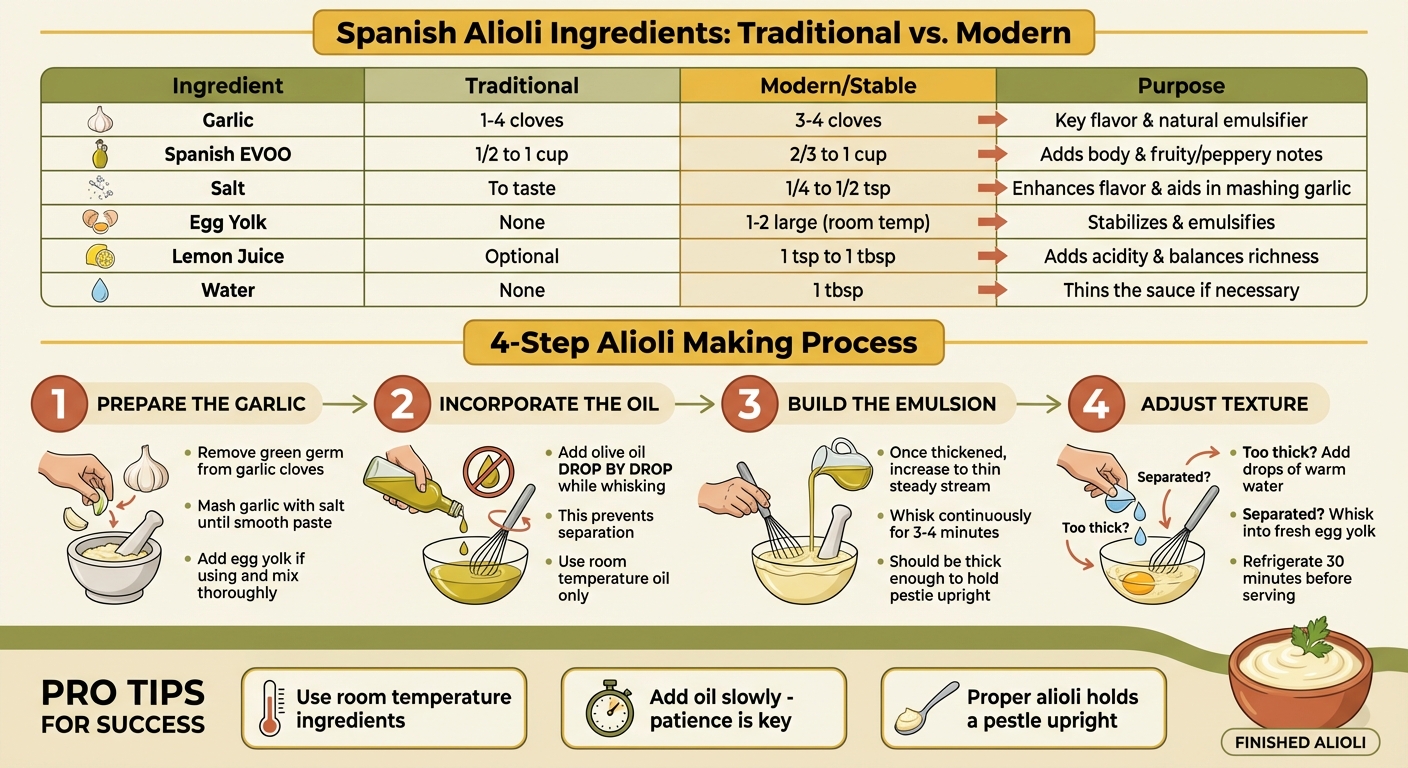
How to Make Spanish Alioli: Step-by-Step Guide with Ingredients
Ingredients
Traditional Spanish alioli is incredibly simple, relying on just three main ingredients: fresh garlic, extra virgin olive oil, and salt. This classic method delivers a bold and intense flavor. However, many modern recipes include room-temperature egg yolk to stabilize the mixture, making it easier to achieve a creamy, mayonnaise-like texture at home.
To balance the richness of the oil and add a touch of brightness, you’ll also need fresh lemon juice or red wine vinegar - about 1 teaspoon to 1 tablespoon, depending on your preference.
| Ingredient | Traditional Quantity | Modern/Stable Quantity | Purpose |
|---|---|---|---|
| Garlic | 1–4 cloves | 3–4 cloves | Key flavor and natural emulsifier |
| Spanish EVOO | 1/2 to 1 cup | 2/3 to 1 cup | Adds body and fruity/peppery notes |
| Salt | To taste | 1/4 to 1/2 tsp | Enhances flavor and aids in mashing garlic |
| Egg Yolk | None | 1–2 large (room temp) | Stabilizes and emulsifies the mixture |
| Lemon Juice | Optional | 1 tsp to 1 tbsp | Adds acidity and balances the richness |
| Water | None | 1 tbsp | Thins the sauce if necessary |
Preparation Method
For the best results, use high-quality Spanish olive oil, such as those from Big Horn, as it enhances both the flavor and texture of the alioli.
- Prepare the Garlic: Start by removing the green germ from the center of each garlic clove to avoid bitterness. Then, mash the garlic with a pinch of salt until it forms a smooth paste. If you’re using an egg yolk, add it at this stage and mix thoroughly.
- Incorporate the Oil: Slowly add the olive oil drop by drop while continuously whisking or pounding the mixture. This step is critical - adding the oil too quickly is the most common reason for separation.
- Build the Emulsion: Once the mixture begins to thicken into a thin sauce, you can increase the oil flow to a very thin, steady stream. Keep whisking or moving the pestle in circular motions for 3 to 4 minutes until the sauce becomes thick and creamy. A well-made alioli should be thick enough to hold a pestle upright in the mortar.
- Blender Option: If you’re using a blender, place the egg yolk, garlic, and lemon juice at the bottom of a tall container. Pour the oil on top and let it settle for 15 seconds. Start blending at the bottom, and once the base emulsifies, gradually tilt and lift the blender to incorporate the oil.
Getting the Right Texture and Flavor
Once the emulsion is complete, you can fine-tune the texture and flavor of your alioli:
- If the mixture is too thick and difficult to whisk, add a few drops of warm water to loosen it.
- If it separates, don’t panic. You can restart the emulsion by slowly whisking the broken mixture into a fresh egg yolk in a clean bowl.
- For a milder garlic flavor, blanch the garlic cloves briefly before mashing. This softens the sharpness while keeping the essence of garlic intact.
Finally, refrigerate your alioli for at least 30 minutes before serving. This resting period allows the flavors to meld together and gives the sauce a firmer texture.
Serving and Storage
How to Serve Alioli
Once your alioli is ready, it’s time to let it shine as part of your meal. This classic Spanish sauce pairs beautifully with dishes like patatas bravas, Spanish tortilla, and even baked potatoes. Its creamy, garlicky flavor enhances everything it touches.
Alioli plays a key role in Spanish cuisine, especially in coastal areas like Valencia and the Balearic Islands. Here, it’s often served with paella, Arroz A Banda, or Caldero. It’s also a fantastic companion to grilled meats, seafood, fresh crudités, and roasted vegetables.
"The magic of alioli goes beyond its simple ingredients. It's a sauce that brings people together, whether drizzled over patatas bravas at a family gathering or served alongside fresh seafood at a beachside dinner." - Chef Omar Allibhoy
For a simple yet satisfying option, serve alioli with crusty bread as a tapa or use it as a flavorful sandwich spread. Before serving, give it a quick stir and ensure it’s served cool to fully appreciate its bold taste.
If you have any leftovers, storing it correctly is essential to maintain its quality.
How to Store Alioli
Homemade alioli is best stored in an airtight container in the refrigerator. This keeps its garlic flavor intact and prevents it from picking up other odors. For the freshest taste, consume it within 2 to 3 days.
"Alioli is better served cool and it must be fresh, so you should consume it within a maximum of two days after you have prepared it." - Spanish-food.org
Freezing alioli isn’t recommended, as it can ruin the sauce’s smooth texture by breaking the emulsion, leaving it grainy. If you notice the sauce separating in the fridge, a quick stir should fix it. For more stubborn separation, whisking in a fresh egg yolk gradually can help re-emulsify it.
Since alioli is at its best when fresh, consider making smaller batches that you can enjoy within a couple of days. This way, every spoonful retains its delicious, creamy consistency.
Conclusion
Main Points
Making authentic alioli boils down to three key elements: top-notch Spanish olive oil, careful emulsification, and proper technique. The olive oil serves as the cornerstone, delivering that rich Mediterranean flavor. Starting with room-temperature ingredients and adding the oil drop by drop ensures the emulsion stays intact, while vigorous whisking achieves the creamy texture that defines alioli. Once perfected, this sauce becomes the perfect complement to grilled seafood, patatas bravas, roasted veggies, or even crusty bread.
What makes alioli so special is its simplicity. With just a few ingredients, you can create a sauce that has been a staple on Spanish tables for generations. Whether you're using it to enhance paella or as a sandwich spread, the olive oil you choose plays a huge role in capturing that authentic taste.
Try Making Alioli
If you’ve never made alioli before, now’s the perfect time to give it a shot. It might feel a bit daunting at first, but as Chef Omar Allibhoy advises: "The key to perfect alioli is patience – add the oil very slowly". Stick to the process, and you’ll end up with a sauce that could rival those served in Spain.
For the best results, consider using Big Horn Olive Oil's premium Spanish EVOO (https://bhooc.com). Their Ultra Premium Extra Virgin Olive Oils are cold-pressed within two hours of harvest and delivered fresh within three months, ensuring a bold flavor and smooth texture - exactly what you need for an authentic alioli. With options like their Estate Reserve Ultra Premium EVOO or single-source varieties like Picual and Coratina, starting at just $8.99, you’re setting up your alioli for success.
Start small, take your time, and before you know it, you’ll be making alioli like a pro - bringing a taste of Spain to your table and connecting with a timeless culinary tradition.
FAQs
Why does my alioli break or separate?
Alioli can separate when the emulsion is disrupted, often because the oil is added too quickly. This prevents the oil from blending evenly with the egg and garlic mixture. To keep the emulsion stable, add the oil very slowly in a thin stream while whisking or blending continuously. Also, make sure all the ingredients are at room temperature before starting. If the mixture does break, you can fix it by adding a small amount of lukewarm water and whisking to bring the emulsion back together.
Which Spanish olive oil flavor works best for alioli?
The best option for making alioli is traditional extra virgin olive oil. Its rich, bold flavor is key to creating authentic alioli, while also contributing to its smooth, creamy texture. To get the ideal balance of taste and consistency, opt for a high-quality olive oil.
Can I make alioli without egg yolk?
Traditional Spanish alioli skips the egg yolk entirely, relying only on garlic and olive oil. While many modern recipes include egg yolk to make the emulsification process simpler, you can stick to the classic method. This involves pounding garlic into a smooth paste and gradually incorporating olive oil. Although it requires more patience and effort, the result is a creamy, egg-free alioli with a flavor that stays true to its roots.