

Balsamic Glaze for Olive Oil Brownies
Yes - you can add balsamic glaze to olive oil brownies without making them taste sour. The key is simple: bake fudgy brownies at 350°F, cool them for up to 2 hours, then drizzle on just 2 to 3 tablespoons of reduced balsamic for an 8x8-inch pan.
Here’s the short version:
- Chocolate should come first
- Olive oil keeps the crumb moist and dense
- Balsamic should be reduced for 12 to 20 minutes
- The glaze should coat a spoon, not turn stiff
- Add the glaze only after the brownies cool all the way
- Use a light hand so the top gets a sweet-tart finish, not a heavy layer
I’d keep the formula simple: whisk oil, sugar, eggs, and vanilla first, fold in cocoa, flour, and salt, then bake until a toothpick shows moist crumbs. After that, reduce 1 cup of balsamic with 1 to 2 tablespoons of sweetener, cool it for 5 to 10 minutes, and drizzle lightly.
If you want the whole idea in one line, it’s this: rich olive oil brownies + a small amount of thick balsamic glaze = deeper chocolate flavor with a soft sweet-tart edge.
That’s the full game plan in plain English, and it covers the full article without dragging you through it twice.
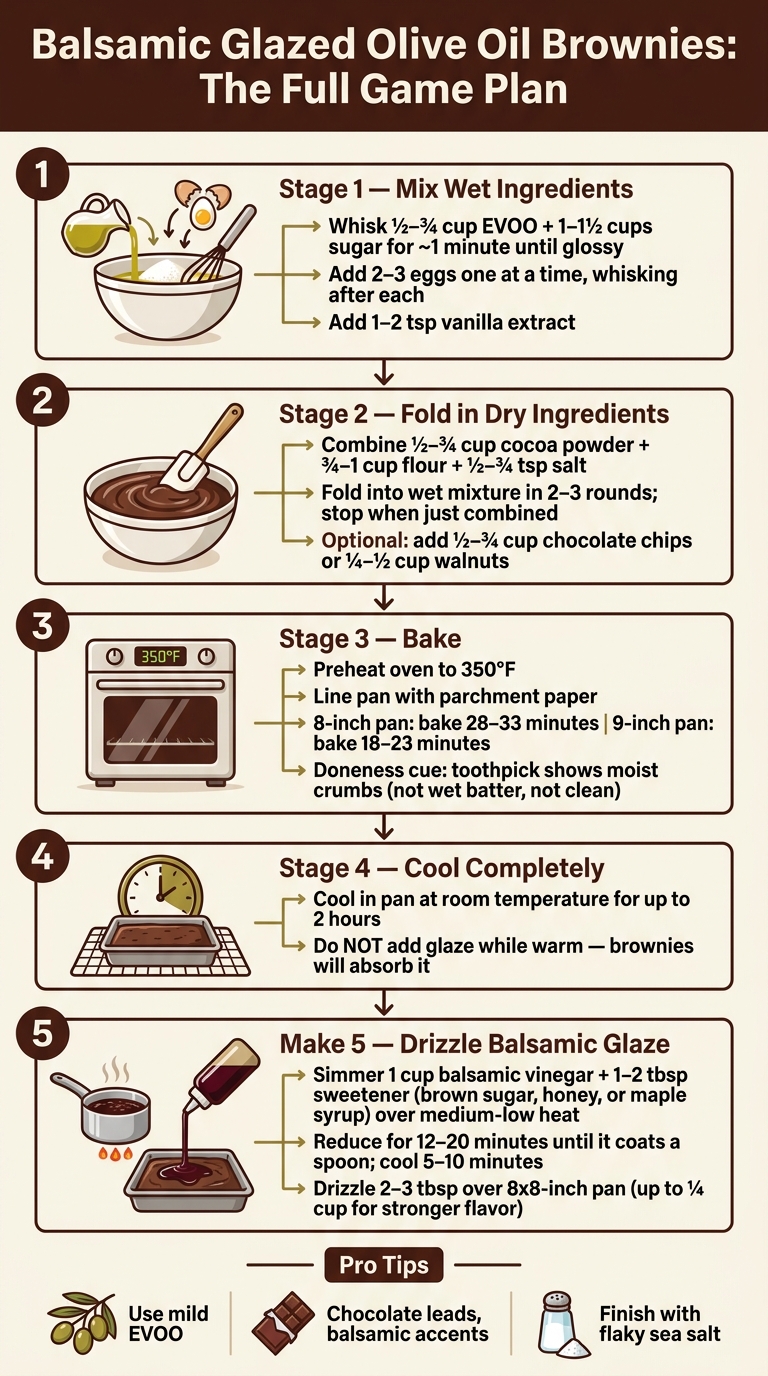
How to Make Balsamic Glazed Olive Oil Brownies: Step-by-Step
How to make the olive oil brownie batter
Mix the wet ingredients first
Start by whisking the olive oil and sugar together for about 1 minute, until the mixture looks glossy and a bit lighter in color. That step does more than you might think. It helps the sugar start to dissolve and spreads the fat through the batter before the other ingredients go in.
For an 8x8-inch pan, use ½ to ¾ cup Ultra Premium Extra Virgin Olive Oil (EVOO) and 1 to 1½ cups granulated sugar. If you want a little more depth, swap in up to ½ cup of light brown sugar for part of the granulated sugar. That adds mild molasses notes that pair nicely with balsamic.
Then add 2 to 3 eggs, one at a time, whisking after each addition. This helps the batter emulsify and keeps the brownies chewy. Finish with 1 to 2 teaspoons of vanilla extract, and whisk until the batter looks smooth and even.
A mild to medium EVOO is the best fit here. It adds a subtle savory note and clean fruitiness without making the brownies taste too much like olives. That matters, because you want the chocolate to lead and the balsamic glaze to stay in balance.
Fold in dry ingredients and optional mix-ins
In a separate bowl, whisk together:
- ½ to ¾ cup unsweetened cocoa powder
- ¾ to 1 cup all-purpose flour
- ½ to ¾ teaspoon fine salt
Make sure to whisk well so you break up any cocoa lumps. Add the dry mixture to the wet in two or three rounds, then fold with a rubber spatula rather than stirring. Stop once you no longer see streaks of flour or cocoa. The batter should look thick and sticky.
That “stop as soon as it’s combined” rule is a big one. If you keep mixing, the flour builds more gluten, and the brownies can shift from fudgy to cakey and a bit tough. If you want to add mix-ins, do it at the end:
- ½ to ¾ cup semisweet or dark chocolate chips
- ¼ to ½ cup chopped, lightly toasted walnuts
Keep the add-ins on the lighter side so the glaze still gets its moment.
Once the batter is just combined, scrape it into the pan.
Choosing quality ingredients
Use fresh, mild EVOO so the balsamic glaze stays the accent, then bake the brownies until just set.
sbb-itb-4066b8e
Baking the brownies and checking doneness
Pan size, oven temperature, and bake time
Once your batter is ready, spread it into the pan and bake at 350°F. Before you pour it in, line the pan with parchment paper. That one small step makes a big difference. It helps you lift the brownies out cleanly later and keeps the glaze sitting on top where it belongs.
Bake time depends on the pan size. An 8-inch square pan usually needs 28–33 minutes, while a 9-inch square pan tends to bake in 18–23 minutes. It’s smart to start checking a few minutes early because ovens vary, and even a slightly deeper batter can shift the timing.
What are you looking for? The edges should look set and may start pulling away from the pan a bit, while the center should still feel slightly soft. If you test with a toothpick, you want moist crumbs on it, not wet batter and not a totally clean pick. That’s the sweet spot. If the brownies are underbaked, the glaze can sink in. If they’re overbaked, you lose that soft texture. Take the pan out as soon as the center is just set, then let the leftover heat finish the job as the brownies cool.
Cool the brownies before adding the glaze
Let the brownies cool all the way in the pan before you add the glaze. If they’re still warm, they’ll soak it up. If they’re cool, the glaze stays on top as a neat drizzle.
For the best setup, give them up to 2 hours at room temperature. That time helps the brownies firm up into a solid base for glazing.
How to make and add the balsamic glaze
Wait until the brownies are fully cooled before you make the glaze. That part matters. A cool surface helps the glaze sit on top instead of soaking into the crumb.
Make the glaze on the stovetop, and crack a window or turn on the vent fan while it cooks. As balsamic reduces, the smell can get pretty sharp.
Reduce the balsamic until thick enough to coat a spoon but still drizzle easily
Pour 1 cup of balsamic vinegar into a small, heavy-bottomed saucepan. Add 1–2 tablespoons of sweetener and whisk to combine, then place the pan over medium-low heat.
You’ve got a few good options here:
- Brown sugar for a mild toffee note
- Honey for a gentle floral warmth
- Maple syrup for a smooth, rich sweetness
Let the mixture simmer gently over medium-low heat, stirring now and then. Keep it below a boil so the glaze doesn’t turn bitter. After 12–20 minutes, it should reduce by about half.
It’s ready when it coats the back of a spoon and leaves a clean line when you run your finger through it. Let it cool for 5–10 minutes. If it thickens too much, stir in a little warm water.
If you’re using a well-aged dark balsamic, use less sweetener. It tends to be richer and sweeter on its own.
How much glaze to use
Go light at first. The glaze should accent the brownies, not blanket them.
For an 8 x 8-inch pan, start with 2–3 tablespoons total. If you want a stronger sweet-tart hit, use up to 1/4 cup total.
You can drizzle it over the uncut slab and slice afterward, or cut the brownies first and drizzle each piece on its own. Either way works. Zigzag it lightly across the top, moving your hand back and forth in a steady motion. A small squeeze bottle makes neater, thinner lines than a spoon, but a spoon still does the job.
Simple serving ideas
Once the glaze is on, keep the finish simple.
- Add a pinch of flaky sea salt
- Serve with raspberries or blackberries
- Add a small dollop of lightly sweetened whipped cream for a cool contrast
Conclusion: Keeping the brownies rich and the glaze in check
The goal is simple: let the brownies stay chocolate-first, with the balsamic sitting quietly in the background. Olive oil helps keep them moist and fudgy as they cool. Bake at 350°F, then pull the pan when a toothpick comes out with moist crumbs. Not wet batter. Not a clean toothpick. That small cue is what keeps the brownies rich instead of dry.
Let the brownies cool all the way before you add the glaze. Once they’re set, reduce the balsamic until it’s thick but still pourable, then drizzle it on lightly for a sweet-tart finish. For an 8×8-inch pan, 2–3 tablespoons is plenty. Chocolate should hit first, with the balsamic showing up after as a soft accent.
A fresh, mild EVOO and a well-made balsamic from Modena give the brownies a clean, polished finish. When the ingredients are good, they do most of the heavy lifting.
FAQs
What balsamic works best?
For olive oil brownies, go with a high-quality, aged balsamic vinegar from Modena, Italy. An 18-year or 25-year aged dark balsamic works best because it has a naturally thick, syrupy texture and a deep flavor that balances sweetness and tartness.
You can also simmer the balsamic into a reduction until it thickens into a glaze. Then drizzle it over warm brownies for a rich finish.
Can I make the glaze ahead?
Yes. Take the balsamic glaze off the heat while it’s still a little runny. It will thicken as it cools, so if you plan to store it, stop a bit early rather than cooking it down too much.
Store the glaze in an airtight container or a sterilized bottle in a cool, dark place or in the refrigerator for up to 1 month. If it gets too thick later on, warm it gently until it turns smooth again.
How should I store glazed brownies?
Store glazed olive oil brownies in an airtight container so they stay fresh. They’ll keep at room temperature for up to 5 days, or in the refrigerator for up to 2 weeks.
If you chill them, let them sit out until they come to room temperature before serving. That gives you the best texture and flavor.