

Balsamic Vinegar in Global Fusion Cuisine
Balsamic vinegar has evolved from a regional Italian specialty to a global culinary favorite. Originating in Modena, Italy, and first recorded in 1046, it was historically used for medicinal purposes. Today, it's a $2.5 billion industry (as of 2025) projected to grow to $3.518 billion by 2031. Its appeal lies in its rich flavor, versatility, and use in both savory and sweet dishes, from marinades to desserts. High-quality varieties like PDO-certified balsamic are aged for over 12 years, while premium varieties like 25-year aged dark balsamic offer even deeper complexity, while modern versions cater to fusion cuisine, blending Mediterranean and global flavors. The Asia-Pacific region leads demand growth, driven by rising incomes and interest in Western food trends. Balsamic vinegar's enduring appeal is rooted in its balance of acidity and sweetness, making it a staple for chefs and home cooks worldwide.
History and Production of Balsamic Vinegar
Production Methods
The production of authentic balsamic vinegar follows a set of strict, time-honored regulations. Since July 3, 2009, only vinegar made in specific areas of Modena and Reggio Emilia can bear the label "Aceto Balsamico di Modena". Every step of the process - from selecting raw materials to aging in wooden barrels - must take place within these regions.
To meet PGI (Protected Geographical Indication) standards, producers must use specific grape varieties like Lambrusco, Sangiovese, Trebbiano, Albana, Ancellotta, Fortana, and Montuni. The production process involves blending 20% to 90% grape must with 10% to 80% wine vinegar, and this mixture must include vinegar aged for at least 10 years.
The quality of the vinegar is overseen by independent certification bodies appointed by the Italian Ministry of Agricultural, Food and Forestry Policies. To qualify, the vinegar must have a minimum density of 1.06 g/mL and a total acidity of at least 6%. When PGI status was granted in 2009, the balsamic vinegar market was valued at roughly $480 million annually.
Traditional balsamic vinegar, labeled PDO (Protected Designation of Origin), represents an even higher level of craftsmanship. It is made exclusively from 100% cooked grape must, with no additives, and aged for at least 12 years. The aging process occurs in a batteria, a series of at least five wooden barrels of decreasing size, made from woods like oak, chestnut, cherry, mulberry, ash, juniper, and acacia. Using a solera-style system, vinegar is transferred annually from larger to smaller barrels to replace what evaporates, enhancing its flavor complexity. Only about 14,000 liters of this premium product are produced each year.
These rigorous standards not only preserve the heritage of balsamic vinegar but also contribute to its worldwide reputation as a premium culinary ingredient.
Export and Global Reach
Balsamic vinegar's rise to global prominence began in the post–World War II era, as Italy experienced an economic boom. By the 1970s and 1980s, American interest in Northern Italian cuisine grew, driven by increased travel and the influence of Italian chefs abroad. This period marked the introduction of balsamic vinegar - often referred to as "black gold" - to international markets. By the 1980s, it had evolved from a gourmet rarity to a household staple in the United States, frequently used in recipes for glazes, marinades, and salads using premium vinegars.
Today, its appeal continues to grow worldwide. The Asia-Pacific region, in particular, has emerged as a significant market, fueled by rising disposable incomes and a growing enthusiasm for Western culinary trends. This combination of traditional craftsmanship and global demand has solidified balsamic vinegar's place as a prized ingredient in kitchens around the world.
sbb-itb-4066b8e
Applications in Global Fusion Cuisine
Asian-Italian Fusion: Balsamic-Soy Marinades
Balsamic vinegar has become a staple in Asian-Italian fusion, especially when paired with soy sauce. Together, they create marinades that not only tenderize lean proteins but also enhance flavor. The acetic acid in balsamic works to break down muscle fibers, while its inherent sweetness eliminates the need for added refined sugars in savory dishes.
Chefs often craft fusion sauces by blending balsamic with umami-packed ingredients like soy and fish sauces. As Rocky's Italian Bistro explains:
"Balsamic vinegar adds both sweetness and acidity, balancing the saltiness of the soy sauce and the umami of the fish sauce".
For glazed vegetables, balsamic is simmered with palm sugar and fish sauce, resulting in a Mediterranean-Asian condiment that combines sweet, sour, and salty flavors. When using these marinades for meats, it's crucial to remove excess liquid before cooking to prevent the sugars from burning and turning bitter. This fusion of techniques and ingredients opens the door to a world of diverse herbal flavors and spices in global cuisine.
Combining with Global Spices: Paprika and Beyond
Pairing balsamic vinegar with bold spices like paprika creates a glaze that's both sweet and tangy, perfect for a variety of dishes. Its natural acidity complements smoky, spicy flavors, adding richness without overpowering the dish. In fusion kitchens, balsamic often joins forces with umami-rich elements such as mushrooms, truffle, and soy sauce to achieve what chefs describe as a:
"perfect balance of depth, sweetness, and umami".
This combination allows for complex layering of flavors, making it possible to create dishes that are both sophisticated and harmonious, blending culinary traditions seamlessly.
Desserts and Modern Applications
Balsamic vinegar's versatility shines in desserts, where it brings a sweet-tart edge to modern creations. Chefs reduce balsamic with honey or agave to produce thick, syrupy glazes that pair beautifully with cheesecake, panna cotta, and fruit tarts. Fruit-infused balsamic varieties - like raspberry, fig, blueberry, and cherry - are often mixed into whipped creams, yogurt parfaits, and chocolate desserts, adding aromatic depth.
Ultra-aged balsamic (aged 12 to 25 years) is frequently used as a finishing touch for rich bases like vanilla ice cream or honey-whipped ricotta. Bona Furtuna highlights its appeal:
"The caramelized balsamic brings complexity to this dessert that will elevate the recipe to the top of your dinner party shortlist".
Drizzling berry-infused balsamic over fresh strawberries or stone fruits enhances their natural sweetness without relying on heavy syrups, while fig-infused balsamic elevates the earthy flavors in dark chocolate tarts. From savory dishes to sweet innovations, balsamic vinegar continues to demonstrate its adaptability, effortlessly bridging culinary boundaries with its unique balance of acidity and sweetness.
Fuse Asian and Italian with Balsamic Vinegar of Modena-Marinated Skirt Steak
Market Trends and Research Insights
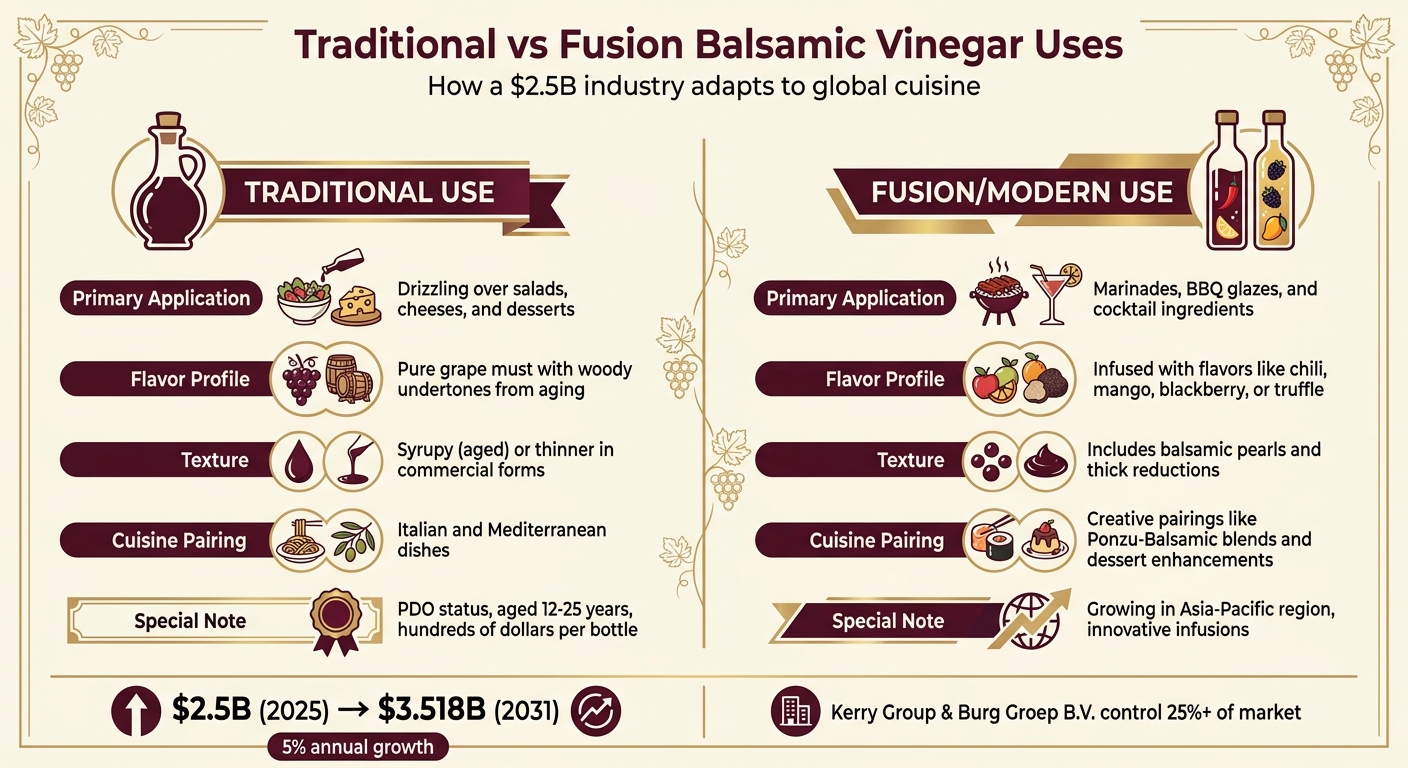
Traditional vs Modern Balsamic Vinegar Uses Comparison
Comparing Traditional and Fusion Uses
Balsamic vinegar is no longer just a staple of Italian cuisine. As global culinary styles evolve, it has transitioned into a versatile ingredient embraced by chefs worldwide. The market, valued at $2.5 billion in 2025, is expected to grow to around $3.518 billion by 2031, with an annual growth rate of 5%. This surge is fueled by its increasing use in diverse cuisines beyond its traditional Italian roots.
Traditional balsamic vinegar, often bearing Protected Designation of Origin (PDO) status, is typically reserved for gourmet applications. Aged for 12 to 25 years in wooden barrels, this syrupy, concentrated vinegar is prized for its depth of flavor and can fetch hundreds of dollars per bottle. On the other hand, modern and fusion varieties have carved out their place in kitchens around the globe. These versions are frequently used in marinades, meat glazes, and even soups and stews.
Here’s a quick comparison of how traditional and modern uses differ:
| Feature | Traditional Use | Fusion/Modern Use |
|---|---|---|
| Primary Application | Drizzling over salads, cheeses, and desserts | Marinades, BBQ glazes, and cocktail ingredients |
| Flavor Profile | Pure grape must with woody undertones from aging | Infused with flavors like chili, mango, blackberry, or truffle |
| Texture | Syrupy (aged) or thinner in commercial forms | Includes balsamic pearls and thick reductions |
| Cuisine Pairing | Italian and Mediterranean dishes | Creative pairings like Ponzu-Balsamic blends and dessert enhancements |
In the Asia-Pacific region, there’s a growing trend toward innovative infusions and premium products. Companies like Kerry Group and Burg Groep B.V., which collectively control over 25% of the market, are leading the charge with creative flavors such as truffle, fig, pear, and chili.
This adaptability and experimentation highlight balsamic vinegar’s ability to meet evolving culinary preferences while maintaining its premium appeal.
Health Benefits Driving Consumer Demand
Balsamic vinegar’s appeal isn’t just about flavor - it’s also about health. Packed with antioxidants and naturally low in sodium and fat, it has become a favorite among health-conscious consumers. This has prompted manufacturers to create low-sugar and low-sodium versions that align with today’s wellness trends, all while preserving its complex taste.
The demand for transparency has also led to the rise of clean-label products. These versions avoid added sugars or caramel, appealing to consumers who prioritize authenticity. To ensure quality, manufacturers now use advanced methods like analyzing the 87Sr/86Sr isotopic ratio to confirm the origin of the grapes.
Packaging innovations further reflect this shift. Sophisticated glass bottles and eco-friendly materials are designed to attract Millennials and Gen Z shoppers who value both aesthetics and sustainability. This combination of health benefits, authenticity, and modern presentation is helping balsamic vinegar stay relevant in an ever-changing market.
Big Horn Olive Oil's Premium Balsamic Vinegars
Big Horn Olive Oil offers two standout aged balsamic vinegars from Modena, Italy, perfect for fusion cuisine enthusiasts. The Traditional 18-Year Aged Dark Balsamic Vinegar ($8.99 for 375 ml) is aged in a blend of chestnut, oak, mulberry, and ash barrels, giving it a density of 1.28+ and 4% acidity. Its rich complexity makes it versatile for various uses, from blending with soy sauce for Asian-Italian marinades to drizzling over chocolate desserts to enhance their flavor.
For those seeking something even more refined, the Molto Denissimo 25-Year Aged Dark Balsamic Vinegar ($12.99 for 375 ml) offers an ultra-aged option. Produced through the traditional Solera method in Modena's "Batteria", this vinegar features layered notes of cherry wood, dried fruits, raisins, figs, dark chocolate, and malt. It's a perfect choice for glazes or as a finishing touch to elevate fusion dishes.
Both vinegars align with wellness trends, containing no added sugars and naturally helping to moderate carbohydrate absorption, which can lower glycemic response.
"Our Traditional 18-Year Aged Italian Dark Balsamic Vinegar is carefully crafted in limited quantities... resulting in an unparalleled depth and complexity." - Big Horn Olive Oil
These vinegars maintain their quality for 3–5 years after opening when stored in a cool, dark place, with even longer shelf life under optimal conditions. Plus, Big Horn Olive Oil offers free USPS Priority Mail shipping on orders over $60. These expertly crafted products highlight the brand's dedication to quality and its focus on fusion-inspired culinary experiences.
Conclusion
Balsamic vinegar, rooted in the traditions of Modena, has earned its place as "the eternal condiment" in kitchens around the world. Its creation from grape must, rather than fermented alcohol, gives it a distinctive sweetness and complexity that transcends borders and culinary traditions. No longer just a salad dressing, balsamic vinegar has become a versatile ingredient - used to tenderize meats, enhance cocktail reductions, and elevate dishes across a variety of cuisines.
As it evolves, balsamic vinegar reflects modern culinary trends, particularly the shift toward premium, high-quality ingredients. This aligns with the growing interest in health-conscious choices, with consumers seeking foods that combine historical wellness benefits and authentic production methods. Its adaptability makes it perfect for fusion cuisine, where it can blend flavors seamlessly without overpowering them. Vishal Gupta, Managing Director of Borges India Private Limited, encapsulates this sentiment:
"Olive oil [and balsamic] is much more than a cooking ingredient; it symbolises cross-cultural innovation and the unifying power of food".
Producers have embraced these trends, offering premium dark balsamic options that cater to evolving tastes. Big Horn Olive Oil’s Traditional 18-Year Aged and Molto Denissimo 25-Year Aged balsamic vinegars from Modena are prime examples. Free of added sugar, they complement modern wellness-focused lifestyles. Whether you’re crafting Asian-Italian marinades, drizzling over desserts, or experimenting with fusion recipes, these aged balsamic vinegars provide the depth and complexity that can transform any dish.
With the global balsamic vinegar market projected to grow through 2030, driven by flavor innovation and culinary exploration, this timeless ingredient continues to inspire chefs and home cooks alike.
FAQs
How do I tell PDO balsamic from PGI balsamic?
PDO balsamic vinegar comes exclusively from specific Italian regions, such as Modena or Reggio Emilia. It's aged for at least 12 years and crafted without any additives. On the other hand, PGI balsamic vinegar also hails from these regions but can include ingredients sourced elsewhere and requires a minimum aging period of 60 days.
What’s the best way to use balsamic in soy-based marinades without burning?
To keep balsamic vinegar from burning in soy-based marinades, it's best to cook over medium or medium-high heat rather than cranking it up to high. You can also add the marinade or sauce toward the end of cooking or use it as a finishing glaze for extra control. If you're reducing the marinade, let it simmer gently - avoid a rolling boil, as that can lead to bitterness. These simple adjustments help maintain the flavors while preventing the balsamic from caramelizing too fast.
Which balsamic works best for desserts versus savory fusion dishes?
When it comes to desserts, a rich and syrupy balsamic vinegar - like A-Premium Dark - can bring out the best in chocolate, berries, and even ice cream. Its deep, sweet flavor adds a luxurious touch. If you're working with lighter desserts, such as sorbets or panna cotta, try fruit-infused balsamic varieties like raspberry or peach. These add a refreshing and tangy layer that complements the delicate flavors.
For savory fusion dishes, balsamic vinegar - whether traditional or infused - can elevate the flavor profile. Richer balsamics work beautifully with hearty dishes, while lighter ones shine in recipes featuring fresh, delicate ingredients.