

Beef Carpaccio with Balsamic Vinegar
Beef carpaccio is a simple, elegant Italian appetizer made from thinly sliced raw beef, dressed with fresh harvest olive oil and balsamic vinegar. First introduced in 1950 at Harry's Bar in Venice, this dish highlights the natural tenderness of beef tenderloin, paired with complementary ingredients like arugula, Parmesan, and capers. The key to great carpaccio lies in using high-quality ingredients, precise preparation, and thoughtful presentation.
Key Points:
- Main Ingredient: Beef tenderloin (or top round for a bolder flavor).
- Dressing: Extra virgin olive oil and aged balsamic vinegar.
- Preparation: Freeze beef briefly for easy slicing, then pound slices thin.
- Plating: Arrange on chilled plates with arugula, Parmesan, and optional capers.
- Serving Tips: Drizzle dressing right before serving; pair with Pinot Noir or Sauvignon Blanc.
This dish is perfect for special occasions or as a light appetizer, showcasing the purity of its ingredients with minimal effort.
Ingredients for Beef Carpaccio
Main Ingredients
Making beef carpaccio the right way starts with just a handful of high-quality ingredients. The star of the dish is beef tenderloin, prized for its buttery texture and lack of connective tissue, making it ideal for raw preparation. If you're after a more pronounced flavor, top round is another option, though it has a firmer bite. To balance the richness of the beef, you'll need fresh arugula for its peppery kick, shaved Parmesan cheese for a salty, nutty touch, and a simple sprinkle of kosher salt and freshly cracked black pepper.
The dressing is just as important. It combines extra virgin olive oil and aged balsamic vinegar, which bring a fruity richness and a sweet, tangy depth that perfectly complement the raw beef. Since carpaccio is served raw, every ingredient's flavor shines through, making top-notch quality a must.
Selecting Quality Products
Choosing the best ingredients isn’t just about taste - it’s about safety, too. Always source your beef from a trusted butcher rather than a grocery store to ensure it meets the standards needed for raw consumption.
For the dressing, invest in Ultra Premium Extra Virgin Olive Oil. Big Horn Olive Oil offers exceptional options like their Picual Extra Virgin Olive Oil, which starts at $8.99 and is bottled within 1 to 3 months of harvest to maintain its antioxidants and freshness. When it comes to balsamic vinegar, authenticity matters. Look for products with the IGP seal (Indicazione Geografica Protetta), a mark of true Italian quality. Big Horn’s balsamic vinegars, sourced directly from Modena, Italy, include options like the Traditional 18-Year Aged Dark Balsamic Vinegar ($8.99) and the luxurious Molto Denissimo 25-Year Aged variety ($12.99).
For the best flavor, always check the olive oil’s crush date and aim to use it within 9 months of that date.
sbb-itb-4066b8e
How to Make Beef Carpaccio | Get Cookin' | Allrecipes
How to Prepare Beef Carpaccio
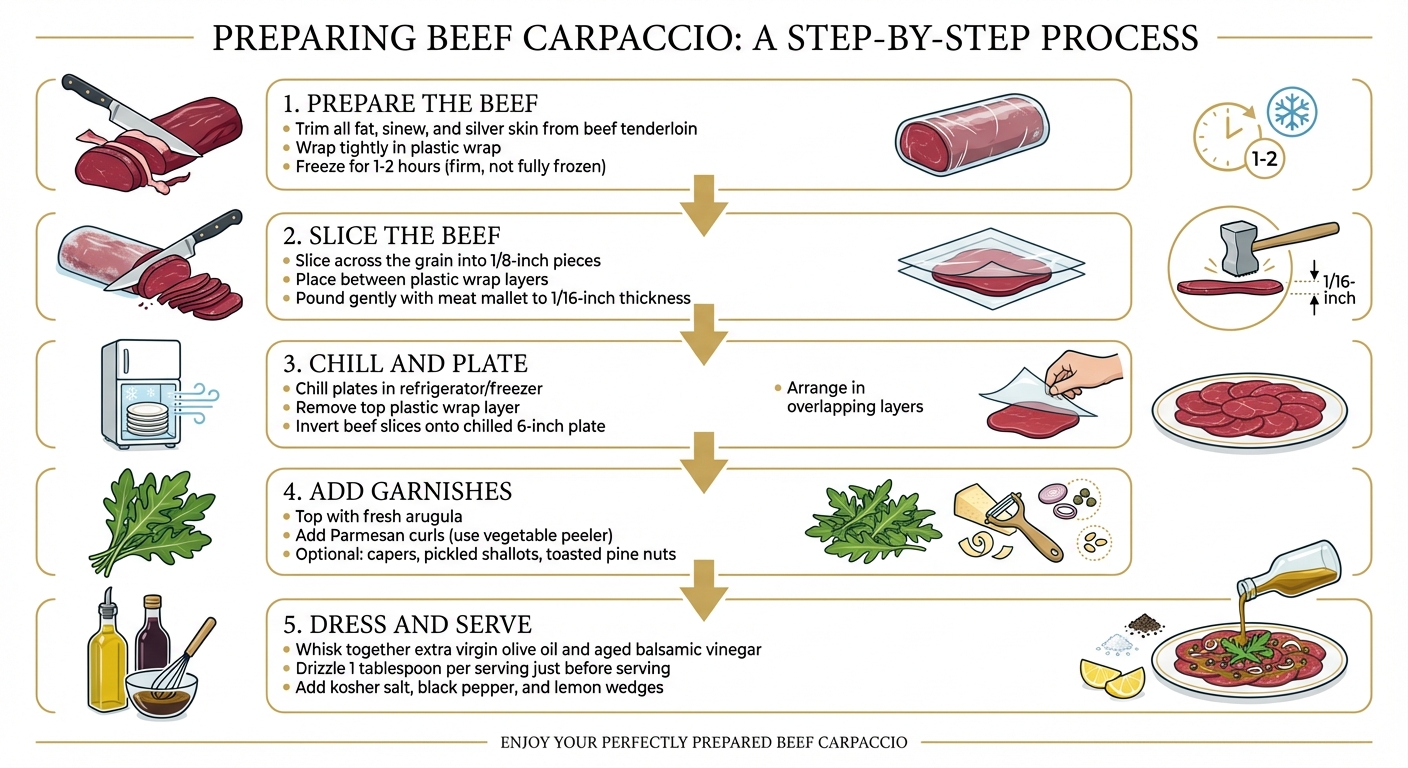
How to Prepare Beef Carpaccio: Step-by-Step Guide
Preparing the Beef
Start by carefully prepping your beef tenderloin. Trim off all fat, sinew, and silver skin to ensure the meat is as tender as possible. Wrap the trimmed beef tightly in plastic wrap and place it in the freezer for about 1 to 2 hours. The goal here is to firm it up - don’t let it fully freeze. This step makes slicing much easier. As cook and blogger Deborah Mele puts it, "Freezing the ultra-fresh beef tenderloin before slicing ensures optimal thinness and a tender texture that enhances the carpaccio's mouthfeel".
Once the beef is firm, slice it across the grain into 1/8-inch pieces. If you’re aiming for ultra-thin 1/16-inch slices, place each piece between layers of plastic wrap and gently pound it with a meat mallet. If this sounds like too much work, many butchers can freeze and slice the beef thinly for you upon request.
With your beef prepped to perfection, it’s time to focus on presentation.
Plating the Dish
Presentation is everything when it comes to carpaccio. Start by chilling your plates in the refrigerator or freezer - this helps maintain the beef’s delicate texture once plated. When you’re ready to plate, remove the top layer of plastic wrap from each pounded slice of beef. Carefully invert the slices onto the chilled plate. Arrange them in overlapping layers on a 6-inch plate for an elegant look.
Top the beef with a handful of fresh arugula, and then add garnishes like capers, pickled shallots, or toasted pine nuts for extra flavor and texture. For a sophisticated touch, use a vegetable peeler to create Parmesan curls instead of grating the cheese.
Adding the Dressing
The dressing is what ties the entire dish together, so timing is crucial. In a small bowl, whisk together Big Horn Olive Oil's Picual Extra Virgin Olive Oil and Traditional 18-Year Aged Dark Balsamic Vinegar (both priced at $8.99) for a high-quality finish. Drizzle about 1 tablespoon of the dressing per serving over the beef just before serving. This ensures every slice is perfectly seasoned without wilting the arugula.
Finally, sprinkle kosher salt, freshly cracked black pepper, and add a few lemon wedges on the side. The lemon allows diners to add a hint of acidity to their liking, completing the dish beautifully.
Serving and Pairing Ideas
After preparing and plating your carpaccio to perfection, explore these serving and pairing suggestions to make the dish truly shine.
Serving as an Appetizer
Beef carpaccio is a fantastic choice for a light appetizer before the main course. For an elegant starter, aim for a 1.5-ounce portion per person. This size offers about 154 calories and 14 grams of protein. If you're serving it as a more filling appetizer or a light lunch, consider portions between 2.6 and 3.5 ounces, with the larger serving providing around 240 calories and 22 grams of protein. A single pound of beef tenderloin can typically serve six people as an appetizer.
For presentation, chilled, flat white plates work best to highlight the dish. Add a handful of arugula for its peppery kick, some shaved Parmesan for richness, and a few capers for a tangy contrast. Pair with thin slices of lightly toasted baguette or ciabatta. Drizzling the bread with Big Horn Olive Oil adds a satisfying crunch and a boost of flavor.
Finish the experience with the perfect wine pairing.
Wine and Side Pairings
To elevate the flavors of beef carpaccio, choose wines that bring balance and enhance the dish. A Pinot Noir is an excellent choice, offering red cherry and earthy tones that complement both the beef and balsamic. Another great option is an Italian Barbera ($15–$20), whose high acidity cuts through the olive oil. Alternatively, a Chianti Classico ($15–$25) provides herbal and cherry notes that pair beautifully with Parmesan and balsamic.
For those who prefer white wine, consider an unoaked Chardonnay or Sauvignon Blanc. Both offer crisp, citrusy flavors that mirror the freshness of the arugula.
"The idea is to showcase the pure flavor of high-quality beef - no heavy sauces, no long cooking times, just great ingredients in balance." - Vinomat
Serve red wines at 60–65°F and whites well-chilled to bring out the best in their flavors.
Final Tips
Building on the preparation and plating techniques mentioned earlier, here are some additional insights to help you perfect your carpaccio.
Key Points to Remember
The quality of your ingredients can make or break this dish. Always opt for premium beef tenderloin and pair it with Big Horn Olive Oil's Ultra Premium Extra Virgin Olive Oil and authentic Modena balsamic vinegar to elevate the flavors.
"Beef tenderloin is called for here as it will unfailingly yield the tenderest carpaccio." - Gabrielle Hamilton, Chef and Author
Stick to the recommended temperature guidelines for achieving the ideal texture. Also, ensure you drizzle the dressing right before serving to maintain the dish's freshness and avoid any sogginess.
Customizing the Recipe
Want to add a personal twist to this classic? Here are a few ideas to inspire you.
- Sprinkle capers for a salty, briny kick.
- Add a squeeze of fresh lemon juice to brighten the flavors.
- Whisk a small dollop of whole-grain mustard into your dressing to emulsify the oil and vinegar while adding a tangy depth.
"A small dollop of whole-grain mustard enhances the brightness of the capers and helps with the emulsion." - J. Kenji López-Alt, Culinary Consultant, Serious Eats
For a touch of luxury, try adding a few drops of truffle oil for an earthy aroma. Other options include topping the dish with pickled shallots, anchovies, or extra shaved Parmesan.
The beauty of carpaccio lies in its simplicity. Start with the basics and layer in flavors to create a version that reflects your personal taste. Experimentation is key - so don’t hesitate to make it your own!
FAQs
Is it safe to eat beef carpaccio at home?
Eating beef carpaccio at home can be safe, but it requires careful attention to freshness, handling, and sourcing. Start with meat that’s extremely fresh and comes from a trusted, hygienic supplier. To lower bacterial risks, you can wash and lightly sear the surface of the meat before preparation. However, it’s important to remember that eating raw meat always involves some level of risk. Prioritize cleanliness and food safety at every step to minimize potential issues.
What’s the best way to slice the beef paper-thin?
To get beef sliced paper-thin for carpaccio, start with a sharp knife and cut against the grain. If you want the slices even thinner, place each piece between two sheets of parchment paper and gently roll them out with a rolling pin. This method helps achieve evenly thin, delicate slices - just right for a classic carpaccio.
Which balsamic vinegar works best for carpaccio?
For carpaccio, Aceto Balsamico Tradizionale - a traditional aged balsamic vinegar from Modena, Italy - is a fantastic choice. Its thick, syrupy consistency and layered flavors bring a touch of sophistication to the dish. Choosing a premium-quality vinegar will elevate the overall flavor harmony.