

How Blockchain Tracks Olive Oil Origins
Blockchain technology is transforming the olive oil industry by ensuring transparency and trust in the production process. Here's how it works:
- Fraud Prevention: Blockchain creates an unchangeable record of every step, from olive harvesting to bottling, addressing issues like fraud and mislabeling. For instance, up to 80% of Italian extra virgin olive oil (EVOO) is reportedly affected by adulteration.
- Smart Contracts: Automated checks ensure quality standards, such as acidity levels and cold-pressing temperatures, are met.
- IoT Integration: Sensors monitor conditions like temperature and humidity, logging real-time data to maintain oil quality.
- Consumer Access: QR codes on bottles let buyers trace the oil's journey, including harvest dates, grove locations, and certifications.
This system not only combats fraud but also meets growing consumer demand for transparency. For example, Tunisia's CHO saw a 30% demand increase for its Terra Delyssa brand after adopting blockchain traceability. By scanning a QR code, consumers can verify the product's origin and quality, building trust and confidence in their purchase.
ALLIANCE Blockchain Usage: Olive Oil
How Blockchain Tracks Olive Oil from Farm to Table
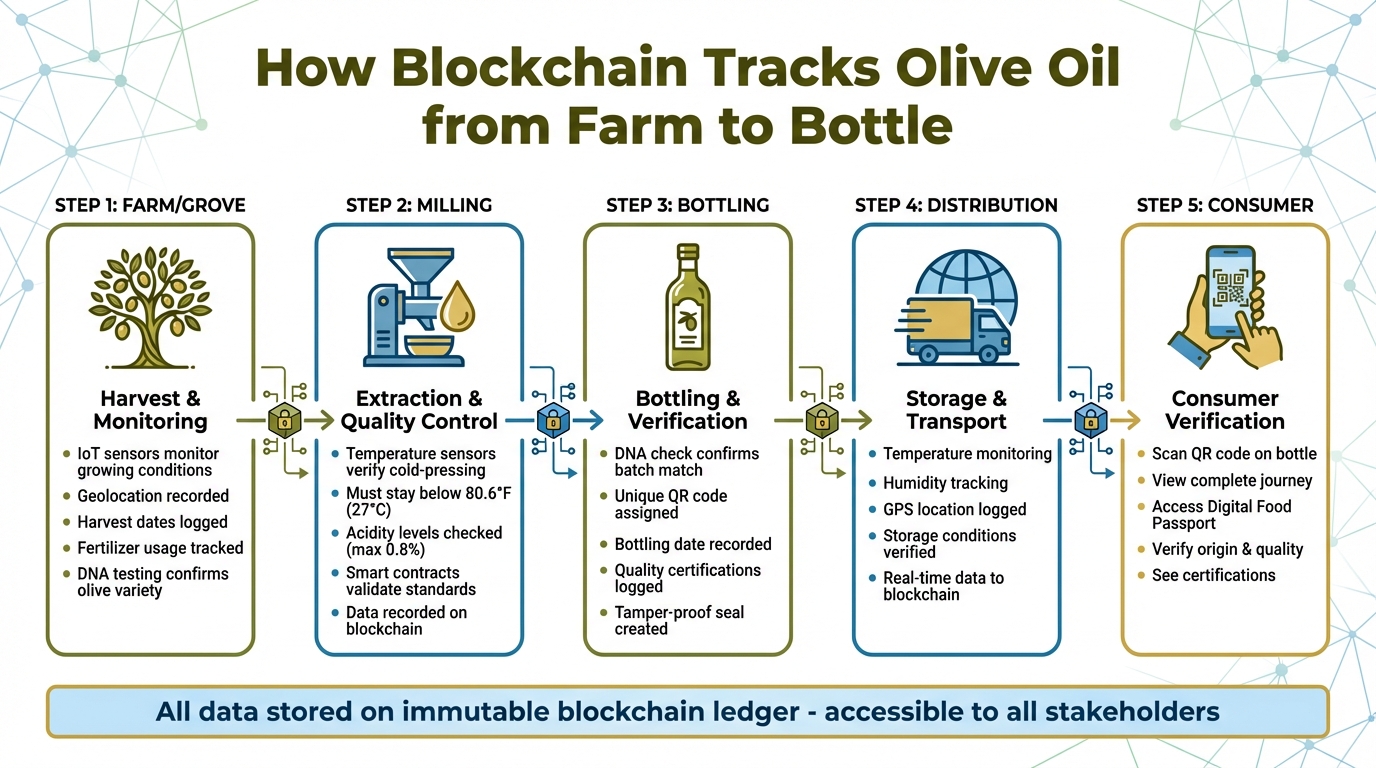
How Blockchain Tracks Olive Oil from Farm to Bottle
Blockchain technology creates a digital record that tracks every step of olive oil production, from the farm to the final bottle. This record is stored on a distributed ledger that cannot be altered, ensuring transparency and accountability. Key details - like geolocation, harvest dates, milling temperatures, and quality certifications - are logged at every stage.
At the farm, IoT sensors monitor growing conditions, fertilizer usage, and extraction temperatures to ensure quality standards are met. After harvesting, DNA technology confirms that the olives match the declared batch, and this genetic data is recorded on the blockchain. During milling, temperature sensors verify that the oil qualifies as "first cold-pressed." Before bottling, another DNA check ensures the oil in the bottle matches the recorded batch, eliminating the risk of substitutions. This meticulous process builds a comprehensive digital record, enabling decentralized methods and automated quality checks.
Each bottle is then assigned a unique QR code, allowing consumers to trace its journey from grove to table. In 2022, Spanish producer Deoleo adopted this system for its "Maestros de Hojiblanca" brand, tracking 4 million bottles annually across Spain, France, and the U.S. Niklas Sannebro, Strategic Operations Director at Deoleo, spearheaded the project by integrating data from purchasing, quality, and IT departments to create a tamper-proof verification system for each bottle. Once the oil is processed, blockchain ensures that every batch is tracked through its digital identity.
Decentralized Record-Keeping for Supply Chain Transparency
Traditional tracking systems often rely on centralized databases, which can create vulnerabilities and information gaps. Blockchain, however, distributes records across a network of computers, offering a secure and transparent system accessible to all stakeholders. This decentralized approach closes loopholes that fraudsters might exploit.
By making every transaction visible, blockchain enhances trust and accountability in the olive oil industry. It prevents bad actors from tampering with records or misrepresenting the oil’s origins. In fact, some producers now allow consumers to trace their oil back to the specific grove where the olives were harvested.
Smart Contracts for Automated Quality Checks
Blockchain’s benefits extend further with smart contracts - self-executing programs that automate quality verification. These contracts use data from IoT sensors to ensure that olive oil meets strict standards. For example, if a batch exceeds the maximum acidity level of 0.8% or if storage temperatures rise above safe limits, the smart contract can flag the issue and block the batch from moving forward.
This automation not only reduces human error but also prevents intentional tampering. For instance, if a mill claims its oil is "first cold-pressed" but the temperature sensors show the extraction process exceeded 80.6°F (27°C), the smart contract rejects the claim before it’s recorded on the blockchain. Rafael Pérez del Toro, General Manager of Quality at Deoleo, highlighted the importance of this initiative:
"This initiative seeks to go a step further in the relationship with our consumers to improve their experience with the brand and interaction with the product. It also meets one of the objectives of our 2030 sustainability strategy: to improve the quality standards of our olive oil throughout the value chain".
Using IoT Sensors with Blockchain for Better Traceability
IoT sensors act as a bridge between the physical and digital worlds, capturing real-time data on production and storage conditions. These devices, which include RFID tags and wireless sensor networks, collect environmental and chemical data and send it to blockchain systems using lightweight protocols. Once transmitted, blockchain nodes validate the data through a consensus process before recording it. This creates a tamper-resistant record, addressing the weaknesses of traditional paper-based or closed electronic systems. This reliable data transfer forms the backbone of quality assurance throughout the production process.
Real-Time Tracking of Temperature and Storage Conditions
Environmental sensors play a critical role in monitoring key factors like temperature, humidity, and pressure during storage and transportation. These factors are crucial for maintaining the quality of extra virgin olive oil (EVOO). For example, exposure to excessive heat or moisture can degrade the oil, increasing its acidity and lowering its quality. When sensors detect that conditions exceed safe limits, this information is immediately logged on the blockchain. This ensures that any quality issues are documented and accessible to all stakeholders. Additionally, GPS and geolocation data are tracked to confirm that olives are sourced from Protected Designation of Origin (PDO) certified areas, further validating the product's authenticity.
Automatic Data Entry into Blockchain Systems
IoT devices streamline the process by automatically recording data directly onto the blockchain, minimizing the risks of human error and fraud. During production, various sensors continuously monitor and log data to ensure compliance with stringent quality standards. This automated system ensures that only olive oil meeting these standards progresses through the supply chain.
sbb-itb-4066b8e
How Consumers Use QR Codes to Verify Olive Oil Origins
Each bottle equipped with blockchain technology includes a unique QR code that unlocks a detailed production history. By scanning this code with your smartphone, you can access a "Digital Food Product Passport", which outlines every step of the process - from the olive grove to your kitchen table. This system creates a secure, tamper-proof record, thanks to blockchain's cryptographic safeguards.
Unlike standard QR codes that often provide only basic company details, these blockchain-enabled codes connect directly to unchangeable batch records. This added layer of transparency is particularly important when purchasing high-quality extra virgin olive oil.
Viewing Harvest Dates and Production Details
Blockchain technology allows consumers to instantly access detailed production data. By scanning the QR code, you can see information that was once only available to industry professionals. This includes geolocation, harvest dates, olive varieties, milling techniques, and bottling details - all in one place.
For example, in 2022, Spanish company Deoleo introduced blockchain for its "Maestros de Hojiblanca" brand using IBM Food Trust technology. Scanning the QR codes on blends No. 5, 6, and 7 provides consumers with origin details, olive varieties, and quality certifications. This initiative now tracks 4 million bottles of extra virgin olive oil annually in Spain, France, and the United States. Similarly, Tunisia-based CHO adopted blockchain for its Terra Delyssa brand in 2020, enabling shoppers in over 10,000 grocery stores across the US and Canada to verify first cold-pressing claims and view lab analyses from International Olive Council-accredited facilities.
| Information Type | Details Provided via QR Code |
|---|---|
| Origin | Grove location, geolocation, and farmer profiles |
| Production | Harvest dates, milling methods (e.g., first cold-pressed), and bottling dates |
| Quality | Acidity levels, chemical composition, and DNA identity |
| Certifications | Organic status, PDO verification, and sustainability marks |
| Logistics | Storage conditions and transportation history |
Some systems even incorporate portable DNA testing to confirm the authenticity of olive cultivars. For instance, the WATSON project, launched in Italy and Greece in 2025 by the Institute of Biosciences and BioResources, combines blockchain with DNA testing to ensure the oil matches the declared olive varieties.
How Transparency Builds Consumer Confidence
Scanning a QR code not only confirms a product’s authenticity but also provides a detailed view of its production process. This level of transparency is essential in combating fraud within the olive oil industry, where estimates suggest that up to 80% of the Italian extra virgin olive oil market may be affected by adulteration.
Blockchain-verified records offer cryptographically secured data that has been independently validated. This is a game-changer for consumers who prioritize knowing every detail about the journey and quality of their products.
"By scanning the code directly with their mobile phones, consumers can travel through all the stages that a specific batch has gone through, discovering its origin, the olive varieties, the quality certification process, the flavors and the sustainable production origin."
- IBM Case Study on Deoleo
When shopping for premium olive oil, opt for bottles with unique QR codes. These codes connect to blockchain records that confirm the product’s authenticity and quality, ensuring it truly meets the "Extra Virgin" standard.
Case Study: Blockchain in Olive Oil Production
Big Horn Olive Oil's Quality Tracking Methods
Big Horn Olive Oil ensures the quality of its Ultra Premium Extra Virgin Olive Oil through meticulous tracking and processing. Each bottle is cold-pressed within two hours of harvest and delivered within three months, preserving its flavor and antioxidant properties.
At the orchard level, crucial details like olive weight, type, and source are recorded at the time of harvest. For single-source varieties such as Picual and Coratina, the records include the orchard's genetic profile and geolocation, ensuring transparency about each bottle's origin. Smart contracts, integrated with IoT sensors, monitor the use of fertilizers and insecticides, logging cultivation data that aligns with Big Horn's strict quality standards.
This comprehensive process forms the foundation for blockchain to authenticate and maintain the company's premium production practices.
Blockchain Technology and Premium Product Standards
Building on its robust tracking system, Big Horn Olive Oil uses blockchain to certify every stage of its production process. This technology provides verified proof of origin, enabling the company to share the complete story of each bottle - from its precise geographical roots to the key environmental factors involved in its production. This level of transparency is crucial in an industry where approximately 80% of "Italian" extra virgin olive oil is believed to be fraudulent or mixed with lower-quality oils.
For its balsamic vinegars sourced from Modena, Italy, blockchain ensures full traceability throughout the supply chain. This is particularly important for aged products like the 18-Year Aged Dark Balsamic Vinegar and the Molto Denissimo 25-Year Aged Dark Balsamic Vinegar, where authenticity is directly tied to quality. Blockchain technology independently verifies claims about aging, sourcing, and production methods, offering consumers confidence in the product's genuineness.
Conclusion: Blockchain's Impact on Olive Oil Traceability
Blockchain is reshaping olive oil traceability by tackling fraud and boosting consumer confidence. With its unchangeable digital ledger, it becomes nearly impossible to tamper with origin or quality data, ensuring that consumers receive authentic products. The urgency for such technology is evident - fraud incidents in the European Union tripled in early 2024 compared to 2018.
What’s more, consumers are showing they’re willing to pay extra for transparency. This willingness highlights blockchain's potential to increase demand and enhance brand trust when applied effectively.
Big Horn Olive Oil has embraced these benefits to reinforce its reputation for premium quality. By recording harvest details within hours and delivering products to consumers within three months, the company ensures its quality standards are upheld. Blockchain also verifies aging claims for premium products like the 18-Year Aged Dark Balsamic Vinegar and the Molto Denissimo 25-Year Aged Dark Balsamic Vinegar, offering customers a guarantee of authenticity.
Additionally, IoT sensors play a key role in maintaining quality by monitoring temperature, storage, and other critical metrics in real time. This automated process reduces human error and provides consumers with a Digital Food Passport. By scanning a QR code, buyers can access detailed information, including harvest dates, grove locations, and mill processing details. This level of transparency supports Big Horn Olive Oil’s unique production timeline and traceability standards.
Raj Rao, General Manager of IBM Blockchain Platforms, summed it up perfectly:
"There's a growing desire among consumers to know where their food comes from and an increased business motivation to optimize processes with better supply insights".
In this way, blockchain not only protects premium brands like Big Horn Olive Oil but also empowers consumers to make well-informed purchasing decisions.
FAQs
How does blockchain help verify the origin of olive oil?
Blockchain technology offers a secure way to track the journey of olive oil - from the olive grove to your table. It creates a tamper-proof digital record that documents every step in the supply chain, including harvesting, production, packaging, and distribution. This digital ledger is transparent and cannot be altered, ensuring the integrity of the information.
For consumers, this traceability means confidence in the quality and purity of the olive oil they buy. For producers, it’s a way to uphold high standards and build trust. Take brands like Big Horn Olive Oil, for example. They use blockchain to provide a detailed history of their Ultra Premium Extra Virgin Olive Oils (EVOO), guaranteeing that each bottle reflects their dedication to freshness, quality, and excellence.
How do IoT sensors help track the origins of olive oil?
IoT sensors play a crucial role in tracking the journey of olive oil by keeping tabs on essential factors like temperature, humidity, and storage conditions at every stage of production and distribution. These sensors gather real-time data, safeguarding the oil's quality and integrity from the grove to your table.
With detailed traceability powered by IoT technology, you can be confident that the olive oil you buy is fresh, high-quality, and handled under ideal conditions. This level of transparency not only ensures a premium product but also fosters trust - something Big Horn Olive Oil delivers with its Ultra Premium Extra Virgin Olive Oils.
How does scanning a QR code help verify the origin of olive oil?
By simply scanning a QR code on an olive oil bottle, shoppers can uncover a wealth of information about the product's journey - verified through blockchain. This includes details about the orchard where the olives were cultivated, the mill where they were processed, and the facilities where the oil was filtered and bottled.
Thanks to blockchain, this data is secure and cannot be altered, offering peace of mind about the product's authenticity and quality. It's a straightforward way to confirm the olive oil's origins and traceability, helping consumers make more confident and informed choices.