

How to Brine Olives Provence Style
Provence-style olive brining is a simple, natural method that uses salt water, Mediterranean herbs, and citrus peels to create flavorful, firm-textured olives. This process avoids chemicals like lye and instead relies on time and care to remove bitterness and infuse olives with subtle herbal and citrus notes. Here's a quick overview:
- Preparation: Crack or slit olives to help remove bitterness. Soak them in water for 7–14 days, changing the water daily.
- Brining: Cure olives in a 10% salt brine (3.5 oz salt per quart of water) and add aromatics like fennel, thyme, garlic, and citrus peels.
- Fermentation: Let olives ferment for 2–3 weeks, tasting periodically to achieve the desired flavor.
- Finishing: Store olives in extra virgin olive oil or fresh brine with herbs for long-term preservation.
This method delivers olives with a bold, artichoke-like flavor, perfect for snacks, appetizers, or cooking. Keep reading for a detailed step-by-step guide.
BEST Method to Brine OLIVES at Home - Olive recipe
Selecting and Preparing Olives
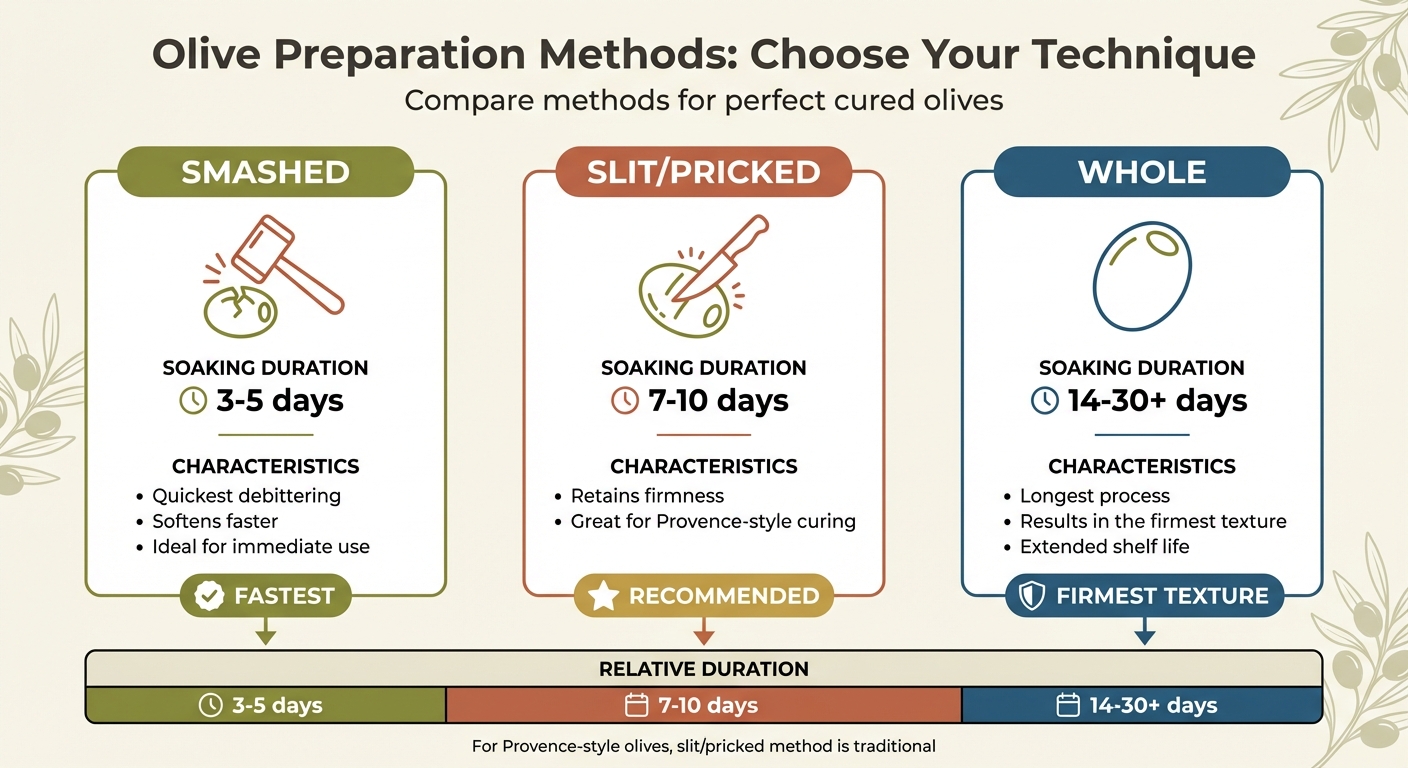
Olive Preparation Methods Comparison: Soaking Times and Texture Results
Choosing the Right Olives
For a bold, fresh artichoke flavor, Picholine olives are a top choice. If they’re not available, Manzanilla and Mission olives are excellent alternatives.
When selecting olives, go for green, young, and firm ones. These hold up better during fermentation. Carefully inspect each olive and avoid any with wrinkles or small holes. Hank Shaw, chef and author of Hunter Angler Gardener Cook, offers this advice:
"Look for pretty olives, with few or no blemishes, and which are not wrinkled".
Beige scars on olives are a sign of damage caused by olive fly larvae and should be discarded. However, tiny dots are fine as long as there aren’t too many, as numerous marks suggest olive fly damage. To ensure even curing, sort your olives by size - small, medium, and large.
Preparing the Olives for Brining
Start by rinsing the olives thoroughly in cold water to remove dirt and debris. Then, remove any stems. To help the olives absorb water and brine, you’ll need to break their skin. There are two main ways to do this:
- Cracking: Smash the olives gently with a wooden mallet.
- Slitting: Make one to three deep cuts along the length of each olive using a paring knife.
The method you choose will affect the soaking time and final texture:
| Preparation Method | Soaking Duration | Characteristics |
|---|---|---|
| Smashed | 3–5 days | Quickest debittering; softens faster, ideal for immediate use |
| Slit / Pricked | 7–10 days | Retains firmness; great for Provence-style curing |
| Whole | 14–30+ days | Longest process; results in the firmest texture and extended shelf life |
After preparation, place the olives in a food-grade container and cover them completely with cold, unchlorinated water (spring or rainwater works best). This prevents unwanted chemical flavors. To keep the olives submerged, use a heavy plate or food-safe mesh. Any fruit exposed to air risks browning or spoiling.
Once your olives are cracked or slit, sorted, and submerged, they’re ready for the next step: water soaking.
Water Soaking to Remove Bitterness
Water soaking is essential to remove the natural bitterness from olives. Change the water once or twice daily. Early on, the water may turn brownish and develop foam or slime, but it will gradually clear up. For slit olives cured in the Provence style, the soaking process usually takes 7 to 10 days.
Start tasting the olives after about five days. They’re ready when most of the bitterness is gone but still have a slight "bite" to prevent them from tasting bland. As Tracy Ariza, DDS, explains:
"By piercing the skin of the olives, the flesh is exposed and the bitter compounds are more easily given off into the water".
Making the Brine with Provençal Aromatics
Crafting the Salt Brine
Once your olives have soaked and shed most of their bitterness, it's time to take their flavor to the next level with a salt brine. The classic ratio for this step is a 10% salt solution, which means mixing 3.5 oz (100 g) of salt for every quart (1 liter) of water.
For best results, stick to non-iodized salt like sea salt, canning salt, or pickling salt. Iodized table salt can cloud the brine and alter its taste. To make sure the salt dissolves completely, heat a portion of the water, stir in the salt until fully dissolved, and let it cool before adding it to your olives. Keep the olives fully submerged to avoid any unpleasant flavors - using a food-safe weight works perfectly for this.
Infusing with Provençal Aromatics
The hallmark of Provence-style olives is their infusion with wild fennel, which gives them a unique and fresh artichoke-like flavor. Ashley Tinker, founder of Curious Provence, describes this preparation as delivering "a strong, fresh artichoke taste". If wild fennel isn’t available, toasted and coarsely ground fennel seeds make a great substitute.
The aromatics should be added on the 8th day, once the soaking phase is complete. Traditional Provençal additions include 1 tablespoon of chopped fresh rosemary, thyme, 3 smashed garlic cloves, 1/2 teaspoon of cracked peppercorns, and strips of orange or lemon peel (be sure to avoid the bitter white pith). To evenly distribute the flavors, layer the herbs and spices throughout the jar as you pack in the olives.
Once the herbs are in place, it’s time to fine-tune the brine for the perfect flavor.
Perfecting the Brine
Allow the aromatics to work their magic for at least 2 weeks, giving the olives time to absorb the authentic Provençal essence. You can start tasting them after the first week and let them cure longer if you want a bolder flavor. If the olives end up too salty, a quick soak in fresh, unchlorinated water for 4 to 8 hours will balance things out before serving.
sbb-itb-4066b8e
Brining and Fermentation Process
Brining Instructions
After the 7-day water soak, transfer the olives into clean, sterilized glass jars or food-grade plastic containers, leaving about 1 inch of headspace. Pour the cooled salt brine over the olives, ensuring they're completely submerged. As you pack the jars, add Provençal aromatics like herbs or spices to enhance the flavor. To keep the olives submerged, place a weight on top, such as a small plate or a sealed water bag. Store the jars in a cool, dark place where the temperature stays below 75°F, like a pantry or cupboard.
For Provence-style olives, the fermentation process in the brine usually takes about 2 weeks, adding up to a total of 3 weeks when combined with the initial water soak. Start tasting the olives around the 2-week mark to check for bitterness. If needed, extend the curing period by another week or two for the flavors to fully develop. Keep an eye on the fermentation process to achieve the best results.
Fermentation and Safety Tips
As the olives ferment, you may notice the brine darkening or a white film forming on the surface. This is perfectly normal. Skim the surface weekly to maintain clarity. Chef and author Hank Shaw explains:
"As time passes, you will see a scum of mold and weirdness form on the top. This is normal. Skim it off once a week and you'll be fine".
If any olives become excessively soft, develop a foul odor, or have mold growing directly on them, discard them immediately. Additionally, small gas bubbles or slight fizzing may appear early in the process - this is simply natural yeast activity and nothing to worry about.
Conditioning and Storing
Once the olives have cured and their bitterness has mellowed, they're ready for conditioning. If they taste too salty, soak them in fresh water overnight, then drain and repack them into clean jars. For storage, you can either submerge the olives in fresh brine with a splash of vinegar or citric acid to prevent mold or cover them entirely in extra virgin olive oil. Adding herbs to the oil can provide a flavorful finishing touch.
For a consistent Provençal flavor, use the same aromatics throughout the process. When stored in the refrigerator, the olives can last for up to a year. For the best taste and texture, let the olives rest in the finishing oil for a few days before serving, allowing the aromatics to fully infuse.
Finishing and Serving Brined Olives
Finishing with Extra Virgin Olive Oil
Now that the curing process is complete, it’s time to take your olives to the next level. Start by draining and rinsing the cured olives in cold water. If they taste overly salty, a quick soak in water can help balance the flavor. This is where the magic happens - marinating the olives to add depth and character. A high-quality extra virgin olive oil like Big Horn Olive Oil's Estate Reserve Ultra Premium EVOO is ideal for this step. Its fresh, cold-pressed quality enhances the Provençal flavors beautifully.
To create the marinade, mix three parts EVOO with one part wine vinegar - white wine, red wine, or balsamic all work well - to introduce a touch of acidity. Pack the olives tightly into sterilized glass jars, layering in Provençal aromatics like fresh rosemary, thyme, oregano, and wild fennel. For an extra burst of flavor, add sliced garlic, whole peppercorns, and strips of lemon or orange peel. Pour the oil-vinegar mixture over the olives and herbs, ensuring everything is fully submerged. Let the jars sit for a few days to allow the flavors to meld together.
Serving Suggestions
Once marinated, these olives become a star ingredient or a delightful snack. In Provence’s Les Alpilles region, olives are often served with wine as a warm gesture of hospitality. Recreate this tradition by pairing your olives with aged cheeses, cured meats, and crusty bread for a simple yet elegant appetizer. They’re also a perfect addition to charcuterie boards, alongside dried fruits and spiced nuts.
But don’t stop there - these olives can elevate your cooking, too. Toss them into a hearty potato and leek soup, sprinkle them over roasted butternut squash or cauliflower, or use them as a gourmet topping for flatbread pizzas with pear and prosciutto. If you’ve stored your olives in the fridge, let them sit at room temperature for a few minutes before serving so the oil returns to its liquid state.
Storing Marinated Olives
To keep your olives fresh and flavorful, store them in sterilized, airtight glass jars. They can be kept in the refrigerator or in a cool, dark place for up to a year. Just make sure the olives and herbs stay fully submerged in the marinade. When serving, use wooden or plastic utensils to preserve their taste and texture.
As Leonie from The Glutton Life wisely points out:
"If you feel like it's wasteful to use good quality oil for a recipe like this, you can use the leftover oil+vinegar in the jars to flavour salads once you've eaten the olives!"
This herb-infused oil doubles as a rich dressing, capturing the essence of Provence in every drop. It’s a simple way to make sure nothing goes to waste while savoring every bit of your homemade creation.
Conclusion
Brining olives in the Provence style brings a touch of Mediterranean magic to your kitchen. This age-old method - preparing, soaking, and curing olives in a salt brine infused with wild fennel - yields olives with a bold, artichoke-like flavor and a satisfying, firm bite.
What makes this approach stand out is its simplicity and reliance on natural ingredients. Unlike many store-bought options that rely on chemical processing, this method lets you craft olives with a depth and authenticity that's hard to match. The natural curing process preserves the olive's true essence, offering a complexity that feels both rustic and refined.
The finishing touch is just as important as the process. Using a premium extra virgin olive oil, such as Big Horn Olive Oil's Estate Reserve Ultra Premium EVOO, elevates your cured olives to the next level. The fresh, cold-pressed oil enhances the Provençal aromatics, creating a perfectly balanced and flavorful result.
FAQs
How do I know if my olives are fermenting correctly?
To ensure your olives are fermenting as they should, keep an eye out for small, consistent bubbles forming in the brine - this is a good indicator of activity. The liquid should remain clear, and the olives must stay fully submerged to prevent spoilage. A properly fermenting batch will also give off a clean, slightly tangy smell. After one to two weeks, take a small taste. The flavor should be mildly tangy, with no unpleasant odors or tastes. If everything checks out, your fermentation process is progressing well!
What can I use instead of wild fennel when brining olives?
If you can’t find wild fennel, fennel seeds make an excellent substitute. They bring a comparable aromatic flavor and are a solid choice for olive brining. Alternatively, fresh fennel fronds or stalks can be used if you’re looking for a more herb-like, green flavor profile.
What’s the best way to store olives after marinating them?
Once your olives have finished marinating, proper storage is key to keeping their flavor and freshness intact.
Move the olives into a clean, airtight container - something like a sterilized glass jar or a food-safe plastic container works well. Ensure the olives are fully submerged in either fresh brine or the brine they were marinated in. This step is essential to preserve their taste and texture.
Seal the container securely and store it in the refrigerator. The cold temperature will help slow down spoilage, allowing your olives to remain flavorful for several weeks.