

Caloric Density of Olive Oil: What Science Says
Olive oil is one of the most calorie-dense foods, delivering 9 calories per gram or about 120 calories per tablespoon (15g). This is due to its pure fat composition, primarily made up of heart-healthy monounsaturated fats like oleic acid. While high in calories, studies suggest olive oil can support weight management when used to replace less nutritious fats like butter or margarine.
Key points:
- 1 tablespoon (15g) contains approximately 120 calories and 14g of fat.
- Nutritional highlights: High in monounsaturated fats (~10g/tbsp), with small amounts of Vitamin E (13% DV) and Vitamin K (7% DV).
- Health studies: Research links olive oil to modest weight reduction (-0.09kg over 4 years with ½ tbsp daily) and cardiovascular benefits, especially when part of a Mediterranean diet.
Extra virgin olive oil, rich in polyphenols, offers additional anti-inflammatory and metabolic benefits compared to refined versions. For maximum health impact, focus on portion control and choose high-quality extra virgin olive oil.
Nutritional Profile of Olive Oil
Macronutrient Breakdown
Olive oil is 100% fat - containing absolutely no carbohydrates, protein, fiber, or sugar. This makes it one of the purest sources of dietary fat you can use in your kitchen. Its standout feature? The high content of monounsaturated fat, particularly oleic acid, which makes up 55% to 83% of its composition.
A single tablespoon (about 14–15g) delivers 13.5–14g of total fat. Breaking it down further, that’s around 10g of monounsaturated fats, 1.5g of polyunsaturated fats, and 2g of saturated fats per serving. While olive oil isn’t a powerhouse for vitamins, it does provide small amounts of Vitamin E and Vitamin K, contributing 1.9mg of Vitamin E (13% of your daily value) and 8.1mcg of Vitamin K (7% of your daily value) per tablespoon.
| Nutrient (per 1 Tablespoon/14–15g) | Value | % Daily Value (DV) |
|---|---|---|
| Calories | 119–121 kcal | 6% |
| Total Fat | 13.5–14g | 17%–18% |
| Monounsaturated Fat | 9.85–10g | N/A |
| Polyunsaturated Fat | 1.42–2g | N/A |
| Saturated Fat | 1.9–2.3g | 9%–11% |
| Cholesterol | 0mg | 0% |
| Total Carbohydrates | 0g | 0% |
| Protein | 0g | 0% |
| Vitamin E | 1.9mg | 13% |
| Vitamin K | 8.1mcg | 7% |
What makes olive oil stand out among cooking oils isn’t its calorie count - it’s the high proportion of monounsaturated fats and the presence of antioxidant polyphenols, especially in extra virgin olive oil. These attributes play a key role in its nutritional benefits.
Calories in Olive Oil
As noted in the table, a single tablespoon of olive oil provides 119 to 121 calories. This high energy content comes from fat's 9 calories per gram. For reference, 100 grams of olive oil packs around 884 calories.
This calorie density isn’t unique to olive oil - it’s typical of all pure fats. Nutrition expert Barbie Cervoni MS, RD, CDCES, CDN, explains:
"All oils are pure fats and, therefore, contain the same amount of calories per tablespoon".
If you’re using smaller portions, a teaspoon of olive oil delivers roughly 40 calories. That’s why portion control is key when adding olive oil to your meals.
To maintain its quality and prevent spoilage, store olive oil in dark glass containers to protect it from light and air.
Scientific Studies on Olive Oil and Weight Management
Nurses' Health Study: Olive Oil vs. Other Fats

From 1990 to 2015, researchers at the Harvard T.H. Chan School of Public Health followed 121,119 healthy U.S. adults as part of three major studies: the Nurses' Health Study (NHS), NHS II, and the Health Professionals Follow-up Study (HPFS). Their analysis, published in the American Journal of Clinical Nutrition in May 2025, uncovered a fascinating connection between olive oil and weight management. Specifically, they found that increasing daily olive oil intake by just half a tablespoon (7 g) was linked to a 0.09 kg weight reduction over four-year intervals.
Interestingly, olive oil stood out as the only added fat tied to weight loss. In contrast, consuming more butter, margarine, or other vegetable oils was associated with weight gain.
When researchers examined substitutions, they discovered that replacing one daily serving of margarine, butter, or vegetable oils with olive oil significantly reduced weight gain.
As the study authors noted:
"A long-term increase in olive oil intake was inversely associated with body weight in middle-aged adults in the United States. Conversely, increased consumption of other added fats, such as butter and margarine, was positively associated with body weight."
These findings provide compelling evidence for olive oil's unique role in weight management and align with broader insights into the Mediterranean diet.
PREDIMED Trial: Olive Oil in the Mediterranean Diet
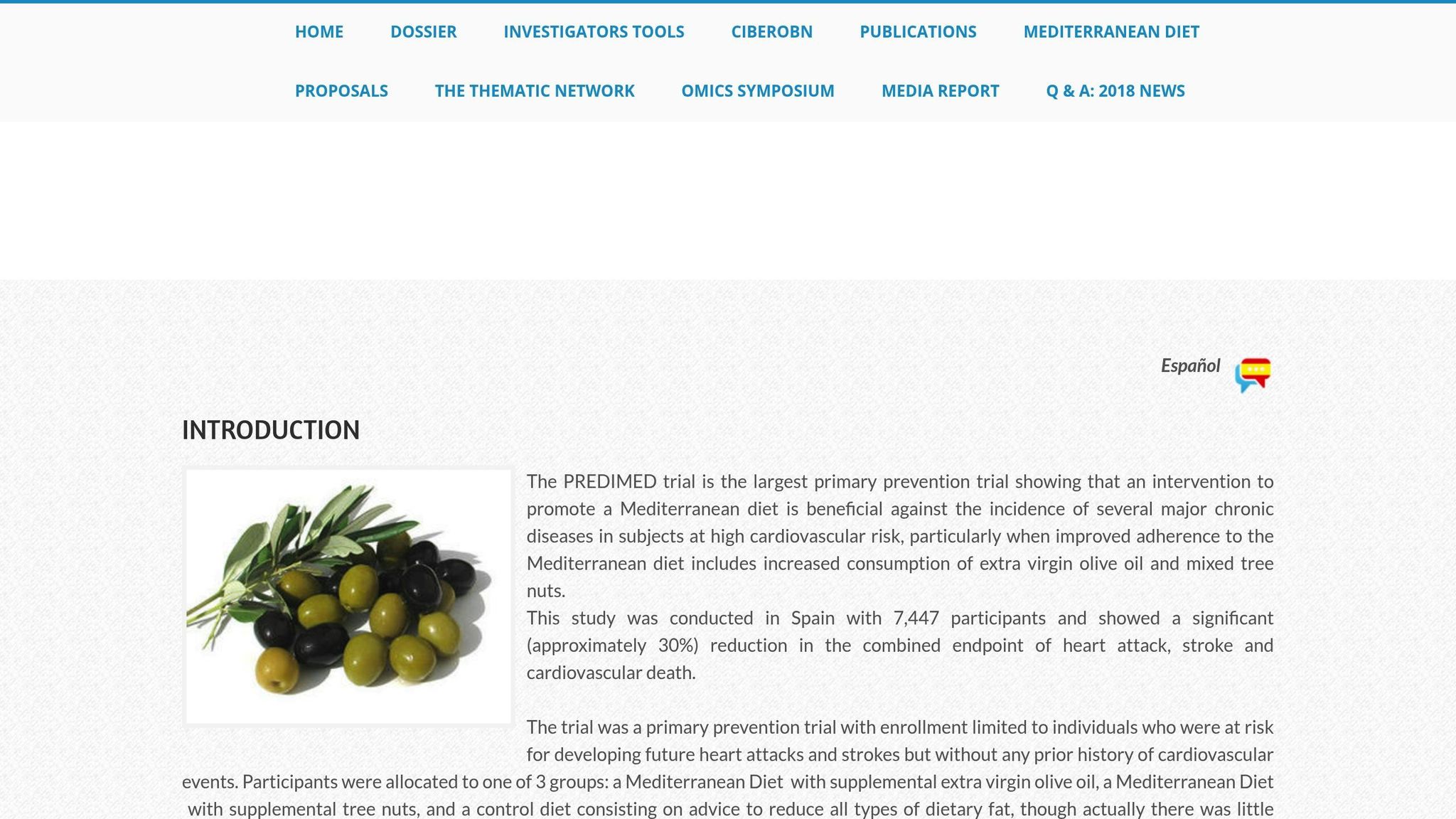
Adding to the U.S.-based research, the PREDIMED (Prevención con Dieta Mediterránea) trial explored olive oil's role in a Mediterranean diet and its impact on weight. Conducted in Spain, this large-scale study followed 7,447 participants - men aged 55–80 and women aged 60–80 - who were at high cardiovascular risk. Participants in the study consumed about four tablespoons (50 g) of extra virgin olive oil daily without any calorie restrictions. Over a median follow-up period of 4.8 years, no weight gain was observed.
The trial also revealed another significant outcome: the Mediterranean diet groups experienced a 30% reduction in major cardiovascular events compared to the low-fat control group, leading to the trial's early conclusion.
Summarizing their findings, the researchers stated:
"Higher olive oil intake in the context of an unrestricted caloric Mediterranean diet was not associated with weight gain or higher waist circumference."
Together, the U.S. and Mediterranean studies highlight olive oil's positive metabolic effects and its advantages over other fats. Researchers point to olive oil's satiating properties as a potential explanation. Despite its calorie density, olive oil may help regulate appetite, naturally reducing overall calorie consumption.
Metabolic Benefits of High-Quality Olive Oil
How Polyphenols Affect Metabolism
Olive oil isn’t just a kitchen staple - it’s packed with polyphenols that play a key role in supporting your metabolism. These compounds, like oleuropein and hydroxytyrosol, can improve how your body handles energy and regulates blood sugar. For example, they enhance insulin sensitivity by blocking enzymes such as amylase and α-glucosidase, which are involved in breaking down carbohydrates.
A 2013 study involving 46 overweight men found that taking olive leaf extract (containing 51.1 mg of oleuropein and 9.7 mg of hydroxytyrosol) for 12 weeks improved insulin sensitivity by 15% and increased β-cell responsiveness by 28%.
Beyond blood sugar regulation, high-polyphenol olive oil can significantly boost HDL cholesterol levels and enhance LPL gene expression by 26%, which helps clear triglycerides. A meta-analysis even showed nearly a 50% increase in HDL levels. Additionally, these polyphenols reduce inflammation by modulating NF-κB and lowering markers like IL-6, TNF-α, and C-reactive protein. As the European Food Safety Authority highlights:
"Olive oil polyphenols contribute to the protection of blood lipids from oxidative stress."
Polyphenols may also inhibit adipogenesis - the creation of new fat cells - helping to manage weight and reduce visceral fat. These benefits underline the importance of polyphenol-rich oils, setting the stage to compare extra virgin and refined olive oils.
Refined vs. Extra Virgin Olive Oil: Health Differences
The way olive oil is processed makes a huge difference in its health benefits. Extra virgin olive oil is cold-pressed, preserving its polyphenols, while refined olive oil undergoes high-heat processing with chemical solvents, stripping away most of these beneficial compounds.
The difference in polyphenol levels is striking. Refined olive oils have about 62 mg/kg of polyphenols, compared to 150–400 mg/kg in high-quality extra virgin olive oils. Ultra-premium varieties can even reach 500–800+ mg/kg. This means refined oils mainly provide calories, while extra virgin options offer added perks like reducing inflammation and improving insulin function.
| Feature | Refined Olive Oil | Extra Virgin Olive Oil | Ultra-Premium EVOO |
|---|---|---|---|
| Polyphenol Content | Low (~62 mg/kg) | Moderate (150–400 mg/kg) | High (500–800+ mg/kg) |
| Metabolic Effect | Minimal effect on HDL | Protects LDL from oxidation | Significant increase in HDL and insulin sensitivity |
| Anti-inflammatory | Negligible | Moderate CRP reduction | High modulation of inflammatory pathways |
| Processing Method | Chemical processing | Cold-pressed | Cold-pressed within 2 hours |
Ultra-premium extra virgin olive oils, like those from Big Horn Olive Oil, are cold-pressed within just two hours of harvest to lock in their high polyphenol content. To meet the European Food Safety Authority’s health claim for protecting LDL particles from oxidative damage, you’d need to consume about 20 g (roughly two tablespoons) of olive oil daily, provided it contains at least 5 mg of hydroxytyrosol and related compounds.
Ever notice a peppery kick at the back of your throat when tasting top-notch extra virgin olive oil? That’s oleocanthal at work - a polyphenol with anti-inflammatory effects similar to ibuprofen. On the other hand, if your olive oil tastes bland or neutral, it’s likely missing the bioactive compounds that deliver these metabolic benefits.
sbb-itb-4066b8e
Olive oil is healthy - but it’s not a fat loss food.
Comparing Olive Oil to Other Dietary Fats
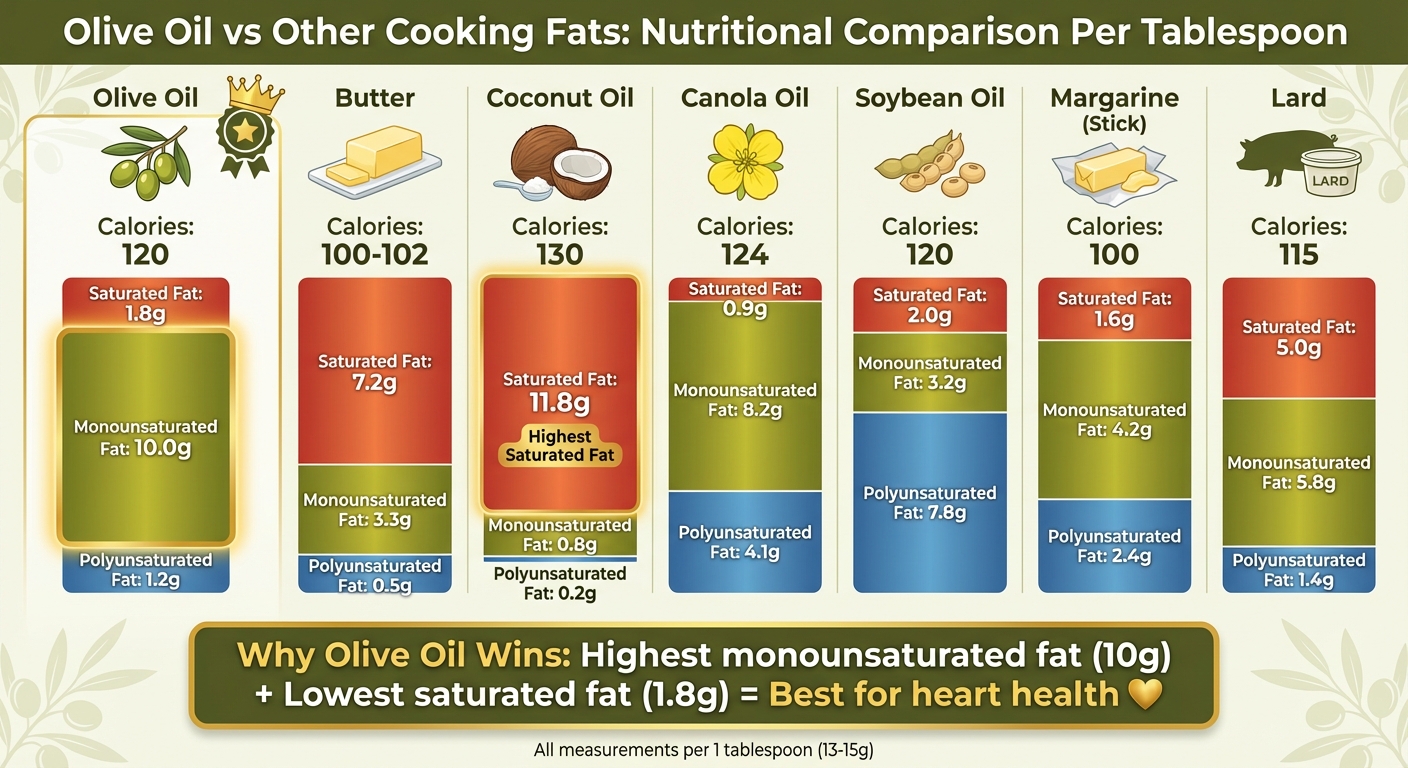
Olive Oil vs Other Cooking Fats: Calorie and Fat Composition Comparison
Caloric Density and Fatty Acid Composition Table
Olive oil contains about 120 calories per tablespoon, but its real strength lies in its fat composition and how efficiently the body can utilize its nutrients.
| Fat Type (1 Tbsp) | Calories | Saturated Fat (g) | Monounsaturated Fat (g) | Polyunsaturated Fat (g) |
|---|---|---|---|---|
| Olive Oil | 120 | 1.8 | 10.0 | 1.2 |
| Butter | 100–102 | 7.2 | 3.3 | 0.5 |
| Coconut Oil | 130 | 11.8 | 0.8 | 0.2 |
| Canola Oil | 124 | 0.9 | 8.2 | 4.1 |
| Soybean Oil | 120 | 2.0 | 3.2 | 7.8 |
| Margarine (Stick) | 100 | 1.6 | 4.2 | 2.4 |
| Lard | 115 | 5.0 | 5.8 | 1.4 |
Olive oil stands out with 10 grams of monounsaturated fat per tablespoon, far exceeding butter (3.3 g) or soybean oil (3.2 g). Its saturated fat content is also much lower - 1.8 grams per tablespoon compared to butter's 7.2 grams and coconut oil's 11.8 grams.
These differences in composition explain why olive oil is often linked to better metabolic and cardiovascular health. Research shows that swapping butter or margarine for olive oil can aid in weight management and improve cholesterol levels by reducing LDL (the "bad" cholesterol) while maintaining or even boosting HDL (the "good" cholesterol).
Why Olive Oil is the Better Choice
Olive oil's benefits go beyond its nutrient profile. In a study where nutritional scientists evaluated 32 edible oils, virgin olive oil achieved a perfect score of 100, outperforming options like coconut oil and margarine by a significant margin. This rating reflects olive oil's unique combination of monounsaturated fats and natural polyphenols, which provide more than just energy - they also support overall health.
Unlike processed fats, extra virgin olive oil retains bioactive compounds such as hydroxytyrosol and oleocanthal. These compounds are known for their anti-inflammatory properties and their role in improving insulin sensitivity, further enhancing olive oil's cardiovascular and metabolic benefits.
The FDA even allows a qualified health claim stating that consuming about 2 tablespoons (23 grams) of olive oil daily may lower the risk of coronary heart disease - provided it replaces saturated fats without increasing total calorie intake. As dietitian Emma Shafqat explains:
"The type of olive oil matters – extra virgin is the best choice as it's the least processed and retains the highest levels of antioxidants."
Extra virgin olive oil, like those from Big Horn Olive Oil, is particularly prized for its high polyphenol content. That peppery sensation you feel in your throat? It's a sign of oleocanthal, a compound that signals you're reaping genuine metabolic benefits.
Conclusion: Olive Oil in a Balanced Diet
Key Takeaways
Olive oil packs about 120 calories per tablespoon, but research suggests that even adding just ½ tablespoon daily can lead to a modest weight reduction of 0.09 kg over four years. Consuming around 25 grams (roughly 2 tablespoons) per day has been linked to a 16% lower risk of cardiovascular issues, reduced chances of developing type 2 diabetes, and even lower mortality rates, as supported by FDA-backed studies. These impressive health perks are largely due to olive oil’s healthy fats and its abundance of polyphenols, especially in extra virgin varieties.
To fully enjoy these benefits, making thoughtful choices about the type and quality of olive oil you use is key.
Choosing the Right Olive Oil
The metabolic and cardiovascular advantages of olive oil are undeniable, but not all olive oils deliver the same punch. As Mary Flynn, a nutrition researcher at Brown University, points out:
"you wouldn't know if it had phenols, which account for the health benefits of extra virgin olive oil".
This makes selecting a high-quality extra virgin olive oil crucial. Look for oils with a clearly labeled crush date to ensure they retain their polyphenol content and anti-inflammatory properties, like those caused by oleocanthal. Brands like Big Horn Olive Oil offer ultra-premium options that maintain their polyphenol levels for 12–15 months when stored correctly. To preserve these nutrients, keep your olive oil in a cool, dark place and use it raw - such as in salads or as a finishing touch on dishes. This way, you’re locking in the health benefits that olive oil is known for.
FAQs
Can olive oil help with weight management even though it's high in calories?
Yes, olive oil can play a role in weight management, even though it’s calorie-dense. The monounsaturated fats and phenolic compounds it contains - like oleic acid and polyphenols - can help your body in several ways. They’re known to boost thermogenesis (your body’s ability to burn calories), increase fat oxidation, and even help you feel fuller for longer. These effects can aid in appetite control and contribute to modest weight loss when used in moderation.
Keep in mind, one tablespoon of olive oil packs roughly 120 calories, so portion control is crucial. Adding high-quality extra virgin olive oil, such as those from Big Horn Olive Oil, to a well-rounded diet can deliver health benefits while aligning with your weight management goals.
What’s the difference between extra virgin olive oil and refined olive oil?
Extra virgin olive oil (EVOO) is crafted from top-tier olives and extracted purely through mechanical methods, avoiding the use of heat or chemicals. This careful process helps retain its natural flavor, nutrients, and low acidity (≤0.5%). The result? A rich, bold taste with a touch of bitterness or a peppery kick - hallmarks of its freshness and high quality.
Refined olive oil, however, undergoes processing with heat and chemicals to eliminate impurities and extend its shelf life. While this makes it more stable, it also strips away much of its flavor and beneficial compounds. Made from lower-grade olives, it offers a milder, more neutral taste but lacks the depth and health perks that make EVOO stand out.
Why is it important to watch your portions when using olive oil?
Olive oil is a calorie-dense ingredient, delivering roughly 120 calories in just one tablespoon. While it offers plenty of health perks, overusing it can unintentionally add extra calories to your meals, which might contribute to weight gain over time.
By keeping an eye on portion sizes, you can savor olive oil’s robust flavor and nutritional goodness without going overboard. Measuring out your servings is a simple way to make olive oil a healthy part of a well-rounded diet.