

Top 5 Cheeses for Aged Balsamic Vinegar
Pairing aged balsamic vinegar with cheese creates a perfect harmony of flavors. The vinegar’s acidity and sweetness balance the richness of cheese, enhancing its taste and texture. Here’s a quick guide to the top five cheeses that pair exceptionally well with aged balsamic vinegar:
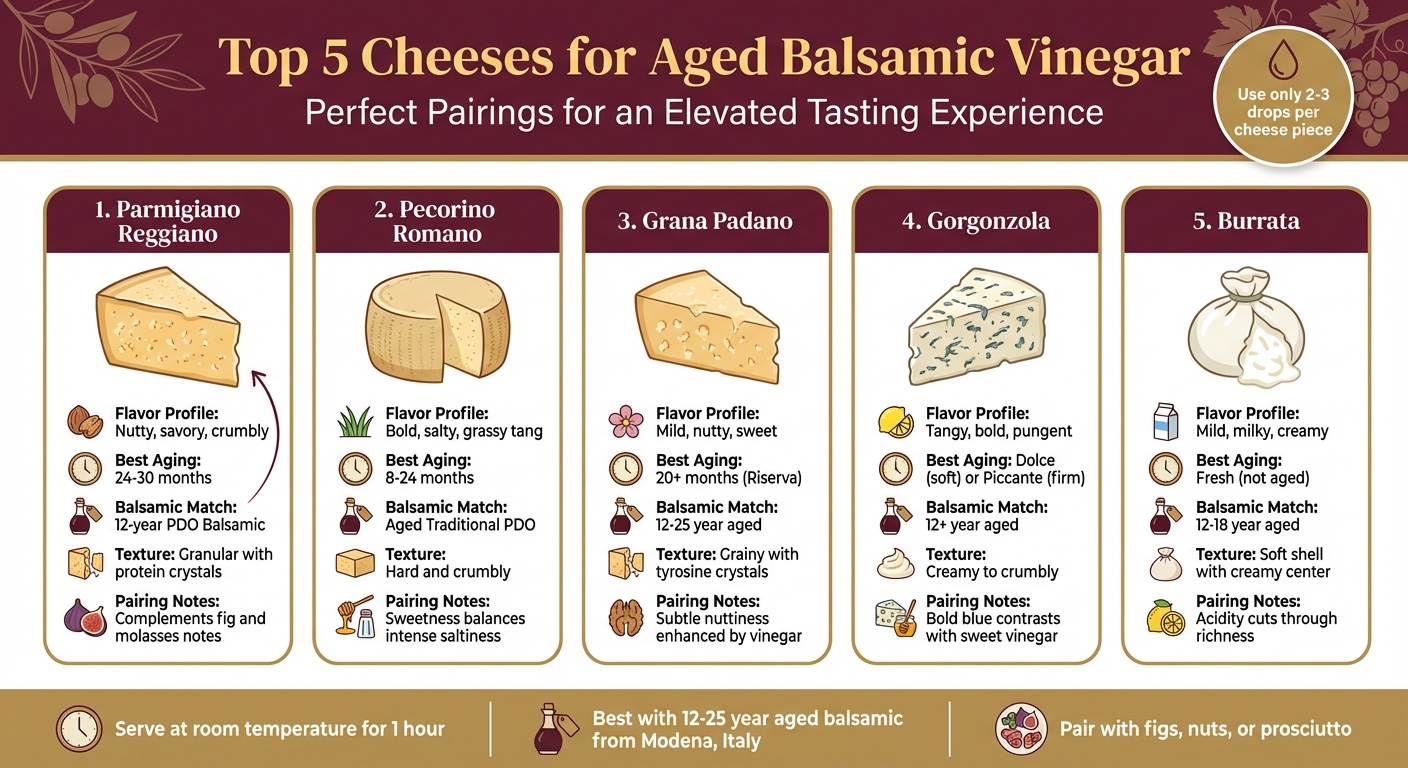
- Parmigiano Reggiano: Nutty, savory, and crumbly - pairs beautifully with the vinegar’s fig and molasses notes.
- Pecorino Romano: Bold and salty, balanced by the vinegar’s sweetness and acidity.
- Grana Padano: Mild and nutty, with a grainy texture that complements the syrupy vinegar.
- Gorgonzola: Tangy blue cheese flavors contrast with the rich, sweet vinegar.
- Burrata: Creamy and indulgent, elevated by the vinegar’s tangy sweetness.
Use just 2–3 drops of aged balsamic vinegar per cheese piece to avoid overpowering the flavors. Pair with fruits, nuts, or prosciutto for a complete tasting experience. For the best results, opt for high-quality balsamic vinegar aged 12–25 years, like those from Modena, Italy.
Top 5 Cheeses for Aged Balsamic Vinegar Pairing Guide
1. Parmigiano Reggiano
Flavor Balance with Aged Balsamic Vinegar
Parmigiano Reggiano brings a nutty, savory richness that pairs beautifully with the concentrated sweetness of aged balsamic vinegar. The vinegar often carries hints of fig, molasses, and cherry, creating a striking contrast to the cheese's natural saltiness and depth of flavor.
"The intense and nutty flavors of the cheese complement the concentrated sweetness of the reduction, creating a delightful balance of taste."
The vinegar's acidity also plays a key role, cutting through the cheese's fat and enhancing its umami profile.
Now, let’s dive into how the cheese’s texture elevates this pairing.
Texture and Mouthfeel
Aged Parmigiano Reggiano features a crumbly, granular texture with tiny protein crystals that form after 18–24 months of aging. This unique structure is perfect for thick, syrupy balsamic vinegar to cling to, creating a satisfying contrast in texture.
"To combine the rough texture of Parmigiano Reggiano DOP and the sweet-and-sour softness of balsamic vinegar, the first step is to cut the cheese into coarse flakes."
For the best experience, break the cheese into uneven chunks, allowing the vinegar to coat each piece.
Cheese's Aging Process
The aging process of Parmigiano Reggiano significantly impacts its flavor and texture, making certain stages ideal for pairing with aged balsamic vinegar. Cheese aged 24–30 months is often preferred for its crumbliness and nutty complexity, which perfectly align with the vinegar’s layered sweetness.
| Age of Cheese | Flavor Profile | Best Balsamic Pairing |
|---|---|---|
| 12–18 Months | Fruity, milky | Younger IGP Balsamic |
| 24–30 Months | Balanced, buttery, nutty | 12-year PDO Balsamic |
| 36+ Months | Bold, spicy, deeply nutty | 25+ year Traditional PDO |
"The more aged the cheese, the better it will pair with an aged balsamic vinegar."
- Luciana Squadrilli, Senior Editor at Food&Wine Italia
The evolving flavors of the cheese ensure a harmonious match with the complexity of aged balsamic vinegar.
Pairing with Other Ingredients
To elevate this pairing even further, consider adding complementary ingredients like fresh or dried figs, walnuts, or thin slices of prosciutto to your cheese board. These additions, inspired by the culinary traditions of Emilia-Romagna, enhance the sweet and salty interplay. Serve the cheese at room temperature and finish with 2–3 drops of aged balsamic for the perfect touch.
2. Pecorino Romano
Flavor Balance with Aged Balsamic Vinegar
Pecorino Romano, crafted entirely from sheep's milk, is known for its bold saltiness and distinct grassy tang. These flavors create a striking contrast when paired with the rich, concentrated sweetness of aged balsamic vinegar, which often carries subtle hints of fig, molasses, and cherry.
"Cheese can seem too heavy, rich, and salty after a few slices. But once paired with balsamic vinegar, the saltiness is balanced out by sweetness."
The vinegar’s sharp acidity not only cuts through the cheese’s fat but also enhances its flavor, making each bite more balanced and enjoyable. This pairing is particularly effective in taming Pecorino’s intense saltiness and sharp character.
Texture and Mouthfeel
Pecorino Romano’s hard, crumbly texture pairs beautifully with the syrupy thickness of aged balsamic vinegar. Despite its dryness, the cheese’s high butterfat content can leave a slightly oily sensation, especially at room temperature. The vinegar’s acidity offsets this richness, keeping the palate refreshed and inviting you to savor more.
Cheese's Aging Process
This cheese undergoes a meticulous aging process: it’s brined for 100 days and then dry-aged for 8 to 12 months. Some artisanal varieties are aged even longer - up to 24 months - developing a sharper, nuttier profile [11, 12]. As a robust Grana-style cheese, Pecorino Romano holds its own against the bold flavors of aged balsamic vinegar. The extended aging brings out deeper, complex notes that harmonize beautifully with the vinegar’s layered sweetness.
Pairing with Other Ingredients
Take this pairing to the next level by adding walnuts or hazelnuts for a toasty crunch. Fresh fruits like ripe pears, figs, or even a dollop of strawberry jam can add a touch of sweetness to balance the cheese’s salty edge. For the best experience, let the cheese sit at room temperature for about an hour before serving. Then, finish each wedge with just 2 to 3 drops of aged balsamic vinegar for a perfect flavor combination.
3. Grana Padano
Flavor Balance with Aged Balsamic Vinegar
Grana Padano offers a mild, nutty sweetness that truly shines when paired with aged balsamic vinegar. The cheese’s subtle nuttiness contrasts beautifully with the vinegar's rich sweetness and notes of fig and molasses. The vinegar’s acidity cuts through the cheese’s richness, highlighting its savory and nutty qualities. Together, they create a harmonious balance that not only enhances the flavor but also makes the cheese feel lighter on the palate, encouraging you to savor every bite.
Texture and Mouthfeel
The name "Grana" stems from the cheese’s signature grainy texture, which is achieved by breaking the curd into rice-sized pieces during production. Over time, Grana Padano develops tyrosine crystals - tiny, crunchy bits that add a delightful texture to each bite. When drizzled with aged balsamic vinegar, the liquid clings to the cheese’s crumbly surface, allowing the sweetness to meld perfectly with the grainy texture. As the cheese ages, this texture becomes even more pronounced, adding depth to its character and making it an ideal match for the concentrated sweetness of balsamic vinegar.
Cheese's Aging Process
Grana Padano undergoes a fascinating transformation as it matures. To earn its official branding, it must age for a minimum of nine months. Its flavor and texture evolve through three distinct stages: the standard version (9 to 16 months) has a creamy, slightly grainy texture; "oltre 16 mesi" (over 16 months) becomes crumblier with a more robust flavor; and "Riserva" (over 20 months) reaches peak complexity, offering a fully grainy, crumbly texture and a bold, full-bodied taste. For the best pairing with aged balsamic vinegar, opt for Grana Padano Riserva - its intensity pairs perfectly with the rich, layered notes of a well-aged vinegar.
Pairing with Other Ingredients
To get the most out of this pairing, cut the cheese into uneven bite-sized pieces, increasing the surface area for the vinegar to adhere to. Let the cheese rest at room temperature for about an hour before serving to fully unlock its aroma. Then, carefully add just two or three drops of aged balsamic vinegar to each piece - this ensures the vinegar enhances, rather than overpowers, the cheese’s subtle flavors. For an extra twist, try incorporating this combination into dishes like risottos or salads with grapes and pine nuts for added complexity and texture.
4. Gorgonzola
Flavor Balance with Aged Balsamic Vinegar
Gorgonzola finds its perfect companion in aged balsamic vinegar. The vinegar’s rich notes of fig, molasses, and cherry create a beautiful contrast to the bold, tangy flavors of the blue cheese. Its acidity also works wonders in cutting through the creamy, fatty texture of Gorgonzola.
"The bold, pungent blue cheese [is] balanced by the burst of... balsamic. This combination proves that opposites truly attract in the world of cheese and balsamic pairings." - Sticky Balsamic
For the best results, opt for balsamic vinegar that has been aged for at least 12 years.
Texture and Mouthfeel
The texture of Gorgonzola plays a key role in this pairing. Gorgonzola Dolce offers a soft, creamy consistency, while Gorgonzola Piccante is firmer and crumbly. Both textures respond differently to the balsamic vinegar, enhancing the cheese’s unique character and creating a balanced experience.
Pairing with Other Ingredients
To get the most out of Gorgonzola, let it sit at room temperature for about 30 minutes before serving. Add just a few drops of aged balsamic vinegar right before serving - this minimalist touch ensures the cheese’s delicate, mold-ripened flavors remain the star.
For an elegant appetizer, try pairing Gorgonzola with fresh pear slices, a drizzle of aged balsamic, and a sprinkle of pine nuts or walnuts. It also works beautifully on a salad with peppery arugula or served on crusty bread for a simple yet refined treat.
sbb-itb-4066b8e
5. Burrata
Burrata stands out among Italian cheeses with its creamy, indulgent texture, offering a softer, more luxurious experience compared to its firmer counterparts.
Flavor Balance with Aged Balsamic Vinegar
The mild, milky flavor of burrata serves as the perfect backdrop for aged balsamic vinegar. The vinegar’s tangy acidity cuts through the richness of the cheese, while its syrupy sweetness - layered with notes of fig, molasses, and cherry - elevates the burrata without overshadowing it.
"The sweetness from balsamic accentuates the creaminess in the cheese (unless you overdo it, and then it's impossible to taste anything beyond the balsamic vinegar)." – Yummy Bazaar
Texture and Mouthfeel
At the heart of burrata lies its signature creamy center, a blend of stracciatella and cream, encased in a soft mozzarella shell. When paired with the thick, glossy texture of aged balsamic vinegar, the result is a velvety combination that feels indulgent yet balanced. The vinegar’s mellow tartness acts as a palate refresher, cutting through the richness of the cheese and leaving you eager for the next bite.
Pairing with Other Ingredients
To enjoy burrata at its best, serve it at room temperature, allowing the creamy center to remain soft and fluid. Pair it with fresh, peppery arugula and juicy heirloom or cherry tomatoes for a burst of brightness and tang. For a sweeter variation, try strawberries - their natural sweetness and acidity mirror the flavors of aged balsamic beautifully. Complete the dish with a drizzle of high-quality extra virgin olive oil, a pinch of flaky sea salt, and freshly cracked black pepper. Serve with crusty or grilled bread to soak up every bit of the creamy cheese and tangy vinegar.
How to Serve and Enjoy
Add just 2–3 drops of aged balsamic to each piece of cheese to bring out its flavors without overwhelming the taste. Traditional balsamic, aged between 12 and 25 years, develops a thick, syrupy consistency, so even a small amount goes a long way.
For hard cheeses like Parmigiano Reggiano or Grana Padano, use a pointed knife to break them into uneven chunks. This increases the surface area, allowing the balsamic to coat the cheese more effectively. Drizzle half the vinegar over the chunks, let it sit for 15 minutes to let the flavors blend, and then add a final drizzle just before serving. Always let the cheese sit at room temperature for at least an hour before serving to fully enjoy its complex flavors.
To create a well-rounded flavor experience, consider building a cheese board with complementary items. Fresh figs, strawberries, ripe pears, and apricots highlight the sweet notes of aged balsamic. Add Marcona almonds or pine nuts for a buttery crunch, and serve with crusty bread or grilled baguette slices to soak up the cheese and vinegar. For a savory twist, include prosciutto or balsamic-glazed onions. These additions bring balance and elevate the tasting experience.
When it comes to quality, Big Horn Olive Oil offers authentic balsamic vinegars from Modena, Italy, like their Traditional 18-Year Aged Dark Balsamic Vinegar and Molto Denissimo 25-Year Aged Dark Balsamic Vinegar. These premium vinegars are rich with flavors of fig, molasses, and cherry, making them a perfect match for cheese pairings. Remember, aged balsamic should never be heated - use it as a finishing touch to preserve its delicate flavors.
Serve your cheese and balsamic platter as an appetizer alongside sparkling wine or as a sophisticated pre-dessert course. The acidity in high-quality balsamic cuts through the richness of fatty cheeses, creating a perfectly balanced bite every time. With these tips, your cheese pairing will leave a lasting impression.
Conclusion
Pairing aged balsamic vinegar with premium cheeses creates a perfect harmony, cutting through the richness of the cheese while balancing its savory flavors. As one expert puts it, "The simple explanation why balsamic vinegar pairs with cheese, is the balance of acidity and richness".
The combinations highlighted - Parmigiano Reggiano, Pecorino Romano, Grana Padano, Gorgonzola, and Burrata - showcase how tradition and quality come together beautifully on your plate. Each cheese offers its own unique charm, and when paired with authentic aged balsamic, the result is a flavor experience that’s hard to match. Whether you prefer the nutty crunch of a hard cheese or the creamy decadence of a soft one, there’s a pairing here to suit your taste. The secret lies in choosing top-notch ingredients for both the cheese and the vinegar.
For those seeking authenticity, Big Horn Olive Oil provides exceptional options like their Traditional 18-Year Aged Dark Balsamic Vinegar and Molto Denissimo 25-Year Aged Dark Balsamic Vinegar, both sourced straight from Modena, Italy. These rich, velvety balsamics are ideal for enhancing fine cheeses without overpowering their flavors.
Use the serving tips mentioned earlier to let these ingredients truly shine. Start with one or two pairings from the list, craft a cheese board for your next gathering, or indulge in a quiet tasting session at home. This is your chance to savor the magic of these timeless pairings.
FAQs
Why does aged balsamic vinegar pair so well with cheese?
Aged balsamic vinegar is a fantastic match for cheese, thanks to its rich, syrupy texture and a flavor profile that brings out the best in the cheese. After years of aging, this vinegar develops a blend of sweetness, acidity, and layered notes like caramel, fruit, and wood, which work beautifully with the bold, salty, or nutty characteristics of aged cheeses.
The vinegar’s acidity acts as a palate refresher, cutting through the creamy richness of the cheese, while its sweetness draws out umami and nutty flavors. Together, they create a perfect harmony that makes each bite both satisfying and bright. Classic pairings include Italian staples like Parmigiano-Reggiano, blue cheese, and other aged varieties, making aged balsamic vinegar an essential addition to any cheese board.
What’s the best way to serve cheese with aged balsamic vinegar?
For the best taste, allow the cheese to reach room temperature before serving. Take it out of the fridge about an hour in advance to bring out its full texture and aroma. Cut the cheese into bite-sized pieces or thin slices, and display them on a wooden board or a simple white plate for an understated yet classy look.
Add a touch of indulgence by drizzling 2–3 drops of aged balsamic vinegar (at least 12 years old) onto each piece of cheese, or serve the vinegar in a small dish for dipping. The thick, syrupy sweetness of the balsamic vinegar creates a perfect match for aged, nutty cheeses like Parmigiano-Reggiano, Vacche Rosse, or even a well-aged blue cheese. The vinegar’s tanginess balances the richness of the cheese while highlighting its complex flavors.
For an extra-special touch, try traditionally aged balsamic vinegar from Big Horn Olive Oil, sourced directly from Modena, Italy. Pair your cheese board with a crisp sparkling wine or a light red wine to round out the experience beautifully.
What ingredients can elevate a cheese and aged balsamic vinegar pairing?
Enhancing the pairing of cheese and aged balsamic vinegar can be a delightful experience with a few simple touches. Start with a drizzle of high-quality extra virgin olive oil, such as Big Horn Olive Oil’s Ultra-Premium EVOO. This not only softens the vinegar’s sharpness but also brings out the creamy richness of the cheese. Adding fresh herbs like basil or thyme introduces an aromatic, earthy layer that works wonderfully with soft cheeses like mozzarella or burrata.
For a bit of texture and an extra flavor boost, try sprinkling flaky sea salt or cracked black pepper to amplify the savory notes of the cheese. Toasted nuts, such as Marcona almonds or walnuts, add a satisfying crunch, while fresh fruits like figs, pears, or strawberries deliver a natural sweetness that balances the vinegar’s tang. These fruits are especially harmonious with sharper cheeses like Parmigiano-Reggiano. To top it all off, a drizzle of reduced balsamic glaze not only adds a rich, glossy finish but also makes the dish as visually enticing as it is delicious.