

Citrus Blend Olive Oil Flavor Profile Explained
Citrus blend olive oil combines the zest of orange, lemon, and lime with extra virgin olive oil (EVOO) to create a vibrant, multi-layered flavor. Unlike single-flavor oils, this blend offers a balanced citrus profile that works well in both sweet and savory dishes. High-quality versions use co-milling, where citrus and olives are crushed together, preserving natural flavors better than simple infusions. Key highlights:
- Flavor: Fresh citrus notes with floral, sweet, and tangy undertones.
- Production: Co-milling ensures a seamless blend of citrus and olive flavors.
- Uses: Ideal for drizzling over seafood, roasted vegetables, salads, and even desserts.
- Quality: Look for low-acidity EVOO bases and certifications like ISO or BRC.
- Price: Premium options range from $22.99 to $48.00 per bottle.
This oil elevates everyday meals with its bright, layered taste. For best results, use it as a finishing oil to preserve its delicate flavors.
Olive Oil Infusion Recipe: How to Infuse Oil (Homemade Citrus Oil and Asian Oil)
sbb-itb-4066b8e
Flavor Characteristics and How They're Made
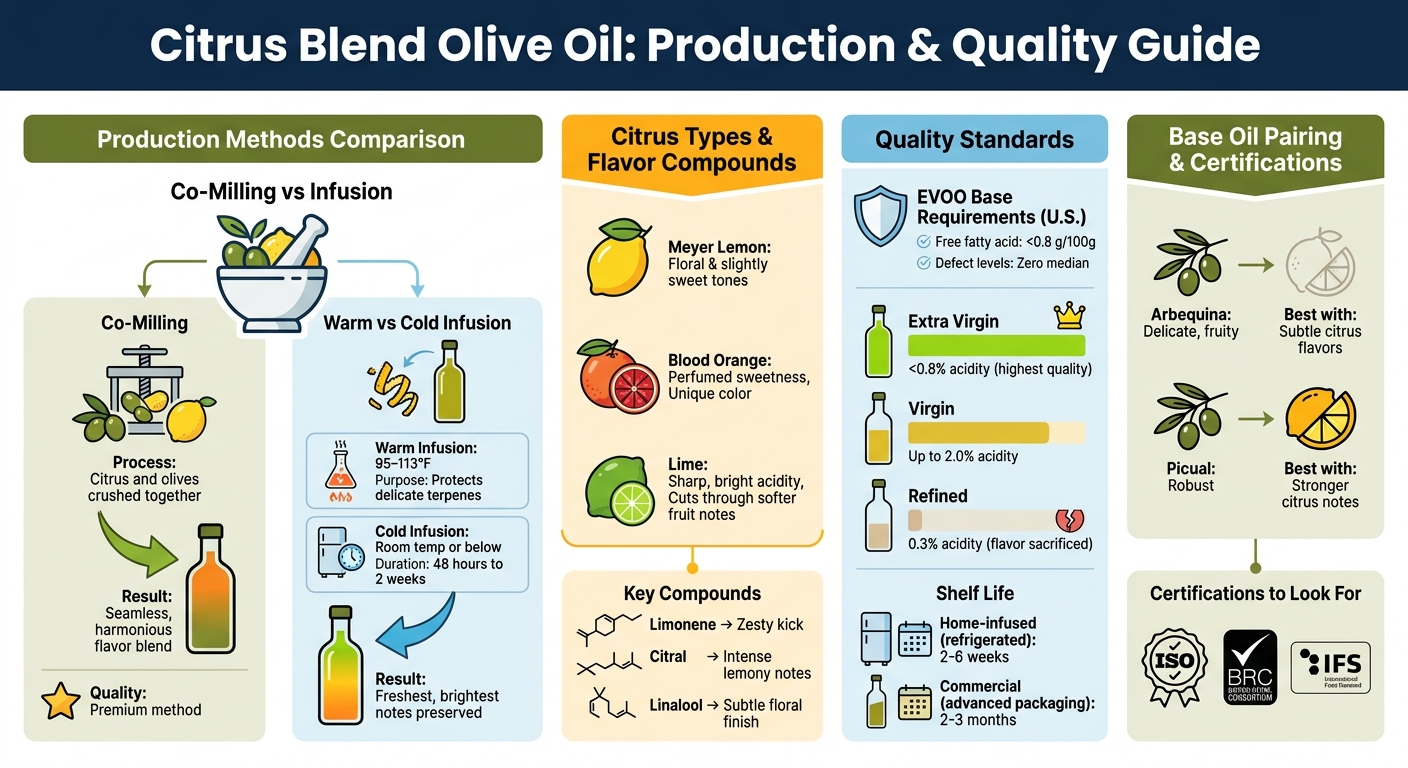
Citrus Blend Olive Oil Production Methods and Quality Comparison
Citrus blend olive oil delivers a multi-layered flavor profile that stands out for its vibrant and balanced taste. By combining orange, lemon, and lime, it creates a fresh, fruit-forward experience that feels more intricate than single-fruit oils like Meyer Lemon or Blood Orange, which showcase just one flavor.
How it's made has everything to do with the flavor. High-quality citrus oils are crafted through co-milling, a process where citrus and olives are crushed together. This method produces a harmonious flavor that can't be matched by simple infusion, where citrus zest is steeped in finished oil. For infusion, temperature control is key - warm infusion should stay between 95–113°F to protect delicate terpenes, while cold infusion, though slower (48 hours to 2 weeks), preserves the oil's freshest, brightest notes.
The type of citrus used also shapes the oil's character. Meyer lemons bring floral and slightly sweet tones, blood oranges add a perfumed sweetness and a unique color, while limes contribute sharp, bright acidity that cuts through softer fruit notes. These flavors come from essential oils in the citrus peel, such as limonene for a zesty kick, citral for intense lemony notes, and linalool for a subtle floral finish.
Bitterness control is another hallmark of premium blends. Bitterness often comes from including the white pith (albedo) or overheating during production. To avoid this, top-tier citrus oils focus on using only the aromatic outer peel and maintaining strict temperature controls throughout the process.
Finally, the choice of base olive oil is crucial. Delicate, fruity oils like Arbequina pair beautifully with subtle citrus flavors, while more robust oils like Picual hold their own against stronger citrus notes without overpowering the olive's natural taste. This thoughtful pairing ensures the citrus and olive flavors complement each other perfectly, setting the stage for versatile culinary uses explored in the next section.
Cooking and Culinary Uses
Citrus blend olive oil shines as a finishing oil, bringing out its delicate citrus notes when drizzled over dishes after cooking. As TITIN EVOO puts it:
Finishing oils are the final 10% that add 90% of the perceived aroma. If you taste a dish and it feels 'almost there,' a ½ teaspoon of lemon or basil finishing oil can be the difference between good and unforgettable.
This finishing touch highlights the oil's layered flavor profile, which combines orange, lemon, and lime notes. Unlike single-flavor oils, this blend offers flexibility across a variety of dishes. For example, Meyer lemon oil pairs well with delicate fish, and blood orange oil enhances desserts. But the citrus blend's complexity works wonders on everything from grilled halibut and roasted asparagus to ricotta toast and even vanilla ice cream with a sprinkle of flaky salt. Chef Aida Mollenkamp sums it up perfectly:
A drizzle adds a bright, citrusy finish.
Salad dressings especially benefit from the balanced acidity of this blend. At $22.99 per bottle, it pairs beautifully with 18-year aged balsamic vinegar, creating a dressing that’s both vibrant and nuanced. It complements mixed greens, grain salads, and herb-forward dishes without overwhelming their flavors.
This oil also excels when drizzled over grilled vegetables, pasta, risotto, or vegetable soups. Using it as a finishing oil preserves its delicate floral and fruity notes, enhancing the dish without overshadowing other ingredients. The result? A versatile oil that turns everyday meals into something memorable.
At Big Horn Olive Oil, our citrus blend EVOO is carefully crafted to capture these vibrant, layered flavors and elevate your cooking.
Quality Standards and Shelf Life
The quality of citrus blend olive oil depends heavily on the standards of its EVOO (Extra Virgin Olive Oil) base. In the U.S., EVOO must meet the highest benchmarks, including zero median defect levels and a free fatty acid content below 0.8 g/100g. This low acidity is a key indicator of quality - it enhances oxidative stability and extends shelf life. In comparison, Virgin Olive Oil can have acidity levels up to 2.0%, while refined olive oil drops to 0.3% acidity but sacrifices flavor during the refining process.
Infusing citrus into olive oil can increase antioxidant activity - like sweet orange zest, which can elevate DPPH activity to an impressive 99.50% - but it also introduces moisture, which can lead to hydrolysis or fermentation risks. To counteract this, producers often use nitrogen-flushed, oxygen-free packaging to safeguard the oil’s delicate compounds.
Shelf life varies depending on how the oil is made. Home-infused citrus oils, even when refrigerated, typically last only 2 to 6 weeks. On the other hand, commercial products with advanced packaging techniques can extend their shelf life to 2 or 3 months. The type of citrus peel used also plays a role - olive oils infused with sweet orange zest tend to have better heat stability compared to those made with sweet lemon zest. These rigorous production techniques ensure that each bottle delivers a consistent, high-quality flavor while maintaining the integrity of the oil.
When purchasing citrus blend EVOO, look for certifications such as ISO, British Retail Consortium (BRC), or International Food Standard (IFS). These certifications confirm that both the base EVOO and the infusion process meet strict quality and safety standards, guaranteeing optimal flavor and shelf life. Some premium producers even go the extra mile by sampling up to 6,000 oils annually, with only 6% making the cut.
At Big Horn Olive Oil, we start with Ultra Premium EVOO that adheres to stringent acidity standards, ensuring every bottle delivers vibrant flavor and peak freshness.
Pros and Cons
Citrus blend olive oil brings both opportunities and challenges to your kitchen, offering a unique culinary experience.
Pros:
One of its standout qualities is its incredible versatility. Unlike standard infused oils that often work best in savory dishes, citrus blends shine in both sweet and savory recipes. Think smoothies, desserts, grilled seafood, or fresh salads - it fits seamlessly into all of them. As 41 Olive describes:
The marriage of the rich, smooth character of olive oil and the zesty, tangy notes of orange zest creates a symphony of flavors that's both refreshing and complex.
This complexity comes from a harmonious mix of orange, lemon, and lime, delivering a flavor depth that goes beyond single-note oils. At $22.99 per unit for California-origin citrus blend EVOO, it offers a solid balance between price and quality. You’re not paying a premium, but you still get a product that enhances a wide variety of dishes - especially when paired with aged balsamic or citrus-based vinegars. While the blend's rich profile elevates many meals, achieving this balance is no small feat.
Cons:
Creating a high-quality citrus blend is no easy task. Its nuanced flavor, which sets it apart, relies on precise production methods that can be tricky to replicate at home. Home infusions, for instance, require careful attention to avoid bitterness and to extract the right flavors. To make your own, let the oil sit in a cool, dark place for two weeks, shaking it regularly to help the flavors meld. However, without proper technique, homemade versions often lack the consistency and clean profile of professionally crafted citrus blend oils.
Conclusion
Citrus blend olive oil, crafted by combining orange, lemon, and lime in a premium extra virgin olive oil (EVOO) base, offers a rich, layered flavor that sets it apart from single-flavor oils. While single-note options work for specific recipes, this blend brings a refreshing versatility, making it a go-to choice for a wide variety of dishes.
The true magic of this oil shines through when paired thoughtfully. For instance, mixing it with premium dark balsamic vinegar creates a dressing that perfectly balances the citrusy brightness with a deep, sweet complexity. Whether you're drizzling it over an arugula salad, finishing grilled seafood, or adding a subtle twist to baked goods, this oil provides a one-bottle solution, eliminating the need for multiple single-citrus varieties.
As discussed earlier, quality is key. Always choose a citrus blend made with a robust extra virgin olive oil base and clear origin labeling. This ensures the fruit flavors stay vibrant and fresh, rather than dull or muted. Proper storage - cool and dark conditions - helps maintain these qualities throughout the oil's shelf life.
Citrus blend olive oil is an easy way to elevate your cooking, adding a bright, fresh note without the bold intensity of stronger, peppery oils. It's perfect for lighter dishes like fresh salads, citrus-forward recipes, and delicate proteins, often benefiting from a splash of white balsamic vinegar, delivering a restaurant-worthy finish right in your kitchen. This versatile oil embodies the essence of flavor, quality, and thoughtful pairings discussed earlier.
FAQs
How can I tell if a citrus blend olive oil is co-milled or infused?
To figure out whether a citrus blend olive oil is co-milled (fused) or infused, start by checking the label or product description.
- Co-milled oils are created by crushing fresh citrus fruits together with olives during the milling process, resulting in a naturally integrated flavor.
- Infused oils are made by adding citrus flavors to olive oil after it has already been produced.
Look for words like "co-milled" or "fused" on the packaging to confirm how the oil was made.
Can I cook with citrus blend olive oil without losing its flavor?
Citrus blend olive oil keeps its bright, zesty flavor when used in low-heat cooking, marinades, or as a finishing drizzle. These high-quality infused oils are crafted to hold onto their citrus essence when used correctly. To enjoy its full flavor, steer clear of high-heat cooking methods.
What’s the safest way to store citrus blend olive oil to prevent spoilage?
To keep citrus blend olive oil fresh, store it in a cool, dark place. Use dark glass bottles to protect it from light and ensure the bottle has an airtight seal to minimize air exposure. If the oil is infused with fresh ingredients, refrigeration can help it stay fresh longer. Watch for signs of spoilage like cloudiness, a rancid odor, or mold, and discard the oil if you notice any of these.