

Early Harvest Olive Oil: Benefits and Drawbacks
If you want more bite, more polyphenols, and longer storage life, I’d pick early harvest olive oil. If I want a softer taste and a lower price, I’d pick later-harvest oil.
Here’s the whole article in plain English:
- Early harvest oil comes from green olives picked sooner.
- Later-harvest oil comes from darker, riper olives picked later.
- Early harvest oil often has 400–900 mg/kg of polyphenols, while later-harvest oil is often around 120–210 mg/kg.
- One comparison found early harvest yield at 11.37% vs. 13.67% for normal harvest.
- As olives ripen, total phenols can drop by about 49% in some cases.
- Early harvest oil usually tastes more grassy, bitter, and peppery.
- Later-harvest oil is often smoother, softer, and easier for daily cooking.
- Early harvest bottles often cost more because producers get less oil from the same fruit.
- Higher polyphenols help early harvest oil last longer before oxidation dulls the taste.
If I had to sum it up in one line, it’s this: early harvest gives you more flavor and antioxidants; later harvest gives you more oil, a lower shelf price, and a milder taste.
Quick comparison
| Factor | Early harvest | Later-harvest |
|---|---|---|
| Olives used | Green, unripe | Riper, darker olives |
| Taste | Bold, grassy, bitter, peppery | Mild, smooth, fruity, buttery |
| Polyphenols | Higher | Lower |
| Yield | Lower | Higher |
| Shelf life | Longer in storage | Shorter after opening |
| Price | Often higher | Often lower |
| Best use | Finishing, dipping, dressings | Daily cooking, sautéing, baking |
So if you’re choosing between the two, I’d keep it simple: buy early harvest for raw use and taste, and later-harvest for higher-volume cooking.
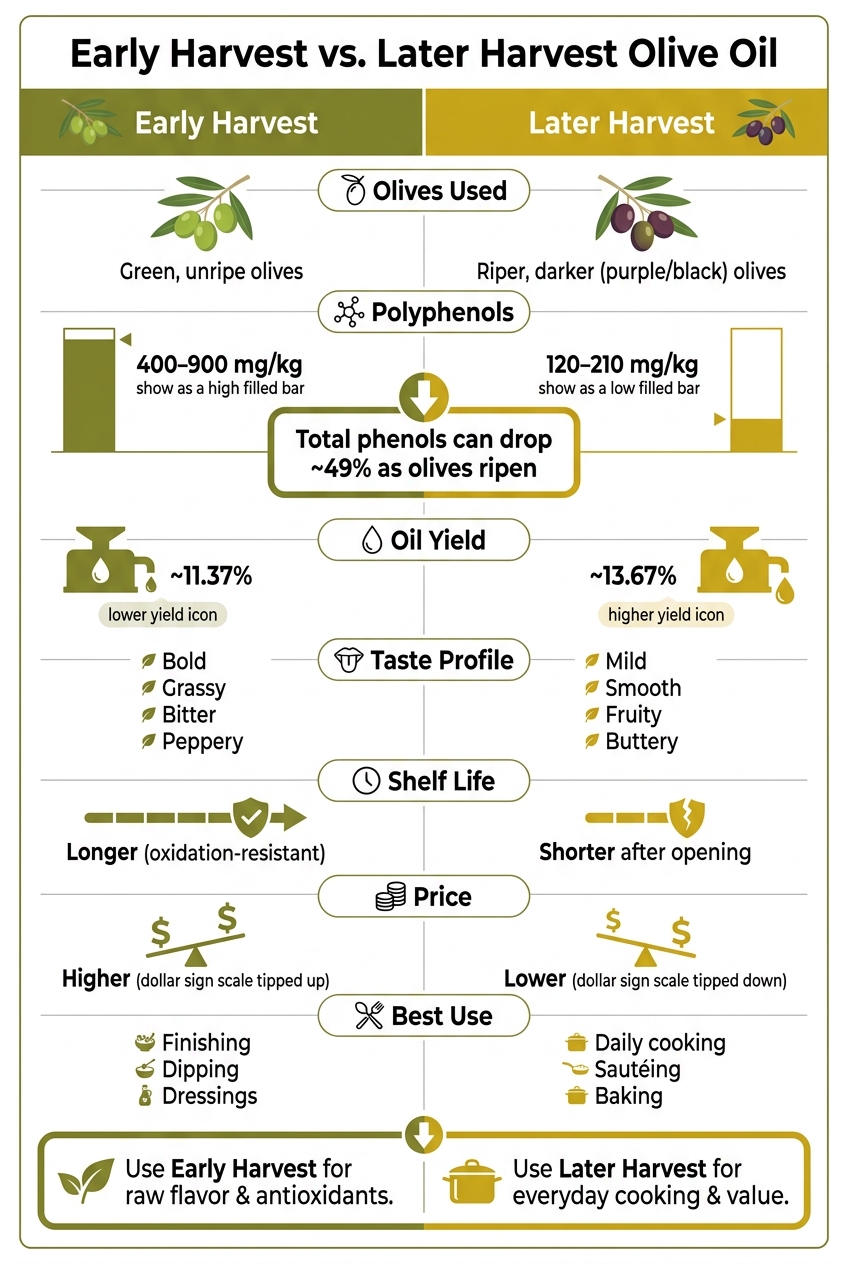
Early Harvest vs. Later Harvest Olive Oil: Key Differences at a Glance
1. Early harvest olive oil
Early harvest olive oil is made from green olives picked in the Northern Hemisphere between September and October. Because the olives are still unripe, they produce less oil. But what you get in return is a more concentrated taste and a higher antioxidant level. That’s why early harvest oils tend to taste sharper and sell at a higher price.
Flavor intensity
The flavor is bold and green, with notes of fresh grass, green almond, artichoke, and herbs. Then comes the bitterness, followed by that peppery kick in the throat. In olive oil tasting, those signs point to quality. You can learn more about these sensory profiles in our educational videos.
Polyphenol content
That bitterness comes from a higher polyphenol load. Early harvest oils usually have much more polyphenol than oils made from later-picked olives. Those compounds shape both the bitterness and the peppery finish, with oleuropein and oleacein playing a big role.
Yield and price
Picking olives early means lower yield because unripe fruit contains less oil. So producers need more olives to make the same amount of oil, and that pushes production costs up.
Shelf life
Higher polyphenol levels help slow oxidation, so early harvest oils usually keep better over time. For the best flavor, use them within 18 months of harvest. The sweet spot is the first 6 months, when the oil tastes the most fresh. That sets it apart from later-harvest oil.
sbb-itb-4066b8e
2. Later-harvest olive oil
Later-harvest olive oil is made from olives picked at a more mature stage, when the fruit has often shifted from green to purple or black. Compared with early-harvest oil, the trade-off is pretty clear: you get a milder taste, but lower polyphenol levels.
Flavor intensity
The flavor is much softer. Instead of sharp, grassy notes, later-harvest oils usually lean rounder and smoother, with hints of ripe apple, banana, nuts, or butter. They also have less bitterness and less of that peppery kick, which is why people often call them sweeter or milder oils.
That gentler profile works well for everyday cooking. At the same time, it also means a lower antioxidant load.
Polyphenol content
Polyphenol levels drop as olives ripen. Studies show total phenols can fall by about 49% between early and later ripeness stages, from around 567 mg/kg to about 289 mg/kg.
If you're buying olive oil mainly for antioxidant or anti-inflammatory support, that gap matters.
Yield and price
Waiting longer to harvest usually leads to a higher oil yield, often around 20% to 28% of fruit weight. More oil from the same amount of fruit helps cut production costs, which usually leads to a lower price on the shelf.
But there's a catch: lower cost often goes hand in hand with flavor fading sooner after opening.
Shelf life
Because later-harvest oils contain fewer polyphenols, they don't hold up as well against oxidation and may lose their fresh taste more quickly. A cool, dark cabinet helps. So does using the bottle within a few months of opening.
It also helps to check the harvest or crush date before you buy. When you compare later-harvest and early-harvest oils side by side, these trade-offs are easier to spot.
Benefits and Drawbacks of Each Harvest Type
Put them next to each other, and the trade-off is pretty clear: early harvest leans into flavor and antioxidants, while later harvest leans into yield, price, and a softer taste.
Here’s the practical difference at a glance.
| Factor | Early Harvest | Later Harvest |
|---|---|---|
| Polyphenol content | Very high in polyphenols | Lower; more typical of regular EVOO |
| Antioxidant strength | Stronger | Weaker |
| Oxidation resistance | Better - resists rancidity longer | Lower - less stable over time |
| Flavor character | Bold, green, grassy, herbaceous, peppery | Mild, round, fruity, buttery |
| Bitterness & pungency | Pronounced - a sign of higher phenolic content | Minimal - easier for many new EVOO users |
| Oil yield | Lower | Higher |
| Price | Typically higher | Typically lower |
| Best uses | Finishing and raw use | Milder everyday cooking |
That bitterness in early harvest oil isn't a defect. It's tied to higher polyphenol content and the peppery compounds tasters link with quality. For some people, though, that punch can feel like a lot, especially if you're used to milder oils or refined oils.
For shoppers focused on health, early harvest oils usually bring higher antioxidant capacity and more vitamin E.
So the choice often comes down to one simple thing: do you want a bolder oil that stands out, or a softer one that's easier to use every day?
Which Harvest Type Is Right for You
Choose based on flavor, nutrition, and budget.
Early harvest is the better pick when flavor and antioxidants matter most. If you want a bolder oil with more polyphenols, go with early harvest. It shines in raw uses and as a finishing oil, where that peppery, grassy bite can stand out.
Later-harvest extra virgin olive oil is a better match if you want something smoother and more neutral for daily sautéing or baking. It gives you good day-to-day use without that stronger edge.
A simple approach works well: keep both. Use early harvest for finishing, and later-harvest for cooking.
The label can help you sort this out fast. Look for bottles that list a harvest date, origin, and Arbequina olive variety. Sensory terms also tell you a lot. Words like "robust", "peppery," or "green" usually point to early harvest. Terms like "delicate", "buttery," or "fruity" are more common with later-harvest oils. Certification seals, such as those from the California Olive Oil Council (COOC), can add another layer of confidence that the oil meets verified quality standards.
At a glance, the choice usually comes down to these priorities:
| Your Priority | Best Fit |
|---|---|
| Finishing and raw use | Early harvest |
| Everyday, higher-volume cooking | Later-harvest |
| More polyphenols and antioxidants | Early harvest |
| Budget-friendly, high-volume use | Later-harvest |
| Both flavor and versatility | Keep one of each |
FAQs
How can I tell if an olive oil is early harvest?
Check the label for a harvest date, which is often in October or November, along with terms like Early Harvest or Green Harvest.
You can also watch for a few common signs:
- A deep green color
- A bold, peppery or bitter taste
- Grassy, herbaceous notes
- A sharp feeling in the throat, which can point to high polyphenol content
Can I cook with early harvest olive oil?
Yes. You can cook with early harvest olive oil, but it tends to shine most when its bold, peppery, grassy taste gets a chance to stand out.
That’s why it works so well as a finishing oil. Drizzle it over salads, soups, or grilled vegetables, or serve it with bread. You can also use it in heartier dishes when you want that robust flavor to come through.
Does higher polyphenol content change the taste?
Yes. Olive oil with more polyphenols usually tastes more bitter and pungent. That includes the peppery kick you often feel in the back of your throat.
Early-harvest olives have more of these compounds, so their oils tend to taste bolder, stronger, and more herbaceous. Oils with lower polyphenol levels are often milder, sweeter, and more buttery.