

Economic Benefits of Olive Oil in Local Dining
Olive oil production isn't just about great food - it's a driver of local economic growth. Here's why it matters:
- Boosts Local Economies: Restaurants using olive oil from nearby producers keep money circulating in their communities.
- Creates Jobs: From farming to bottling, the industry supports year-round rural employment.
- Supports Supply Chains: Olive oil production fuels jobs in transportation, packaging, and marketing.
- Drives Tourism: Visitors explore production regions, contributing to hospitality and retail sectors.
- Meets Consumer Demand: Diners are looking for high-quality, traceable ingredients that enhance dining experiences.
- Encourages Sustainability: Locally sourced olive oil reduces transportation emissions and supports eco-friendly farming practices.
The takeaway? Olive oil isn't just a kitchen staple - it's a key ingredient for stronger local economies and vibrant dining experiences.
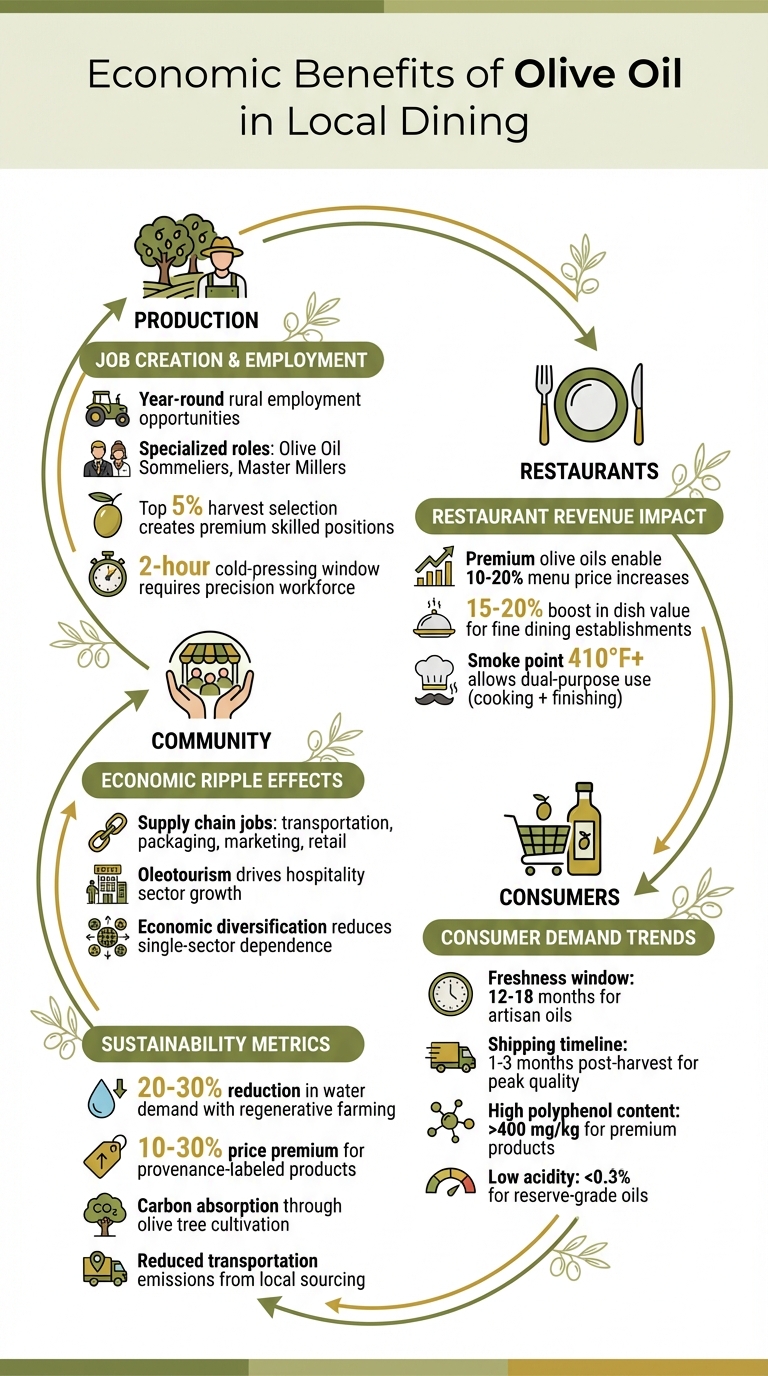
Economic Impact of Local Olive Oil Production on Dining Communities
Job Creation and Economic Benefits
Rural Employment Opportunities
Producing olive oil provides steady, year-round jobs in areas where employment options can be scarce. From tending the fields and harvesting olives to milling, bottling, and ensuring quality control, the industry offers a range of roles that help sustain families in agricultural communities. These jobs often allow people to stay in their hometowns rather than relocating to cities in search of work.
"Olive cultivation is a significant source of employment in local communities, especially in rural areas... this industry creates job opportunities that strengthen the local economy." - Escuela Superior del Aceite de Oliva
High-end producers take this a step further. For instance, Big Horn Olive Oil focuses on the top 5% of harvests to craft their ultra-premium products. This dedication to quality demands skilled workers who excel in tasks like timing the perfect harvest, cold-pressing olives within two hours, and adhering to strict freshness standards. Their U.S. retail locations also employ staff trained to educate customers on tastings and food pairings, creating specialized roles in this expanding market.
In addition to direct employment, the olive oil industry supports broader economic activity, benefiting entire supply chains and boosting rural tourism.
Economic Ripple Effects
The influence of olive oil production goes well beyond the groves. It supports entire supply chains, generating jobs in areas like transportation, packaging, marketing, and specialty retail. Every bottle of olive oil represents the work of multiple industries, from logistics to creative branding.
"Transport, packaging, marketing, and tourism businesses linked to olive oil create a value chain that diversifies the local economy, reducing dependence on a single sector and fostering economic resilience." - Escuela Superior del Aceite de Oliva
Tourism tied to olive oil, known as oleotourism, adds another dimension to local economies. Visitors flock to production regions to explore how olive oil is made and to enjoy tastings, bringing business to local hotels, restaurants, and tour operators. This trend has created unique jobs, such as Olive Oil Sommeliers and Master Millers, further enriching the regional workforce. Overall, this diversification strengthens rural economies, making them less vulnerable to downturns in any single industry.
sbb-itb-4066b8e
Consumer Demand and Local Dining Impact
Rising Demand for Premium Extra Virgin Olive Oil
American diners are increasingly prioritizing authenticity and traceability in their food choices. They want to know the story behind their meals - where the ingredients come from, who produced them, and how they made their way to the plate. This shift is transforming the olive oil market, as consumers now favor oils with a distinctive identity, often tied to a single grove, over generic blends sourced from multiple countries.
"Provenance is a traceable journey from soil and climate to pressing and bottling." - Oliver Hartley, Senior Editor & Olive Oil Specialist
This growing demand for transparency has carved out a space for premium olive oils, where freshness is key. Artisan oils, pressed within hours of harvest and consumed within 12–18 months, offer a flavor complexity that mass-market oils simply can't replicate. Companies like Big Horn Olive Oil cater to this demand by shipping products within 1–3 months of harvest, ensuring peak freshness. Customers often commend these oils for their vibrant flavors and nuanced profiles.
The trend isn’t limited to home kitchens. Professional chefs are also seeking distinctive varietals and small-batch oils to craft signature dishes that set their menus apart. Many are now embracing direct-to-producer purchasing models - whether through subscriptions or partnerships with farms. This approach not only keeps profits with local growers but also supports sustainable farming practices and strengthens community ties.
This evolving preference among consumers is pushing restaurants to rethink their menus and innovate.
Boost to Local Restaurants and Food Culture
As diners demand higher-quality ingredients, local restaurants are stepping up their game. Incorporating premium olive oils into their dishes gives these establishments a competitive advantage in several ways. For one, high-quality oils with smoke points of 410°F or more allow chefs to use the same product for both high-heat cooking and delicate finishing, streamlining kitchen operations without sacrificing flavor. Additionally, highlighting specific groves and harvest dates on menus serves as a compelling marketing tool, justifying higher prices and earning customer trust.
"For chefs and diners seeking memorable experiences, provenance contributes as much to the plate as technique." - Oliver Hartley, Senior Editor & Olive Oil Specialist
The economic benefits for restaurants are clear. Featuring olive oils with a traceable origin attracts diners looking for authentic culinary experiences, which often leads to repeat visits and higher spending per meal. Training staff to conduct tastings or recommend oil and vinegar pairings further enhances the perceived value of the dining experience. Some establishments are even hosting producer-led tastings or featuring specific olive groves on their menus, turning olive oil into a central part of the dining experience.
This shift in consumer expectations does more than just elevate individual dining experiences - it also strengthens local economies. The rising demand for locally produced, sustainable goods opens doors for entrepreneurs to stand out by offering distinctive products and experiences. This connection between food culture and community prosperity is becoming a cornerstone of the modern dining landscape.
Long-Term Economic Impacts
Reducing Carbon Footprint
Olive trees do more than just produce olives - they actively absorb carbon, protect against soil erosion, and serve as vital components of local ecosystems. When restaurants opt for locally or regionally sourced olive oil, they cut down on transportation emissions while also fostering stronger economic relationships with nearby producers.
Using regenerative farming techniques enhances these environmental advantages. For instance, planting cover crops and native grasses among olive trees can lower water usage by 20–30%, enrich soil quality, and create habitats for pollinators and beneficial insects. Restaurants that prioritize sustainability can demonstrate their commitment by partnering with growers who adopt these methods, showcasing their dedication to environmental responsibility.
"A single small producer switching from conventional to regenerative olive growing can increase local pollinator abundance, reduce water demand by 20–30% with smart irrigation, and generate a 10–30% price premium when combined with clear provenance labelling." - Amelia Hart, Senior Editor & Sustainable Food Strategist
These ecological gains go hand in hand with the economic stability provided by sustainable farming.
Preserving Agricultural Practices and Economic Stability
The olive oil industry offers farmers a way to generate income beyond selling fresh produce, thanks to its long shelf life and value-added nature. This diversification is particularly crucial for rural areas where job opportunities may be limited.
When restaurants buy directly from local producers or cooperatives, they help keep revenue within the community. For example, Big Horn Olive Oil focuses on sourcing the top 5% of olive harvests and ensures oils are shipped within 1–3 months of harvest. This approach guarantees fresh, high-quality oils for consumers while supporting eco-friendly farming and allowing producers to earn premium prices. By upholding traditional farming methods, this system creates a robust local economy that drives innovation in dining.
Olive production also boosts related sectors like packaging, transportation, and agritourism. Many groves offer tastings and harvest tours, creating additional revenue streams. By choosing responsibly sourced olive oils, restaurants and diners support a cycle that strengthens local economies while celebrating high-quality, regionally inspired culinary experiences.
Case Study: Big Horn Olive Oil in U.S. Regional Dining
Economic and Culinary Value of Big Horn Olive Oil
This case study highlights how Big Horn Olive Oil contributes to the growth of regional dining economies across the United States. Based in Cody, Wyoming, the company is known for its dedication to quality and efficient distribution, ensuring its olive oils remain fresh and rich in bioactive compounds. This commitment helps restaurants elevate their menus while also supporting jobs in packaging, distribution, and retail.
Restaurants that incorporate Big Horn's products - like Picual EVOO and Estate Reserve EVOO - often see increased revenues. Picual EVOO, with its peppery flavor, works beautifully for grilling and salads, while Estate Reserve EVOO, with its high-polyphenol content (over 400 mg/kg), is perfect for finishing dishes. These premium oils allow restaurants to raise menu prices by 10–20%, as demonstrated by Big Horn's success in earning multiple gold medals at the New York International Olive Oil Competition between 2022 and 2024.
Big Horn's physical storefronts also serve as culinary hubs, attracting both locals and tourists. Their expert pairing advice helps restaurants craft menus that justify higher pricing. Below is a table showcasing the features and benefits of some of Big Horn's standout products.
Product Comparison Table
| Product | Pricing (500ml EVOO / 375ml Balsamic) | Production Features | Documented Benefits |
|---|---|---|---|
| Picual EVOO | $28–$32 | Single-estate, early harvest, high polyphenols (>400 mg/kg) | Bold flavor for grilling/salads; anti-inflammatory properties; enhances restaurant dishes |
| Estate Reserve EVOO | $35–$42 | Limited reserve, cold-pressed, low acidity (<0.3%) | Intense fruit notes for fine dining; supports premium menu pricing (+15–20% dish value) |
| Traditional Balsamic Vinegar | $22–$28 | Aged 18+ years, Modena IGP | Sweet-tart balance ideal for reductions; boosts dessert and salad sales |
| Infused Balsamic (Blackberry) | $25–$35 | Infused post-aging | Adds unique flavor for pairings; encourages repeat visits with distinctive offerings |
California olive oil industry poised for growth amid rising demand
Conclusion
The findings highlight olive oil's powerful role in boosting local dining economies.
Studies reveal that olive oil production and local dining work hand-in-hand to deliver economic advantages to regional areas. From creating jobs in rural communities to enhancing tourism and hospitality, this sector keeps money circulating locally. By prioritizing local sourcing, communities not only strengthen their infrastructure but also foster meaningful collaborations between producers and dining establishments.
High-end brands play a critical role in this dynamic. Restaurants that feature premium, traceable olive oils can elevate their menu offerings, attract higher spending from customers, and build loyalty through compelling stories and transparent sourcing practices. For example, Big Horn Olive Oil demonstrates how emphasizing ultra-premium products and maintaining strict freshness standards can enhance both culinary quality and economic outcomes.
Oleotourism adds another layer of opportunity, turning production sites into tourist destinations that generate additional revenue and create jobs. Big Horn Olive Oil's storefronts exemplify this by doubling as educational spaces. Here, visitors can learn about topics like smoke points, flavor combinations, and harvest dates, creating a knowledgeable customer base that supports premium pricing and market stability over time.
Investing in local olive oil production fosters diverse and resilient economies. As Carballo-Cruz and Sánchez-Martínez point out:
"The economic diversification of rural territories specialised in olive growing is key to the sustainability and resilience of these communities".
For restaurants, retailers, and planners, championing premium local olive oil not only supports sustainable food systems but also secures long-term prosperity for regional economies.
FAQs
How can a restaurant verify an olive oil’s provenance?
Restaurants can ensure the origin of their olive oil by using traceability tools like QR codes or batch numbers. These tools offer essential details, including harvest dates, grove locations, and quality test results. This not only confirms the oil’s authenticity but also guarantees its high quality.
What should diners look for to judge olive oil freshness?
When assessing the freshness of olive oil, pay attention to its scent. A fresh oil should have a sharp, grassy, or peppery aroma. Steer clear of oils that smell waxy or resemble crayons - these are signs the oil has gone stale. Instead, vibrant and lively aromas are what signal quality and freshness.
How do restaurants use olive oil to drive higher check averages?
Restaurants rely on high-quality extra virgin olive oil (EVOO) to bring out the best in their dishes and create a more memorable dining experience. Many chefs emphasize the oil's origin and quality right on the menu, showcasing its premium nature. EVOO plays a versatile role in the kitchen - it’s used for sautéing, frying, and finishing dishes, as well as in creative techniques like making infusions and emulsions.
Beyond flavor, olive oil contributes to the visual appeal of food. Its vibrant colors and glossy finishes can make dishes look more appetizing, enticing diners and potentially encouraging them to indulge in higher-priced menu items.