

How EVOO Improves the Gut Microbiome
Extra Virgin Olive Oil (EVOO) is more than just a kitchen staple - it’s a powerful tool for gut health. Packed with polyphenols and healthy fats, EVOO supports the growth of good bacteria, reduces harmful microbes, strengthens the gut lining, and lowers inflammation. Here's what you need to know:
- Boosts Good Bacteria: Encourages growth of Lactobacillus and Bifidobacterium, which produce short-chain fatty acids (SCFAs) essential for digestion and immunity.
- Reduces Harmful Bacteria: Polyphenols like oleuropein and hydroxytyrosol act as natural antibacterials, targeting pathogens while sparing beneficial microbes.
- Improves Gut Barrier: Strengthens the intestinal lining, reducing "leaky gut" and promoting overall gut integrity.
- Lowers Inflammation: Regulates immune responses and decreases inflammatory markers like IL-1β and CRP.
- Enhances Microbial Diversity: Increases beneficial species like Bacteroidetes while balancing the Firmicutes/Bacteroidetes ratio, linked to better metabolic health.
Studies show daily consumption of high-quality EVOO (2–4 tablespoons) can lead to reduced inflammation, better cholesterol levels, and even cognitive benefits through the gut-brain axis. To maximize these effects, choose EVOO with high polyphenol content (150–400 mg/kg) and avoid refined oils, which lack these compounds. For optimal results, incorporate EVOO into your diet consistently.
Take Olive Oil and THIS Happens to the Bacteria in Your Body 🦠
How EVOO Promotes Good Bacteria Growth
Extra virgin olive oil (EVOO) plays a powerful role in nurturing the good bacteria in your gut, particularly Lactobacillus and Bifidobacterium species. These beneficial microbes produce short-chain fatty acids (SCFAs), which are essential for regulating metabolism, supporting immune health, and maintaining the protective lining of your intestines.
A clinical trial (NCT03441802) involving 18 overweight or obese participants demonstrated the impact of EVOO. Participants consumed 40 grams daily (about 2.7 tablespoons) of high-quality EVOO for three months. The results? Lactic Acid Bacteria levels skyrocketed 55.6 times, alongside notable reductions in inflammation markers and oxidative stress.
Polyphenols as Prebiotics
EVOO is rich in polyphenols, which act as prebiotics - essentially food for beneficial bacteria, helping them flourish. Remarkably, around 90–95% of dietary polyphenols make their way to the colon, where gut bacteria break them down.
These bacteria transform complex polyphenols like oleuropein into smaller compounds such as hydroxytyrosol and elenolic acid. These byproducts not only nourish beneficial microbes but also enhance their activity. As Professor Magdalena Martínez-Cañamero from the University of Jaén explains:
"These results support the prebiotic role of polyphenols, showing how they are able to modulate the set of strains that comprises a genus in the gut, allowing them to adapt to a changing environment in the host's intestine."
This process fuels the growth of good bacteria and contributes to a more diverse and balanced gut microbiome.
Effects on Bacterial Diversity
EVOO doesn't just boost specific bacteria like Bifidobacterium; it also promotes greater microbial diversity, a hallmark of a healthy gut. Research on Mediterranean diets highlights how EVOO increases the abundance of Bacteroidetes while reducing the Firmicutes/Bacteroidetes ratio - a change linked to better metabolic health.
Unlike high-fat diets rich in butter, which can encourage harmful bacteria and raise blood pressure, EVOO-enriched diets support a healthier microbial balance. For example, the VOHF study found that consuming just 25 mL of EVOO daily (about 1.7 tablespoons) for three weeks significantly increased beneficial bacteria like Bifidobacterium and Parascardovia denticolens. This enhanced microbial diversity strengthens gut health and supports the gut barrier and immune system.
How EVOO Reduces Harmful Bacteria
Extra virgin olive oil (EVOO) does more than just promote the growth of beneficial bacteria - it also works to suppress harmful microbes, acting as both a prebiotic and a selective antibacterial agent.
Antimicrobial Properties
The secret to EVOO's antibacterial power lies in its high polyphenol content. Compounds like oleuropein, hydroxytyrosol, and oleocanthal are natural antibacterial agents that target harmful bacteria while leaving beneficial strains intact. EVOO contains between 150–400 mg/kg of these polyphenols, a stark contrast to refined oils, which have only 0–5 mg/kg.
These polyphenols are particularly effective against pathogens such as Staphylococcus aureus, Escherichia coli, Listeria monocytogenes, and Salmonella enteritidis. For example, oleocanthal inhibits 41–57% of COX-1 and COX-2 activity at a concentration of 25 μM, compared to just 13–18% inhibition by the same dose of ibuprofen.
Study Findings
Scientific research backs up these antimicrobial effects. A study from the University of Jaén, published in Molecules in February 2023, explored EVOO's impact on gut health. Mice fed an EVOO-enriched diet for six weeks showed significantly reduced levels of Proteobacteria, a type of bacteria associated with gut inflammation, compared to those fed butter or refined olive oil. Interestingly, this reduction also aligned with lower systolic blood pressure in the EVOO group (p = 0.004).
Another study, published in Microorganisms in 2019, compared the effects of four diets - standard, EVOO, refined olive oil (ROO), and butter - on Swiss Webster mice. The ROO group had higher levels of harmful bacterial families like Desulfovibrionaceae and Helicobacteraceae compared to the EVOO group. Since ROO and EVOO share the same fatty acid profile but differ in polyphenol content, researchers concluded that polyphenols are key to controlling pathogenic bacteria. Professor Magdalena Martínez-Cañamero from the University of Jaén highlighted this distinction:
"Comparison between the EVOO and ROO diets reveals that... the genus Desulfovibrio can be better understood if the antimicrobial role of the virgin olive oil polyphenols is considered."
EVOO's selective antibacterial action helps reduce harmful bacteria like Desulfovibrio, a sulfate-reducing bacterium linked to inflammation and metabolic syndrome. At the same time, it supports the growth of beneficial bacteria, creating a healthier gut environment. This dual action underscores EVOO's potential to maintain gut health and reduce harmful microbes.
EVOO's Effects on Gut Barrier and Immune Function
Extra virgin olive oil (EVOO) does more than balance gut bacteria - it also fortifies the intestinal barrier and bolsters immune health. Think of the gut lining as a shield, keeping harmful microbes and toxins in your digestive tract from entering your bloodstream. When this barrier weakens, a condition often referred to as "leaky gut", it can lead to inflammation and immune dysfunction throughout the body. EVOO builds on its ability to regulate gut bacteria by supporting this critical protective layer.
Strengthening the Gut Lining
The phenolic compounds in EVOO, such as hydroxytyrosol and oleuropein, help guard the intestinal lining against oxidative stress. These compounds, combined with oleic acid - which makes up 55–83% of EVOO's fatty acids - play a key role in preserving the structural integrity of gut cells.
EVOO also acts as a prebiotic, encouraging the growth of beneficial bacteria like Bifidobacterium and Lactobacillus. According to Marta Farràs from the Institut de Recerca de l'Hospital Santa Creu i Sant Pau:
"Bifidobacterium is a beneficial bacteria, a marker of gut microbiota balance, that helps maintain the intestinal barrier and reduces intestinal permeability."
These helpful bacteria produce short-chain fatty acids (SCFAs) such as butyrate, which are essential for keeping the "tight junctions" between gut cells intact - essentially the glue that holds the barrier together. Additionally, EVOO promotes the production of antimicrobial peptides, further reinforcing the gut lining. This strengthened barrier helps reduce inflammation and supports overall gut health.
Reducing Inflammation
A healthier gut barrier is just the beginning - EVOO also helps to control inflammation by influencing key immune regulators. It boosts levels of FoxP3 and IL-10, molecules that are vital for developing regulatory T cells, which help maintain immune balance and prevent excessive inflammation.
Research backs this up. A 2019 study found that mice on a high-fat diet supplemented with 35% EVOO for 10 weeks showed significantly higher levels of FoxP3 and IL-10 in the proximal colon compared to those fed lard (P < 0.05). They also had increased production of RegIIIγ, a molecule that supports gut health.
Human studies align with these findings. Following a Mediterranean diet rich in EVOO is linked to lower levels of pro-inflammatory markers like C-reactive protein (CRP) and IL-17. The phenolic compounds in EVOO also reduce the activation of the NLRP3 inflammasome and lower levels of IL-1β, a molecule heavily involved in inflammation. By simultaneously reducing inflammation and fortifying the gut barrier, EVOO creates an environment where both the gut microbiome and immune system can thrive.
sbb-itb-4066b8e
Active Compounds in EVOO and Their Effects
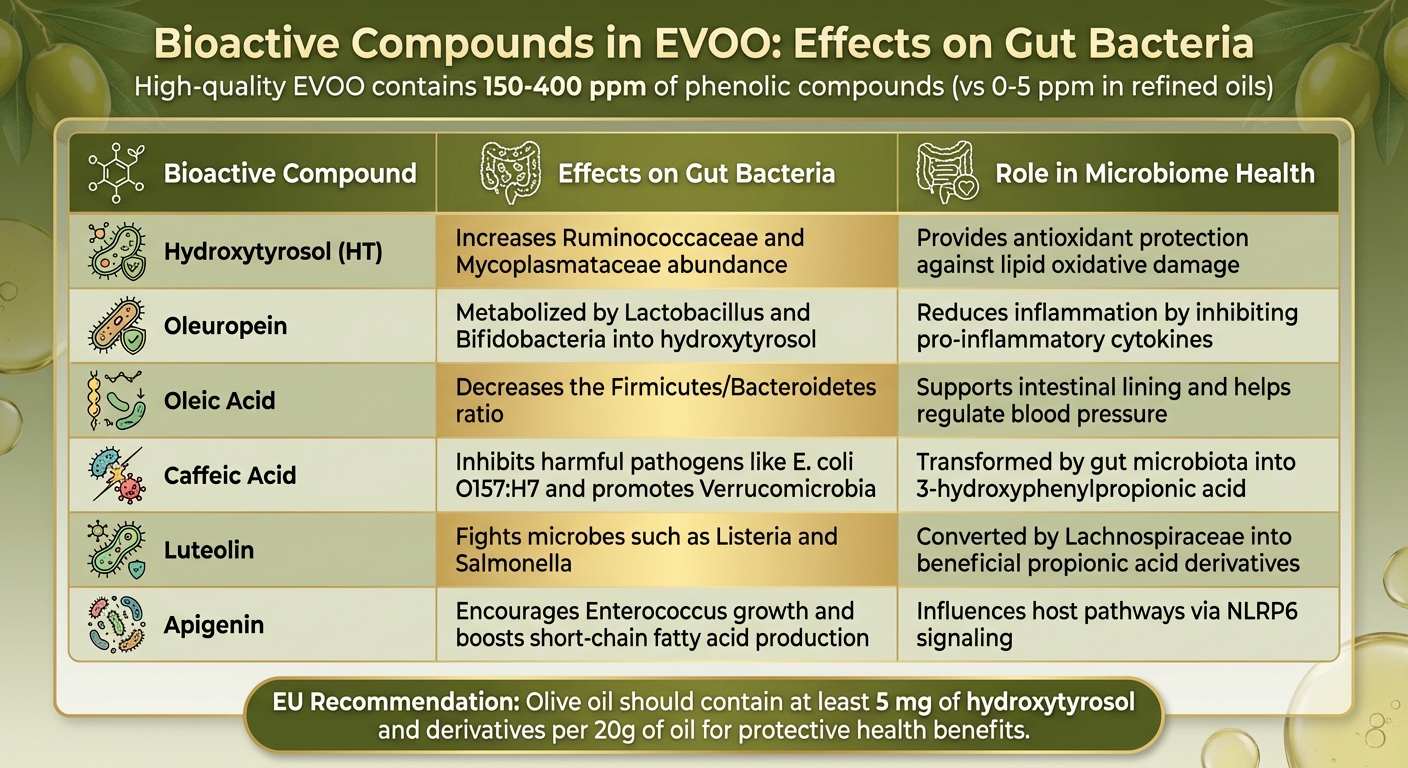
Bioactive Compounds in EVOO and Their Effects on Gut Bacteria
Extra Virgin Olive Oil (EVOO) is packed with a variety of compounds that play a major role in supporting gut health. Around 98% of its composition is fatty acids, primarily oleic acid, which ranges from 55% to 83%. The remaining 1–2% consists of over 30 bioactive compounds crucial for gut health. These include phenolic alcohols like hydroxytyrosol and tyrosol, secoiridoids such as oleuropein and oleocanthal, and triterpenes like squalene, which can be present in concentrations as high as 8,260 mg/kg. This intricate composition highlights how each compound contributes to shaping the gut environment.
These bioactive compounds actively interact with gut bacteria. The microbiome breaks down complex polyphenols into smaller, more easily absorbed molecules. Simultaneously, these compounds influence which bacteria thrive in your gut. High-quality EVOO typically contains between 150 and 400 parts per million (ppm) of phenolic compounds, ensuring it delivers optimal benefits for gut health.
Marta Farràs, a researcher at the Institut de Recerca de l'Hospital Santa Creu i Sant Pau, explains:
"Several studies have demonstrated that OOPC [olive oil phenolic compound] consumption increases Bacteroidetes and/or reduces the Firmicutes/Bacteroidetes ratio, which have both been related to atheroprotection."
Comparing Bioactive Compounds
Each compound in EVOO offers unique benefits, influencing gut bacteria in different ways. Hydroxytyrosol, for example, is the primary phenolic compound and has been shown to boost beneficial bacteria like Ruminococcaceae and Mycoplasmataceae while providing antioxidant protection. Oleuropein, on the other hand, is metabolized by Lactobacillus and Bifidobacteria into hydroxytyrosol, which contributes to reducing inflammation. Oleic acid plays its part by lowering the Firmicutes/Bacteroidetes ratio, a key marker linked to better metabolic health.
| Bioactive Compound | Effects on Gut Bacteria | Role in Microbiome Health |
|---|---|---|
| Hydroxytyrosol (HT) | Increases Ruminococcaceae and Mycoplasmataceae abundance | Provides antioxidant protection against lipid oxidative damage |
| Oleuropein | Metabolized by Lactobacillus and Bifidobacteria into hydroxytyrosol | Reduces inflammation by inhibiting pro-inflammatory cytokines |
| Oleic Acid | Decreases the Firmicutes/Bacteroidetes ratio | Supports intestinal lining and helps regulate blood pressure |
| Caffeic Acid | Inhibits harmful pathogens like E. coli O157:H7 and promotes Verrucomicrobia | Transformed by gut microbiota into 3-hydroxyphenylpropionic acid |
| Luteolin | Fights microbes such as Listeria and Salmonella | Converted by Lachnospiraceae into beneficial propionic acid derivatives |
| Apigenin | Encourages Enterococcus growth and boosts short-chain fatty acid production | Influences host pathways via NLRP6 signaling |
The European Food Safety Authority recommends that olive oil contain at least 5 mg of hydroxytyrosol and its derivatives per 20 g of oil to deliver protective health benefits. By choosing high-quality EVOO, you ensure you’re getting the full range of these beneficial compounds - benefits that are completely absent in refined olive oils.
For those eager to tap into these gut-health advantages, exploring Ultra Premium Extra Virgin Olive Oils from Big Horn Olive Oil (https://bhooc.com) is a great way to ensure your EVOO is rich in these natural compounds.
Health Benefits of EVOO for Gut Health
Extra virgin olive oil (EVOO) has a remarkable ability to support gut health, which in turn can lead to widespread benefits throughout the body. When beneficial gut bacteria like Lactobacillus and Bifidobacterium flourish, they produce short-chain fatty acids (SCFAs). These SCFAs play a crucial role in improving digestion, reducing inflammation, balancing blood sugar levels, and lowering markers linked to cardiovascular issues.
Clinical Trial Results
Scientific studies continue to validate the positive effects of EVOO on health. One such trial, conducted in February 2025 by researchers at the Universidade Católica Portuguesa, followed 33 healthy participants who consumed 30 mL (roughly 2 tablespoons) of polyphenol-rich EVOO from northern Portugal daily for 100 days. The results were striking: HbA1c levels decreased from 5.12% to 4.93% (p=0.000), LDL cholesterol dropped from 92.63 mg/dL to 83.23 mg/dL (p=0.024), and there was a reduction in IL-1β levels alongside an increase in beneficial Bacteroidota bacteria.
Another study, published in Nutrients in November 2025, compared high-phenolic olive oil (1,021 mg/kg of phenols) to lower-phenolic varieties in 50 hyperlipidemic patients. Participants consuming just 8 g per day of the high-phenolic oil experienced an average 17 mg/dL reduction in total cholesterol within four weeks, along with improved HDL ("good") cholesterol levels. George Moschonis, a professor at La Trobe University, highlighted:
"high-phenolic extra virgin olive oil produces superior effects on endothelial function, HDL activity, and even small reductions in blood pressure compared with low-phenolic or refined varieties".
In addition to these findings, regular EVOO consumption has been linked to a 16% lower risk of type 2 diabetes, an 18% reduction in coronary heart disease risk, and better cholesterol profiles. One Italian study from the IRCCS Don Gnocchi Foundation in Florence involved 18 overweight or obese participants who followed a Mediterranean diet enriched with 40 g of high-quality EVOO daily for three months. The results showed reduced oxidative stress and Myeloperoxidase (MPO) levels, along with increased levels of anti-inflammatory markers like IL-10 and adiponectin.
These metabolic benefits pave the way for EVOO's contributions to brain health.
Gut-Brain Connection Benefits
EVOO's ability to enhance gut microbial diversity doesn't just stop at digestive health - it also has profound effects on brain function. A healthier gut microbiome, shaped by EVOO, communicates with the brain through the gut-microbiota-brain axis. Beneficial bacteria metabolize EVOO's polyphenols into neuroactive compounds and SCFAs, which can cross the blood-brain barrier to reduce neuroinflammation and protect neurons.
The PREDIMED trial, which included 7,447 participants at high cardiovascular risk, revealed that those consuming a Mediterranean diet supplemented with 1 liter of EVOO per week experienced improved cognitive function (as measured by higher Mini-Mental State Examination scores) and a 30% reduction in major cardiovascular events compared to those on a low-fat diet. Luna Barrera-Chamorro and her team at the University of Seville further explained:
"such as hydroxytyrosol and ferulic acid, may protect against neuronal death and inhibit amyloid‑β plaques (Aβ) formation".
Moreover, the metabolites produced when gut bacteria break down EVOO polyphenols influence mood and energy regulation. For instance, adding just 10 g of EVOO to a meal significantly boosted levels of insulin and glucagon-like peptide 1 (GLP-1), hormones that signal the brain's hypothalamic centers to manage appetite and metabolism. To maximize these benefits, opting for high-quality Ultra Premium Extra Virgin Olive Oils, like those from Big Horn Olive Oil (https://bhooc.com), ensures you get the polyphenol-rich content essential for supporting the gut-brain axis effectively.
Conclusion
Extra virgin olive oil (EVOO) offers powerful support for gut health through several key actions. Its polyphenols serve as prebiotics, encouraging the growth of beneficial bacteria such as Lactobacillus and Bifidobacterium, while simultaneously suppressing harmful microbes. Beyond that, EVOO helps fortify the gut barrier by boosting IgA levels and promoting anti-inflammatory cytokines. This stronger barrier not only blocks unwanted substances from entering the bloodstream but also benefits from short-chain fatty acids produced by gut bacteria nourished by EVOO. These fatty acids provide energy to gut cells and help reduce inflammation throughout the body.
To maximize these benefits, opt for high-quality, polyphenol-rich EVOO. Refined olive oils contain minimal beneficial compounds (0–5 mg/kg), while EVOO offers a robust 150–400 mg/kg of polyphenols. Jasmine F. Millman of the University of the Ryukyus highlights this dual role of EVOO:
"Extra-virgin olive oil modulates the gut microbiota by acting as both a prebiotic (encouraging the growth of beneficial bacteria) and antibacterial (reducing the growth of pathogenic bacteria)".
Incorporate 2–4 tablespoons of premium EVOO into your daily diet. Brands like Big Horn Olive Oil ensure high polyphenol content by cold-pressing their oils within 2 hours of harvest and delivering them fresh within 3 months. Whether you choose their Estate Reserve or single-source varieties like Picual or Coratina, you’ll be giving your gut bacteria the bioactive compounds they need to thrive.
FAQs
How does extra virgin olive oil support a healthy gut microbiome?
Extra virgin olive oil (EVOO) is rich in polyphenols and other bioactive compounds that naturally work as prebiotics. These compounds feed the good bacteria in your gut, like Lactobacillus and Bifidobacterium, while keeping harmful bacteria in check. This creates a healthier gut environment and helps avoid issues like dysbiosis, an imbalance in the microbiome.
Adding high-quality EVOO to your meals is an easy and tasty way to promote better digestion. Beyond its ability to elevate flavors, it plays a key role in nurturing a balanced and thriving gut microbiome, benefiting your overall health.
What are the main polyphenols in extra virgin olive oil, and how do they support gut health?
Extra virgin olive oil (EVOO) is packed with important polyphenols like oleuropein, hydroxytyrosol, and oleocanthal. Once consumed, these compounds are broken down by gut microbes into bioactive substances that encourage the growth of beneficial bacteria, such as Coriobacteriaceae and Collinsella.
Beyond supporting gut health, these polyphenols offer antioxidant and anti-inflammatory benefits. They play a key role in maintaining gut balance, which is crucial for overall health and wellness.
What should I look for when choosing high-quality EVOO to support gut health?
To maximize the gut health benefits of extra virgin olive oil (EVOO), prioritize quality. Look for oils labeled as "extra virgin" with a free acidity level of 0.8% or lower. This indicates minimal processing, which helps retain the beneficial compounds. For freshness, choose oils harvested within the last 12–18 months and packaged in dark glass bottles to shield them from light and preserve their polyphenol content.
Cold-pressed oils are the way to go. These are extracted without heat or chemicals, ensuring the bioactive compounds that support a healthy gut microbiome remain intact. Oils with a polyphenol content of at least 300 mg/kg are especially helpful for promoting a balanced gut environment. Whenever possible, opt for single-origin, single-varietal oils and check for certifications or lab tests to verify their quality and potency.
To keep your EVOO fresh, store it in a cool, dark place and use it within a few months of opening. Brands like Big Horn Olive Oil offer ultra-premium EVOO options that meet these standards, giving you both quality and freshness in every bottle.