

EVOO vs. Butter: Best Choice for Holiday Baking
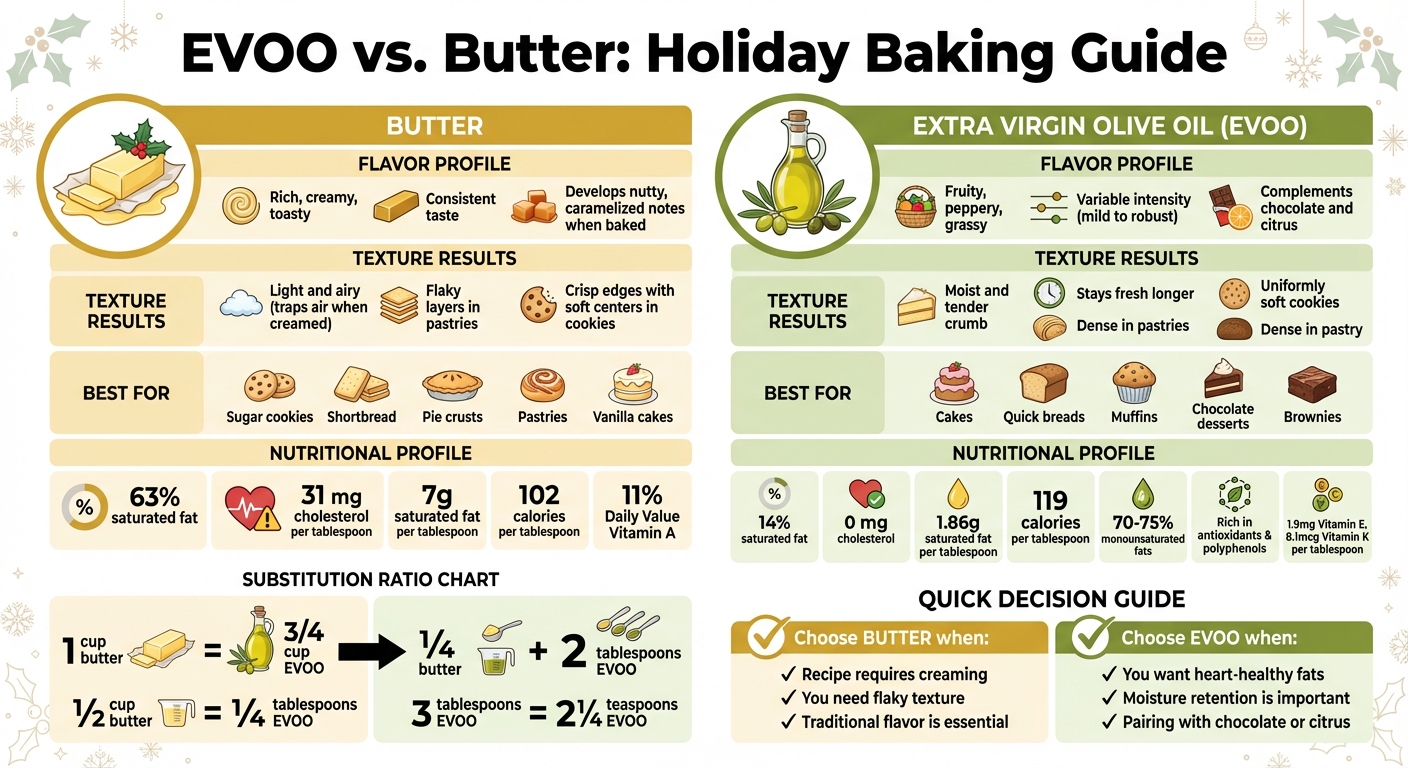
EVOO or butter? The choice depends on your baking goals. Butter provides a rich, creamy flavor and creates light, airy textures, making it ideal for cookies, pie crusts, and pastries. EVOO, however, delivers a moist, tender crumb with fruity or peppery notes, perfect for cakes, quick breads, and chocolate desserts. Plus, EVOO is a healthier option, offering heart-friendly monounsaturated fats and antioxidants compared to butter's higher saturated fat content.
Key Takeaways:
- Flavor: Butter is creamy and consistent, while EVOO offers a range of fruity to bold flavors.
- Texture: Butter creates flaky, fluffy textures. EVOO keeps baked goods moist longer.
- Health: EVOO is lower in saturated fat and cholesterol, with added antioxidants.
- Substitution: Use 3/4 cup EVOO for every 1 cup of butter in recipes.
| Fat | Flavor | Best For | Health Profile |
|---|---|---|---|
| Butter | Rich, creamy, toasty | Cookies, pie crusts, pastries | Higher in saturated fat and cholesterol |
| EVOO | Fruity, grassy, peppery | Cakes, quick breads, chocolate | Heart-healthy fats, zero cholesterol |
For healthier, moist holiday treats, EVOO is a great choice. Stick with butter for flaky pastries or when creaming is essential.
EVOO vs Butter Baking Comparison: Flavor, Texture, Health Benefits
When Baking with Olive Oil is Even Better Than Butter
Flavor Comparison: EVOO vs. Butter
The choice between butter and extra virgin olive oil (EVOO) can completely transform the flavor profile of your holiday baking. Butter brings that classic rich and creamy taste we associate with timeless treats like sugar cookies and shortbread. Its milk solids and butyric acid contribute to deep, toasted flavors and a golden hue, thanks to the Maillard reaction. This nostalgic flavor often evokes warm holiday memories.
EVOO, on the other hand, introduces a complex mix of fruity, peppery, and grassy notes that can elevate desserts in unexpected ways. The variety of olive oil you choose - whether the mild Arbequina or the bold Picual - can be tailored to suit both subtle and intense recipes.
EVOO Flavor Profile
EVOO offers a broad range of flavors, making it incredibly versatile. Mild options like Arbequina have delicate, buttery undertones with hints of almond or apple, ideal for recipes like citrus cakes or muffins where the oil plays a supporting role. In contrast, medium to robust varieties such as Picual or Coratina deliver bold, peppery, and herbaceous flavors that pair wonderfully with stronger ingredients.
"High-quality chocolate can stand up to the bitterness and pungency of a medium or even a robust extra virgin olive oil." - Fran Gage, Cookbook Author and Olive Oil Expert
The peppery kick of robust EVOO works beautifully with warm spices like cinnamon, ginger, and nutmeg in quick breads or loaves. For chocolate desserts, its bitterness complements cocoa's depth, while fruity notes add unexpected layers of flavor. Meanwhile, lighter, fruitier oils shine in lemon or orange cakes, enhancing the dessert's brightness with their natural citrusy undertones.
Butter Flavor Profile
Butter’s flavor is simple yet irreplaceable in certain recipes. Its creamy richness comes from milk fat and butyric acid. When baked, butter’s proteins brown and develop nutty, caramelized flavors, adding an extra layer of depth.
However, butter is consistent - it always tastes like butter. While it lacks the variety of EVOO, this uniformity is a strength in recipes where a familiar, traditional flavor is key. Butter also excels at browning, thanks to its protein content, giving cookies and cornbread their signature golden-brown finish.
| Fat Type | Primary Flavor Notes | Best Holiday Applications |
|---|---|---|
| Butter | Rich, creamy, toasted (if browned) | Sugar cookies, shortbread, pie crusts, vanilla cakes |
| Mild EVOO | Fruity, buttery, creamy, light | Citrus cakes, muffins, delicate sponges |
| Robust EVOO | Peppery, grassy, herbaceous | Dark chocolate desserts, gingerbread, savory breads |
Up next, we’ll explore how these fats influence texture and how to substitute them in holiday recipes.
Texture and Substitution Methods
How Each Fat Affects Texture
The choice between butter and extra virgin olive oil (EVOO) isn’t just about taste - it has a big impact on the texture of your holiday treats. Butter is about 80% fat and 16% water, while EVOO is pure fat. This difference creates distinct results in your baked goods.
Butter, being solid at room temperature, traps air when creamed, producing light and fluffy textures. Jessica Gavin, a Certified Food Scientist, explains:
"Because [butter] is solid at room temperature, you can cream it with sugar to trap tiny air bubbles. This gives cakes their rise and that soft, melt-in-your-mouth crumb."
On the other hand, EVOO’s liquid nature coats flour proteins, reducing gluten formation. This results in a tender, even crumb and helps baked goods stay moist longer. However, for flaky pastries, butter’s water content creates steam pockets that EVOO can’t replicate, often leading to denser, oilier doughs.
| Baked Good | With Butter | Using EVOO |
|---|---|---|
| Cookies | Crisp edges with soft, chewy centers | Uniformly soft, often more cake-like |
| Cakes | Light, airy texture; may dry out when chilled | Moist and tender, even when cold |
| Pastries | Flaky layers | Heavier, less crisp dough |
| Quick Breads | Rich but may dry out faster | Moist, with a consistent crumb that stays fresh longer |
These differences in texture are key when deciding how to substitute one fat for the other.
How to Substitute EVOO for Butter
Since butter and EVOO behave differently, a good rule of thumb is to use 3/4 cup of EVOO for every 1 cup of butter. This ratio compensates for the water content in butter. For example, if your recipe calls for 1 cup of butter, you’d use 3/4 cup of EVOO.
If the mixture feels too dry after using this ratio, you can add 1–2 teaspoons of water. Keep in mind that recipes relying on creamed butter may turn out denser and moister. EVOO is particularly suited for recipes that already call for melted butter, like muffins, brownies, and quick breads.
For cookies, where a chewy texture is often desirable, try blending butter and EVOO in a 50/50 ratio. This mix preserves butter’s structural advantages while incorporating EVOO’s moisture-retaining properties. However, for recipes that depend entirely on creamed butter for lift - like delicate pastries - it’s best to stick with butter.
| Butter Amount | EVOO Amount |
|---|---|
| 1 teaspoon | 3/4 teaspoon |
| 1 tablespoon | 2 1/4 teaspoons |
| 1/4 cup | 3 tablespoons |
| 1/2 cup | 1/4 cup + 2 tablespoons |
| 1 cup | 3/4 cup |
Now that you understand the texture changes and substitution methods, let’s dive into holiday recipes and tips for baking with EVOO.
Health Benefits: EVOO vs. Butter
EVOO Nutritional Benefits
Extra virgin olive oil (EVOO) brings more than just flavor to your holiday baking - it’s packed with heart-friendly perks. About 70–75% of its fat content comes from monounsaturated fats, which are known for supporting cardiovascular health. Unlike butter, EVOO contains no cholesterol and is loaded with polyphenols, plant-based antioxidants that help combat inflammation and promote heart health. A single tablespoon of EVOO provides 1.9 mg of Vitamin E, 8.1 mcg of Vitamin K, and antioxidants like hydroxytyrosol. Dr. Eboni Cornish from Amen Clinics highlights its benefits, stating:
"Extra virgin olive oil remains the gold standard for anti-inflammatory cooking."
The U.S. FDA recommends consuming 1.5 tablespoons (20 grams) of olive oil daily to help reduce the risk of coronary heart disease. Studies also suggest that having more than half a tablespoon daily may lower the chances of premature death from cardiovascular conditions. Beyond heart health, EVOO’s unique composition has been linked to reduced risks of diabetes, cancer, and other chronic illnesses.
Butter Nutritional Profile
Butter, on the other hand, has a very different nutritional makeup. It consists of about 63% saturated fat - much higher than EVOO’s 14%. One tablespoon of butter contains 7 g of saturated fat and 31 mg of cholesterol, compared to EVOO’s 1.86 g of saturated fat and zero cholesterol. While butter does provide 11% of the Daily Value for Vitamin A per tablespoon, it lacks the antioxidant-rich polyphenols found in EVOO. Calorie-wise, butter is slightly less dense, with about 102 calories per tablespoon compared to EVOO’s 119 calories .
Registered Dietitian Alex Caspero offers a balanced perspective:
"Is butter healthier than olive oil? No. Can small amounts of butter be enjoyed in the context of an overall healthy diet? Yes."
For holiday baking, swapping butter for EVOO reduces saturated fat while adding valuable antioxidants. This makes EVOO a standout option for anyone looking to make their festive treats a bit healthier.
sbb-itb-4066b8e
Best EVOO Products for Holiday Baking
Big Horn Olive Oil Recommendations
When it comes to holiday baking, not all olive oils deliver the same results. Big Horn Olive Oil ensures exceptional quality by selecting only the top 5% of olive harvests for their Ultra Premium line. These oils are shipped within 1–3 months of harvest and are at their best when consumed within 9 months of the crush date, preserving their flavor and antioxidant content.
For delicate baked goods like cookies and pastries, the Picual Ultra Premium EVOO (starting at $8.99) is an excellent choice. Its fresh harvest profile and high biophenol content add depth to your recipes without overshadowing subtle flavors. If you're preparing chocolate-heavy treats like brownies or decadent cakes, the Coratina Ultra Premium EVOO (starting at $8.99) shines with its bold, robust flavor that complements rich cocoa notes beautifully. For breads and specialty cakes, the Estate Reserve Ultra Premium EVOO delivers a balanced taste that enhances recipes without taking over.
These oils are also built for performance in the kitchen. With a smoke point of 410°F or higher, all Big Horn Olive Oils are perfect for recipes that require high oven temperatures.
With over 600 five-star reviews and international "Best In Class" awards, these oils offer both quality and reliability for your holiday baking needs. Plus, orders over $40 qualify for free shipping, making it easier to stock up for the season.
For an extra layer of creativity, try using their infused options like Blood Orange EVOO or Whole Fruit Lemon Olive Oil in your recipes. The Blood Orange variety pairs wonderfully with bittersweet chocolate and cinnamon, while the lemon-infused EVOO works beautifully with vanilla and can even replace both butter and lemon zest in cakes.
Holiday Baking Recipes and Tips
Let’s dive into some exciting holiday baking ideas that spotlight extra virgin olive oil (EVOO). From cookies to cakes, EVOO can add depth and a unique twist to your festive treats.
Holiday Recipes Using EVOO
EVOO is a versatile ingredient that works beautifully in brownies, cookies, sponge cakes, scones, granola, biscotti, quick breads, and muffins. For a festive touch, try Olive Oil-Orange Sugar Cookies, a delightful combination of orange zest with warm spices like cardamom, nutmeg, cloves, and turmeric. This recipe has earned rave reviews, scoring 4.8 out of 5 stars from 127 reviewers on King Arthur Baking. Recipe developer Molly Marzalek-Kelly describes them as:
"the subtle olive oil flavor makes these a sophisticated cookie, while the turmeric provides a pop of natural color".
For a rich, indulgent dessert, consider the Chocolate Olive Oil Cake. This moist, one-bowl wonder pairs EVOO with dark chocolate for a dessert that’s both simple and elegant. It even creates a ganache-like frosting. Jesse Szewczyk, Senior Test Kitchen Editor at Bon Appétit, notes:
"an unexpected complement to dark chocolate, it lends the cake - and the ganache-like frosting - a floral complexity and grassy pepperiness".
If you’re craving cookies that stay soft and delicious for days, Double Chocolate Olive Oil Cookies are a great choice. They use coffee to amplify the chocolate flavor while keeping the texture fudgy and chewy.
For a more versatile option, the Everyday Olive Oil Cake is a crowd-pleaser. Rated 4.9 out of 5 stars from 59 reviews, this cake is a blank canvas for holiday flavors like ginger, fennel, or grapefruit. It becomes even more flavorful and moist as it sits, staying fresh for up to four days at room temperature. For something truly festive, try Lemon Ricotta Cannolis, which pair beautifully with citrus- or pistachio-infused olive oils.
Tips for Baking with EVOO
To make the most of EVOO in your holiday baking, consider these practical tips:
- Match the oil's intensity to your recipe. Robust, full-bodied EVOO pairs well with chocolate and earthy spices, while lighter, fruity oils shine in citrus, vanilla, or fruit-based desserts.
- Highlight fruity notes. Pair EVOO with orange, lemon, or grapefruit zest and juice to enhance its natural flavors.
- Complement chocolate. Use EVOO with dark chocolate or Dutch-process cocoa to introduce floral and peppery notes.
- Balance sweetness. Add ingredients like cardamom, ginger, vanilla, toasted nuts, or a pinch of sea salt to create a well-rounded flavor profile.
However, EVOO isn’t ideal for every recipe. It doesn’t work well in dishes that require "creaming" butter and sugar for a light texture or in recipes where solid fat is essential, like traditional buttercream frosting. For chewy cookies, try blending butter and EVOO in a 50/50 ratio if structural lift isn’t a priority. Always taste your EVOO before using it to ensure its flavor complements your recipe, avoiding overly peppery or bitter notes in delicate desserts.
With these recipes and tips, EVOO can become your secret weapon for creating memorable holiday bakes.
Conclusion
When it comes to holiday baking, extra virgin olive oil (EVOO) and butter each bring something unique to the table. Butter shines in recipes that rely on creaming for structure, while EVOO is ideal for creating moist, tender baked goods. Think brownies, quick breads, muffins, and cakes with a soft crumb that stays fresh longer. This makes EVOO a flavorful, healthier option for seasonal treats.
Beyond its culinary qualities, EVOO offers heart-health advantages. Butter contains about 63% saturated fat, while EVOO is packed with monounsaturated fats and antioxidants. Using a 3:4 ratio (EVOO to butter) not only reduces saturated fat but also adds beneficial nutrients.
EVOO’s flavor profile is incredibly versatile, ranging from mild and buttery to bold and peppery, making it a great match for desserts. As cookbook author Fran Gage explains:
"A delicate extra virgin olive oil, with low bitterness and pungency, is always a good choice, especially if it has buttery notes because it will then mimic the flavor of the butter that it is replacing".
Additionally, EVOO helps baked goods retain moisture and freshness by slowing the staling process, keeping cakes and cookies soft for longer. With a smoke point between 410°F and 420°F, high-quality EVOO is perfectly suited for standard baking temperatures without breaking down.
FAQs
Can I replace butter with extra virgin olive oil in holiday baking?
Yes, you can often swap extra virgin olive oil (EVOO) for butter in baking, especially in recipes that already use liquid fats like vegetable oil. EVOO brings a rich flavor and helps keep baked goods like cakes, muffins, and quick breads moist.
That said, in recipes where butter is key for structure, flakiness, or richness - like pie crusts or certain cookies - EVOO might not deliver the same results. If you’re trying it out, a good starting point is to use about 3/4 cup of EVOO for every cup of butter. Make adjustments based on the texture and flavor you’re aiming for. Opting for a high-quality EVOO, like the Ultra Premium options from Big Horn Olive Oil, can elevate both the taste and the health benefits of your holiday baking.
How does extra virgin olive oil influence the flavor of baked goods?
Extra virgin olive oil (EVOO) adds a distinctive twist to baked goods, elevating their flavor with its unique characteristics. Depending on the type of EVOO you choose, it can introduce hints of fruitiness, nuttiness, or even a mild peppery kick - perfect for recipes like decadent chocolate brownies or bright, tangy citrus cakes.
Swapping butter for EVOO doesn't just alter the taste; it can also result in a lighter, more delicate texture in certain baked goods. Its adaptability makes it a fantastic option for crafting both sweet desserts and savory holiday treats.
What makes extra virgin olive oil a healthier choice than butter for baking?
Using extra virgin olive oil (EVOO) instead of butter in baking isn't just a healthier choice - it can also elevate your recipes in unexpected ways. EVOO is packed with heart-friendly monounsaturated fats, which may help lower bad cholesterol levels and promote better cardiovascular health. Plus, it’s loaded with antioxidants like vitamin E and polyphenols, known for their anti-inflammatory benefits.
But it’s not just about health. EVOO adds a subtle, rich flavor and keeps baked goods moist, making it a fantastic alternative to butter. Whether you’re whipping up cakes, muffins, or cookies, this simple swap can make your holiday treats both nutritious and delicious, all while keeping the texture and taste you love.