

EVOO vs. Regular Olive Oil: Pregnancy Nutrition
When you're pregnant, choosing the right olive oil can make a difference for both you and your baby. Extra Virgin Olive Oil (EVOO), made through cold-pressing without heat or chemicals, retains essential nutrients like polyphenols, antioxidants, and vitamins E and K. These compounds offer benefits such as reducing the risk of gestational diabetes, preeclampsia, and aiding fetal brain development. Regular olive oil, on the other hand, undergoes refining with heat and chemicals, stripping away most of its nutrients and health-promoting properties.
Key Takeaways:
- EVOO: High in antioxidants, polyphenols, and vitamins. Linked to better pregnancy outcomes like lower risks of gestational diabetes and preeclampsia.
- Regular Olive Oil: Lacks most beneficial compounds due to refining. Better suited for high-heat cooking but less nutritious.
- Daily intake of 3–4 tablespoons of EVOO can support maternal health, fetal development, and even improve breast milk quality.
Why EVOO is better: Its nutrients and anti-inflammatory properties make it a superior choice for pregnancy, helping both mother and baby thrive.
Extra virgin olive oils and regulating gestational diabetes
What is Extra Virgin Olive Oil (EVOO)?
Extra virgin olive oil, or EVOO, is made by mechanically pressing fresh olives - no heat or chemicals involved. As Mary M. Flynn, PhD, RD, from Brown University explains:
"Olive oil is essentially the juice of olive fruit."
The "extra" in extra virgin olive oil signifies that it meets very strict standards set by bodies like the International Olive Council. For example, its free acidity can’t exceed 0.8%, and it must be free of any flavor or aroma defects. In contrast, virgin olive oil can have acidity levels as high as 2.0%. EVOO also undergoes sensory testing to ensure it has the signature robust, peppery taste.
This cold-pressing method helps preserve important compounds that heat or chemicals would destroy. Among these are polyphenols like hydroxytyrosol, tyrosol, and oleocanthal. Oleocanthal, in particular, stands out for its anti-inflammatory effects, which are said to be comparable to ibuprofen.
Since EVOO is minimally processed, it’s packed with nutrients, including vitamins E and K. Just one tablespoon delivers about 13% of your daily vitamin E needs and 9% of vitamin K, making it a nutrient-rich choice. This is especially beneficial during pregnancy, when both mother and baby require optimal nutrition.
To ensure you’re buying authentic EVOO, check for certifications from organizations like the International Olive Council, the North American Olive Oil Association, or the California Olive Oil Council. Once opened, store your bottle in a cool, dark place and try to use it within a few months to keep its nutritional value intact. This sets the foundation for understanding how EVOO compares to regular olive oil in the next sections.
What is Regular Olive Oil?
Regular olive oil, often labeled as "Pure", "Classic", or "Light", is a blend of refined olive oil mixed with a small portion of virgin or extra virgin olive oil. Unlike extra virgin olive oil (EVOO), which is made using a simple cold-press process, regular olive oil undergoes a more complex refining process involving heat and chemicals to improve the quality of lower-grade oils.
This refining process includes several steps - degumming, neutralization, bleaching, winterization, and deodorization. During deodorization, the oil is heated to temperatures between 300°F and 500°F to eliminate odors and flavors. As Julie Corliss, Executive Editor of the Harvard Heart Letter, explains:
"This process, which relies on heat and chemicals, gives the oil a neutral flavor and longer shelf life but destroys the polyphenols."
As a result, most of the natural antioxidants and polyphenols that make EVOO so nutritionally rich are lost. Regular olive oil generally retains only 15% to 20% of the healthy compounds found in extra virgin olive oil. The final product is about 80%–85% refined oil, with a small addition of virgin oil to provide some color and a mild flavor. This intensive refining process significantly reduces the oil's nutritional value, making it distinctly different from EVOO.
The result is a pale yellow oil with a neutral taste, better suited for high-heat cooking due to its higher smoke point, which ranges from 390°F to 468°F. While it still contains heart-healthy oleic acid, it lacks the anti-inflammatory compounds that make EVOO especially beneficial during pregnancy.
Nutritional Differences Between EVOO and Regular Olive Oil
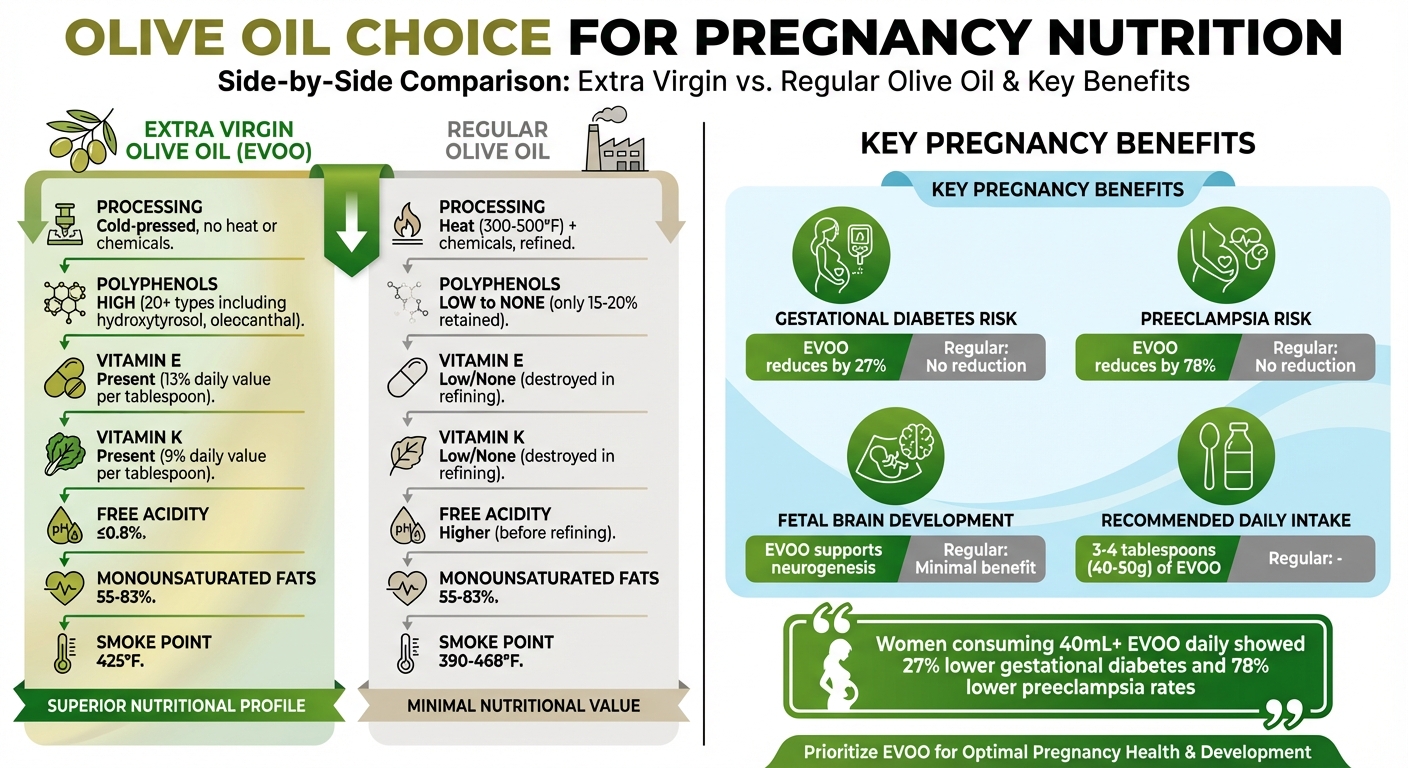
EVOO vs Regular Olive Oil Nutritional Comparison for Pregnancy
Extra virgin olive oil (EVOO) and regular olive oil might share a similar fatty acid profile - primarily made up of oleic acid (55–83%) - but their nutritional differences lie in how they’re processed. EVOO is cold-pressed, a method that preserves over 30 phenolic compounds, including powerful antioxidants like hydroxytyrosol and oleocanthal. In contrast, regular olive oil undergoes high-heat refining, which significantly reduces these bioactive compounds.
EVOO also retains natural levels of Vitamin E and Vitamin K. These nutrients are crucial for protecting cells from oxidative stress and ensuring proper blood clotting. Unfortunately, the refining process used for regular olive oil strips away most of these vitamins. For pregnant women, these nutrients play a key role in fetal development and maternal health, making EVOO a better choice.
Another distinguishing factor is acidity. EVOO must meet strict standards, with a free acidity level of 0.8% or less, signaling minimal processing and better retention of health-promoting compounds. Regular olive oil, however, starts with higher acidity and undergoes chemical treatment that further reduces its nutritional value, including its polyphenol content.
Registered dietitian Desiree Nielsen highlights the benefits of EVOO:
"Extra-virgin olive oil contains polyphenols, a class of naturally occurring phytochemicals, that are known to be antioxidant, anti-inflammatory, and possibly even prebiotic."
Research supports these claims, especially during pregnancy. A 2017 randomized controlled trial in Spain involving 1,000 pregnant women found that consuming more than 40g of EVOO daily (about 3 tablespoons) reduced the risk of gestational diabetes by 27% and preeclampsia by 78%, compared to women on a fat-restricted diet. Regular olive oil, lacking the protective polyphenols found in EVOO, does not offer the same advantages.
Comparison Table: EVOO vs. Regular Olive Oil
| Nutrient/Polyphenol Content | Extra Virgin Olive Oil (EVOO) | Regular Olive Oil | Pregnancy Benefit |
|---|---|---|---|
| Monounsaturated Fats | 55–83% (High) | 55–83% (High) | Supports heart health and reduces inflammation |
| Polyphenols/Antioxidants | High (20+ types) | Low to None | Reduces risk of gestational diabetes, preeclampsia, and oxidative stress |
| Vitamin E | Present | Low/None | Protects cells from oxidative damage |
| Vitamin K | Present | Low/None | Supports bone health and blood clotting |
| Free Oleic Acid (Acidity) | ≤0.8% | Higher (before refining) | Indicates high quality and minimal processing |
sbb-itb-4066b8e
Health Benefits of EVOO During Pregnancy
Extra virgin olive oil (EVOO) is packed with polyphenols and antioxidants, which offer a range of benefits during pregnancy. These nutrients can have a meaningful impact on both maternal and fetal health.
Lower Risk of Gestational Diabetes and Pre-eclampsia
EVOO contains oleic acid and polyphenols that help reduce insulin resistance and inflammation - two major factors in preventing complications like gestational diabetes and pre-eclampsia. Oleic acid plays a key role by activating peroxisome proliferator-activated receptors (PPARs), which regulate important metabolic pathways necessary for a healthy pregnancy.
A 2015 study revealed that women who consumed 40 mL of EVOO daily saw a drop in gestational diabetes cases from 23.4% to 17.1%. Additionally, only 19% of these women required insulin therapy, compared to 32% in the control group.
In a 2023 study published in Frontiers in Endocrinology, researchers examined the effects of giving 36 g of EVOO daily to gestational diabetes patients from weeks 24–28 until delivery. Lead researcher Alicia Jawerbaum highlighted:
"We identified novel beneficial effects of an EVOO-enriched diet in GDM women, a diet capable of regulating maternal insulin resistance, the structure and metabolism of the placenta."
The study also noted that EVOO helped prevent a rise in maternal triglycerides and reduced placental inflammation markers, such as excessive glycogen buildup and collagen deposition - both linked to gestational diabetes.
Better Fetal Brain and Nervous System Development
EVOO is not just beneficial for the mother; it also supports fetal brain and nervous system development. Its hydroxytyrosol compound promotes neurogenesis and cognitive growth, while secoiridoids like oleuropein and oleocanthal provide antioxidant and anti-inflammatory protection during critical developmental stages. These compounds can cross the placental barrier, delivering neuroprotective benefits that may even extend into breastfeeding.
Julia Zumpano, a registered dietitian at Cleveland Clinic, underscores the importance of EVOO's purity:
"Extra virgin olive oil isn't heated or altered by temperature or any chemicals. It's the closest thing to the pressing of fresh oil."
Improved Breast Milk Quality
A mother’s diet during pregnancy can influence both the pregnancy itself and the quality of breast milk later on. Consuming EVOO during pregnancy and breastfeeding allows its phenolic compounds to pass into breast milk, potentially boosting the infant's immune system and aiding its development.
Long-term studies have shown that children whose mothers consumed over 40 mL of EVOO daily had fewer hospitalizations for conditions like bronchiolitis and asthma. They also required fewer antibiotic or corticosteroid treatments and experienced lower rates of atopic eczema and respiratory problems up to age six.
Relief from Constipation
On a more practical note, EVOO can help ease one of the most common pregnancy discomforts: constipation. Acting as a natural digestive lubricant, EVOO can promote smoother bowel movements.
How to Use EVOO During Pregnancy
If you're looking to make the most of EVOO's benefits during pregnancy, incorporating it into your daily routine is simpler than you might think. As we've seen, EVOO's natural compounds not only promote maternal health but also aid in fetal development. One easy way to start? Swap out less healthy fats like butter. Julia Zumpano, RD, LD, from Cleveland Clinic, emphasizes this point:
"You really only reap the dietary benefits of EVOO if you use it as a replacement ingredient for, say, butter or other types of oil."
Studies suggest consuming 40–50 grams (about 3–4 tablespoons) of EVOO daily can lower the risk of gestational diabetes. Between 2015 and 2017, researchers at Hospital Clínico San Carlos in Madrid studied 2,228 pregnant women who followed a regimen including at least 40 mL of EVOO per day along with a handful of pistachios. The results were promising: a reduced incidence of gestational diabetes and improved health outcomes for their children, such as lower rates of bronchiolitis and atopic eczema by age six.
Easy Ways to Add EVOO to Your Diet
- Drizzle it on food: Use EVOO on salads, roasted veggies, or steamed fish to retain the oil's heat-sensitive polyphenols.
- Mix it into meals: Blend 1–2 tablespoons into a smoothie or yogurt for a quick nutrient boost.
- Take it straight: A tablespoon on an empty stomach can help relieve constipation.
- Cook with it: EVOO is heat-stable, making it a good choice for sautéing, baking, and even frying. Plus, swapping butter for EVOO reduces saturated fat intake.
Pairing EVOO with carbohydrate-rich foods like bread or potatoes is another smart move. Studies show this can lower your blood sugar response by 34% to 43% compared to eating carbs alone.
EVOO vs. Regular Olive Oil: A Quick Comparison
| Usage | EVOO | Regular Olive Oil | Daily Serving Suggestion |
|---|---|---|---|
| Salads & Dressings | Packed with polyphenols and a fruity flavor that enhances nutrient absorption. | Lacks the bioactive compounds found in fresh olives. | 1–2 tablespoons per salad. |
| Cooking & Heat | High smoke point (425°F) and antioxidants protect the oil from breaking down. | Often refined with chemicals, offering fewer protective compounds. | Use as your primary cooking fat. |
| Morning Spoonful | Natural remedy for constipation and supports gut health with antioxidants. | Lacks key vitamins like E and K. | 1 tablespoon on an empty stomach. |
| Mediterranean Diet | Linked to reduced risks of gestational diabetes, pre-eclampsia, and abnormal fetal growth. | Provides calories but lacks protective polyphenols. | 3–4 tablespoons daily (approx. 40–50g). |
Storage Tips for EVOO
Proper storage is key to maintaining EVOO's flavor and nutritional value. Keep it in a cool, dark place, ideally around 65°F, and away from heat sources like your stove. For best results, use the oil within 30 to 60 days of opening. Look for bottles made of dark glass and labeled with terms like "Extra Virgin" and "Cold-Pressed." Avoid oils marked "Pure", "Classic", or "Light", as these are refined and lack the same health benefits.
Conclusion
The comparisons outlined above highlight why Extra Virgin Olive Oil (EVOO) stands out as an excellent choice for pregnancy nutrition. Unlike regular olive oil, EVOO is cold-pressed without the use of heat or chemicals, which helps it retain over 20 polyphenols and antioxidants that are often lost in standard oil processing.
Research supports the benefits of incorporating EVOO into a pregnancy diet. For instance, studies show that regular consumption of EVOO during pregnancy can lead to better maternal outcomes. Additionally, children born to mothers who consumed EVOO during pregnancy have been found to experience lower rates of bronchiolitis and atopic eczema by the age of six. As Julia Zumpano from the Cleveland Clinic aptly puts it:
"No other oils can provide as many benefits as extra virgin olive oil can. It's the far superior oil".
To integrate EVOO into your diet, consider replacing butter, margarine, and refined oils with this nutrient-rich option. Use it in your cooking or as a flavorful addition to salads. When selecting EVOO, ensure you're buying genuine products by looking for certifications from trusted organizations like the International Olive Council or the California Olive Oil Council.
For those seeking top-quality EVOO, Big Horn Olive Oil offers Ultra Premium options that are cold-pressed within two hours of harvest and delivered fresh within three months. With prices starting at $8.99, their EVOO provides a high-quality, nutritious choice to meet the dietary needs of pregnancy.
FAQs
How can I choose authentic Extra Virgin Olive Oil (EVOO) during pregnancy?
To make sure you're buying genuine Extra Virgin Olive Oil (EVOO), keep an eye out for a few key details. Look for bottles labeled as 100% extra virgin olive oil and cold-pressed, as this indicates the oil was extracted without heat, preserving its nutrients and flavor. Opt for oils packaged in dark glass bottles, which help shield the oil from light and maintain its quality. Also, check for a harvest date - ideally within the past year - and look for a certification seal like PDO or PGI. These seals verify the oil's origin and authenticity.
Big Horn Olive Oil offers Ultra Premium EVOO crafted from carefully selected olives, ensuring peak freshness and nutritional benefits - an excellent addition to your diet, especially during pregnancy.
How does extra virgin olive oil (EVOO) support fetal brain development during pregnancy?
Extra virgin olive oil (EVOO) is packed with monounsaturated fats and polyphenols, both of which are crucial for fetal brain development. These healthy fats work to reduce oxidative stress in the brain by limiting lipid peroxidation - a process that can harm brain cells. Meanwhile, the antioxidants found in EVOO support the creation of protective molecules necessary for brain growth.
Including EVOO in your diet during pregnancy could help boost your child’s cognitive development, laying the foundation for strong brain health both before and after birth. To ensure you’re getting the freshest and most nutrient-rich option, try Ultra Premium EVOO, like the varieties from Big Horn Olive Oil, designed to deliver exceptional flavor and nutritional value.
How does refining impact the nutrition of regular olive oil?
The refining process takes a toll on the nutritional profile of regular olive oil. During this process, most of the natural antioxidants, polyphenols, and flavor compounds - key elements found in extra virgin olive oil - are removed. What’s left is primarily oleic acid, a monounsaturated fat, which means the oil loses much of its potential health benefits.
For pregnant women, this nutrient loss is especially significant. Extra virgin olive oil is packed with antioxidants and anti-inflammatory properties that can support overall health during pregnancy. Choosing a high-quality option, like the Ultra Premium Extra Virgin Olive Oils from Big Horn Olive Oil, ensures you’re getting the freshest, most flavorful oil with all the added health perks intact.