

Extra Virgin Olive Oil and Insulin Resistance: Key Findings
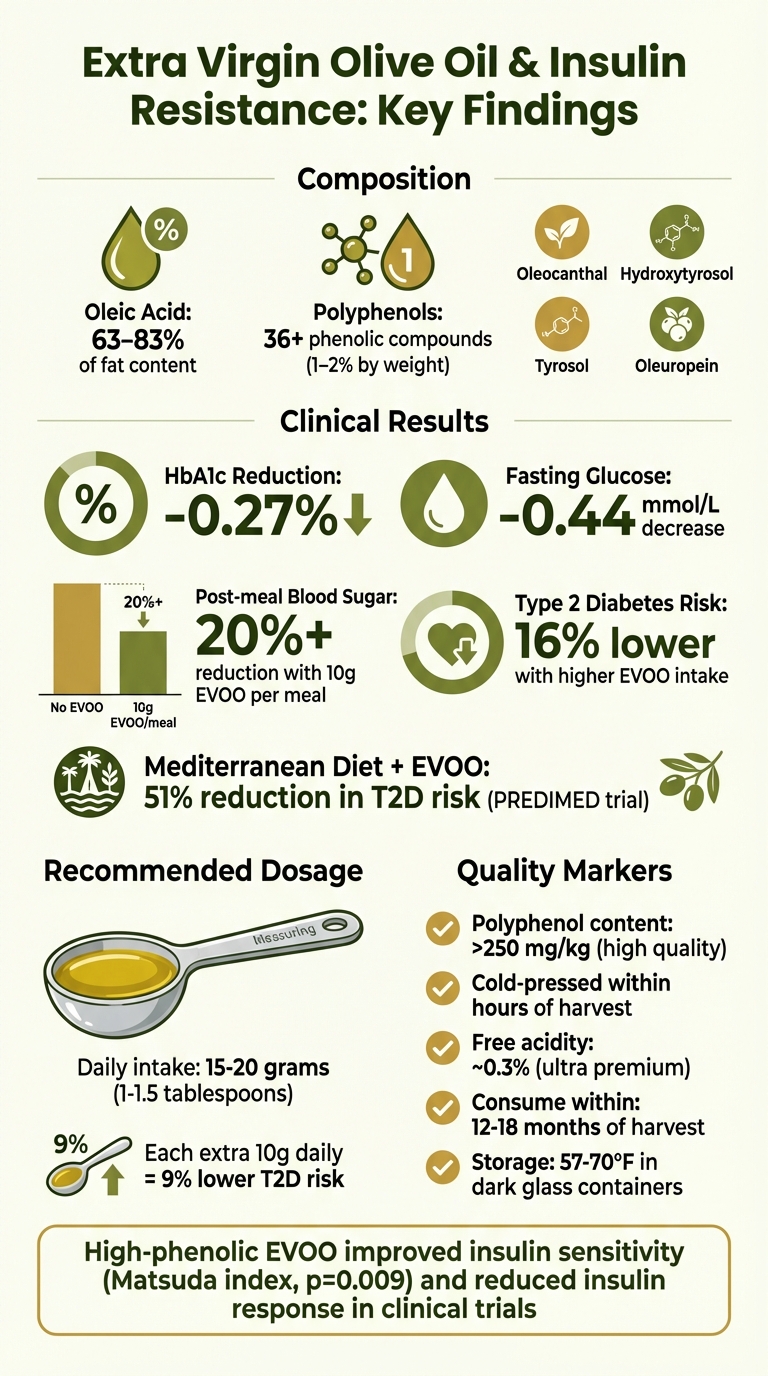
Extra virgin olive oil (EVOO) may help improve insulin sensitivity and reduce the risk of type 2 diabetes. Studies show its monounsaturated fats and polyphenols support better blood sugar control, protect pancreatic cells, and reduce inflammation. For example, adding just 10 grams of EVOO to a meal lowered post-meal blood sugar by over 20% in one study. Long-term use, especially within a Mediterranean diet, can lower diabetes risk by up to 51%. To maximize benefits, choose high-quality, cold-pressed EVOO with high polyphenol content and consume about 15–20 grams daily. Proper storage and checking harvest dates ensure you get the most out of your olive oil.
Extra Virgin Olive Oil Benefits for Insulin Resistance and Type 2 Diabetes Prevention
1-2 Tablespoons Lowers BLOOD GLUCOSE | Dr. Mandell
sbb-itb-4066b8e
How Extra Virgin Olive Oil Improves Insulin Sensitivity
Extra virgin olive oil (EVOO) helps combat insulin resistance through its monounsaturated fats and bioactive polyphenols, which work together to regulate glucose metabolism and improve insulin signaling. Let’s take a closer look at how specific components in EVOO - oleic acid and polyphenols - enhance insulin sensitivity through various metabolic pathways.
Monounsaturated Fats and Oleic Acid
One of the key players in EVOO is oleic acid, which makes up 63–83% of its fat content. This monounsaturated fat integrates into cell membranes, improving the function of insulin receptors. It also serves as a ligand for PPAR‑gamma, activating anti-inflammatory pathways that reduce the chronic, low-grade inflammation often linked to impaired insulin signaling. Beyond that, oleic acid supports fatty acid oxidation and inhibits lipogenesis, the process by which the body creates and stores new fat.
Polyphenols Reduce Inflammation and Oxidative Stress
EVOO is packed with over 36 phenolic compounds, which, while accounting for just 1–2% of its weight, offer substantial metabolic benefits. One standout compound is oleocanthal, responsible for EVOO's signature peppery taste. Oleocanthal inhibits COX‑1 and COX‑2 enzymes, reducing inflammation. As Dr. Vasilis Tsimihodimos from the University of Ioannina explains:
"Oleocanthal, one of the compounds that gives EVOO its characteristic intense taste, has an action similar to ibuprofen by inhibiting cyclooxygenases 1 and 2 (COX1-COX2)."
Other polyphenols, like hydroxytyrosol and tyrosol, protect pancreatic beta-cells from oxidative stress and apoptosis while promoting insulin biosynthesis. Meanwhile, oleuropein acts as a natural DPP-4 inhibitor, preventing the breakdown of incretin hormones such as GLP-1, which helps regulate insulin secretion after meals.
In the APRIL study, conducted at the Regional Hospital of Málaga between July 2016 and June 2019, 91 participants with obesity and prediabetes replaced their usual cooking oil with EVOO enriched with oleocanthal and oleacein (approximately 428 mg/kg) for one month. The results? Significant reductions in interferon‑gamma levels, improved antioxidant status, lower blood glucose levels, and decreases in BMI.
Effects on Glucose Metabolism and Gene Expression
EVOO also impacts glucose metabolism at the molecular level. For example, it restores the expression of the Insulin Degrading Enzyme (IDE) in the liver, which is crucial for clearing insulin from the bloodstream. By improving insulin clearance, EVOO helps prevent the buildup of excess insulin, which can lead to hyperinsulinemia and worsen insulin resistance.
Additionally, EVOO contains triterpenic acids, such as oleanolic acid and maslinic acid, which enhance liver function. These compounds increase glycogen synthesis while inhibiting both gluconeogenesis (the production of glucose) and glycogenolysis (the breakdown of glycogen). The NUTRAOLEUM trial found that consuming 30 mL doses of enriched EVOO improved the Matsuda index - a measure of insulin sensitivity - and reduced postprandial insulin release. Dr. Maria Dolores Mesa from the University of Granada highlighted this benefit:
"The enrichment of VOOs with bioactive compounds from the olive fruit increases its benefits, improving postprandial insulin release and peripheral tissue sensitivity."
Finally, EVOO influences gene expression by down-regulating genes involved in fatty acid synthesis while up-regulating antioxidant defenses. This genetic shift may explain why individuals with type 2 diabetes experienced a 39% reduction in liver fat after incorporating EVOO into their diets.
Research Findings: EVOO and Insulin Resistance
Results from Clinical Studies
Clinical research strongly supports the role of extra virgin olive oil (EVOO) in improving markers of insulin resistance. For individuals with type 2 diabetes, supplementing with olive oil led to a 0.27% reduction in HbA1c levels and a 0.44 mmol/L decrease in fasting plasma glucose. While these changes may seem modest, they contribute significantly to long-term blood sugar management.
One notable study, the NUTRAOLEUM trial conducted in Granada, Spain, examined the effects of a specialized olive oil enriched with triterpenic acids (389 ppm) and polyphenols (487 ppm). A single 30 mL dose of this enriched EVOO significantly improved the Matsuda index, a measure of insulin sensitivity (p = 0.009), and lowered the insulin response compared to standard virgin olive oil. These results highlight the importance of using precise doses of EVOO to achieve the best metabolic outcomes.
Recommended Dosage and Duration
Evidence indicates a clear relationship between EVOO intake and improved outcomes. Consuming an extra 10 g of EVOO daily is linked to a 9% lower risk of type 2 diabetes. The most protective effects occur with 15–20 g per day (about 1–1.5 tablespoons). Even a small addition of 10 g of EVOO to a single meal can reduce post-meal glucose spikes within two hours. However, to see sustained improvements in fasting glucose and HbA1c, consistent use over several weeks or months is needed.
For example, the APRIL study from Málaga demonstrated that replacing regular cooking oil with high-phenolic EVOO for 30 days led to reductions in body weight, BMI, and fasting blood sugar levels. These benefits are also influenced by the quality of EVOO, which will be discussed in the next section.
Lower Risk of Type 2 Diabetes
The connection between olive oil consumption and diabetes prevention is strong. Higher intake of olive oil is associated with a 16% lower risk of developing type 2 diabetes compared to lower intake levels. In the well-known PREDIMED trial, participants on a Mediterranean diet supplemented with approximately 50 g/day of EVOO saw a 51% reduction in type 2 diabetes incidence over a four-year follow-up compared to those on a low-fat diet. Additionally, this diet reduced the need for insulin therapy by 12% in individuals already living with diabetes.
| Metabolic Indicator | Effect of EVOO | Statistical Significance |
|---|---|---|
| HbA1c (T2D patients) | -0.27% reduction | p < 0.01 |
| Fasting Glucose | -0.44 mmol/L reduction | p < 0.01 |
| T2D Risk (high vs. low intake) | 16% reduction (RR: 0.84) | |
| Postprandial Glucose (10 g dose) | Decrease | p < 0.001 |
| Matsuda Index (insulin sensitivity) | Increase | p = 0.009 |
Choosing High-Quality EVOO
Polyphenol Content and Harvest Timing
The health perks of extra virgin olive oil (EVOO) come down to its polyphenol content. These compounds, which can range from 50–800 mg/kg, are a big deal for health enthusiasts. Oils with more than 250 mg/kg are considered especially rich in polyphenols. Factors like the olive variety (think Coratina, Koroneiki, or Mission), the climate, and - most importantly - when the olives are harvested all play a role in these levels. Early-harvest olives, which are still green, tend to produce oil with the highest polyphenol content.
You can often taste the difference, too. A high-polyphenol EVOO will have a distinct bitterness and a peppery kick in your throat, thanks to a compound called oleocanthal. In fact, the European Food Safety Authority has set a standard: EVOO must contain at least 5 mg of hydroxytyrosol and its derivatives per 20 grams to claim it helps protect blood lipids from oxidative stress. Understanding these details is key when evaluating how the oil is processed.
Cold-Pressed and Ultra Premium Standards
How EVOO is made has a huge impact on its quality and health benefits. Genuine extra virgin olive oil is created by physically pressing olives at low temperatures, without any chemicals involved. Dr. Stephen L. Kopecky from Mayo Clinic puts it simply:
"You take olives, and you press them and collect the oil in a bucket, and that's it. There's no processing to it."
This method, known as cold pressing, is essential because it preserves over 30 phenolic compounds by avoiding heat-related damage. Ultra premium EVOO takes it a step further. These oils are cold-pressed within hours of harvesting and maintain free acidity levels around 0.3%, which helps retain the bioactive compounds. Keeping these beneficial elements intact is crucial, and that’s where freshness also comes into play.
Why Freshness Matters
Freshness is everything when it comes to EVOO. Exposure to light, heat, or oxygen can degrade the oil, lowering its polyphenol content and, in turn, its ability to improve insulin sensitivity. To get the most benefits, aim to consume EVOO within 12–18 months of its harvest date. Proper storage is equally important - keep your oil in a cool, dark spot, ideally between 57°F and 70°F, and use dark glass or stainless steel containers to protect it.
Some producers, like Big Horn Olive Oil, take freshness seriously. They offer oils harvested within three months and press olives within two hours of picking - practices that help preserve those all-important polyphenols. When shopping, always check for harvest dates on the bottle rather than relying on generic "best by" labels. Packaging matters, too; opt for bottles designed to shield the oil from light to ensure you’re getting the best quality.
Conclusion
Studies reveal that extra virgin olive oil (EVOO) can enhance insulin sensitivity and significantly lower the risk of Type 2 Diabetes. For instance, a Mediterranean diet rich in EVOO has been shown to reduce the risk of Type 2 Diabetes by an impressive 51%. Substituting saturated fats with EVOO also helps lower glycated hemoglobin (HbA1c) levels by 0.3% to 2.0%, which is comparable to the effects of some anti-diabetic medications.
These health benefits are tied to EVOO's composition, particularly its monounsaturated fats and polyphenols, such as oleocanthal and oleacein. Additionally, EVOO naturally inhibits DPP-4, an enzyme responsible for breaking down incretin hormones, which play a crucial role in regulating blood sugar levels after meals. However, the quality of EVOO is key to unlocking these benefits.
Research highlights that high-phenolic EVOO can improve glucose metabolism and reduce inflammation in individuals with obesity and prediabetes. In contrast, standard olive oils with lower polyphenol content don’t deliver the same results. The difference lies in the concentration of bioactive compounds, which protect pancreatic β-cells, reduce inflammation, and enhance insulin response.
To maximize these benefits, focus on freshness and quality. Choose oils that are cold-pressed shortly after harvest and stored in dark containers to preserve their bioactive properties. Even small portions - about 10 grams per meal - can help moderate post-meal blood sugar spikes.
Big Horn Olive Oil offers ultra-premium EVOO, harvested within three months and cold-pressed within two hours, ensuring high polyphenol levels and optimal support for insulin regulation. Whether you're managing prediabetes or simply aiming to improve metabolic health, selecting the right EVOO can be a meaningful step toward better overall well-being.
FAQs
How does extra virgin olive oil help improve insulin sensitivity?
Extra virgin olive oil (EVOO) offers a natural way to support insulin sensitivity, thanks to its rich monounsaturated fats (MUFAs) and phenolic compounds. MUFAs play a key role in keeping cell membranes flexible, which helps insulin receptors work more efficiently and improves glucose uptake. Meanwhile, phenolic compounds like oleocanthal and oleacein deliver anti-inflammatory and antioxidant effects, helping to reduce chronic inflammation and protect the pathways involved in insulin signaling. These nutrients also contribute to the health of pancreatic beta cells, which are crucial for producing insulin.
Scientific studies back up these benefits. Research indicates that adding EVOO to meals can lower blood sugar spikes, enhance the body’s insulin response, and reduce inflammation. Regular consumption of high-quality EVOO has been associated with improved blood sugar control and a reduced risk of developing type 2 diabetes.
Adding Big Horn Olive Oil’s ultra-premium EVOO to your daily routine - about 2 to 4 tablespoons (30–60 ml) - is an easy way to tap into these health benefits. Drizzle it over salads or use it for low-heat cooking (below 320°F) to preserve its nutritional value.
How much extra virgin olive oil should I consume daily to help reduce the risk of diabetes?
For those looking to lower their diabetes risk, experts often suggest consuming 2 to 4 tablespoons of extra virgin olive oil (EVOO) daily. Research indicates that this amount may aid in managing blood sugar levels and enhancing insulin sensitivity.
Adding fresh, high-quality EVOO to your meals is easy and flavorful. Try drizzling it over salads, roasted vegetables, or whole grains to make the most of its potential health perks.
What makes polyphenols in extra virgin olive oil important for health?
Polyphenols, naturally occurring antioxidants in extra virgin olive oil, are known for their ability to shield the body from oxidative stress and inflammation. These compounds are particularly important for enhancing insulin sensitivity, potentially lowering the risk of insulin resistance and associated health concerns.
By combating free radicals, polyphenols contribute to overall well-being, including promoting heart health and reducing the likelihood of certain diseases. Opting for premium extra virgin olive oils, such as those from Big Horn Olive Oil, ensures a rich source of these health-boosting compounds.