

Ultimate Guide to Fruit-Infused Vinegars
Fruit-infused vinegars combine the tang of vinegar with the natural flavors of fruits, creating a flavorful, low-calorie ingredient for dressings, marinades, and even drinks. Here's what you need to know:
- Why Use Them: They add depth to recipes, balance sweetness, and can even offer health benefits like aiding digestion and weight management.
- Best Fruits: Berries (raspberries, strawberries), citrus (orange, lemon), and even dried fruits (raisins, prunes) work well.
- Vinegar Bases: Apple cider, white wine, champagne, red wine, and rice vinegar each bring unique characteristics to your infusion.
- How to Make Them: Combine prepared fruits with heated vinegar, let steep for 3–4 weeks, strain, and store properly.
- Uses: Perfect for salad dressings, glazes, marinades, and even cocktails or mocktails.
Whether you're making your own or buying artisan options like those from Big Horn Olive Oil, fruit-infused vinegars are a simple way to elevate your cooking and beverages.
How to Ferment Fruit Vinegars From Scratch | Apple, Pear, Peach & Raspberry
Best Fruits for Vinegar Infusions
The fruit you choose plays a big role in shaping the flavor of your infused vinegar. Some fruits pack a punch with bold flavors, while others add a gentle sweetness or a tangy brightness. Knowing how each type behaves can help you pick the perfect match for your cooking needs. Let’s dive into how berries, citrus, and less common fruits can give your vinegar its unique personality.
Berries (Raspberries, Strawberries, Blueberries, Blackberries)
Raspberries are a timeless go-to for fruit vinegars. Their natural sweetness balances the sharpness of vinegar, and they add a striking red hue. To get the most flavor, bruise or lightly crush the berries before infusing - it speeds up the process and releases more of their essence.
Strawberries bring a gentle, fruity touch. They pair best with milder bases like white wine or white balsamic vinegar, as stronger options (like apple cider or red wine vinegar) can overpower their delicate flavor.
Blueberries contribute a rich, slightly earthy taste and produce a deep red infusion. Blackberries, on the other hand, shine when paired with dark balsamic vinegar, creating a robust flavor perfect for glazes and reductions.
To start, use about 1 to 2 cups of fruit per pint of vinegar. Both fresh and frozen berries work well - if you’re using frozen, there’s no need to thaw them beforehand.
Citrus Fruits (Orange, Lemon, Lime, Grapefruit)
For citrus infusions, focus on the peel (zest) rather than the juice. The peel’s essential oils provide bright, zesty flavors without the sourness that juice can bring. Just be sure to remove the white pith, as it can add an unwanted bitterness.
Citrus-infused vinegars are ideal for seafood marinades and tangy salad dressings. Bases like distilled white vinegar or champagne vinegar work best, as they let the citrus flavors shine without competing for attention.
Uncommon Fruits (Elderflowers, Black Currants, and Dried Fruits)
Elderflowers deliver a bold flavor that works beautifully in savory dishes, such as potato salad. Black currants offer a deep, sweet richness and pair wonderfully with soy sauce for stir-fry glazes.
Dried fruits bring a whole new layer of creativity to the table. Raisins add a mellow sweetness similar to white balsamic vinegar, while prunes can be blended into a thick, syrupy "vinegar cream" reminiscent of premium balsamic glazes. For something a bit exotic, dried mango adds a tropical twist that’s sure to stand out.
Selecting Your Vinegar Base
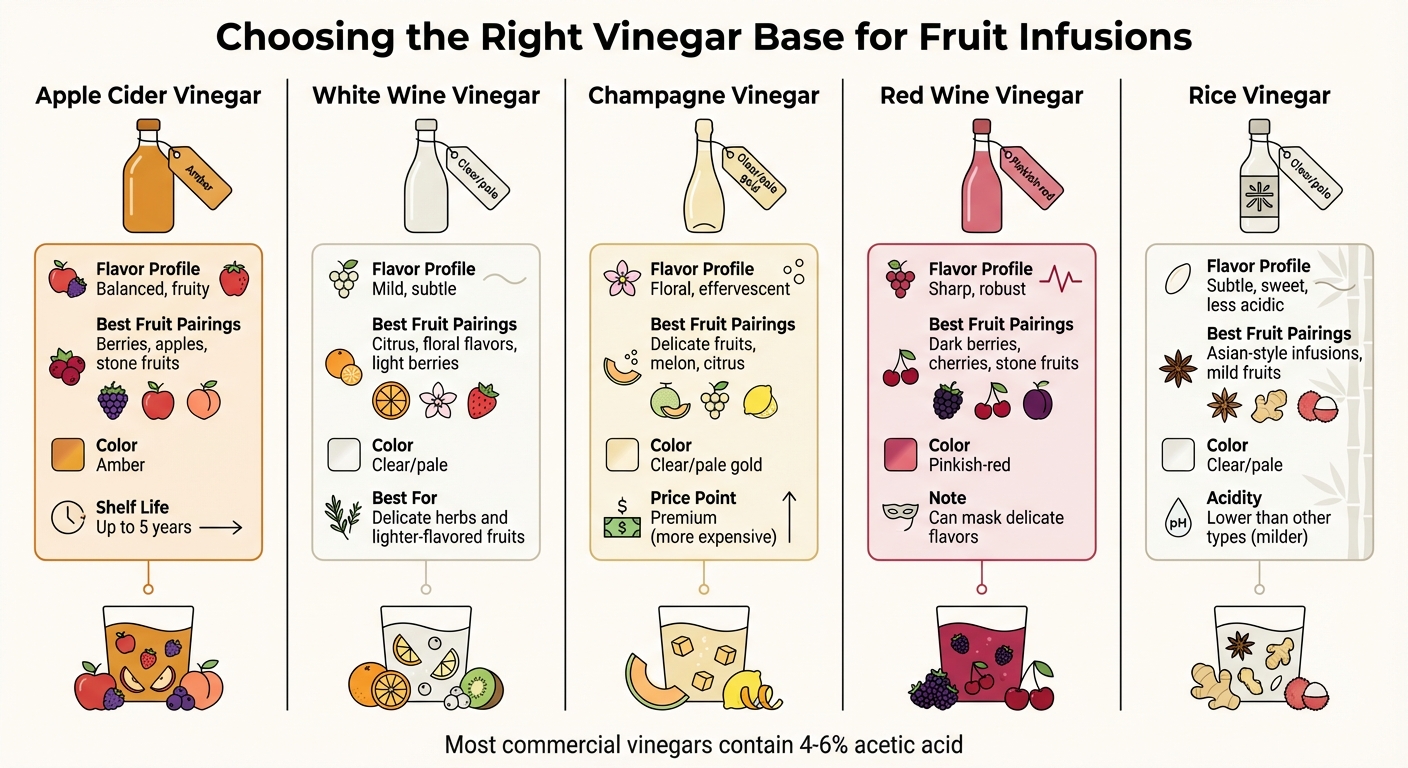
Vinegar Base Selection Guide for Fruit Infusions
The vinegar you choose sets the tone for your infusion, influencing its acidity, color, and overall flavor. Most commercial vinegars consist of 4% to 6% acetic acid, with water making up the rest. For a milder touch, rice vinegar is a great option, while distilled white vinegar offers a sharper, more pronounced acidity.
The color of the vinegar also plays a role in the final appearance of your infusion. For example, red wine vinegar adds a pinkish-red hue that pairs beautifully with dark berries but might alter the look of lighter fruits. In such cases, distilled white or white wine vinegar is a better choice. Below is a breakdown of popular vinegar bases - apple cider, white wine, champagne, red wine, and rice - and how they can enhance your fruit infusions.
Apple Cider Vinegar
Apple cider vinegar stands out for its fruity profile, making it a versatile choice for a wide range of infusions. As Sarah R-P. Lewis, an Extension Faculty member at the University of Alaska Fairbanks, highlights:
Apple cider vinegar blends best with fruits.
Its amber color complements most fruits without overpowering their natural hues, and its balanced tartness enhances both sweet and tangy flavors. Additionally, it has a long shelf life, remaining stable for up to 5 years from the date of manufacture.
White Wine and Champagne Vinegars
For delicate fruits like citrus or light berries, white wine and champagne vinegars are excellent choices. Sarah R-P. Lewis notes:
These options work well with delicate herbs and lighter-flavored fruits.
Champagne vinegar, in particular, adds a floral and slightly effervescent quality that enhances subtle ingredients. While these vinegars tend to be pricier than distilled white or apple cider options, their refined notes make them perfect for sophisticated dressings and cocktails.
Other Bases (Red Wine, Rice Vinegar)
Red wine vinegar is bold and tangy, making it a great match for dark fruits like blackberries and cherries. However, as Sarah R-P. Lewis explains:
Red wine vinegars can work well with spices and strong herbs like rosemary, but they will mask the flavor of most herbs.
Rice vinegar, on the other hand, offers a milder, sweeter taste. This makes it ideal for gentle infusions. Professional chef and food writer Lindsay D. Mattison describes it this way:
Rice vinegar is less acidic than the other types of vinegar so it's less harsh and has a sweeter taste.
| Vinegar Type | Flavor Profile | Best Fruit Pairings |
|---|---|---|
| Apple Cider | Balanced, fruity | Berries, apples, stone fruits |
| White Wine | Mild, subtle | Citrus, floral flavors, light berries |
| Champagne | Floral, effervescent | Delicate fruits, melon, citrus |
| Red Wine | Sharp, robust | Dark berries, cherries, stone fruits |
| Rice | Subtle, sweet | Asian-style infusions, mild fruits |
How to Infuse Vinegar with Fruit
Preparing Fruits for Infusion
Start by washing your fruits thoroughly under cool water. To ensure they're sanitized, use a solution made from 1 teaspoon of chlorine bleach mixed with 6 cups of water. At the same time, sterilize your glass jars and bottles by boiling them for 10 minutes. Proper fruit preparation is key to getting the best flavor. For berries, gently bruise them to release their juices. With citrus fruits, only use the colored zest - steer clear of the bitter white pith. Larger fruits like peaches or pears should be peeled and sliced or cubed. As Catherine Boeckmann from The Old Farmer's Almanac warns:
"Discard the vinegar if there is mold or signs of fermentation, such as bubbling or cloudiness."
For the best flavor infusion, heat your vinegar to 190°F–195°F (just below boiling) before pouring it over the prepared fruit. Use about 1 to 2 cups of fruit for every pint (2 cups) of vinegar, leaving 1/4 to 1/2 inch of space between the liquid and the lid. Once your fruits and jars are ready, you're all set to start the infusion process.
Infusion Process and Timing
With your fruits prepped, pour the heated vinegar over them to begin the infusion. Let the mixture sit for three to four weeks to fully develop its flavor. You may notice changes as early as 10 days, especially if you lightly crush or chop the fruits beforehand. Store the sealed jars in a cool, dark place, and avoid disturbing them during this time.
To test the flavor, place a few drops of the vinegar on plain white bread. If the taste is too strong, you can dilute it with more vinegar. When refrigerated, infused vinegars stay fresh for 6 to 8 months. If stored in a cool pantry, they’ll last about 2 to 3 months.
Straining and Bottling
After the infusion period, strain the vinegar to remove fruit solids and sediment. Use a fine-mesh strainer lined with damp cheesecloth or a coffee filter. Press the fruit gently with a wooden spoon to extract as much flavor as possible. If the vinegar still looks cloudy, strain it again using a fresh coffee filter.
Sterilize your storage bottles by boiling them for 10 minutes, just as you did for the infusion jars. When selecting lids, plastic screw caps or glass stoppers are ideal. If you’re using metal lids, line them with parchment or wax paper to protect against corrosion caused by the vinegar’s acidity. For extra safety, scald screw caps in hot water and dip corks into boiling water 3 to 4 times using tongs.
Don’t forget to label your bottles with the flavor and bottling date. LayLa Burgess from Clemson University emphasizes:
"If your flavored vinegar starts to mold at any time, or to show signs of fermentation (bubbling), cloudiness or sliminess, discard the product and do not use it."
If you decide to display your vinegar on a sunny windowsill for decoration, keep in mind it should not be consumed after two weeks. To preserve the flavor and ensure safety, store your finished vinegar in the refrigerator rather than at room temperature.
sbb-itb-4066b8e
Cooking with Fruit-Infused Vinegars
Salad Dressings and Marinades
Fruit-infused vinegars can transform simple dressings and marinades into something extraordinary when paired with the right ingredients. For sweet vinaigrettes, apple cider vinegar shines when combined with fruits like berries, pears, or peaches. On the other hand, distilled white vinegar keeps the flavors of delicate fruits crisp and fresh, making it an excellent choice for light green salads. For heartier dishes, red wine vinegar infused with garlic or rosemary adds depth to marinades, especially for meats.
To create a basic yet delicious dressing, mix your fruit-infused vinegar with high-quality extra virgin olive oil in a 1:3 ratio, add a pinch of salt, and whisk until combined. If you’re making slaws, white balsamic vinegar infusions - like citrus or garlic-chive - are a perfect match for shredded cabbage, carrots, and peppers. Catherine Boeckmann from The Old Farmer's Almanac sums it up beautifully:
"Vinegars flavored with fruits, sprigs of herbs, or fiery peppers are so beautiful - adding great taste and interest to entrées and salads."
Fruit-infused vinegars also work as natural tenderizers while adding complexity to marinades. Lemon-infused vinegar pairs wonderfully with seafood, while raspberry vinegar complements rich meats like duck or venison. For grilling, try blending infused vinegar with smoky oils or BBQ rubs for added depth of flavor.
And don’t stop at dressings - these vinegars also elevate sauces and glazes.
Sauces and Glazes
Fruit-infused vinegars are perfect for crafting reductions and glazes that bring out the best in seasonal dishes. Making a glaze is straightforward: combine ½ cup of fruit-flavored balsamic vinegar with 1 tablespoon of honey, then simmer over medium heat until the mixture reduces by half and thickens enough to coat the back of a spoon. This syrupy glaze adds a caramelized touch to roasted vegetables and proteins.
Choosing between white and dark balsamic vinegar can influence the final flavor of your dish. White balsamic offers a lighter, subtler taste, ideal for delicate sauces, while dark balsamic delivers a richness that pairs well with beef or pork. As user "M", a culinary commenter at Attainable Sustainable, explains:
"White balsamic is amazing and lighter tasting than the dark, which is absolutely mouthwatering but can be overpowering."
Seasonal vegetables also benefit from the brightness of fruit-infused vinegars. Lemon or orange vinegar adds zest to spring produce like Brussels sprouts, while fig or pomegranate vinegar enhances the earthy sweetness of fall vegetables like squash and parsnips. For a lighter alternative to butter, try spritzing fruit-infused vinegar over cooked vegetables - it’s a simple yet flavorful touch.
Cocktails and Mocktails
Fruit-infused vinegars are not just for savory dishes - they can also add a unique twist to beverages. Shrubs, which are concentrated syrups made from fruit, vinegar, and sugar, bring a delightful tartness to drinks. For example, Lindsay Landis from Love and Olive Oil created a Strawberry Elderflower Mocktail in 2019 by infusing fresh strawberries in red wine vinegar and combining it with elderflower syrup, lemon, and club soda. The result? A refreshing and layered drink.
To make a shrub-based drink, mix 1 to 2 tablespoons of your fruit-infused syrup with 4 ounces of sparkling water over ice. For added variety, swap club soda for ginger beer or incorporate fresh herbs like mint or basil. In 2023, Sylvia Fountaine of Feasting At Home crafted a Plum and Shiso Shrub by macerating summer plums with sugar for 24 hours and then adding shiso-infused vinegar.
For cocktails, fruit vinegars can elevate classics. Add them to gin and tonics, margaritas, or even champagne for a surprising twist. A Pineapple Jalapeño Shrub with cilantro, for instance, pairs beautifully with margaritas, offering a mix of sweet, spicy, and herbal notes.
Big Horn Olive Oil's Infused Vinegar Options
If you're looking for high-quality, ready-to-use infused vinegars, Big Horn Olive Oil has you covered. Their selection showcases artisan balsamics straight from Modena, Italy, offering a variety of fruit-forward white balsamics like Sicilian Lemon, Cranberry Pear, Ripe Peach, and Elderflower. Prices for these start at $8.99. For those who prefer deeper, aged flavors, choices like the Traditional 18-Year and Molto Denissimo 25-Year Aged Dark Balsamics begin at $12.99.
Big Horn Olive Oil ensures freshness and quality through their carefully chosen products and fast shipping. These vinegars are crafted with the same attention to detail and flavor precision discussed earlier in this guide.
One satisfied Yelp reviewer, Erin M., shared:
"Just tried the Elderflower white balsamic vinegar - heavenly!"
Whether you're whipping up a zesty vinaigrette or a decadent glaze, these expertly crafted vinegars can elevate your cooking. Plus, with free U.S. shipping on orders over $40, it's easy to stock your pantry with a variety of options.
Conclusion
Fruit-infused vinegars add a touch of finesse to everything from salad dressings to cocktails. Their perfect mix of sweetness and acidity can effortlessly transform even the simplest dishes into something special.
Making your own at home is straightforward: lightly crush your chosen fruit, combine it with high-quality vinegar, and let it steep for three to four weeks. If you'd rather skip the wait, Big Horn Olive Oil offers artisan-crafted fruit-infused vinegars straight from Modena, Italy, known for their exceptional flavor.
These vinegars are incredibly versatile in the kitchen. Try pairing apple cider vinegar with berries, white wine vinegar with citrus, or aged balsamic with strawberries. The combinations are endless, giving you plenty of room to get creative and elevate your everyday meals.
FAQs
What are the health benefits of fruit-infused vinegars?
Fruit-infused vinegars come packed with potential perks for your health. They're loaded with antioxidants, which help protect your body from damage caused by free radicals. On top of that, they may offer anti-inflammatory benefits that contribute to overall well-being. Another bonus? These vinegars can support a healthier gut by helping maintain the balance of gut microbiota, which plays a key role in digestion and boosting immune function.
Adding fruit-infused vinegars to your meals is a simple and tasty way to elevate both flavor and nutrition. Try drizzling them over salads, using them in marinades, or even mixing them into drinks. Their versatility makes them an easy fit for a balanced and flavorful diet.
What’s the best way to store homemade fruit-infused vinegars?
To keep your homemade fruit-infused vinegars fresh and safe, make sure to store them in the refrigerator. Use clean, sterilized glass jars or bottles with tight-fitting lids to avoid contamination. Be vigilant - check regularly for signs of spoilage like mold, cloudiness, or an unusual smell, and toss the vinegar if anything seems off.
Refrigeration is key to maintaining the flavor and quality of your vinegars. It also minimizes the chances of fermentation or spoilage, allowing you to enjoy your creations for weeks or even months!
Can I use frozen fruit to make fruit-infused vinegar?
Frozen fruit is an excellent choice for making fruit-infused vinegar! When fruit is frozen, its cell structure breaks down, allowing it to release more juice and flavor during the infusion. This makes it a practical and flavorful alternative when fresh fruit isn't on hand. Just ensure the fruit is clean and doesn't contain added sugar or preservatives before using it.