

Greek Grilled Meats with Olive Oil
Greek grilling is simple: quality ingredients, flavorful marinades, and proper techniques. The key? Extra virgin olive oil (EVOO). It locks in moisture, enhances flavors, and protects meat from high heat. Whether you're making souvlaki (small skewers) or souvla (slow-roasted cuts), the marinade is the star: olive oil, lemon juice, garlic, oregano, and salt. Here's a quick breakdown:
- Marinade basics: For 2 lbs of meat, mix 1/2 cup olive oil, 3 tbsp lemon juice, garlic, oregano, salt, and pepper.
- Meat prep: Chicken, lamb, pork, or even seafood work well. Cut evenly for skewers or butterfly larger cuts for even cooking.
- Grill setup: Preheat to 375–400°F. Use a two-zone fire for larger cuts. Soak wooden skewers to prevent burning.
- Cooking times: Chicken skewers (8-10 mins), butterflied chicken (40-55 mins), pork skewers (8-10 mins), lamb chops (sear to 145°F for medium).
For the best results, baste frequently with olive oil and lemon, but save lemon juice for after grilling to keep the skin crispy. Pair your grilled meats with pita, tzatziki, and grilled veggies for a complete meal. Drizzle EVOO over the finished dish for extra flavor.
Ingredients and Marinade Basics
Selecting Your Olive Oil
The olive oil you choose plays a big role in how your grilled meat turns out. Extra virgin olive oil (EVOO) is ideal - it clings to the meat, helps retain moisture, and creates those crave-worthy crispy edges. For about 2 lbs of meat, you'll need roughly 1/2 cup of EVOO.
If you're looking for a top-notch option, check out Big Horn Olive Oil's Estate Reserve Ultra Premium EVOO (https://bhooc.com). Their oil is cold-pressed within just 2 hours of harvest and delivered fresh within 3 months, giving it a bold, fruity flavor that pairs perfectly with garlic and oregano. Plus, it’s packed with healthy polyphenols and holds up well to grilling.
Making the Marinade
A classic Greek marinade is simple yet effective, relying on six key ingredients to tenderize and flavor the meat. For 2 lbs of meat, mix together:
- 1/2 cup of extra virgin olive oil
- 3 tablespoons of fresh lemon juice (about 1-2 lemons)
- 4 minced garlic cloves
- 2 teaspoons of dried oregano
- 1 teaspoon of sea salt
- 1/2 teaspoon of black pepper
The lemon juice adds acidity to break down the meat fibers while brightening the flavor, and the garlic provides a savory, aromatic base that defines Greek cooking.
To ensure the marinade coats the meat evenly, whisk the olive oil into the lemon juice, garlic, and herbs until it emulsifies. Save half of the marinade to drizzle over the cooked meat for an extra burst of flavor.
Once your marinade is ready, it’s time to pick your protein and prepare it for the grill.
Choosing and Preparing Your Meat
Whether you're grilling chicken, lamb, or pork, each type of meat needs a little specific prep for the best results.
For chicken souvlaki, cut boneless thighs or breasts into even-sized chunks. When skewering, leave small gaps between pieces to ensure even cooking. Grilling a whole chicken? Butterfly it by removing the backbone with kitchen shears and pressing down on the breast to flatten it. This method helps the chicken cook evenly while giving you beautifully crispy skin.
Lamb chops are another excellent choice. Their natural richness soaks up the smoky, herb-filled marinade perfectly. Let the chops sit at room temperature for about 20 minutes before grilling to ensure an even sear.
Pork works great for skewers, steaks, or even larger cuts. Feeling adventurous? Shrimp and calamari can also be marinated using the same recipe for a Greek-inspired seafood twist.
sbb-itb-4066b8e
How to Marinate the Meat
Combining the Ingredients
Start by whisking together lemon juice, garlic, oregano, salt, and pepper in a large bowl. Once those flavors are well mixed, slowly drizzle in Big Horn Olive Oil while whisking constantly to ensure the marinade coats evenly.
Before adding the meat, pat it dry - this helps the marinade stick better. For smaller cuts, toss the pieces in the marinade until they're evenly coated. If you're working with larger cuts or a whole butterflied chicken, rub the marinade thoroughly into the meat to ensure every bit is covered.
Save half of the marinade to use as a finishing sauce. This is especially useful because even with extended marinating, the flavors mostly stay on the meat's surface.
Finally, keep in mind that marinating times vary depending on the type of meat.
Marinating Times for Different Meats
The minimum marinating time for Greek grilled meats is 30 minutes, which gives the flavors a chance to settle and lets the olive oil start locking in moisture. For chicken souvlaki or chunks, you can let them sit in the marinade for up to 24 hours in the refrigerator to deepen the flavor. Lamb chops, on the other hand, need less time - 30 to 60 minutes is enough to prepare them for grilling.
While longer marinating won’t make the flavors penetrate much deeper, it does allow the surface to absorb more of that garlicky, herb-packed olive oil goodness.
GREEK CHICKEN SOUVLAKI | The Best Mediterranean Grilled Chicken Skewers
Grilling and Basting Methods
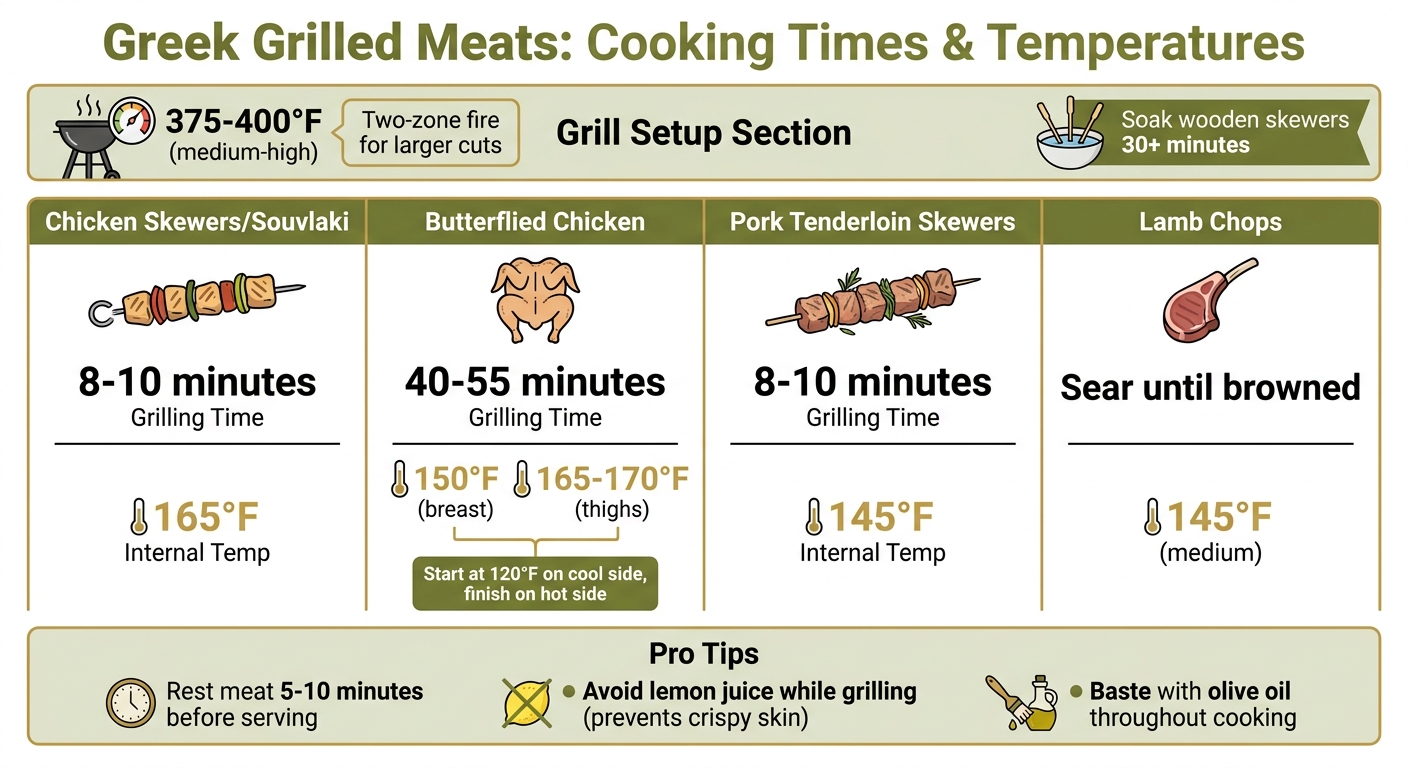
Greek Grilled Meats Cooking Times and Temperature Guide
Setting Up Your Grill
Once your meat is marinated and ready, it’s time to get your grill prepped for those perfect Greek flavors. Start by preheating your grill to 375–400°F (medium-high). If you’re grilling larger cuts, like butterflied chicken, set up a two-zone fire. This means arranging the coals to one side for high heat and leaving the other side cooler for indirect cooking. Using a gas grill? Heat it on high for about 10 minutes, then lower one side to medium-low for indirect heat.
If souvlaki is on the menu and you’re using wooden skewers, don’t forget to soak them in water for at least 30 minutes to avoid any fiery mishaps. To keep your meat from sticking, lightly grease the grill grates with olive oil.
With your grill set, the next step is nailing the cooking times and temperatures for each type of meat.
Cooking Times and Temperatures
Grilling times and internal temperatures are key to ensuring your meat is both safe to eat and deliciously cooked. Here’s a quick reference table:
| Meat Type | Grilling Time | Target Internal Temperature |
|---|---|---|
| Chicken (Skewers/Souvlaki) | 8-10 minutes | 165°F |
| Chicken (Butterflied/Whole) | 40-55 minutes | 150°F (Breast) / 165-170°F (Thighs) |
| Pork (Tenderloin Skewers) | 8-10 minutes | 145°F |
| Lamb (Chops) | Varies (sear until browned) | 145°F (for medium) |
For butterflied chicken, place the legs closer to the hotter side of the grill while keeping the breast over the cooler side. This helps the dark meat reach 165-170°F while keeping the breast juicy at 150°F. A good technique is to start the chicken on the cooler side until it reaches 120°F internally, then move it to the hotter side to crisp the skin.
Culinary expert J. Kenji López-Alt explains:
"Starting the chicken low and slow over indirect heat and finishing over the hotter side of the grill gives you the juiciest results".
Once the meat is done, let it rest for 5 to 10 minutes before carving. This step allows the juices to settle back into the meat.
Don’t forget: olive oil not only adds flavor but also helps keep the meat moist while grilling.
Now that the grilling is underway, let’s talk about how to enhance those flavors with proper basting.
Basting During Cooking
Olive oil plays a key role in basting, just as it did in your marinade. Use half of the olive oil mixture before grilling to help seal in moisture. Save the remaining marinade for a finishing touch after grilling.
One tip: Avoid adding lemon juice while the meat is on the grill, as it can prevent the skin from crisping. Instead, grill lemon halves cut-side down for about 5 minutes until caramelized. Once done, squeeze the charred lemon over your cooked meat for a burst of flavor.
For that extra touch, drizzle some Big Horn Olive Oil over the finished dish. This step adds a sweet, smoky layer of citrus flavor that’s a hallmark of Greek grilling.
Serving Ideas and Practical Tips
After grilling, take your meal to the next level by pairing your meats with sides and garnishes that complement the smoky, savory flavors.
What to Serve with Greek Grilled Meats
Pair your grilled meats with warm, slightly charred pita, creamy tzatziki, and fresh vegetables for a classic Greek-inspired meal. Lightly grill the pita to enhance its flavor and make it more pliable. For something heartier, try Greek rice, lemon-herb potatoes, or crispy fries. Adding grilled lemon halves not only boosts flavor but also adds a visually appealing touch.
If you're going for a street-food vibe, wrap your grilled skewers in pita bread and top them with onions, tomatoes, and a sprinkle of paprika. As Simply Dishy highlights:
"The combination of warm, smoky meat and cool, tangy tzatziki is a sensory contrast that keeps you coming back for more. It's a pairing that speaks to the Greek philosophy of balance".
These sides and garnishes make for a meal that’s as visually enticing as it is flavorful.
Plating and Garnishing
For a welcoming presentation, serve the grilled meats family-style on a large platter surrounded by salads and sides, allowing guests to build their own plates. Drizzle a touch of Big Horn Olive Oil over the meat just before serving, and include a small bowl of tzatziki on the platter for a cool contrast.
Finish the dish with fresh herbs like oregano or mint and a sprinkle of lemon zest for a bright, aromatic touch. Caramelized grilled lemon halves also make for a simple yet elegant garnish. As Simply Dishy observes:
"The act of passing a skewer, tearing off a piece of pita, and scooping up tzatziki is as much about connection as it is about flavor".
Health Benefits of Grilling with Olive Oil
Big Horn Olive Oil not only enhances the flavor and appearance of grilled dishes but also offers health benefits. Their Ultra Premium EVOO helps retain moisture in the meat, reducing the need for heavy sauces . It also ensures that aromatics like garlic, oregano, and lemon zest adhere to the meat for even flavor distribution.
As Big Horn Olive Oil explains:
"Olive oil isn't just a carrier - it's a star ingredient. It helps the marinade cling to the chicken, locks in moisture during cooking, and creates those lightly crisp, golden edges...".
For an extra layer of flavor and healthy fats, drizzle a bit more olive oil over the meat after grilling.
Conclusion
To bring your Greek grilling to the next level, focus on the practical techniques we've covered. Start by emulsifying your marinade for even flavor distribution. Use a two-zone fire setup to balance indirect and direct heat, ensuring perfectly cooked meat. And don’t forget to reserve half your marinade to use as a finishing sauce - it’s a simple way to elevate your dish from good to unforgettable. As Mykonos Kitchen & Bar wisely puts it, "The foundation of any great Greek dish is fresh, high-quality ingredients... Extra virgin olive oil [is] the heart of Mediterranean cooking, used in marinades and basting".
Big Horn Olive Oil's Ultra Premium EVOO is an excellent choice for this. It not only keeps your meat juicy but also crisps the edges beautifully while infusing it with bright flavors of lemon, garlic, and oregano. A final drizzle of fresh olive oil after grilling enhances the richness and ties the dish together with an extra burst of flavor. These straightforward methods, paired with premium ingredients, let you bring authentic Mediterranean flavors to your grill, creating tender, flavorful meats that honor the simplicity and quality of Greek cooking.
FAQs
Can I use this Greek marinade on fish or shrimp?
Greek marinade is an excellent choice for fish and shrimp. The combination of olive oil, lemon, garlic, and herbs pairs perfectly with seafood, boosting its flavor while ensuring it stays juicy and tender.
How do I keep grilled meat juicy without burning the outside?
To keep your grilled meat juicy without charring it, aim for a moderate cooking temperature - around 300°F to 325°F. After searing, lightly baste the meat with olive oil using a brush or even a sprig of herbs. This helps lock in moisture while also reducing the risk of burning.
Begin by cooking the meat over indirect heat to ensure even cooking, then finish it off with a quick sear to develop a flavorful crust. Be cautious with heavy oil applications or extremely high heat, as these can cause flare-ups that might ruin your meal.
How do I safely use reserved marinade as a finishing sauce?
To use reserved marinade as a finishing sauce safely, it’s important to prevent cross-contamination. Always save a portion of the marinade before it comes into contact with raw meat. This untouched portion can be used as a finishing sauce after cooking.
If you plan to reuse marinade that has been in contact with raw meat, you must make it safe by bringing it to a boil and simmering it for at least 5 minutes. This step kills any harmful bacteria, making it safe to serve.