

5 Health Perks of Grilling Meat with Olive Oil
If I grill meat with extra virgin olive oil, I can cut some heat-made compounds by 80% to 90% in some studies. That’s the big takeaway.
Here’s the short version:
- Less HCA formation: EVOO can help lower compounds linked to cancer risk during high-heat grilling.
- Better fat choice: It swaps in more monounsaturated fat than butter.
- More antioxidant support: EVOO brings polyphenols and vitamin E to the meal.
- Better vitamin uptake: Fat from olive oil helps my body absorb vitamins A, D, E, and K.
- Good heat performance: EVOO can hold up well on the grill because it resists breakdown.
I’d also keep the method simple:
- Use 1–2 tablespoons per pound of meat
- Marinate for at least 30 minutes
- Grill around 350–450°F
- Flip often and avoid heavy charring
Healthy Grilling: How to Prevent Carcinogens During Grilling Using a Marinade
sbb-itb-4066b8e
Quick Comparison
| Point | Plain grilling | Grilling with EVOO |
|---|---|---|
| HCA formation | More likely at high heat | Lower in some cases |
| Surface oxidation | Higher | Lower |
| Fat profile | Depends on the meat and add-ons | Better if used instead of butter |
| Nutrient absorption | No added help | Helps with fat-soluble vitamins |
| Heat stability | No added surface protection | Oil layer helps protect the surface |
My bottom line: olive oil is a simple add-on that can make grilled meat a bit safer, a bit healthier, and easier to cook well.
Why Olive Oil Works at the Grill
Olive oil does more than stop meat from sticking.
EVOO helps protect meat on the grill by slowing oxidation on the surface. Its polyphenols, oleic acid, and vitamin E help shield the outer layer of the meat from heat damage. And that protection works best when the oil stays on the surface while the meat cooks.
Each way you apply it does a slightly different job. Brushing, basting, or coating the meat during cooking helps keep that thin layer in place. That can help limit the formation of harmful compounds while also adding flavor.
That’s the basic reason behind the five health perks below.
1. Reduced Carcinogens from High-Heat Grilling
The biggest health upside of using EVOO on the grill is simple: it can lower your exposure to grilling-related carcinogens. When meat cooks over high heat, it can form HCAs, compounds linked to cancer risk. That makes cutting HCA formation one of the main reasons to use olive oil when grilling meat.
Here’s what helps. EVOO polyphenols can slow oxidation on the meat’s surface, which helps reduce HCA formation. Think of it as a light shield on the outside of the meat, right where high heat does most of its damage. That’s why EVOO works so well in high-heat cooking.
Marinating or coating meat in EVOO can reduce HCA formation by 80% to 90%. And it doesn’t take a long soak to make a difference. Even a short marinade can help. For more antioxidant support, pair EVOO with lemon juice and herbs like rosemary or thyme. Then brush the meat during cooking to keep that layer in place.
2. A Heart-Healthy Fat Swap for Better Cholesterol
EVOO does more than cut down harmful compounds. It also gives grilled meat a better fat mix.
When you use EVOO instead of butter, you replace saturated fat with monounsaturated fat. That shift supports healthier cholesterol levels and heart health. More specifically, these fats can help lower LDL while supporting HDL. So this is one of those swaps that feels easy and makes sense at the same time.
EVOO also holds up well on the grill, and its polyphenols can help limit oxidation during cooking.
For an easy option, whisk EVOO with aged balsamic vinegar for steak.
3. Anti-Inflammatory and Antioxidant Protection
EVOO does more than help cut HCA exposure. It also adds antioxidant support to grilled meat. Its polyphenols and antioxidants can help limit oxidation during cooking, which gives grilled meat another health-minded edge.
You’ll get the most out of that effect with a short marinade, especially if you mix in herbs. A marinade made with EVOO plus rosemary, garlic, or thyme can help reduce heat damage on the meat’s surface.
Once the meat comes off the grill, you can keep that going with a finishing drizzle. Let it rest for 5 to 10 minutes, then add a light drizzle of EVOO for one more layer of antioxidants and moisture.
4. Better Nutrient Absorption from Grilled Meals
EVOO doesn't just help limit grill damage. It also helps your body get more from the food itself.
Here's why: your body needs dietary fat to absorb fat-soluble vitamins like A, D, E, and K. The fat in EVOO helps your body take in those nutrients from the meal.
This is especially useful with grilled vegetables. EVOO helps move fat-soluble nutrients from the vegetables into the body, which makes the meal do more nutritionally.
For the best results, marinate the meat or give it a light coating before it hits the grill. And if you're cooking vegetables too, basil- or garlic-infused EVOO can add more flavor while helping with nutrient absorption at the same time.
5. Safer, More Stable Grilling with Olive Oil
Beyond cutting down harmful compounds, EVOO also performs well on the grill. Its smoke point is lower than that of refined oils, but that doesn't tell the whole story. What matters more here is oxidative stability: EVOO resists the kind of breakdown that can happen under grill heat.
The big reason comes down to its fat makeup. More than 70% of EVOO is monounsaturated oleic acid, and that fat has just one double bond in its structure. In plain English, that means it's much less reactive to heat than polyunsaturated oils.
EVOO also contains polyphenols and vitamin E, which help slow oxidation when the oil heats up.
A 2018 heat test found that EVOO produced the lowest levels of harmful breakdown compounds among all the oils tested. So if you're using it as a marinade or a light coating before grilling, you can feel good about that choice.
For normal grilling temperatures, a light coating or marinade gives EVOO solid heat protection. That heat stability also makes EVOO easy to use in simple grilling methods, which we'll cover next.
Quick Grilling Tips to Get the Most Out of Olive Oil
A few simple moves can help olive oil stay on the meat, cut down flare-ups, and guard the surface while food cooks. Start with the right amount of oil. Then let the marinade and grill temp do their job.
How Much Olive Oil to Use Per Pound of Meat
Use 1–2 tablespoons of EVOO per pound of meat. That works well for steaks, chicken, pork, and kebabs.
You want enough oil to lightly coat the meat, not so much that it pools or drips off. Once the meat is coated, the rest of the marinade can cling better and add flavor as it sits.
Marinade Add-Ins That Boost Flavor and Protection
A few add-ins can do more than make the meat taste better. Acidic ingredients like lemon juice, apple cider vinegar, or wine help break down meat fibers and can also lower HCA formation during cooking.
Herbs and spices such as rosemary, garlic, oregano, thyme, and turmeric add extra antioxidant support along with the EVOO. It’s a simple combo, but it works.
Let the marinade sit for at least 30 minutes before grilling. That short rest gives the oil, acid, and seasonings time to soak into the surface instead of just sitting there.
How to Manage Heat and Avoid Heavy Charring
Heat control is where a lot of grilling goes right - or goes sideways fast.
Keep your grill in the 350–450°F range. That’s hot enough to cook the meat well without pushing the outside into deep char too fast. If you're cooking over charcoal, set up an indirect heat zone so you can slide meat away from the flame when flare-ups hit.
It also helps to:
- Flip the meat often, about once a minute, to lower HCA formation
- Trim visible fat to cut drips, flare-ups, and smoke
Olive Oil vs. Plain Grilling: A Side-by-Side Look
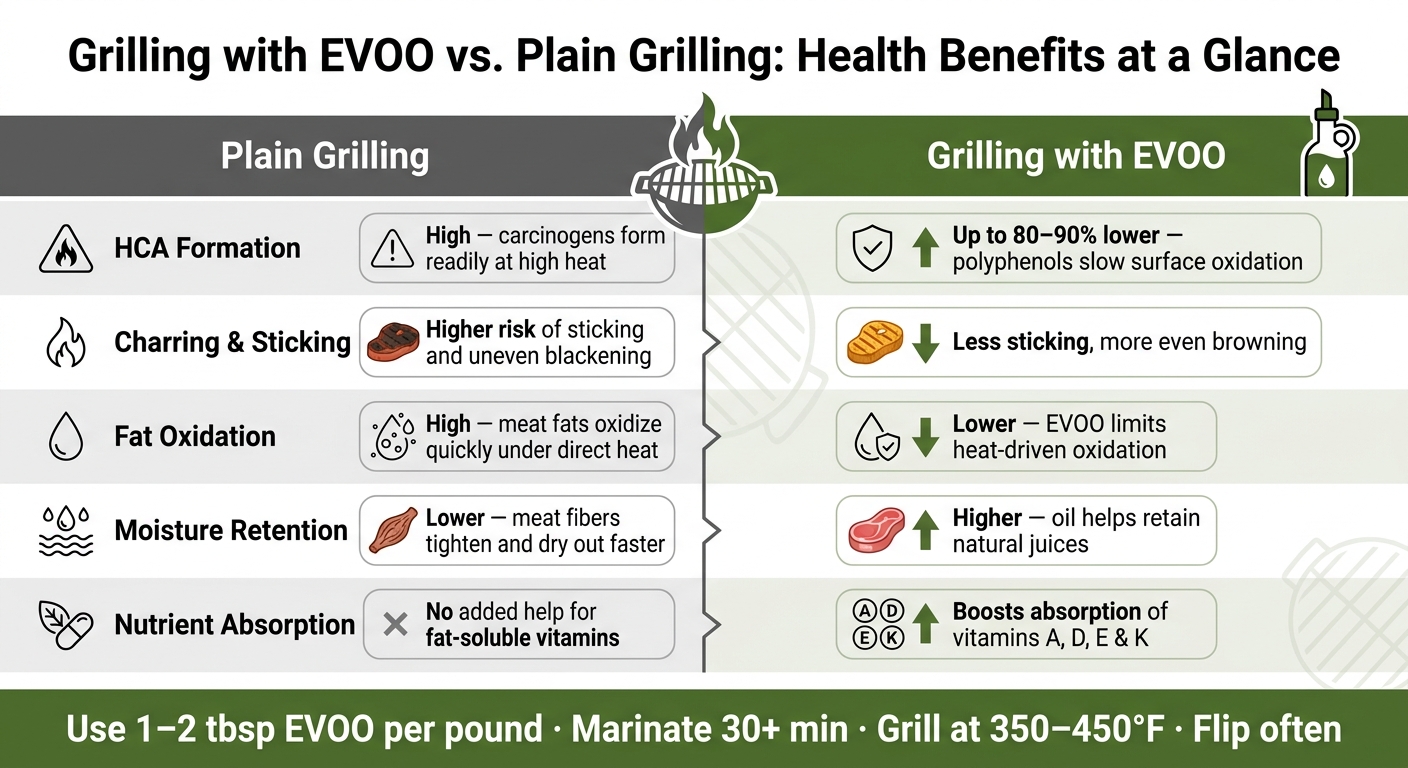
Grilling with EVOO vs. Plain Grilling: Health Benefits at a Glance
A light coat of EVOO can change what happens on the grill in a few clear ways. You're not just adding oil for flavor. You're helping the meat handle high heat a bit better.
| Feature | Without EVOO | With EVOO |
|---|---|---|
| HCA Formation | High; carcinogens form readily at high heat | Lower; EVOO slows surface oxidation |
| Charring | Higher risk of sticking and uneven blackening | Less sticking and more even browning |
| Fat Oxidation | High; meat fats oxidize quickly under direct heat | Lower; EVOO helps limit heat-driven oxidation |
| Moisture Retention | Lower; meat fibers tighten and dry out faster | Higher; oil helps retain juices |
The main shift comes from EVOO's antioxidants. They help protect the meat's surface as heat builds, which can cut down on oxidation.
That, in turn, can mean less harsh charring, less sticking, and juicier results. Even a thin coating before the meat hits the grate can make a clear difference.
Conclusion
The main point is simple: EVOO helps make grilled meat cleaner, healthier, and easier to handle on the grill. Using extra virgin olive oil is a small change, but it can pay off in a few clear ways - fewer harmful compounds, better fat quality, antioxidant support, improved nutrient absorption, and steadier performance over high heat.
A light coating, a short marinade, and moderate heat are usually all it takes to put it to work.
FAQs
Does olive oil work on all meats?
Yes. Olive oil pairs well with beef, lamb, pork, poultry, and seafood. It helps keep meat moist, supports even cooking, and adds flavor.
For the best results, match the oil to the meat. Bold, peppery olive oils work best with red meat, while lighter, fruitier, or citrus-infused oils fit poultry and delicate seafood better.
Can I grill with olive oil at high heat?
Yes, but the type of olive oil and the grill temperature matter.
EVOO usually has a smoke point of 350°F to 410°F, so it works best for medium-heat grilling. If you're searing at over 425°F, light or refined olive oils are a better fit.
If you want to keep the oil’s flavor and nutrients in better shape, avoid too much heat. A two-zone setup helps. You can also grill with less oil, then finish the food with a drizzle of premium EVOO.
What should I mix with olive oil for grilling?
Mix olive oil with an acid like balsamic vinegar, lemon juice, or wine to make a balanced marinade. A good starting point is a 3:1 ratio of oil to acid.
If you want more flavor, stir in extras like fresh rosemary, thyme, minced garlic, or citrus zest. That simple mix does a lot: it adds more taste, helps the meat stay moist, and gives it a light coating that helps during grilling.