

Ultimate Guide to Crudités and Olive Oil Dips
Crudités are raw vegetables served with dips, offering a nutritious, visually appealing snack. Pairing them with olive oil-based dips not only enhances their flavor but also adds healthy fats and antioxidants. Here's what you need to know:
- Vegetables: Use a mix of crunchy (carrots, celery), juicy (grape tomatoes), and blanched (broccoli, asparagus) options. Seasonal choices like snap peas in spring or roasted squash in fall add variety.
- Olive Oil Dips: High-quality olive oils, like Big Horn's, elevate dips such as herb-infused oils, hummus, or spicy sauces. Infused oils (lemon, rosemary) can complement specific vegetables.
- Health Perks: Raw vegetables provide fiber, vitamins, and minerals, while olive oil supports heart health and boosts nutrient absorption.
To prepare, wash and cut vegetables, blanch tougher ones, and arrange them around dip bowls for a polished look. Choose olive oil with a high antioxidant content for maximum flavor and benefits. A thoughtful pairing of vegetables and dips creates a delicious, nutrient-rich platter for any occasion.
Portuguese Green Olive Dip with Crudites | EG12 Ep35
How to Prepare a Crudités Platter
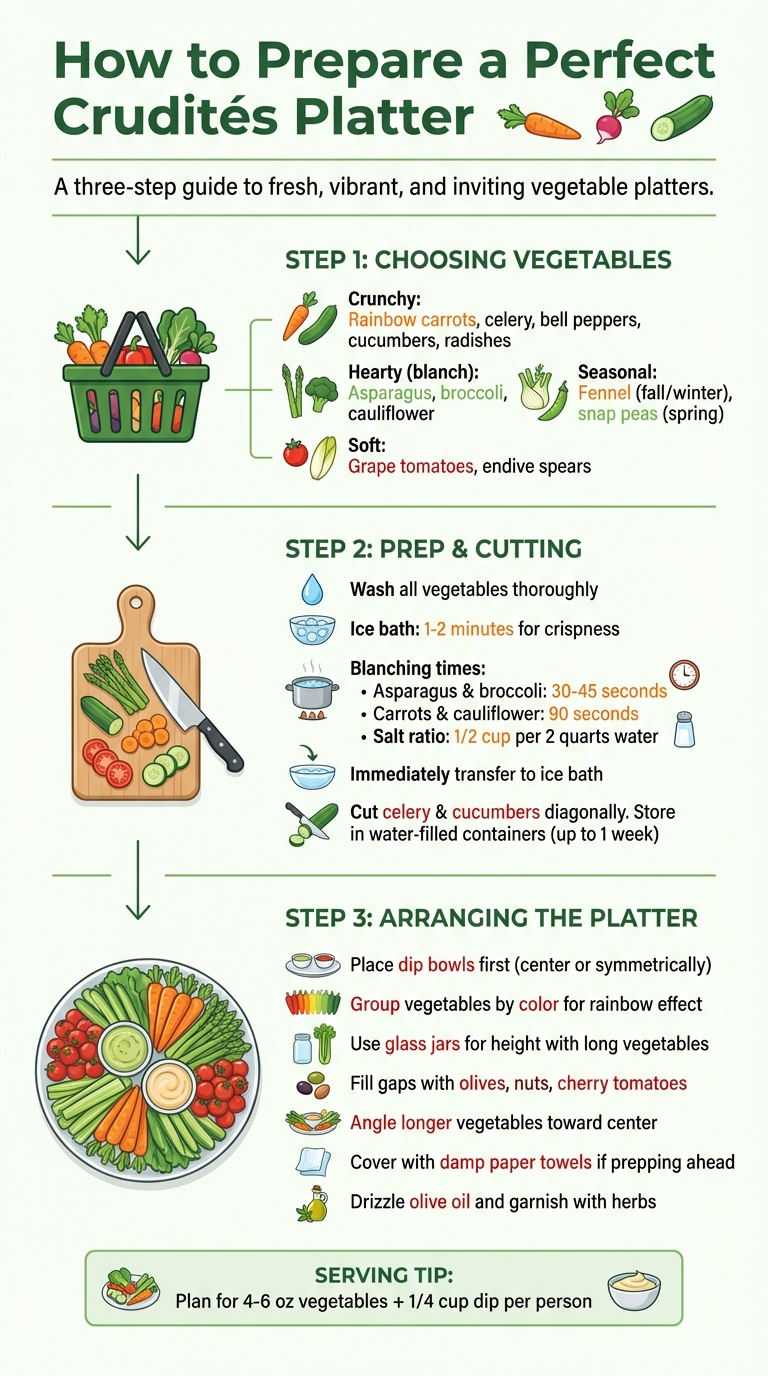
How to Prepare a Perfect Crudités Platter: Step-by-Step Guide
Choosing the Right Vegetables
Start with a variety of crunchy vegetables like rainbow carrots, celery, and bell peppers to bring texture and vibrant color to your platter. Include crisp options such as Persian or English cucumbers - both have thin skins and lack bitter seeds - and add radishes like watermelon or French Breakfast varieties for a peppery kick. For heartier vegetables, blanch options like asparagus, broccoli crowns, and cauliflower to make them tender yet crisp.
To balance the crunch, include soft, bite-sized pieces like grape tomatoes for a burst of juiciness. Leafy greens such as endive spears or radicchio leaves can double as natural scoops for dips. Opt for carrots with their feathery tops intact for a fresher taste. For seasonal flair, try fennel or roasted delicata squash during cooler months, or squash blossoms in spring and summer.
Prepping and Cutting Vegetables
Thoroughly wash all vegetables to remove dirt and pesticides. To ensure crispness, briefly submerge raw vegetables in an ice bath for 1–2 minutes. For tougher vegetables like asparagus and broccoli, flash-blanch them in boiling water with 1/2 cup of table salt per 2 quarts of water - 30–45 seconds is enough. Carrots and cauliflower need about 90 seconds. Immediately transfer them to an ice bath to lock in their vibrant color.
When cutting, slice celery and cucumbers diagonally to create a larger dipping surface and a polished appearance. Instead of snapping asparagus stalks, peel the lower half to reduce waste and keep the spears tender. Leave about 3/4 inch of green tops on carrots for a rustic look, and store pre-cut pieces in water-filled containers in the fridge to keep them crisp for up to a week. Use a mandoline to slice watermelon radishes thinly into chips - storing them in water overnight will give the edges a delicate curl.
Once prepped, it’s time to arrange your platter.
Arranging Your Platter
Start by placing your dip bowls on the platter - position them in the center, at opposite ends, or symmetrically to anchor the layout. Build the vegetable arrangement around the dips, grouping by color to create a rainbow effect or contrast. Use glass jars to display long vegetables upright, and add height with small bowls or cake stands. For variety, mix different cuts of the same vegetable - for instance, leave some carrot tops intact or quarter cauliflower florets to highlight their inner color.
Fill any gaps with extras like olives, nuts, radishes, or cherry tomatoes to create a cohesive look. Angle longer vegetables toward the center for balance. If you’re assembling the platter a few hours in advance, cover it with damp paper towels and refrigerate to keep everything fresh. For the final touch, drizzle your dips with high-quality olive oil and garnish with herbs like dill, parsley, or mint.
Olive Oil-Based Dip Recipes
These olive oil dips are a perfect match for your freshly prepared crudités platter, adding flavor and flair to every bite.
Olive Oil and Herb Dip
Start with a high-quality olive oil like Big Horn's Estate Reserve Ultra Premium Extra Virgin Olive Oil or Tuscan Olive Oil to ensure a fresh, bold flavor. In a shallow bowl, mix ½ cup of olive oil with 2 finely minced garlic cloves. Stir in 1 teaspoon each of dried oregano, basil, and parsley, along with ½ teaspoon of red pepper flakes, kosher salt, and freshly cracked black pepper.
For a smoother blend, grind the garlic and herbs with a mortar and pestle before mixing them into the oil. If you're using rosemary, opt for fresh sprigs to avoid a tough texture. To enhance the flavor, consider adding a splash of balsamic vinegar or a tablespoon of freshly grated Parmesan cheese. This dip is best served immediately but can be stored in the refrigerator for up to a week. Pair it with your crudités for a deliciously balanced bite.
Olive Oil Hummus
Give traditional hummus a flavorful twist with olive oil. Combine 15 ounces of drained chickpeas, 3 tablespoons of tahini, 2 garlic cloves, and the juice of 1 lemon in a food processor. While blending, slowly drizzle in ⅓ cup of Big Horn's Lemon Olive Oil until the mixture becomes silky smooth. The citrus-infused oil not only enhances the flavor but also creates a creamier texture.
For a creative variation, swap chickpeas with black beans for a spicy kick or use cooked green lentils blended with coconut cream, shallots, and a touch of cayenne. These legume-based dips are naturally gluten-free and pair wonderfully with blanched vegetables like asparagus or broccoli. Finish with a drizzle of olive oil and a sprinkle of paprika or fresh herbs for added flair. Serve alongside your crudités for a well-rounded snack.
Spicy Olive Oil Dipping Sauce
Bring some bold heat to your platter with this spicy olive oil dip. In a bowl, mix ½ cup of Big Horn's Wild Mushroom Olive Oil with 2 tablespoons of red pepper flakes, 1 teaspoon of smoked paprika, and ½ teaspoon of cayenne pepper. Add 2 minced garlic cloves and a pinch of sea salt, then let the mixture sit for 15 minutes to allow the flavors to meld.
For a Mediterranean-inspired variation, use Rosemary Olive Oil and mix in sun-dried tomatoes and shallots. This dip pairs beautifully with hearty vegetables like cauliflower, bell peppers, and jicama. Thanks to Big Horn's premium oils, which have a smoke point of 410°F or higher, this dip works well for both raw and gently warmed preparations. For the best flavor, use olive oil within 9 months of its crush date. Serve with your crudités for a bold and flavorful bite.
sbb-itb-4066b8e
Pairing Vegetables with Dips
Matching Vegetables with Dip Flavors
Creating a standout crudités platter comes down to smart pairings that enhance each other rather than clash. Root vegetables like carrots and radishes shine when paired with herb-based or creamy dips - garlic-herb olive oil or classic hummus are perfect examples. For crisp greens like snap peas and celery, tangy dips bring out their fresh crunch without overpowering their natural flavor.
Mild vegetables like cucumbers and bell peppers pair wonderfully with bold, salty dips, while bitter or earthy options like endive and asparagus are best complemented by rich, umami-packed choices. A warm Bagna Cauda - made with olive oil, anchovies, and garlic - offers just the right savory depth for these vegetables.
"There's no creamy dip to hide behind here: Use the nicest spring vegetables and olive oil you can find." - Bon Appétit
Texture plays a big role in pairing success, too. Thicker dips like hummus are ideal for sturdy vegetables that can scoop easily, such as carrots, bell peppers, and cauliflower florets. On the other hand, lighter, oil-based sauces pair better with delicate vegetables like asparagus spears or thin radish slices. For tougher veggies, try blanching them in salted water for 30–90 seconds, then shocking them in ice water. This quick step not only enhances their color but also makes dips stick better while keeping their crunch intact.
Using Infused Olive Oils for Flavor Combinations
Infused olive oils, like those from Big Horn Olive Oil, open up even more pairing possibilities. Lemon Olive Oil can brighten the flavors of cucumbers and carrots, while Rosemary or Wild Mushroom oils add depth to earthier vegetables. For radishes, cauliflower, or even roasted potatoes, these oils can transform a basic Greek yogurt dip or elevate store-bought hummus with just a drizzle.
Tuscan Olive Oil works beautifully with bell peppers, broccoli, and zucchini, especially when paired with hummus or spinach-based dips. The trick is to match the oil's intensity to the vegetable's flavor - subtle oils work best with delicate veggies, while bolder infusions can complement heartier options.
Health Benefits of Crudités and Olive Oil
This section highlights the nutritional perks of raw vegetables and the antioxidant-rich properties of high-quality extra virgin olive oil.
Nutritional Value of Raw Vegetables
Raw vegetables pack a punch when it comes to nutrition. A typical serving of crudités provides 5g to 12g of dietary fiber, which not only supports digestion but also helps you feel satisfied for longer. They’re also loaded with vitamins - you can get anywhere from 15,386 to 21,785 IU of Vitamin A, which is great for vision and immune health, and 24mg to 58mg of Vitamin C, which benefits your skin and provides antioxidant protection.
Beyond vitamins, raw vegetables are a good source of essential minerals. A serving can contain up to 201mg of calcium, a notable amount of iron, and 837mg to 1,025mg of potassium, all of which contribute to overall health. They’re also low in calories but nutrient-dense - a hearty portion has just 240 to 310 calories, while still offering 3g to 11g of plant-based protein and plenty of fiber to keep you full.
The variety of colors in vegetable platters isn’t just for show - it’s a sign of the diverse health benefits they offer. For instance, purple cauliflower contains anthocyanins, orange carrots and cauliflower are rich in carotenoids, and green veggies like broccoli and asparagus deliver chlorophyll. To maximize these benefits, experts suggest planning for 4 to 6 ounces of raw vegetables per person. Plus, veggies like cucumbers, radishes, and celery, which are high in water content, can also help you stay hydrated.
Health Benefits of Extra Virgin Olive Oil
The magic of extra virgin olive oil (EVOO) lies in its polyphenols, which go beyond its well-known monounsaturated fats. High-quality EVOO is packed with antioxidants like hydroxytyrosol, oleuropein, and tyrosol, which your body absorbs efficiently - over 50%, in fact. These antioxidants bind to lipoproteins in your bloodstream, delivering their protective effects directly to your cells.
"The overwhelming evidence of the studies over the past 30 years confirms that the consumption of authentic extra virgin olive oil that is high in polyphenols can increase life expectancy, lower blood pressure and cholesterol." - Randall Abney, Founder, Uncommon Gourmet
EVOO, such as Big Horn Olive Oil, has been shown to reduce LDL cholesterol by up to 14% in just four weeks, while keeping HDL cholesterol levels steady. It also contains oleocanthal, a compound with anti-inflammatory properties similar to ibuprofen, which can help manage chronic inflammation tied to heart disease and arthritis. Clinical research indicates that consuming four tablespoons of olive oil daily can lower both systolic and diastolic blood pressure, with some patients requiring less hypertension medication as a result.
Pairing raw vegetables with EVOO is a win-win. The healthy fats in olive oil help your body absorb fat-soluble vitamins (A, D, E, and K) from the vegetables. This combination also helps regulate blood sugar - vegetable fiber slows glucose absorption, while olive oil avoids triggering an insulin spike. Big Horn Olive Oil takes it a step further by cold-pressing its olives within two hours of harvest, preserving polyphenols and ensuring you get the full spectrum of health benefits in every dip.
Conclusion
Crafting a gorgeous crudités platter with olive oil-based dips doesn’t require advanced kitchen skills - just fresh vegetables and high-quality olive oil. The secret to turning an ordinary appetizer into something unforgettable lies in the ingredients. Big Horn Olive Oil delivers bottles within 1–3 months of harvest, ensuring the oil is bursting with flavor and packed with nutrients at its peak freshness.
When you start with top-tier ingredients, even the simplest recipes can feel gourmet. It’s all about keeping it uncomplicated. Picture this: drizzling Estate Reserve Ultra Premium EVOO over creamy hummus, pairing the zesty Whole Fruit Lemon Olive Oil with crunchy radishes, or offering a classic Italian-style spread with just olive oil, lemon wedges, and a sprinkle of sea salt. These small touches let the flavors shine. As customer Cleo H. puts it:
"My husband buys fine wine; I prefer the 'finest' olive oil!! We enjoy it daily"
For serving, plan on 4 to 6 ounces of vegetables and about 1/4 cup of dip per person. And don’t forget - olive oil tastes best within 9 months of its crush date, so enjoy it while it’s fresh. Feeling adventurous? Try Big Horn’s infused varieties like Rosemary or Tuscan Olive Oil to discover unique flavor pairings. Thoughtful choices like these make every bite feel special.
But it’s not just about the taste. Every bite of your crudités platter offers a health boost, thanks to the cardiovascular and anti-inflammatory perks of ultra-premium olive oil. With the right ingredients and a little attention to detail, you can elevate simple raw vegetables into a memorable, gourmet experience that’s as good for your body as it is for your taste buds.
FAQs
What are the best vegetables to include in a crudités platter for each season?
When assembling a crudités platter, sticking with seasonal vegetables is the key to achieving peak flavor, texture, and freshness.
In spring and summer, lean into crisp, colorful options like snap peas, baby carrots, radishes, cherry tomatoes, cucumbers, bell peppers, asparagus, broccoli florets, and tender greens such as Little Gem lettuce. These veggies are naturally sweet and refreshing, making them ideal for the warmer months.
In fall and winter, choose heartier selections like sliced beets, cauliflower, roasted squash, carrots, radicchio, Brussels sprouts, and fennel. These vegetables offer earthy, subtly sweet flavors that complement the cooler seasons beautifully.
For a simple, flavorful dip, drizzle some high-quality extra virgin olive oil - such as Big Horn Olive Oil - over the vegetables. Top it off with a pinch of flaky sea salt and a squeeze of fresh lemon to highlight the natural taste of the produce. This no-fuss approach keeps your platter fresh, seasonal, and delicious.
How does using high-quality olive oil make crudités healthier?
Using high-quality extra-virgin olive oil does more than just elevate the taste of your crudités - it also adds a nutritional punch. Packed with monounsaturated fats, polyphenols, and antioxidants, olive oil can contribute to better heart health, help manage inflammation, and support blood sugar control.
What’s more, olive oil enhances your body’s ability to absorb fat-soluble vitamins (such as A, D, E, and K) from raw veggies. So, drizzling it over your crudités isn’t just about flavor - it’s a simple way to make your snack healthier, too.
How can I create unique and flavorful olive oil dips for crudités?
To make mouthwatering olive oil dips that stand out, start with high-quality extra virgin olive oil - something like Big Horn Olive Oil works perfectly for its fresh and rich flavor. Then, build layers of taste by adding herbs like basil or rosemary, spices such as smoked paprika or chipotle, or a touch of citrus zest from lemon or orange for a refreshing aroma. For a perfectly balanced dip, mix 2 parts olive oil with 1 part acid, like vinegar or freshly squeezed lemon juice, and finish it off with a sprinkle of flaky sea salt or freshly cracked black pepper.
If you're feeling adventurous, try combining olive oil with roasted beet puree and a hint of chili for a bold, spicy beet dip. Or, go for a nutty twist by blending olive oil with toasted pistachios, a splash of lemon juice, and a touch of honey for a creamy, flavorful option. Want to take it up a notch? Add a drizzle of balsamic reduction or experiment with fruit-infused olive oils, like orange or lemon, to create something truly special. Serve these dips with fresh veggies like carrots, radishes, or snap peas, and garnish with micro-herbs or a bit of citrus zest for a vibrant, crowd-pleasing display.