

Health Benefits of EVOO on Roasted Vegetables
Roasting vegetables with extra virgin olive oil (EVOO) does more than improve taste - it also boosts their nutritional value. Here's why:
- Nutrient Boost: EVOO transfers heat-stable antioxidants, like oleuropein and hydroxytyrosol, directly into vegetables during roasting.
- Improved Absorption: The healthy fats in EVOO help your body absorb fat-soluble vitamins (A, D, E, K) and carotenoids like beta-carotene and lycopene.
- Heart Health: Antioxidants from EVOO, combined with its monounsaturated fats, support cardiovascular wellness and reduce inflammation.
- Preserved Nutrients: Unlike boiling, roasting with EVOO retains nutrients and enhances antioxidant levels in vegetables.
For the best results, use high-quality, cold-pressed EVOO and roast at 350°F–400°F. This cooking method ensures maximum flavor and health benefits.
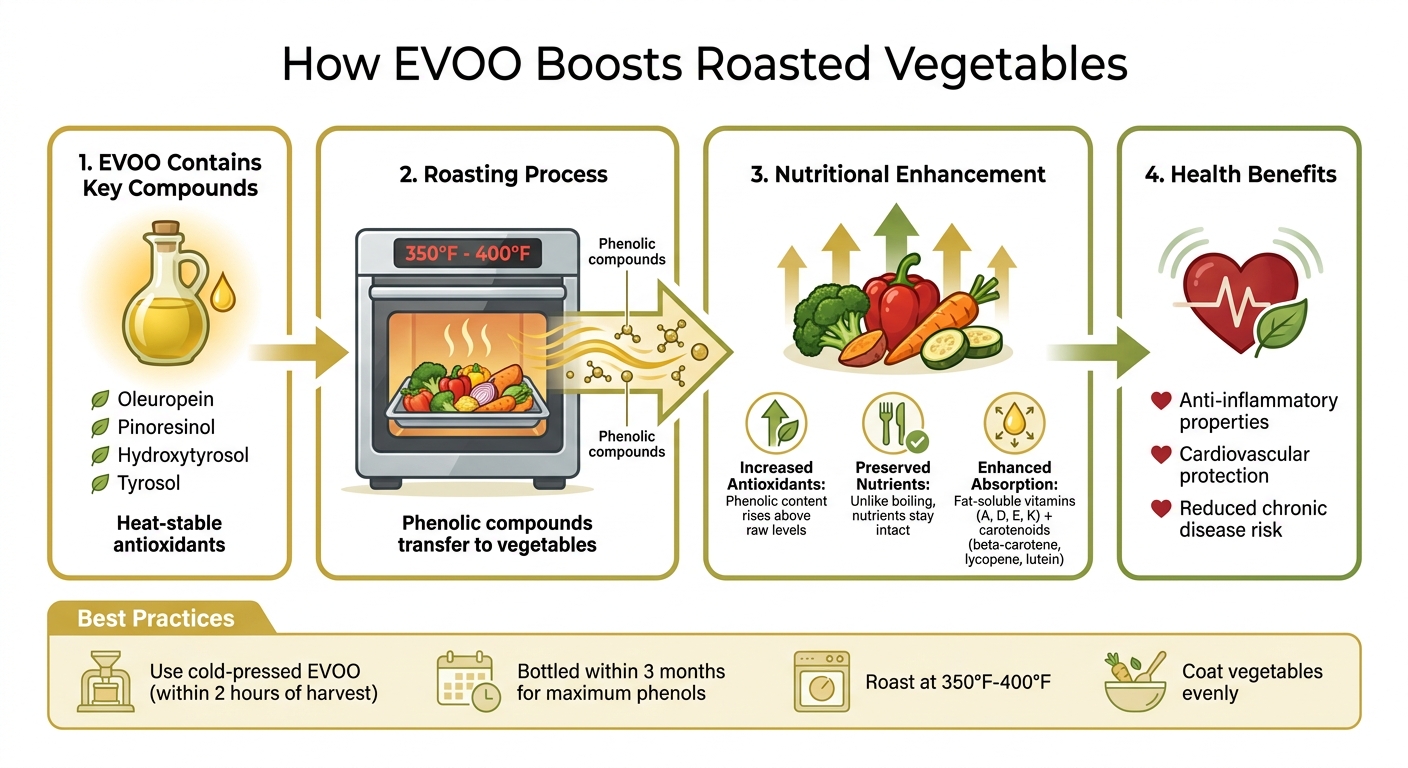
How EVOO Enhances Roasted Vegetables: Nutrient Transfer and Absorption Process
A Spoonful of Olive Oil Makes the Vegetables Go Down: The Health Benefits of Cooking with EVOO
sbb-itb-4066b8e
Phenolic Compounds Transferred by EVOO
When you roast vegetables with extra virgin olive oil (EVOO), its phenolic compounds are absorbed by the veggies, enhancing their antioxidant levels. In fact, this process can make roasted vegetables even more nutritious than raw ones. Let’s dive into the main phenolic compounds in EVOO and how they interact during roasting.
Main Phenolic Compounds in EVOO
EVOO contains four standout phenolic compounds: oleuropein, pinoresinol, hydroxytyrosol, and tyrosol. These compounds are known for their ability to reduce inflammation and help lower the risk of chronic diseases. What makes EVOO special is its production method - mechanical cold extraction - which preserves these beneficial compounds, unlike refined oils that lose much of their nutritional value during processing.
How Roasting Transfers Phenolic Compounds
Roasting vegetables with EVOO doesn’t just add flavor - it’s a powerful way to boost their antioxidant properties. According to research by Ramírez-Anaya et al., Mediterranean vegetables cooked with EVOO show a significant increase in both phenolic content and antioxidant capacity. This is possible because the phenolic compounds in EVOO are heat-stable, as confirmed by the UC Davis Olive Center.
"The healthy phenols and mono-unsaturated fats from extra virgin olive oil can transfer into cooked food."
This means roasted vegetables can end up with more antioxidants than if they were eaten raw or boiled. By using EVOO, you’re not just cooking - you’re creating a nutrient-packed dish that’s as healthy as it is delicious.
Improved Nutrient Absorption and Antioxidant Levels
Cooking with extra virgin olive oil (EVOO) doesn’t just enhance flavor - it can also improve how your body absorbs nutrients and antioxidants. The healthy fats in EVOO play a key role in helping your digestive system absorb fat-soluble vitamins like A, D, E, and K more effectively.
Better Absorption of Fat-Soluble Nutrients
Roasting vegetables with EVOO can break down their cell walls, releasing nutrients that would otherwise remain locked in. On top of that, EVOO encourages bile production, which aids in absorbing fat-soluble vitamins and carotenoids such as beta-carotene, lycopene, and lutein.
"EVOO's stability in cooking ensures that the nutrients in the oil and the foods cooked with it, remain intact and available for absorption." – Zejd
The monounsaturated fats in EVOO also integrate into cell membranes, further enhancing the transport of nutrients throughout your body. This process not only boosts nutrient absorption but also helps retain antioxidants.
Higher Phenolic and Antioxidant Content
Interestingly, roasting with EVOO can actually increase the phenolic and antioxidant levels in vegetables. For instance, a 2015 study revealed that potatoes fried in EVOO had higher phenolic and antioxidant content compared to boiling. Similarly, research from the University of Barcelona in 2020 highlighted that EVOO retains a significant amount of its beneficial compounds even when heated.
"When cooking with extra virgin olive oil, the phenols move into the food." – North American Olive Oil Association
EVOO’s oxidative stability also provides an added benefit: it protects fat-soluble nutrients from breaking down during cooking. This makes it one of the most reliable oils for preserving essential compounds, even at higher temperatures.
Anti-Inflammatory and Cardiovascular Benefits
Extra virgin olive oil (EVOO) doesn’t just make vegetables taste better - it also delivers anti-inflammatory and heart-friendly benefits. When you roast vegetables with EVOO, it infuses them with phenolic compounds that help combat oxidative stress, a key contributor to chronic inflammation and cardiovascular problems.
Polyphenols and Heart Health
EVOO is packed with phenols that can improve heart health by increasing the antioxidant levels in vegetables. These antioxidants are linked to a lower risk of long-term degenerative diseases. Research from the University of Granada highlights that roasting vegetables with EVOO significantly boosts their phenolic content, which offers cardiovascular protection.
"The phenols from the oil are transferred to the vegetables, enhancing them with compounds that are not naturally present in them." – University of Granada
This transfer of antioxidants not only upgrades the nutritional value of your vegetables but also ensures they’re more beneficial for heart health.
EVOO Stability During Roasting
EVOO’s ability to remain stable at moderate cooking temperatures plays a big role in maintaining its health benefits. Unlike boiling, which can cause nutrients to escape into the water, roasting with EVOO keeps these beneficial compounds intact. This method not only preserves the oil’s nutrients but also enhances the overall nutritional quality of roasted vegetables, making them a better choice for supporting cardiovascular wellness.
Best Practices for Roasting with EVOO
To get the most out of your roasted vegetables, the type of extra virgin olive oil (EVOO) you use and your cooking technique make all the difference. High-quality EVOO, paired with the right approach, can boost both flavor and nutritional value.
Selecting High-Quality EVOO
Start by choosing EVOO that’s cold-pressed within two hours of harvesting and bottled within three months. This ensures the oil retains its phenolic compounds, which can transfer to your vegetables during roasting. Brands like Big Horn Olive Oil offer ultra-premium options, such as their Estate Reserve or single-source varieties like Arbequina, Picual, and Coratina, known for their rich antioxidant profiles. Always check the harvest date on the bottle - freshness is key to maximizing the oil's health benefits.
Recommended Roasting Temperatures and Techniques
For the best results, set your oven between 350°F and 400°F. This range strikes a balance between developing rich flavors and preserving nutrients. Before roasting, coat your vegetables evenly with EVOO. This step not only enhances flavor but also ensures those antioxidants are absorbed into your dish. Unlike boiling, which can strip away nutrients, roasting with EVOO helps retain them while adding healthful compounds.
Cooking Method Comparison
When it comes to preserving nutrients, roasting with EVOO stands out. Unlike water-based methods like boiling, which can leach vitamins and minerals, roasting allows vegetables to retain their nutritional value while benefiting from the phenolic compounds in the oil. This method is a flavorful and health-conscious choice for your kitchen.
Conclusion
Roasting vegetables with extra virgin olive oil (EVOO) doesn’t just enhance their flavor - it also boosts their nutritional profile. Studies from the University of Granada reveal that this cooking method increases the phenolic content of vegetables, thanks to the transfer of beneficial compounds from the oil itself. EVOO also aids in the absorption of fat-soluble vitamins like A, D, E, and K, along with carotenoids that promote eye health and support your immune system. Plus, phenolic compounds such as oleuropein and hydroxytyrosol provide anti-inflammatory benefits and help protect against chronic illnesses like heart disease and diabetes.
The quality of the olive oil plays a key role in how many phenols are transferred. High-quality options, like Big Horn Olive Oil - cold-pressed within two hours of harvesting and bottled within three months - help ensure your vegetables get the maximum nutritional boost.
FAQs
Does roasting with EVOO destroy its antioxidants?
When you roast vegetables with extra virgin olive oil (EVOO), its antioxidant properties are not destroyed. In fact, research suggests that these antioxidants are preserved and, in some cases, may even increase depending on how you cook. While certain phenols might decrease during the process, EVOO still holds onto its health benefits, making it an excellent option for roasting vegetables.
How much EVOO should I use when roasting vegetables?
To get perfectly roasted vegetables, use about 1–2 tablespoons of extra virgin olive oil (EVOO) per baking sheet. This light coating not only prevents the veggies from turning soggy but also encourages that golden caramelization everyone loves.
Which vegetables benefit most from roasting with EVOO?
Vegetables such as broccoli, cauliflower, root vegetables, zucchini, summer squash, and Brussels sprouts are perfect for roasting with a drizzle of extra virgin olive oil (EVOO). Roasting brings out their natural flavors and creates a delightful texture when done at the right temperature and for the right amount of time, making them both tasty and healthy.