

Health Benefits of Smoked Spice Olive Oils
Smoked spice olive oils combine extra virgin olive oil (EVOO) with spices and natural wood smoke, creating a flavorful and nutrient-rich option for cooking and health. These oils are rich in monounsaturated fats, antioxidants like polyphenols, and bioactive compounds from spices such as turmeric, garlic, and chili. They support heart health, reduce inflammation, and protect cells from oxidative damage. Priced around $21.99 per bottle, they are crafted using methods like infusion and co-milling to retain nutrients and enhance flavor.
Key Highlights:
- Nutritional Boost: High in oleic acid, Vitamin E, and polyphenols like hydroxytyrosol.
- Heart Health: Lowers LDL cholesterol, improves blood pressure, and reduces heart disease risk.
- Anti-Inflammatory: Combines oleocanthal (from EVOO) with spices like curcumin and gingerols.
- Cooking Versatility: Great for salad dressings, marinades, and low-to-medium heat cooking.
- Storage Tips: Use dark containers to protect from light and maintain quality.
These oils are a flavorful way to add health benefits to your meals, supporting cardiovascular and overall well-being.
Olive oil: How to unlock health benefits | Prof. Tim Spector & Elizabeth Berger
Nutritional Content and Health Properties
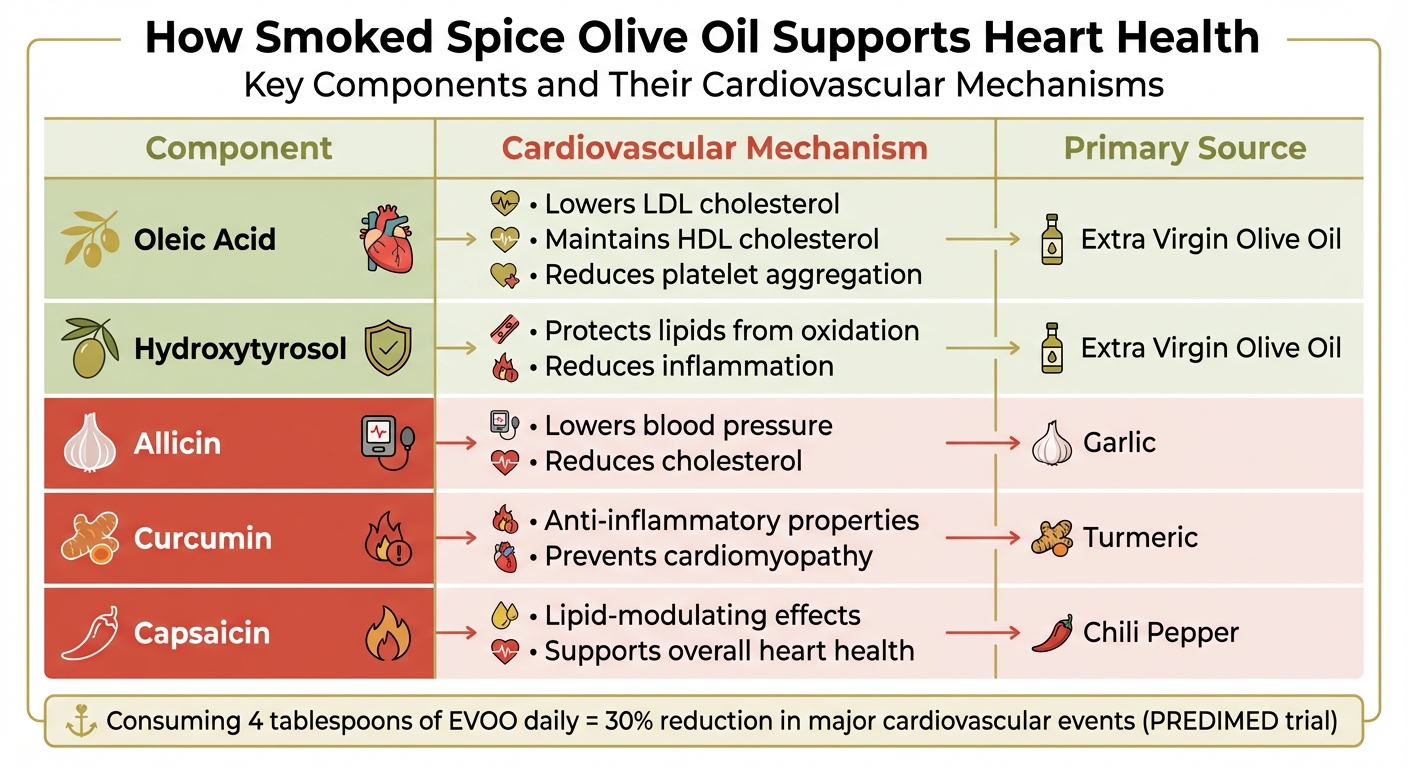
Cardiovascular Benefits of Smoked Spice Olive Oil Components
Smoked spice olive oils pack a punch when it comes to nutrients. At their core is oleic acid, a monounsaturated fat that makes up 55%–83% of the oil's fat content. This healthy fat helps lower LDL (the "bad" cholesterol) while keeping HDL (the "good" cholesterol) steady. Just one tablespoon of olive oil delivers about 20% of your daily Vitamin E needs.
The oil is also rich in bioactive polyphenols like hydroxytyrosol, oleocanthal, and oleuropein, which act as powerful antioxidants. These compounds help stop harmful oxidation that can damage cells. According to the European Food Safety Authority, consuming 5 mg of hydroxytyrosol and its derivatives daily is enough to protect blood lipids from oxidative stress. When spices are added to the mix, the oil gains even more nutrients, thanks to compounds like curcumin (from turmeric), allicin (from garlic), gingerols (from ginger), and capsaicinoids (from chili peppers).
Antioxidant Content
Extra virgin olive oil is loaded with antioxidants, particularly phenolic compounds that neutralize free radicals and protect cells from oxidative stress. One standout phenolic, oleocanthal, is known for its anti-inflammatory effects, which are similar to ibuprofen.
"Olive oil polyphenols contribute to the protection of blood lipids from oxidative stress."
- European Food Safety Authority (EFSA)
Adding spices like rosemary and thyme takes the antioxidant power to another level. These spices bring in compounds like carnosic acid and carvacrol, which not only boost the oil's antioxidant capacity but also activate protective genetic pathways such as NRF2. Plus, the fat in olive oil enhances the absorption of fat-soluble compounds like curcumin and carotenoids, turning it into what researchers call a "functional condiment".
Cardiovascular Health
The heart-health benefits of smoked spice olive oils are well-supported by research. A Harvard study of 99,000 participants over 24 years found that swapping 10 grams of margarine, butter, or mayonnaise daily with olive oil reduced the risk of cardiovascular disease and coronary heart disease by 5% to 7%. Even half a tablespoon of olive oil a day has been linked to a 19% lower risk of death from heart disease.
Polyphenols in olive oil improve nitric oxide availability, which promotes vasodilation and helps lower blood pressure. Even a small drop in blood pressure - just 2 mmHg - has been tied to a 6% lower risk of coronary heart disease and a 15% lower risk of heart attack. The PREDIMED trial in Spain also showed that consuming four tablespoons of extra virgin olive oil daily led to a 30% reduction in major cardiovascular events compared to a low-fat diet.
Spices in the oil amplify these effects. Garlic's organosulfur compounds help lower blood pressure and reduce platelet aggregation, while turmeric's curcuminoids offer protective effects for the heart. Capsaicinoids from chili peppers help manage lipids, and ginger contributes to lowering cholesterol levels.
| Component | Cardiovascular Mechanism | Primary Source |
|---|---|---|
| Oleic Acid | Lowers LDL, maintains HDL, reduces platelet aggregation | EVOO |
| Hydroxytyrosol | Protects lipids from oxidation, reduces inflammation | EVOO |
| Allicin | Lowers blood pressure and cholesterol | Garlic |
| Curcumin | Anti-inflammatory, prevents cardiomyopathy | Turmeric |
| Capsaicin | Lipid-modulating, supports heart health | Chili Pepper |
Anti-Inflammatory Properties
Chronic inflammation is a key factor in many health issues, including heart disease. Smoked spice olive oils tackle inflammation from multiple angles. Oleocanthal, known for its anti-inflammatory properties, works alongside the added spices to amplify these benefits. For example, turmeric's curcumin is particularly effective at reducing joint inflammation and oxidative stress.
"Oleocanthal... shows some features which recall the pharmacological effects of ibuprofen, a modulator of inflammation and analgesia."
- Maurizio Servili, Professor, University of Perugia
The spices bring their own anti-inflammatory agents into the mix. Gingerols and shogaols from ginger support digestive health and reduce overall inflammation. Meanwhile, garlic's organosulfur compounds strengthen the immune system and combat systemic inflammation. Together, these ingredients create a powerful synergy, making smoked spice olive oils an easy and flavorful way to add anti-inflammatory benefits to your meals, whether as a drizzle or a marinade.
How Smoking and Spice Infusion Affect Health Properties
Smoking Process and Nutritional Content
Smoking olive oil doesn’t change its basic nutritional makeup - its healthy fats and oleic acid stay intact. However, adding herbs and spices during the smoking process slows down oxidation, giving the oil an extra layer of stability over time.
When herbs like rosemary and basil are infused into the oil, their antioxidants migrate into the olive oil, enhancing its stability. This benefit becomes especially noticeable after about three months of storage. But there’s a trade-off. Infusion can lead to a quicker reduction of some native antioxidants, such as tocopherols (Vitamin E) and secoiridoids, compared to oils made through co-milling. Over time, the total amount of phenolic compounds in infused oils can decrease by as much as 73% during storage. So, while infusion introduces new beneficial compounds, it’s important to weigh these gains against the loss of existing antioxidants.
Health Properties of Added Spices
Adding spices to olive oil doesn’t just enhance flavor - it turns the oil into a functional ingredient packed with health benefits. These spices contribute bioactive compounds that work alongside olive oil’s natural properties.
For example, chili peppers bring capsaicinoids, which make up about 90% of their bioactive components. These compounds are linked to heart health, improved blood sugar control, and reduced lipid oxidation during both storage and cooking. Interestingly, the antioxidant activity of capsaicinoids is strongly correlated with their concentration, showing an R² value of 0.920. Capsaicinoid levels peak within seven days of infusion, though longer infusion times can increase oxidation markers.
"Capsaicinoids are also able to prevent lipid oxidation when they are added in vegetable oils and during thermal treatments."
- Nicola Caporaso et al., University of Naples Federico II
Turmeric offers curcuminoids and sesquiterpenes, which are known for their anti-inflammatory and liver-protective effects. Garlic, on the other hand, infuses the oil with organosulfur compounds like allicin, as well as saponins and flavonoids. These components help lower blood pressure and cholesterol and provide antibacterial properties. Ginger contributes gingerols and shogaols, which have cholesterol-lowering and antibiotic effects. The olive oil’s fat content enhances the absorption of these fat-soluble compounds, making their health benefits even more accessible.
sbb-itb-4066b8e
Selecting Quality Smoked Spice Olive Oils
Freshness and Production Methods
The quality of smoked spice olive oil plays a huge role in both its flavor and health properties. Fresh oils retain more beneficial compounds compared to those produced on a larger scale.
Timing is everything when it comes to processing. Olives that are milled within 24–48 hours of being harvested maintain their peak freshness and nutrient content. Modern two-way decanter systems help preserve 30% more phenols by avoiding water addition, which protects antioxidants like oleacein and oleocanthal that dissolve in water.
Cold-pressing is another key factor. This low-temperature mechanical process ensures that antioxidants and volatile compounds remain intact. To meet health standards, olive oil must contain at least 5 mg of hydroxytyrosol and its derivatives per 20 g of oil.
Proper storage is also crucial. Dark glass or opaque containers shield the oil from light, which can cause oxidation. Additionally, when oils are infused with herbs like rosemary or basil, antioxidants from the herbs transfer into the oil, slowing down oxidation. This protective effect becomes most noticeable after about three months of storage. These careful methods help preserve both the oil's flavor and its nutritional value.
"The quality level is maintained if the storage conditions aim to minimize the oxidative processes that occur due to oxygen and light."
- Barbara Lanza
These meticulous production practices are the foundation of Big Horn Olive Oil's exceptional products.
Big Horn Olive Oil's Quality Standards
Big Horn Olive Oil takes these principles to the next level, delivering Ultra Premium Extra Virgin Olive Oils that adhere to strict freshness and processing guidelines.
Their oils are cold-pressed within just 2 hours of harvest, ensuring maximum polyphenol content for both health benefits and bold flavor. Products are delivered within 3 months of harvest, preserving their antioxidant levels. This means you’re getting oils rich in oleocanthal and oleacein - compounds known for their peppery "sting" and anti-inflammatory properties.
Their smoked and spiced varieties combine this Ultra Premium base with carefully chosen herbs and spices. These blends not only enhance flavor but also boost the absorption of fat-soluble vitamins and polyphenols from the added ingredients.
Big Horn Olive Oil's global reputation for excellence stems from its dedication to superior extraction methods, ideal storage practices, and top-tier ingredients. Choosing their smoked spice olive oils means selecting a product that prioritizes both freshness and phytochemical richness.
Using Smoked Spice Olive Oils in Your Cooking
Cooking Methods and Applications
Smoked spice olive oils shine in various culinary roles, from finishing oils to dressings, marinades, and even low-to-medium heat cooking. However, they aren't ideal for high-heat searing, as excessive heat can diminish their delicate spice notes.
If your oil begins to smoke, it’s a signal to act quickly. As Bill Briwa, Senior Chef-Instructor at the Culinary Institute of America, explains:
"When you see the first few wisps of smoke that tells you the oil is the hottest it can get before you burn it. You then have two choices. You can take the pan off the heat. Or you can add some food."
Adding food immediately can help lower the pan's temperature and preserve the oil’s quality.
For cold uses, smoked spice olive oils are perfect in salad dressings, as a bread dip, or drizzled over finished dishes like roasted vegetables, soups, or mashed potatoes. This approach keeps their aromatic compounds intact while delivering heart-healthy monounsaturated fats. They’re also excellent in marinades, allowing their smoky, spicy flavors to infuse meats or poultry before grilling, without risking heat degradation.
"The reason you want to avoid burning the oil is that it will spoil the taste of the food, and some of the (EVOO's) healthy properties may be destroyed."
- Kathy McManus, Director of the Department of Nutrition, Brigham and Women's Hospital
These methods not only protect the oil’s flavor but also enhance the overall dish.
Food Pairing Suggestions
Some foods naturally pair with smoked spice olive oils, creating a perfect balance of flavor and nutrition. Grilled proteins, such as fish, chicken, and beef, are excellent matches. This pairing, a staple in Andalusian cuisine, allows the smoky oil to complement the grill’s char without overpowering the meat.
Vegetables and starches also benefit from smoked oils. Drizzle them over roasted root vegetables, steamed greens, or warm pasta for an added layer of flavor. For breakfast, try jalapeño-infused oil on scrambled eggs or tacos, taking advantage of capsaicin’s metabolism-boosting properties. Chili and chipotle oils are ideal for chicken marinades and BBQ sauces, adding depth to these dishes.
Garlic-infused oils work wonderfully with pizza, roasted potatoes, and pasta, while also offering immune-supporting benefits. Meanwhile, rosemary and herb blends are a great match for lamb and roasted vegetables, bringing additional antioxidants to the table. For a balanced dressing, smoked oils pair beautifully with acidic ingredients like lemon or pomegranate balsamic vinegar.
Black pepper-infused oils are another standout option. The piperine in black pepper can improve your body’s ability to absorb nutrients from vegetables. Plus, the 2020–2025 Dietary Guidelines for Americans suggest consuming about 27 grams (just under 2 tablespoons) of added oils daily for a 2,000-calorie diet, making these flavorful oils an enjoyable way to meet that recommendation.
Conclusion
Smoked spice olive oils bring together the benefits of heart-healthy monounsaturated fats and bioactive compounds that promote cardiovascular health, reduce inflammation, and support metabolism. High-quality extra virgin olive oil (EVOO) is rich in oleic acid and essential phenolic compounds like hydroxytyrosol, which help protect blood lipids from oxidative damage. When combined with spices such as chili, turmeric, or garlic, these oils create a powerful synergy that enhances both health benefits and culinary flavor.
The quality of EVOO plays a key role in its health advantages. As Barbara Lanza highlights:
"The ability to choose high-quality EVOO and TOs and their correct use in gastronomy... are two inseparable aspects to support the efficacy of the two products in health protection".
Advancements in production, like 2-way decanter systems, have further improved the quality of olive oil by boosting beneficial phenols such as oleacein by up to 30% compared to traditional methods. These innovations ensure premium quality and enhanced nutritional value.
Big Horn Olive Oil exemplifies these high standards with its Ultra Premium EVOO, which is cold-pressed within 2 hours of harvest to retain maximum antioxidants. Their smoked and spice-infused oils combine internationally recognized quality with the added metabolic and immune-supporting properties of carefully chosen spices.
Incorporating these oils into your meals - whether as a finishing touch, in marinades, or for low-heat cooking - offers real health perks. Research suggests that consuming just 1/2 tablespoon daily is linked to reduced risks of heart disease and neurodegenerative conditions. By selecting high-quality oils and storing them properly - away from light and oxygen - you can preserve their rich flavors and health-promoting properties.
FAQs
What are the heart health benefits of smoked spice olive oils?
Smoked spice olive oils offer a flavorful way to support heart health. Packed with antioxidants, these oils help counter oxidative stress and inflammation - two factors often tied to heart disease. They may also aid in lowering LDL (bad cholesterol) levels while boosting HDL (good cholesterol), promoting better cardiovascular function overall.
Adding high-quality options like Ultra Premium Extra Virgin Olive Oils to your meals not only enhances their taste with a rich, smoky flavor but also provides a heart-friendly boost to your diet.
How should I store smoked spice olive oils to keep them fresh and flavorful?
To keep smoked spice olive oils at their best, store them in a cool, dark place away from heat, light, and air. Opt for dark glass bottles with airtight seals to shield the oil from light and oxygen, which can lead to spoilage. Aim for a storage temperature between 57°F and 70°F. Once opened, refrigeration is a good idea - especially for oils infused with fresh herbs or spices - to help preserve their flavor and extend their shelf life.
Steer clear of plastic containers, and avoid placing the oil near heat sources like stoves or ovens, as high temperatures can break down its quality. With proper storage, you can enjoy the oil's taste and benefits for much longer.
Can you use smoked spice olive oils for cooking at high temperatures?
Smoked spice olive oils are suitable for high-heat cooking, as their smoke points are typically high enough to handle frying, roasting, and sautéing without degrading or losing their beneficial properties.
That said, to maintain their bold flavors and nutritional value, it's wise to avoid pushing them to extremely high temperatures. For the best results, use them for medium to high-heat cooking or drizzle them over finished dishes for an extra layer of flavor.