

Herb Olive Oil Quick Bread Recipes
Herb olive oil quick breads are a fast and flavorful alternative to traditional yeast-based loaves. These breads use olive oil and baking powder instead of yeast, making them easy to prepare in under an hour. Here's what you need to know:
- Key Ingredients: High-quality extra virgin olive oil, fresh herbs like rosemary and thyme, and all-purpose or gluten-free flour.
- Texture and Flavor: Olive oil adds moisture, tenderness, and a subtle fruity flavor, while herbs provide a fragrant, savory touch.
-
Recipe Variations:
- Gluten-Free Option: Use a 1:1 gluten-free flour blend with almond flour and xanthan gum for structure.
- Cheese and Herb Swirl: Add cheese ribbons and an herb mixture for a layered, flavorful loaf.
- Skillet Bread: Bake in a cast-iron skillet for a rustic, crispy crust.
For best results, use fresh olive oil, like Big Horn Olive Oil's Ultra Premium EVOO, which enhances flavor and extends freshness. Whether you're making a no-knead loaf or experimenting with variations, these breads are perfect for quick meals or snacks.
No-Knead No-Yeast Homemade Bread with Olive Oil & Herbs
sbb-itb-4066b8e
No-Knead Olive Oil and Herb Bread
If you're a fan of herb-infused breads but want something quick and easy, this no-knead recipe delivers both flavor and convenience. Start by mixing 3 cups of all-purpose flour, 1 tablespoon of baking powder, a pinch of sea salt, and your choice of fresh herbs like rosemary or thyme. This straightforward approach allows olive oil to shine, enhancing both the taste and texture.
Olive oil plays a key role here, transforming the bread's texture by interacting with proteins like gluten. As professional baker Mark explains:
"Fat adds tenderness by coating structure-builders like gluten and other proteins, which limits their development. This is what makes... cakes tender."
For the best results, use Big Horn Olive Oil's Ultra Premium EVOO, known for its clean and fruity flavor. Cindy Rainey from Veggie Fun Kitchen offers an important tip:
"Make sure your olive oil is fresh and of the best quality you can afford. Using bad-tasting olive oil isn't going to improve any by baking in your bread!"
Before popping the dough into the oven, drizzle a little extra olive oil on top. This step not only enhances the flavor but also gives the crust a rich, crispy finish. Bake until the internal temperature reaches 180°F–210°F - comfortably below olive oil's smoke point of 374°F–405°F. Bonus: olive oil works as a natural preservative, helping your bread stay fresh longer.
Once baked, let the bread cool for about 30 minutes before slicing. This resting period helps maintain the tender crumb structure that olive oil helps create.
Recipe Variations
Put your own spin on herb quick breads with these creative twists.
Gluten-Free Herb Quick Bread
If you're avoiding gluten, you can still enjoy delicious herb quick bread. Use a 1:1 gluten-free flour blend, such as Bob's Red Mill or King Arthur Measure for Measure. These blends are designed to mimic the properties of wheat flour, thanks to their carefully balanced mix of starches and gums. For an extra tender and moist texture, combine the blend with super-fine blanched almond flour.
To help the bread hold its shape, add 1/4 teaspoon of xanthan gum for every cup of flour. As Jeanne Sauvage, a gluten-free baking expert, explains:
"Without gluten (in wheat) or the gums/seeds (added to gluten-free flours), baked goods are flat, crumbly, dry, and as heavy as hockey pucks".
For better rise and texture, go for aluminum-free baking powder and include a splash of apple cider vinegar. To combat the dryness that often comes with gluten-free baking, incorporate Big Horn Olive Oil for added moisture.
Want to take it up a notch? Add some cheese to your gluten-free herb quick bread for a savory kick.
Cheese and Herb Swirl Quick Bread
Elevate your loaf by creating a beautiful cheese and herb swirl. Blend fresh rosemary, parsley, dried thyme, oregano, crushed garlic, and Big Horn Olive Oil into a flavorful mixture. Instead of shredded cheese, use thin slices of melting cheeses like Cheddar, Gruyère, or Colby, cut into 0.1-inch strips. These cheese ribbons form distinct layers throughout the bread, adding texture and flavor.
To assemble, pour half the batter into your pan, spread the herb mixture and cheese strips evenly, then top with the remaining batter. This layering technique creates a marbled effect that's as tasty as it is visually appealing.
For a rustic option, try baking it in a skillet.
Skillet Rosemary Olive Oil Bread
Give your quick bread a rustic charm by baking it in a cast-iron skillet. Grease an 8-inch skillet and bake at 350°F for 45-50 minutes. The cast iron ensures even heat distribution, resulting in a beautifully golden crust. Before baking, drizzle an extra tablespoon of Big Horn Olive Oil on top and sprinkle with fresh rosemary for a flavorful, crunchy finish.
For the perfect crust, place a pan filled with 1 cup of hot water on the bottom rack of your oven to create steam. This helps the bread develop a crisp exterior. The bread is ready when its internal temperature hits 200°F, and the bottom sounds hollow when tapped.
No-Yeast vs. Yeast-Based Herb Breads
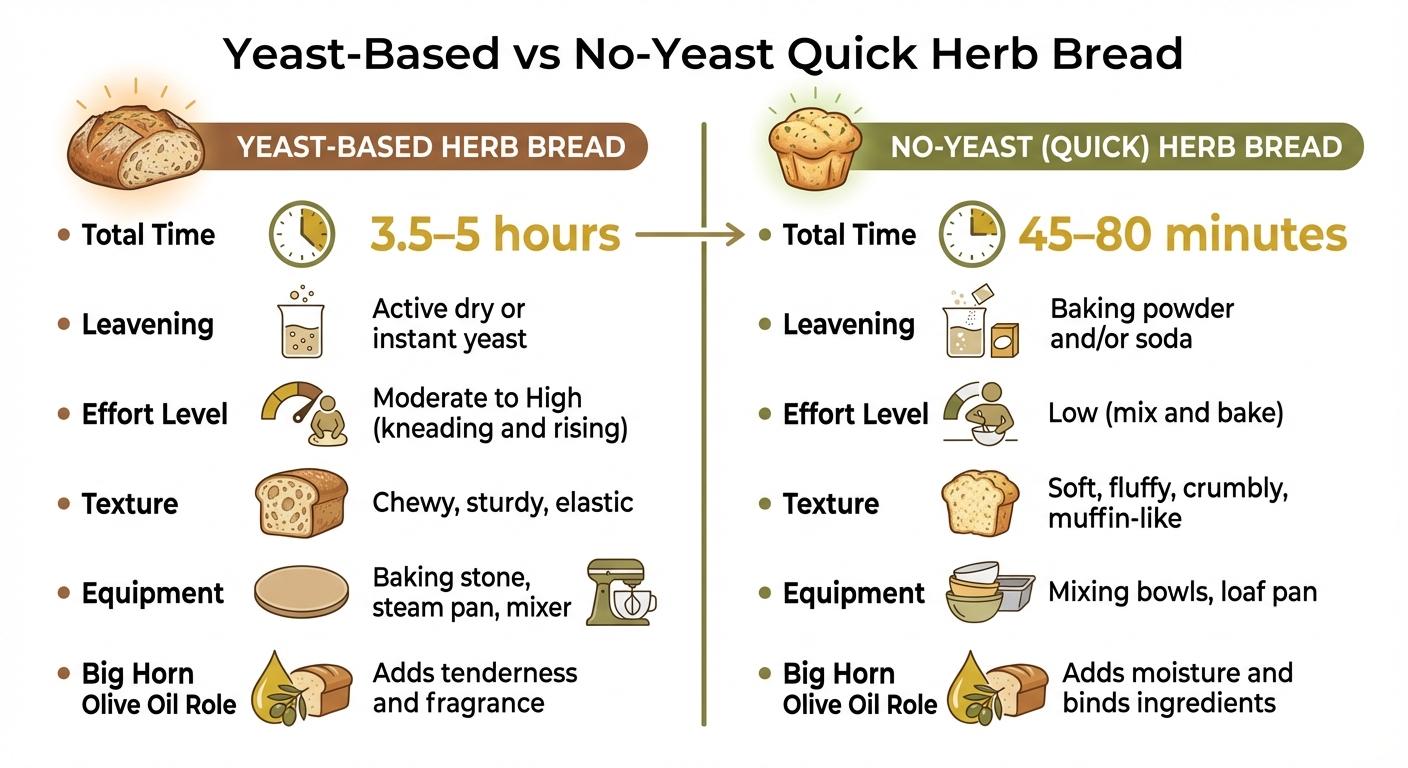
Yeast-Based vs No-Yeast Quick Herb Bread Comparison
Herb-infused breads offer a delightful way to elevate your baking, but the choice between no-yeast quick breads and yeast-based breads can significantly impact the final flavor and texture. If you're after something quick and tender, no-yeast breads are the way to go. For a more structured, chewy crumb, yeast breads are your best bet. As Casey Colodny, Founder of The Mindful Hapa, puts it:
"The best part about a quick bread is that there's no yeast involved and it's perfect for when you're low on time... there's no need to let the batter rise. You simply prepare the batter then bake it right away!"
Yeast breads, on the other hand, create a chewy texture with irregular air pockets, setting them apart from the soft, muffin-like texture of quick breads. Nagi from RecipeTin Eats explains:
"This is one of those recipes that isn't actually a bread in the traditional sense, it's a muffin batter baked in a loaf pan. So it doesn't have that chew you get with proper yeast bread, but it's irresistible in its own right."
These differences in texture and preparation make each type of bread suited to different culinary needs.
Yeast breads require more time and effort, involving kneading, shaping, and maintaining precise temperatures (105°F–115°F) to activate the yeast. Quick breads, in contrast, rely on baking powder or soda as leavening agents and follow a simple mix-and-bake process. The tools needed also vary: yeast breads often call for a baking stone and steam pan, while quick breads only need basic items like mixing bowls and a loaf pan.
Ingredient choices also play a key role in defining these breads. For instance, Big Horn Olive Oil enhances yeast breads by adding tenderness and fragrance, while it contributes moisture and helps bind ingredients in quick breads, keeping them fresh for longer.
Comparison Table
| Feature | Yeast-Based Herb Bread | No-Yeast (Quick) Herb Bread |
|---|---|---|
| Total Time | 3.5–5 hours | 45–80 minutes |
| Leavening | Active dry or instant yeast | Baking powder and/or soda |
| Effort Level | Moderate to High (kneading and rising) | Low (mix and bake) |
| Texture | Chewy, sturdy, elastic | Soft, fluffy, crumbly, muffin-like |
| Equipment | Baking stone, steam pan, mixer | Mixing bowls, loaf pan |
| Big Horn Olive Oil Role | Adds tenderness and fragrance | Adds moisture and binds ingredients |
How to Use Big Horn Olive Oil in Baking
When it comes to baking herb quick breads, choosing the right olive oil can make all the difference. Big Horn Olive Oil's Estate Reserve Ultra Premium EVOO stands out for its freshness, as it’s cold-pressed within just two hours of harvesting and used within three months. This attention to freshness is crucial, as Cindy Rainey from Veggie Fun Kitchen points out:
"Using bad-tasting olive oil isn't going to improve any by baking in your bread!"
For savory herb breads featuring bold flavors like rosemary and garlic, a robust olive oil is ideal. Its strong profile ensures it complements, rather than gets overshadowed by, these intense ingredients.
How you use olive oil in the recipe also impacts the final product. Whisking EVOO with wet ingredients like eggs, milk, or buttermilk ensures even distribution throughout the bread’s crumb. For an herb swirl, try mixing 3 tablespoons of EVOO with rosemary, parsley, and crushed garlic, then folding it into the batter. One reviewer from The Mindful Hapa shared:
"This little change [using high-quality infused olive oil] made the bread absolutely off-the-charts good"
Olive oil doesn’t just enhance flavor - it also plays a role in texture. For a golden-brown crust, drizzle 1 tablespoon of EVOO over the batter before baking. Alternatively, brush the loaf with olive oil immediately after baking and sprinkle flaked sea salt for an aromatic finish. You can even use olive oil to grease the loaf pan for easy release.
Beyond flavor, olive oil offers practical benefits. Nagi from RecipeTin Eats explains:
"Oil makes the crumb of the loaf more moist, and keeps it fresher for longer"
This method helps keep your bread moist for up to 4–5 days, making it both delicious and long-lasting.
Conclusion
Herb olive oil quick breads give home bakers an easy way to whip up flavorful, tender loaves without the long wait that comes with yeast-based recipes. The choice of a high-quality extra virgin olive oil (EVOO) is key to achieving the best results. As Valentina K. Wein, Founder of Cooking on the Weekends, puts it:
"Olive oil creates a soft, moist texture that's perfect for this savory bread recipe. Use one you love because it will impart some of its flavor, too."
Using olive oil not only enhances the flavor but also extends the bread's shelf life. It creates a moist texture and lends a pale golden color that pairs beautifully with soups, stews, or hearty sandwiches. These qualities make herb olive oil quick breads a versatile and appealing choice for any meal.
Big Horn Olive Oil's premium EVOO is an excellent option for savory breads, offering a fresh and robust flavor. For recipes loaded with herbs like rosemary, thyme, or garlic, a robust EVOO ensures the oil's character shines through and complements the bold ingredients rather than fading into the background.
Whether you're making a classic no-yeast loaf, a gluten-free variation, or a cheese-infused creation, the secret to success lies in the olive oil. Careful measuring and avoiding overmixing are essential for achieving that perfect tender crumb. Too much oil or overmixing can affect the texture, so balance is key. With quality ingredients and simple techniques, you can create a loaf that's both easy to make and incredibly satisfying.
FAQs
What effect does olive oil have on the texture of quick breads?
Olive oil takes the texture of quick breads to the next level, making them irresistibly moist, tender, and soft. It helps create a rich, delicate crumb that practically melts in your mouth. Plus, olive oil brings a subtle, savory note that pairs perfectly with fresh herbs like rosemary, thyme, or parsley, adding layers of flavor and aroma to your bread.
What kind of olive oil should I use for herb olive oil quick breads?
For the best flavor and texture in herb olive oil quick breads, opt for a mild, high-quality extra virgin olive oil with a smooth and slightly sweet taste. Steer clear of oils that are too bitter or have an intense grassy flavor, as they can overshadow the subtle notes of the fresh herbs.
How can I make gluten-free herb quick bread successfully?
To whip up a gluten-free herb quick bread, start with a gluten-free flour blend that includes a binder, like xanthan gum or psyllium husk. If your blend doesn’t already have one, simply add 1/2 teaspoon of xanthan gum per cup of flour - this helps the bread hold its shape. For a lighter, fluffier loaf, you might want to swap in oat flour instead of heavier options.
Gluten-free batters tend to dry out easily, so moisture is key. A good amount of high-quality extra-virgin olive oil, such as Big Horn Olive Oil, not only adds richness but also keeps the bread moist while infusing the herbs - think rosemary, thyme, or parsley - through every bite. The batter should have a consistency just a bit thicker than pancake batter. If it feels too dry, stir in a tablespoon of milk, yogurt, or even an extra egg to get the right texture.
Before baking, let the batter rest for about 10–15 minutes. This allows the starches to absorb the liquid fully. Then, bake it at 425°F on the middle rack. To check if it’s done, insert a toothpick - if it comes out clean, you’re good to go. Once out of the oven, let the bread cool on a wire rack for at least 15 minutes before slicing. This ensures the texture is just right and makes cutting easier.