

Herbes de Provence Vinaigrette Recipe
You can make this dressing in about 1 minute with a simple 3:1 ratio: 3 parts olive oil, 1 part balsamic vinegar. I’d use Dijon, dried Herbes de Provence, salt, and pepper, then shake it in a jar for 5 to 10 seconds.
Here’s the short version: this is a French-style vinaigrette with olive oil, balsamic, and a dried herb blend that often includes thyme, rosemary, savory, and oregano. It works on salads, roasted vegetables, grain bowls, chicken, and fish. If I want to change the taste, I can add garlic, lemon juice, or a small amount of honey or maple syrup.
What matters most:
- Ratio: 3 parts oil to 1 part vinegar
- Base mix: olive oil + dark balsamic + Dijon + Herbes de Provence
- Rest time: let it sit for 10 to 15 minutes
- Storage: keep it in the fridge for up to 7 days
- Fixes: add water if too thick, shake again if it separates
A few points stand out from the article:
- Dark aged balsamic gives a deeper, sweeter taste and a darker color
- White balsamic tastes lighter and keeps ingredients from turning brown
- Infused olive oil can give the dressing more herb flavor
- Olive oil may turn cloudy in the fridge, and that is normal
If I were making a standard batch, I’d start with 3/4 cup olive oil and 1/4 cup balsamic vinegar, then season in small amounts and adjust after tasting. The main idea is simple: mix, rest, taste, and use.
Easy Herbed Vinaigrette | It's Only Food w/ Chef John Politte
sbb-itb-4066b8e
Ingredients and Equipment You Need
This recipe follows the classic 3:1 vinaigrette ratio - 3 parts oil to 1 part vinegar. A solid place to start is 3/4 cup extra virgin olive oil and 1/4 cup balsamic vinegar. That ratio gives you a balanced dressing that isn't too sharp or too heavy. After that, the herb blend and the kind of balsamic you use shape the final taste.
The main ingredients are simple: extra virgin olive oil or Herbes de Provence infused olive oil, balsamic vinegar, Dijon mustard, dried Herbes de Provence, kosher salt, and freshly ground black pepper. If you want to tweak the flavor, you can also add minced garlic, honey or maple syrup, or a squeeze of fresh lemon juice.
For equipment, a 10–12 oz glass jar with a tight-fitting lid is the easiest choice. Just add everything and shake. If you like a bit more control, use a small bowl and whisk to help the dressing emulsify.
What Herbes de Provence Adds to the Dressing
Herbes de Provence gives the dressing a savory, woodsy, lightly floral note without taking over. That's why this blend does so much of the work in the finished vinaigrette.
How to Choose Your Olive Oil and Balsamic Vinegar
With a dressing like this, the oil and vinegar aren't hiding behind anything. You taste them right away. A fresh extra virgin olive oil gives the vinaigrette a clean finish. If you want more herb flavor from the start, Herbes de Provence infused olive oil makes that easy. It builds the herb profile into the base before anything else goes in.
Use a fresh extra virgin olive oil or Herbes de Provence-infused olive oil, then match it with a dark aged balsamic for the richest flavor. For this recipe, use dark aged balsamic. Once you've picked the oil and vinegar, the rest comes together in just a few minutes.
Balsamic Vinegar Options: A Side-by-Side Comparison
| Feature | Dark Aged Balsamic (e.g., Traditional 18-Year) | White Balsamic (e.g., Premium White) |
|---|---|---|
| Flavor Intensity | High; complex and bold | Moderate; bright and crisp |
| Sweetness | High; syrupy consistency | Mild to moderate; more acidic |
| Color | Deep brown/black; darkens light ingredients | Clear to pale gold; keeps dish color intact |
| Best Uses | Roasted vegetables, grilled meats, hearty greens | Fruit salads, light field greens, seafood |
How to Make Herbes de Provence Vinaigrette Step by Step
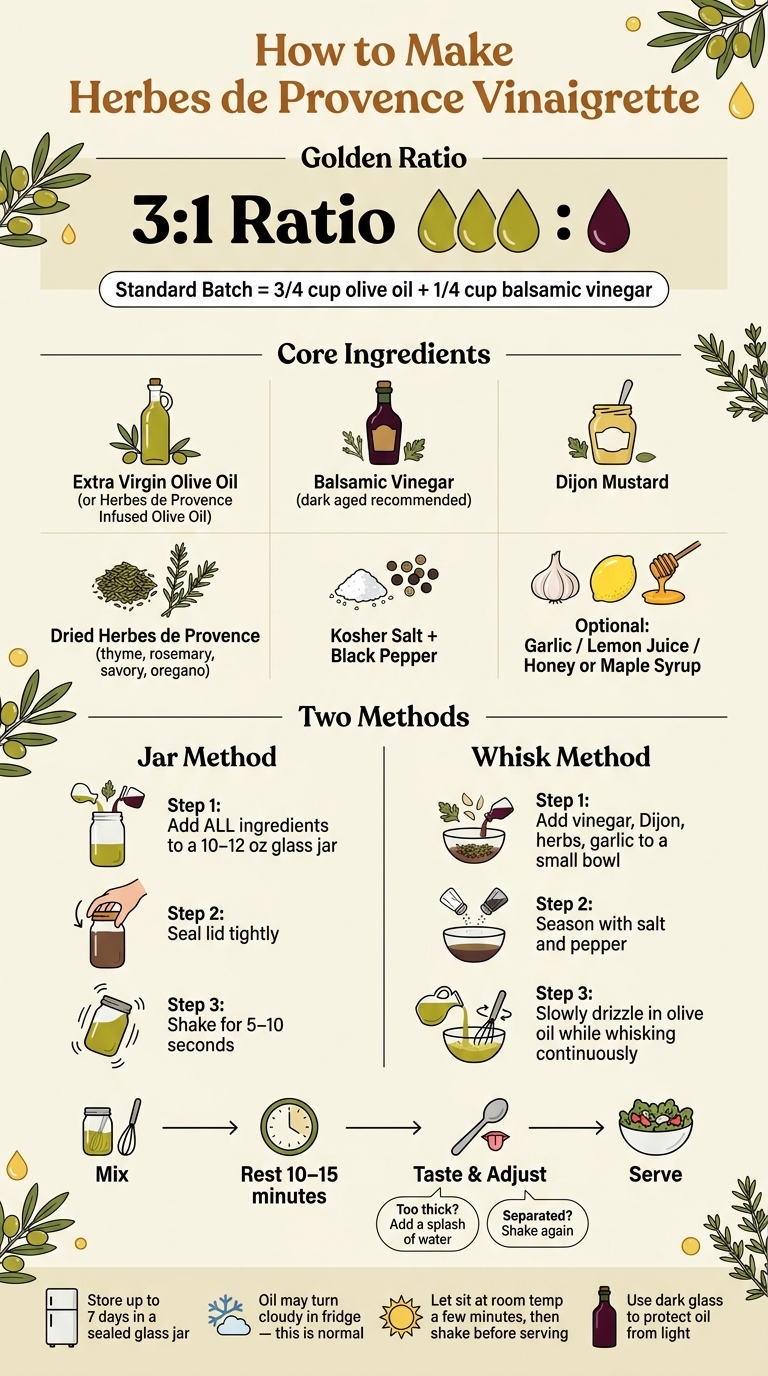
How to Make Herbes de Provence Vinaigrette: Quick Visual Guide
Once your ingredients are measured, this dressing comes together in about a minute. Stick with the same 3:1 oil-to-vinegar ratio. Before you start, set out the Dijon mustard, dried Herbes de Provence, salt, pepper, and any aromatics you plan to use.
If you're whisking: Add the vinegar, Dijon, herbs, and garlic to a small bowl and whisk them together. Season with salt and pepper, then slowly drizzle in the olive oil while whisking. The Dijon helps the dressing emulsify.
If you're using a jar: Add everything at once, seal the lid tightly, and shake for 5–10 seconds until blended.
After mixing, let the dressing sit for 10–15 minutes so the flavors can settle before you taste and adjust.
Using Herbes de Provence Infused Olive Oil
Herbes de Provence infused olive oil gives the vinaigrette a deeper herb taste. It can also cut down on how much dried herb you need.
How to Adjust Texture and Flavor Before Serving
Taste the dressing, then tweak it as needed with more oil, balsamic, lemon juice, sweetener, or water. If it gets too thick, add a small splash of water to make it pourable again. If it separates after sitting, just give it a quick shake before serving.
Variations, Pairings, and Batch Sizes
Once the base vinaigrette tastes right, you can tweak it for a different flavor, a different dish, or a different batch size.
Simple Variations for Different Flavor Profiles
Stick with the same ratio and change just one ingredient. Small swap, different result.
| Variation | Ingredient Change | Flavor Shift |
|---|---|---|
| Lighter | Use white balsamic or white wine vinegar | Cleaner look; more acidic, crisp finish |
| More Savory | Add 1/2 to 1 clove of minced garlic or shallot | Pungent, earthy, and complex |
| More Citrus | Replace some vinegar with fresh lemon juice | Zesty, vibrant, and high-toned |
| Fruitier | Use cranberry-pear, fig, or tangerine balsamic | Tart-sweet with distinct fruit notes |
| Floral Note | Use lavender balsamic | Aromatic and specifically Provençal |
| Thicker Texture | Add 1–2 tbsp Dijon mustard | Thicker texture with a sharp, peppery bite |
Once you pick a direction, pair it with the food on the plate.
What to Serve with Herbes de Provence Vinaigrette
This dressing works well on salads, vegetables, and proteins. It’s a natural match for mixed greens with tomatoes, olives, and goat cheese. It also tastes great drizzled over roasted vegetables like butternut squash or grilled artichokes.
If you want something more filling, spoon it over a quinoa or farro grain bowl. You can also use it as a finishing drizzle for grilled chicken or fish.
For bigger or smaller batches, keep the same oil-to-acid ratio.
How to Scale the Recipe Up or Down
Use the same ratio whether you’re making one serving or enough for a group.
| Serving Size | Olive Oil | Vinegar/Acid | Herbes de Provence |
|---|---|---|---|
| Single Serving | 1–2 tbsp | 1–2 tbsp | 1/4 tsp |
| Family (4 Servings) | 5 tbsp (~2.5 fl oz) | 5 tbsp (~2.5 fl oz) | 1 tsp dried |
| Large Batch (12+ Servings) | 1 cup (8 fl oz) | 1/3 cup to 1 cup | 2 tsp to 1 tbsp |
If you double or triple the recipe, season lightly at first, then taste and adjust. For a large batch, make it at least 15 minutes ahead - or even a day before - so the dried herbs have time to fully infuse.
Storage, Food Safety, and Final Notes
Once the vinaigrette tastes right, pour it into a sealed glass jar or cruet and refrigerate it for up to 7 days, especially if it has fresh garlic or shallot in it. A Mason jar or glass cruet both work well.
Olive oil will thicken and look cloudy in the fridge. That’s normal. Let the jar sit at room temperature for a few minutes, then give it a good shake before pouring.
If you have dark glass, use it. It helps shield the oil from light.
Key Takeaways
Use good olive oil and balsamic, season lightly, refrigerate the dressing, and shake before serving. That simple routine keeps it ready to use and full of flavor all week.
FAQs
Can I make it without Dijon mustard?
Yes - you can make Herbes de Provence vinaigrette without Dijon mustard.
Dijon helps the dressing emulsify, which means it gives the vinaigrette a thicker texture and helps the oil and vinegar stay mixed longer. But it’s not needed for the taste.
Just whisk or shake together the olive oil, balsamic vinegar, herbs, and seasonings right before serving.
How do I keep the vinaigrette from separating?
Slowly drizzle Big Horn Olive Oil into the vinegar and herb mixture while whisking the whole time. That steady whisking helps the dressing come together into an emulsion. If you want an easier route, put everything in a jar and shake hard until the mixture looks creamy and opaque.
If the dressing still won’t come together, add a little Dijon mustard. And if it separates in the refrigerator, let it sit at room temperature for a bit, then shake or whisk again before serving.
What foods pair best with this vinaigrette?
This vinaigrette works with a lot more than just a basic green salad.
It’s great on fresh green salads, pasta salads, and bean salads. You can also use it as a marinade for chicken, lamb, beef, and seafood.
It’s just as good drizzled over roasted or grilled vegetables like asparagus, eggplant, and zucchini. Or spread it into vegan sandwiches, serve it with fresh bread, or pair it with avocado, legumes, grains, or hard-boiled eggs.
In short, if a dish needs a little brightness and depth, this dressing usually fits right in.