

How to Make Autumn Balsamic Chutney
Autumn balsamic chutney is a sweet, tangy, and spiced condiment made by simmering seasonal fruits like apples, pears, figs, or cranberries with sugar, warm spices, and aged balsamic vinegar. It pairs well with cheeses, roasted meats, and charcuterie boards, making it a flavorful addition to meals or holiday gatherings. Here's a quick guide:
- Key Ingredients: Apples, pears, onions, muscovado sugar, ground ginger, mustard seeds, and aged balsamic vinegar (like Big Horn Olive Oil's 18-Year Aged Dark Balsamic Vinegar).
- Cooking Process: Simmer fruits, onions, and spices with vinegar and sugar until thickened into a jam-like consistency.
- Storage: Seal in sterilized jars for up to 6 months; refrigerate after opening.
This easy recipe transforms fall fruits into a rich, glossy chutney that adds depth to dishes and is perfect for gifting or everyday use. Read on for detailed steps and tips.
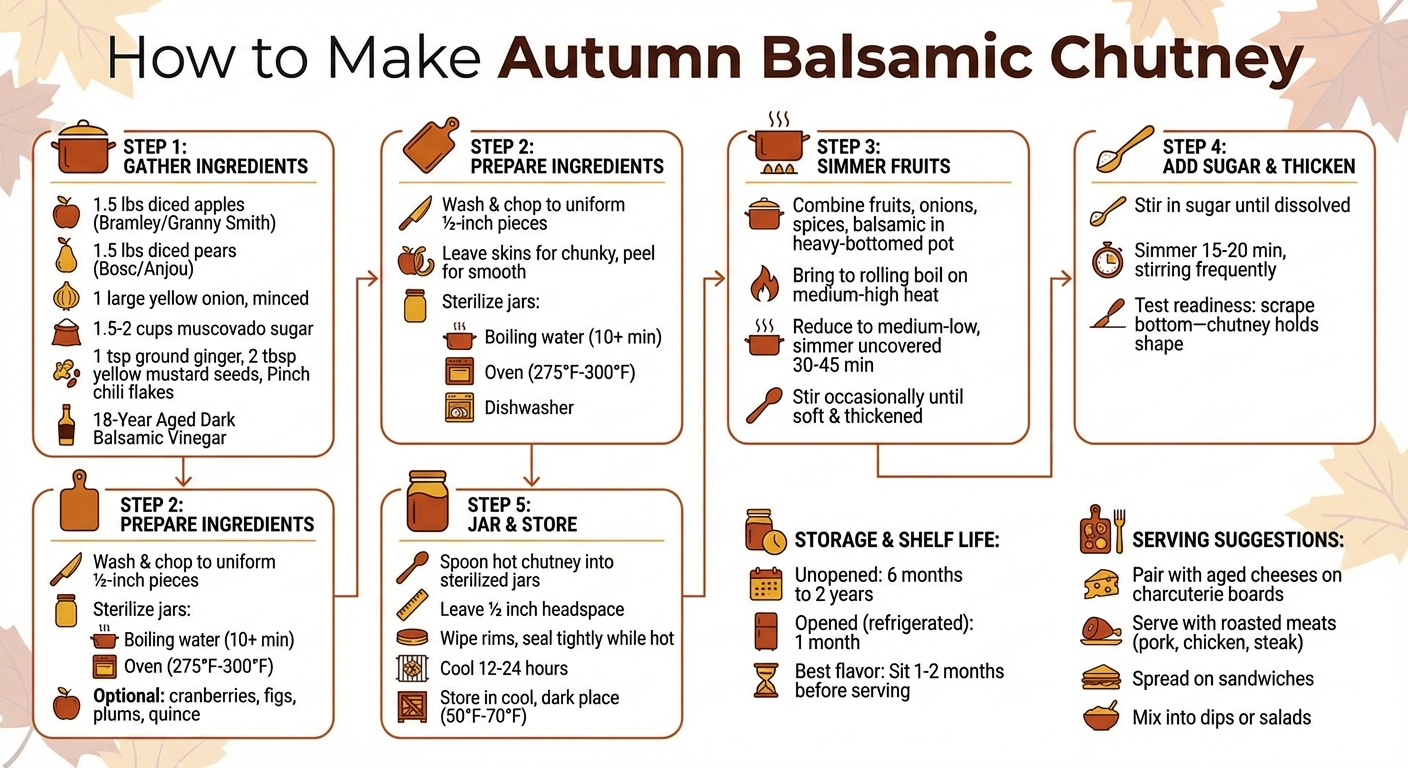
How to Make Autumn Balsamic Chutney: Step-by-Step Recipe Guide
The Olive Oil Co. Kitchen ~ Season 1, Ep. 34 - Apple Balsamic Chutney
Ingredients for Autumn Balsamic Chutney
Create a standout autumn chutney by combining seasonal fruits, high-quality aged balsamic vinegar, and a thoughtful mix of spices. Together, these ingredients deliver a delightful balance of sweet, tangy, and savory flavors.
Fall Fruits and Vegetables
The heart of your chutney lies in the fruits of the season - apples and pears. Use about 1.5 lbs of diced apples and 1.5 lbs of diced pears for a standard batch. Opt for cooking apples like Bramley or Granny Smith for their tartness and structure, while pears such as Bosc or Anjou bring softness and a hint of floral sweetness.
To balance the fruit's sweetness, include one large yellow onion (minced) or 1 lb 2 oz of shallots per 3–4 lbs of fruit. Onions harvested in late summer or fall add depth and prevent the chutney from tasting overly sweet or flat.
For added texture, leave the apple skins on, or peel them for a smoother finish. You can also experiment with seasonal additions like fresh cranberries (12 oz to 2 lbs), figs, plums, or quince to craft a unique flavor profile.
The next step is to bring these flavors together with a standout balsamic vinegar.
Big Horn Olive Oil's Traditional 18-Year Aged Dark Balsamic Vinegar
The quality of your balsamic vinegar is key to this recipe. Big Horn Olive Oil's Traditional 18-Year Aged Dark Balsamic Vinegar, sourced from Modena, Italy, is aged for nearly two decades in wooden barrels. This process gives it a velvety texture and complex flavor profile. Its deep, rich flavor and mild sweetness make it an ideal choice for chutney, while its vibrant purple hue adds visual appeal.
Using this aged balsamic instead of lighter varieties results in a richer, jammy texture that perfectly complements the fruits and spices.
Spices and Sweeteners
The magic of chutney lies in the balance of spices and sweetness. Add 1 tsp ground ginger, 2 tbsp yellow mustard seeds, and a pinch of dried chili flakes to create warmth and complexity.
For sweetness, 1.5–2 cups of muscovado sugar works best. This unrefined sugar has a deep, caramel-like flavor that pairs beautifully with the vinegar. The ratio of sugar to vinegar - about 1¾ cups sugar to 1⅔ cups vinegar - ensures the chutney achieves the right balance of sweetness and acidity while remaining shelf-stable for up to six months.
"The best chutney is sweet and tangy all at the same time, which helps to cut through the strong cheese." - Debbie Jones, Food Writer
To enhance the autumnal flavors, include warm spices like cinnamon, nutmeg, and cardamom. A pinch of salt ties everything together, highlighting the individual ingredients. For an extra aromatic kick, dry roast whole spices like mustard seeds before adding them to the mix.
Equipment and Preparation Tips
Tools for Cooking and Preserving
When making chutney, the right tools can make all the difference. Start with a large, heavy nonreactive pot - stainless steel or enamel-coated options are ideal to avoid any reaction with vinegar. Skip aluminum or uncoated cast iron, as they can alter the flavor. A wide pan is also a smart choice since it helps the chutney thicken faster by speeding up evaporation.
Keep a wooden spoon handy to test the chutney's thickness without risking it burning. As food writer Thane Prince puts it:
"The chutney is done when you can scrape a wooden spoon across the bottom of the pan and the chutney does not flow back into the gap".
For preserving, you'll need glass canning jars (half-pint or pint sizes work well), along with matching lids and rings. Other essentials include a ladle, a jam funnel for mess-free transfers, canning tongs (or jar lifters) for handling hot jars, and heat-resistant rubber gloves for better grip while sealing.
Once you’ve gathered your tools, it’s time to prepare your ingredients for cooking.
How to Prepare Ingredients
To ensure your chutney cooks evenly, wash and chop fruits, vegetables, and onions into uniform ½-inch pieces. This step is crucial for achieving a consistent texture.
Want a chunkier chutney? Leave the apple skins on. Prefer something smoother? Go ahead and peel them.
With your ingredients prepped, you’re ready to move on to sterilizing the jars for safe storage.
How to Sterilize Jars
Sterilizing jars is a must for safe preserving and maintaining the quality of your chutney. Start by washing all jars in hot, soapy water and rinsing them thoroughly.
Here are three reliable sterilization methods:
| Sterilization Method | Temp/Time | Key Steps |
|---|---|---|
| Boiling Water | Rolling boil for 10+ minutes | Submerge clean jars in boiling water; boil lids and rings separately for 5 minutes |
| Oven Method | 275°F–300°F | Place wet jars on a baking tray and dry in the oven for 5–10 minutes |
| Dishwasher | Hot/Sanitize cycle | Run jars through a full hot cycle and use them while still warm |
Once your jars are sterilized and still warm, fill them with hot chutney, leaving ½ inch of headspace. Wipe the rims clean with a damp cloth and seal the jars immediately. After letting them cool for 12–24 hours, check the seal by pressing the center of each lid - if it doesn’t pop or move, the jar is securely sealed.
sbb-itb-4066b8e
Cooking Instructions
Prepare and Simmer Fruits
Start by combining seasonal fruits with Big Horn Olive Oil's Traditional 18-Year Aged Dark Balsamic Vinegar to create a rich, layered flavor. Chop your fruits - apples, pears, or figs work well - and place them in a heavy-bottomed pot along with onions and your choice of spices. Set the pot over medium-high heat.
Bring everything to a rolling boil, then lower the heat to medium-low and let it simmer uncovered for 30–45 minutes. Stir occasionally to prevent sticking. You'll know it's ready when the fruits and onions soften and the liquid starts to thicken into a syrup.
For an extra depth of flavor, sauté the onions in a bit of olive oil until they're soft or lightly caramelized before adding the fruits and vinegar. As Chef Lorraine Pascale puts it:
"The apples and onions should become lovely and soft, and the liquid should be thick and syrupy."
Once the base is ready, you'll add sugar to enhance the sweetness and texture.
Add Sugar and Thicken the Mixture
When the fruits have softened, stir in sugar until it completely dissolves. Keep simmering uncovered, allowing the mixture to reduce into a glossy, thick chutney.
As it thickens - usually after another 15–20 minutes - stir frequently, especially toward the end, to prevent the sugar from burning at the bottom of the pan. A good test for readiness is to scrape the bottom of the pot; if the chutney holds its shape and doesn’t immediately flow back, it’s done. For a slightly smoother texture, you can gently mash some of the fruit pieces with the back of your spoon while cooking.
Once the chutney reaches that perfect syrupy consistency, it's time to jar it up.
Jar and Store the Chutney
While the chutney is still hot, carefully spoon it into sterilized jars, leaving about ½ inch of headspace. Make sure to release any air bubbles by gently tapping the jars or using a clean utensil. Wipe the rims with a damp cloth to ensure a proper seal.
Seal the jars tightly while they're still hot. As food writer Debbie Jones explains:
"As the chutney cools a vacuum will form, pulling the lid in nice and tight."
Let the jars cool completely before storing them in a cool, dark place. For the best flavor, let the chutney sit for at least one to two months. This resting period allows the sharp vinegar notes to mellow and the flavors to fully blend. Properly stored, unopened jars can last 6 months to 2 years, while opened jars should be refrigerated and used within a month.
Storage and Serving Ideas
Storage and Shelf Life
To keep your chutney at its best, store unopened jars in a cool, dark spot with a temperature range of 50°F to 70°F. Under these conditions, the chutney will retain its flavor for anywhere from 6 months to 2 years. Once you’ve opened a jar, pop it in the fridge and aim to use it within a month. Before serving from older jars, give it a quick taste to ensure the flavor is still vibrant - though vinegar-based products rarely spoil, their taste can fade over time.
How to Serve Autumn Balsamic Chutney
Once your chutney is safely stored, the fun part begins - deciding how to serve it! Here are some ideas to make the most of its sweet and tangy flavor.
This chutney is a star on charcuterie boards, pairing wonderfully with aged cheeses like sharp English cheddar, cured meats, nuts, and slices of baguette. Its sweet-tart balance complements rich, creamy cheeses and works beautifully with roasted or grilled meats like pork chops, roasted chicken, or even a juicy steak.
For an extra layer of flavor, drizzle Big Horn Olive Oil's Picual Extra Virgin Olive Oil over your cheese board and add a dollop of chutney. The Picual EVOO’s bold, peppery notes amplify the balsamic richness of the chutney. Beyond cheese boards, you can spread it on sandwiches, mix it into mayonnaise or sour cream for a quick dip, or stir it into chicken or tuna salad to add a flavorful twist.
Conclusion
By following the outlined steps, your autumn chutney is ready to elevate your meals. Making autumn balsamic chutney at home transforms seasonal fruits into a delicious, gourmet condiment that’s both practical and flavorful. The process is simple: chop your fall fruits and vegetables into even pieces, simmer them with spices until the mixture thickens into a rich chutney, and carefully seal it in sterilized jars for lasting freshness.
To achieve the signature depth of flavor, Big Horn Olive Oil's Traditional 18-Year Aged Dark Balsamic Vinegar is a must-have ingredient.
Once you’ve nailed the recipe, the serving possibilities are endless. Spread it on sandwiches for a tangy twist, match it with aged cheeses on a charcuterie board, or use it as a glaze for roasted meats. For the best taste, let the chutney sit for a few weeks to fully develop its flavor. This versatile condiment is sure to bring a touch of sophistication to any dish.
FAQs
What kinds of apples and pears are best for making autumn balsamic chutney?
For a delicious autumn balsamic chutney, it's key to pick fruits that hold their shape while cooking and strike the right balance between sweet and tart. Honeycrisp apples are a fantastic choice, offering crispness and a sweet-tart flavor that's perfect for this recipe. Jonagold apples are another solid option, bringing a similar taste and texture to the mix. When it comes to pears, Bartlett pears soften just enough without turning to mush, while Bosc pears add a firmer bite and a rich, honey-like sweetness that pairs wonderfully with balsamic vinegar. Combining these varieties creates a chutney bursting with hearty, autumn-inspired flavors.
How can I tell when my autumn balsamic chutney is ready?
To know if your autumn balsamic chutney is ready, check for a thick, jam-like consistency. The mixture should appear glossy and syrupy, without any excess liquid pooling at the bottom of the pan. Try dragging a spatula or wooden spoon across the bottom of the pot - if the gap remains visible for a couple of seconds before closing, your chutney is good to go.
For an added punch of flavor, stir in a splash of Big Horn Balsamic Vinegar or a drizzle of Big Horn Extra Virgin Olive Oil right before performing the final test. Once it meets these criteria, it’s time to ladle the chutney into sterilized jars and seal them up.
What are some delicious ways to use autumn balsamic chutney?
Autumn balsamic chutney brings a burst of seasonal flavor to a variety of dishes. Spread it over toasted baguette slices or crostini, then top with sharp cheddar, creamy goat cheese, or brie for an easy yet elegant appetizer. It also works wonders as a sandwich or burger spread, adding a sweet and tangy twist to turkey or roast beef.
For main dishes, pair it with roasted turkey, pork loin, or grilled chicken - it doubles as a rich, fruity glaze that elevates the meal. You can also stir it into warm grain salads like quinoa or wild rice, or serve it alongside roasted root vegetables for an extra layer of taste. Hosting a gathering? Use it as a dip with crackers, pretzel sticks, or cheese-stuffed pastries for a snack that’s sure to impress.