

Olive Harvest in California: Timing and Trends
California leads U.S. olive oil production, with over 35,000 acres of olive groves. Timing is everything when it comes to olive harvesting, directly impacting oil flavor and quality. Early harvesting yields bold, peppery oils with higher polyphenol content, while later harvests produce softer, buttery oils.
Key points:
- Regions and Timing: Inland areas like Tulare County start harvesting in September, while cooler coastal regions like Sonoma begin in November.
- Climate Impact: Warmer springs and summers are pushing harvests earlier, while unpredictable weather can affect crop size and quality.
- Trends: Community milling facilities are helping smaller growers process olives efficiently, with some mills accepting as little as 5 pounds of fruit.
California producers are refining their practices to maintain high-quality standards, ensuring oils are processed quickly to preserve flavor and nutrients.
Olio Nuovo EVOO - The Best Time of Year for California Olive Oil
sbb-itb-4066b8e
Climate Patterns and Harvest Timing
California's climate diversity creates varied harvest windows for olives. Temperature and weather patterns across regions dictate when olives ripen, meaning harvest schedules differ significantly between areas like the Central Valley and coastal regions.
Regional Climate Differences
Inland areas like the Central Valley experience intense summer heat and dry conditions, which speed up olive ripening. Tulare County alone contributes over 56% of California's ripe olive production, with harvests starting as early as September and running through mid-November. Other counties, including Sacramento, Glenn, Tehama, and Butte, follow similar timelines, collectively accounting for 36% of the state's output.
In contrast, coastal regions such as Sonoma and Napa enjoy cooler fall temperatures and higher humidity, which slow down the ripening process. In Sonoma County, for instance, harvests typically begin in November and can stretch into February. This extended period allows growers to harvest greener olives with higher polyphenol content, producing the peppery, herbaceous oils favored by premium oil producers.
These regional patterns, however, are further influenced by annual weather fluctuations.
Seasonal Weather Changes
Yearly weather variations add another layer of complexity to harvest planning. For example, a May 2025 crop report from Corning, Northern California, highlighted extreme heat forecasts of 106°F to 107°F - occurring a month earlier than the previous year. Such high temperatures during the critical bloom period can stress olive trees, causing them to shed excess fruit in what’s known as the "June Drop".
Hotter summers can hasten ripening, leading to earlier harvests, while cooler autumns push the timeline later. This unpredictability impacts both the timing and size of the harvest, with California's olive production ranging dramatically from 50,000 tons in some years to over 160,000 tons in others. To navigate these challenges, growers closely monitor temperatures during the May bloom and summer to ensure olives reach optimal maturity.
Recent Harvest Season Trends
California's olive harvest scene has seen some interesting changes in recent years. Producers are adjusting to shifting climate patterns and finding new ways to work together. Two key trends have emerged: harvests are starting earlier, and community milling facilities are creating new opportunities for small-scale growers.
Earlier Harvest Start Dates
Harvesting in California now often kicks off in early October, thanks to warmer springs and summers speeding up the ripening process. For example, California Olive Ranch began milling in the second week of October - more than two weeks earlier than the previous season.
There’s a strategic reason for this shift. Harvesting earlier helps ensure higher polyphenol levels and lower acidity in the olives, resulting in robust, peppery oils. It also helps growers sidestep late-season challenges like frost damage and olive knot disease.
Growth of Community Milling
Another notable trend is the rise of community milling, which has been a game-changer for smaller olive growers. These facilities accept even small quantities of fruit - sometimes as little as 5 pounds - making it easier for hobbyists and small-scale producers to get their olives processed. For instance, in October 2025, Figone's Village Mill launched a program accepting between 5 and 500 pounds of fruit. They blend smaller batches with other community contributions, ensuring efficiency while providing fresh oil to growers.
Speed is a top priority at these mills. Many process olives within 3 to 4 hours of delivery, which is crucial for maintaining freshness and quality. Amy Sherman, Editor-in-Chief of The Olive Oil Professor, explains:
"Getting olives milled quickly after harvest is of the utmost importance".
Ojai Olive Oil took this concept further during the 2022/23 season by operating two separate mills - one for larger, certified organic batches and another specifically for community milling. Residents could drop off their olives between 10 a.m. and 4 p.m. and pick up their freshly processed oil later the same day or the next morning.
As one participant noted:
"It's fun making little batches of olive oil for Ojai residents that just have a handful of olive trees, and it makes everyone happy".
These collaborative efforts have also sparked "Olio Nuovo" celebrations, where producers and visitors come together in October and November to enjoy freshly pressed olive oil. These events combine harvest activities with agritourism, offering experiences that range from $50–$75 for basic tours to $106–$128 for tastings paired with lunch.
Regional Harvesting Practices in California
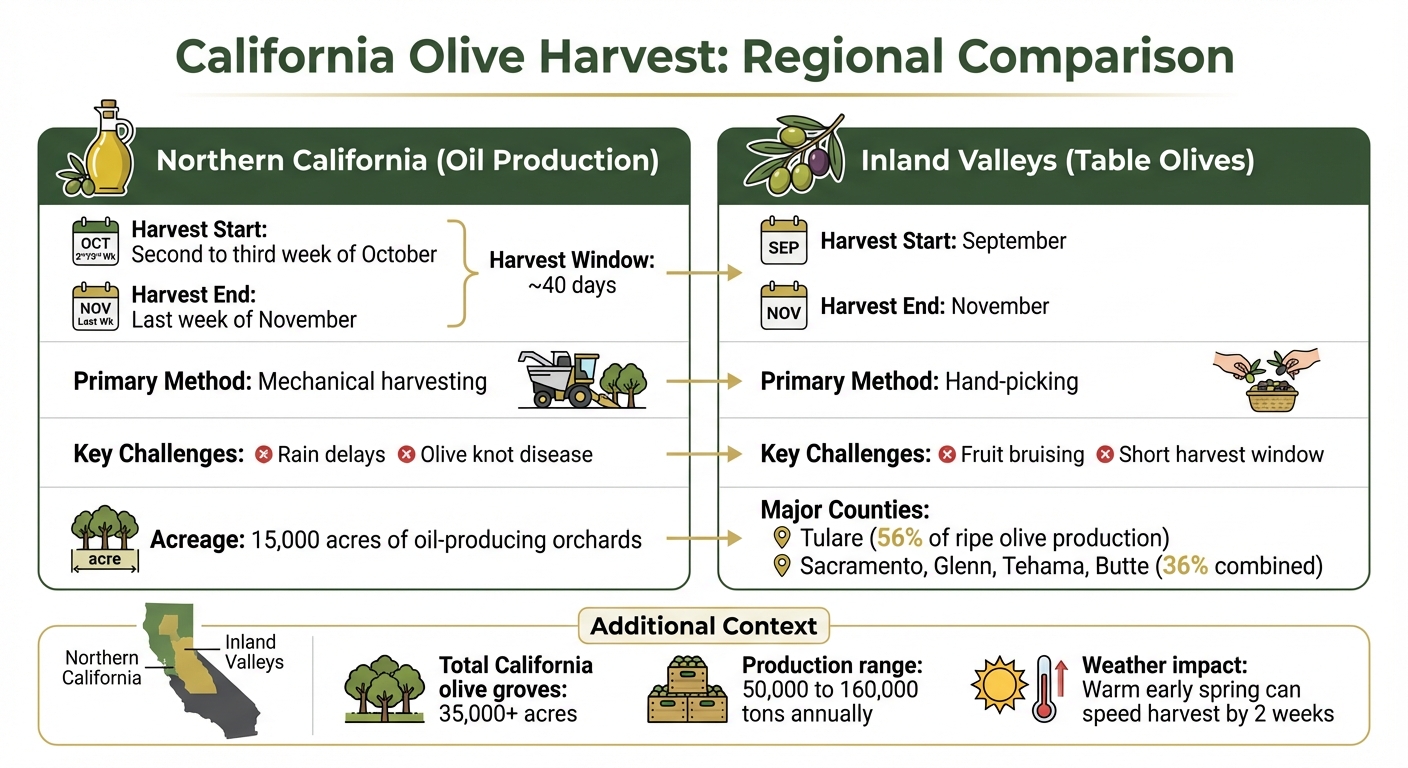
California Olive Harvest Timeline by Region: Timing, Methods, and Challenges
Harvest Schedules by Region
California's olive harvest schedules vary significantly by region, driven by the state's diverse geography and climate. In Northern California and the Inland Valleys, producers usually kick off the harvest around the second or third week of October, aiming to wrap it up by late November. This creates a roughly 40-day window to harvest olives when they reach their ideal maturity.
Brian Mori from California Olive Ranch highlights how producers determine the start of their harvest by assessing fruit maturity. This involves analyzing the olives' color and oil content, allowing growers to fine-tune their schedules for each region.
Weather plays a major role in shaping these timelines. A warm early spring can speed up fruit development by as much as two weeks. On the flip side, rain can delay harvesting and increase the risk of diseases like olive knot, as Mori points out.
Table: Regional Harvest Comparison
| Region | Typical Start | Typical End | Primary Method | Key Challenges |
|---|---|---|---|---|
| Northern California (Oil Production) | Second to third week of October | Last week of November | Mechanical harvesting | Rain delays; olive knot disease |
| Inland Valleys (Table Olives) | September | November | Hand-picking | Fruit bruising; short harvest window |
In the Inland Valleys, including Tulare, Glenn, and Tehama Counties, the focus is on table olives. Here, hand-picking is the go-to method to avoid bruising the fruit. Meanwhile, Northern California's 15,000 acres of oil-producing orchards depend on mechanical harvesting to handle the scale of their operations. These differences illustrate how regional factors like geography and farming techniques shape the olive harvest across California.
How Harvest Timing Affects Olive Oil Quality
Early Harvest and Polyphenol Levels
The timing of the olive harvest plays a major role in shaping both the flavor profile and health benefits of olive oil. Green olives harvested early in the season produce oils with a peppery, herbaceous taste and higher levels of polyphenols. In contrast, fully ripened dark olives yield a milder, buttery flavor. This distinction isn't just about taste - polyphenols are potent antioxidants that contribute significantly to the health benefits of extra virgin olive oil.
In California, where olive oil production is diverse, many producers aiming for Ultra Premium EVOO choose to harvest their olives early, creating what is often called "olio nuovo", or unfiltered "new oil." McEvoy Ranch, for instance, produces certified-organic olio nuovo using premium, early-season olives. This approach ensures the oil captures the peak polyphenol levels that define exceptional quality. Additionally, the speed at which the olives are milled after harvest is just as critical in preserving these valuable compounds.
Fast Milling for Maximum Freshness
Harvesting at the right time is only part of the equation - how quickly the olives are milled afterward is equally important. Mary Louise Bucher, master miller and owner of Trattore Farms, emphasizes this point:
"The ideal timing is for olives to go from the tree to the mill the next day or within 48 hours".
This rapid turnaround is key to preserving the fresh flavor compounds and preventing oxidation. Delays allow enzymes and oxygen to degrade the delicate compounds responsible for premium flavor and aroma. To put it into perspective, it takes 80 pounds of olives to produce just one gallon of EVOO, making every step in the process crucial. Bucher also highlights the importance of keeping harvested olives cool and away from light to maintain their quality before milling.
Big Horn Olive Oil's Quality Standards
Big Horn Olive Oil takes these principles to the next level by cold-pressing their olives within 2 hours of harvest. This ultra-fast processing ensures that their Ultra Premium Extra Virgin Olive Oils retain maximum polyphenol content and antioxidant levels. The company delivers its oils fresh within 3 months of harvest, ensuring customers experience the product at its absolute peak, rather than settling for oil that has been sitting on shelves for extended periods.
Their Estate Reserve Ultra Premium EVOO is a shining example of their dedication to quality. By combining early-harvest olives with immediate cold-pressing, they produce oil with the distinct peppery and herbaceous notes that signal a high polyphenol content and enhanced health benefits.
Conclusion
Why Timing Matters for Olive Oil Quality
The timing of the olive harvest plays a crucial role in determining the chemical makeup of olive oil, especially its phenolic antioxidants and volatile flavor compounds. Early harvests are known for producing oils with higher polyphenol content and more robust flavors, while later harvests prioritize volume, often at the expense of these premium characteristics.
In California, producers have refined their techniques, recognizing that each olive cultivar has its own ideal harvest window. For example, Arbequina and Arbosana cultivars typically reach peak oil accumulation in November, while Koroneiki continues to develop until early December. By tailoring harvest schedules to specific cultivars, growers can balance high-quality oil production with optimal yields. This focus on quality not only enhances the flavor and health benefits of the oil but also highlights California's forward-thinking approach in the olive oil industry.
California's Contribution to Olive Oil Production
California has become a leader in olive oil research and production, emphasizing the importance of precise harvest timing and innovative practices. The state has excelled in adopting super-high-density orchard systems, which have revolutionized olive oil production. The UC Davis Olive Center has been a driving force, conducting extensive multiyear studies to explore how harvest timing and cultivar selection impact the bioactive compounds in olive oil. Juan J. Polari from the University of California Davis noted:
"This paper constitutes the first report of a multiyear study considering quality and composition in bioactive compounds of super-high-density 'Arbequina,' 'Arbosana,' and 'Koroneiki,' planted in California, USA".
Producers like Big Horn Olive Oil exemplify this commitment to excellence. By cold-pressing olives within just 2 hours of harvest and delivering fresh oil within 3 months, they ensure a product that meets the highest standards. These practices have cemented California's reputation for producing premium extra virgin olive oils, proving that careful harvest timing is the cornerstone of exceptional quality.
FAQs
How can I tell when olives are ready to harvest?
When olives shift from green to black and their texture matches the desired oil flavor, they’re ready for harvest. Harvesting early results in oils that are bold and rich in antioxidants, while later harvests produce oils with a smoother, milder taste. The timing ultimately depends on the flavor profile you want and how local climate conditions influence ripening.
How quickly should olives be milled after harvesting?
Olives need to be milled within 24–48 hours after they're harvested to keep their flavor and quality intact. Milling quickly ensures the olives stay fresh and retain their nutritional properties, resulting in a superior final product.
What’s the difference between early-harvest and late-harvest olive oil?
Early-harvest olive oil is made from green, unripe olives, giving it a bold, peppery flavor. It’s packed with antioxidants but has a lower oil yield, typically around 12–16%. This type of olive oil shines when used for drizzling over dishes or as a finishing touch.
On the other hand, late-harvest olive oil comes from ripe olives. It offers a milder, buttery taste with fewer antioxidants but boasts a higher yield, ranging from 20–28%. Its subtle flavor makes it perfect for everyday cooking.
When deciding between the two, consider both the flavor you prefer and how you plan to use it.