

Olive Oil and Vinegar: Age-Based Guidelines for Kids
Here’s the short answer: I’d use olive oil early and often, and I’d use vinegar later and in small amounts. Olive oil can be added once solids start, often around 6 months, while vinegar is better saved for older toddlers and kids because its acid can bother the mouth, stomach, and teeth.
If you want the fast take, it’s this:
-
Olive oil = nutrition
- Adds unsaturated fat
- Helps with growth and brain development
- Helps the body use vitamins A, D, E, and K
-
Vinegar = flavor
- Adds tang to foods
- May help kids like vegetables more
- Should be diluted and served with meals
A few numbers make the guide easy to follow:
- Around 6–12 months: start olive oil in tiny amounts, such as 1/4 tsp, and keep it under 1 tsp a day
- Ages 2–6: about 1–2 tsp of olive oil a day
- Older kids and teens: around 1 tbsp a day can fit into family meals
- Young kids and vinegar: keep it to about 1/4 tsp per meal, mixed into food
- Older kids and teens: about 1 tbsp per meal is a fair upper limit when used in dressings or marinades
The big safety point: vinegar is acidic. That means too much can wear down tooth enamel over time. So I’d skip straight vinegar, salt-and-vinegar snacks for little kids, and sugary balsamic glazes when possible.
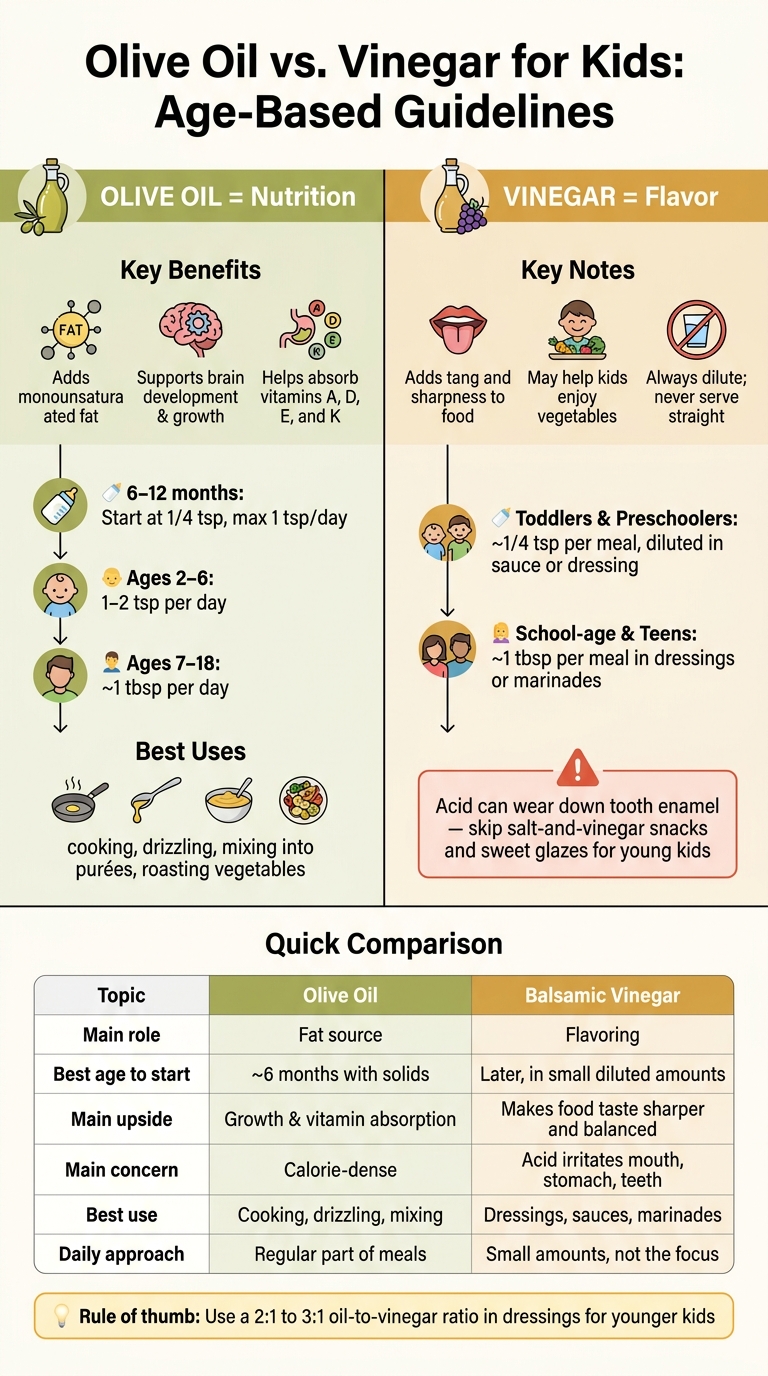
Olive Oil vs. Vinegar for Kids: Age-Based Guidelines at a Glance
Quick Comparison
| Topic | Olive Oil | Balsamic Vinegar |
|---|---|---|
| Main role | Fat source | Flavoring |
| Best age to start | Around 6 months with solids | Later, in small diluted amounts |
| Main upside | Supports growth and vitamin absorption | Makes food taste sharper and more balanced |
| Main concern | High in calories | Acid can irritate mouth, stomach, and teeth |
| Best use | Cooking, drizzling, mixing into foods | Dressings, sauces, marinades |
| Daily approach | Regular part of meals | Small amounts, not the focus |
So if you’re deciding between the two, I’d keep it simple: lean on olive oil for daily use, and treat vinegar as a small add-on for taste.
sbb-itb-4066b8e
Olive Oil by Age: When and How to Use It
Olive oil gives kids the fat they need for growth and for absorbing vitamins, and the amount usually goes up as they get older. What works for a baby is very different from what makes sense for a teen.
Toddlers: Small Amounts Once Solids Begin
Olive oil can usually be introduced at around 6 months, when solids begin. At that point, breast milk or formula is still the main source of nutrition, so olive oil should stay in a small supporting role.
A good starting point is 1/4 teaspoon mixed into warm purées or baby cereal. Then increase slowly, keeping total intake under 1 teaspoon a day during the first year. Olive oil should never be served on its own.
As toddlers start eating more table foods, olive oil can slide into daily meals more naturally.
Ages 2–6: A Regular Fat in Daily Meals
For ages 2–6, 1–2 teaspoons a day often works well as a regular cooking fat. At this age, it makes sense to keep most fats unsaturated.
In day-to-day cooking, that might look like:
- Sautéing green beans or broccoli in a teaspoon of olive oil
- Stirring it into cooked pasta or rice
- Blending it into a simple hummus for carrot sticks and cucumber slices
Using olive oil as the go-to cooking fat instead of butter or shortening is an easy way to shift a young child's fat intake toward unsaturated sources.
By the time kids reach school age, families can usually use olive oil in the same meals they make for everyone else.
Ages 7–18: A Core Fat in Family Cooking
For ages 7–18, olive oil can be a standard cooking fat in family meals. About 1 tablespoon a day suits many 9–13-year-olds, and teens may need more. At this stage, it fits easily into salads, roasted vegetables, grain bowls, and homemade dressings.
Choose fresh extra virgin olive oil for the best flavor and quality.
Vinegar by Age: Flavor, Acidity, and Limits
Vinegar adds flavor, not nutrients. Because it’s acidic, parents should go easy with it, especially for younger kids. The main issue is simple: how much and at what age.
Toddlers and Preschoolers: Use Sparingly and Always Diluted
Vinegar’s acid can irritate a young child’s mouth and may add to enamel wear, so stick to very small amounts and always dilute it well. In late toddlerhood, aim for about ¼ teaspoon per meal, mixed into a sauce or dressing so it isn’t hitting the mouth full-strength. Skip strong pickles, salt-and-vinegar snacks, and any vinegar given by the spoon at this age.
Older kids usually handle vinegar more easily as part of regular meals.
School-Age Kids and Teens: Small Amounts With Meals
For school-age kids and teens, vinegar works best with meals, not in snacks or drinks. A simple vinaigrette on salad or a balsamic-based marinade for roasted vegetables are easy ways to use it. Balsamic does add a bit of sugar and calories, so keep sweet glazes modest. A solid rule of thumb is about 1 tablespoon per meal, and it’s smart to pick balsamic with a short ingredient list instead of sweetened glazes.
That’s the right way to think about it: vinegar is a flavor tool, not a daily nutrient source.
Olive Oil vs. Vinegar for Kids: Nutrition, Safety, and Daily Use
After the age-by-age rules, the main question is pretty simple: which one does more for a child’s diet? Olive oil brings nutrition. Vinegar brings taste.
Which One Offers More Nutritional Value
Olive oil offers more nutritional value because it provides monounsaturated fat and helps the body absorb vitamins A, D, E, and K. Vinegar, by contrast, mostly adds flavor. That can still help in a practical way. If a small amount of vinegar makes vegetables easier for a child to enjoy, it has a place at the table.
| Factor | Olive Oil | Balsamic Vinegar |
|---|---|---|
| Nutritional role | Primary fat source; supports growth and vitamin absorption | Flavoring only; adds almost no nutrition |
| Heart-health value | Strong - monounsaturated fats support a heart-healthy eating pattern | Minimal direct benefit |
| Main safety concern | Calorie-dense; excess can crowd out other foods | Acidity may irritate the mouth, stomach, or dental enamel |
How to Use Each in U.S. Family Meals by Age
In U.S. family meals, the difference stands out most in how often each one should show up. Extra virgin olive oil (EVOO) works as the main added fat, while vinegar is better used in small amounts when a dish needs a little contrast.
| Meal | Olive Oil Use | Vinegar Use |
|---|---|---|
| Lunch | Pasta salad, hummus, grain bowls, roasted veggie wraps | Small amount in a diluted vinaigrette |
| Dinner | Roasting vegetables, sautéing chicken or beans, finishing soups | Brightens sauces or dressings in small amounts |
For younger kids, dressings should lean more heavily on oil than vinegar. A 2:1 to 3:1 oil-to-vinegar ratio helps tone down the sharpness and makes the dressing easier on the palate.
So the day-to-day rule is straightforward: use olive oil as the default fat, and use vinegar now and then as a flavor boost.
Conclusion: Age-Based Rules for Parents
Put all the age-based guidance together, and the pattern is pretty clear: olive oil early, vinegar later. Start with small amounts of olive oil early on, then make it the go-to cooking fat as kids get older.
Vinegar comes later, and even then, it should be used in small amounts with meals.
This matters most because vinegar is acidic. Serving it at mealtimes helps limit enamel exposure. Giving water after a vinegar-containing meal is a simple habit that’s smart to build early.
Quality matters too. Fresh extra virgin olive oil gives you more antioxidants and better flavor. And when you buy balsamic vinegar, check the label for grape must and wine vinegar without lots of added sugar.
In day-to-day use, olive oil is the one to lean on for nutrition and everyday cooking, while vinegar works best as an occasional flavor boost in age-appropriate amounts.
FAQs
How should I introduce olive oil to a baby safely?
Choose a high-quality, fresh, cold-pressed Ultra Premium Extra Virgin Olive Oil.
Use small amounts at first. Drizzle it over finished foods like steamed vegetables or purees instead of cooking with it. Heat can reduce its antioxidants and polyphenols.
As always, watch your baby’s response.
What kind of vinegar is best for kids?
For children, high-quality balsamic vinegar from Modena, Italy, can be a smart pick. It adds flavor and also contains minerals like calcium, potassium, and magnesium, along with antioxidants.
Big Horn Olive Oil offers traditional balsamic varieties from Modena that can fit nicely into meals, marinades, or dressings when used in balanced amounts.
Can vinegar hurt my child’s teeth?
The information provided doesn’t say whether vinegar can damage a child’s teeth.
If you’re adding vinegar to your child’s diet, Big Horn Olive Oil suggests pairing it with high-quality extra virgin olive oil. A classic 3:1 oil-to-vinegar ratio can mellow the sharp taste and make the dressing easier on the palate.