

How Olive Oil Reduces Cholesterol Absorption
Extra virgin olive oil (EVOO) can help lower cholesterol absorption in your gut while supporting heart health. Its high concentration of phenolic compounds (like hydroxytyrosol and oleuropein) plays a key role in reducing "bad" LDL cholesterol levels and improving "good" HDL cholesterol function. Here’s how it works:
- Blocks cholesterol absorption: Olive oil polyphenols interfere with cholesterol uptake in the intestine and reduce its production in the liver.
- Supports cholesterol removal: EVOO enhances reverse cholesterol transport, helping your body excrete excess cholesterol.
- Prevents LDL oxidation: These compounds protect LDL from turning into harmful forms that contribute to artery-clogging plaques.
- Lowers inflammation: Anti-inflammatory properties reduce cardiovascular risks.
For best results, consume 1-2 tablespoons of high-quality EVOO daily. Use it for cooking, drizzling over dishes, or as a butter substitute. Studies show that even small increases in olive oil intake can reduce heart disease risk significantly. Choose cold-pressed, high-phenolic EVOO for maximum benefits.
Olive Oil Healthy Fat Benefits
High Cholesterol Absorption and Health Risks
Cholesterol levels in your body come from two main sources: what your body produces internally and what you absorb from food. Interestingly, your liver is the bigger player here, secreting up to 2 grams of cholesterol into bile daily, while the average American diet contributes only about 0.4 grams. Both sources meet in your intestines, where your body decides how much to absorb.
On average, about 50% of the cholesterol in your intestines gets absorbed, though this can vary widely - from 25% to 80%. When your gut absorbs too much, it packages the excess into particles called chylomicrons, which head to your liver. This sets off a chain reaction: your liver ramps up production of VLDL (Very Low-Density Lipoprotein), which eventually turns into LDL cholesterol, while also reducing the number of LDL receptors that help clear cholesterol from your bloodstream. This dynamic shows how dietary factors can influence your cholesterol levels significantly.
"Cholesterol-induced cytotoxicity represents a key initiating event leading to the development of atherosclerotic cardiovascular disease." - David E Cohen, M.D., Ph.D., Brigham and Women's Hospital
How Cholesterol Affects Heart Health
High LDL cholesterol isn’t just a passive presence in your bloodstream. When LDL particles oxidize, they stop being recognized by normal LDL receptors. Instead, macrophages in your arterial walls take over, absorbing them through an alternate pathway and turning into foam cells. These foam cells are the building blocks of atherosclerotic plaques. Over time, these plaques narrow your arteries, restrict blood flow, and sharply raise your risk of heart attacks and strokes.
Research has shown a direct link between how efficiently your intestines absorb cholesterol and your blood levels of both total and LDL cholesterol. Managing this absorption isn’t just about improving lab results - it’s about preventing dangerous arterial blockages that could threaten your life.
How Diet Influences Cholesterol Absorption
Your diet plays a major role in how much cholesterol your intestines absorb. Since cholesterol doesn’t dissolve well in water, your body uses mixed micelles - tiny structures made from bile salts, phospholipids, and fatty acids - to transport cholesterol to your intestinal wall for absorption. The type of fats you eat can significantly impact this process.
Certain foods can help reduce or block cholesterol absorption. For instance, phytosterols (plant sterols) compete with cholesterol for space in micelles, while soluble fibers form a gel-like substance that traps bile acids and cholesterol. Proteins also play a role: NPC1L1 helps cholesterol enter intestinal cells, while others, like ABCG5 and ABCG8, act as "export pumps", pushing sterols back into your intestines for elimination. Even your gut bacteria contribute - some strains convert cholesterol into coprostanol, a byproduct your body can’t absorb and instead excretes.
Replacing saturated fats with monounsaturated fats, such as those found in olive oil, can also shift how your body absorbs cholesterol. Extra virgin olive oil, in particular, contains polyphenols that not only reduce cholesterol absorption but also actively support your cardiovascular health in multiple ways. These effects, especially the role of olive oil’s phenolic compounds, will be explored further in the next section.
How Olive Oil Reduces Cholesterol Absorption
How Olive Oil Reduces Cholesterol: 4 Key Mechanisms
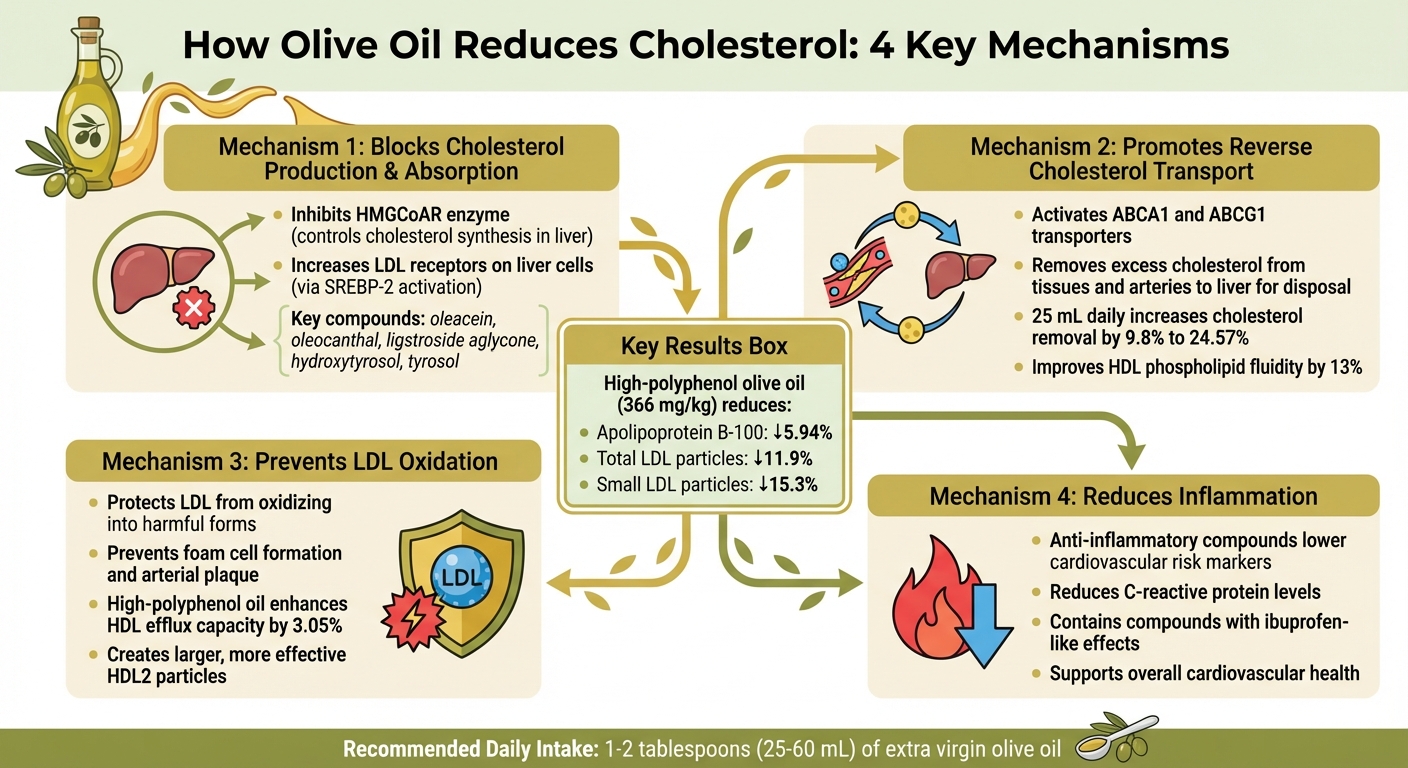
Extra virgin olive oil helps reduce cholesterol absorption through a series of fascinating processes. The secret lies in its phenolic compounds - natural chemicals that actively interact with cholesterol in both the gut and bloodstream. Unlike refined olive oils, which lose these compounds during processing, extra virgin olive oil retains a high concentration of polyphenols. These compounds are key to blocking cholesterol absorption and encouraging its removal from the body. Research shows that consuming high-polyphenol olive oil (366 mg/kg) can lower plasma apolipoprotein B-100 levels by 5.94%, reduce total LDL particles by 11.9%, and decrease small, artery-clogging LDL particles by 15.3%.
These benefits go beyond just digestion - they kickstart processes that help clear cholesterol from your system. Let’s break down how this works.
Phenolic Compounds Block Cholesterol
The phenolic compounds in extra virgin olive oil directly interfere with cholesterol production and absorption. They inhibit HMGCoAR (3-hydroxy-3-methylglutaryl co-enzyme A reductase), the enzyme responsible for controlling cholesterol synthesis in the liver. By slowing down this process, less cholesterol is produced.
At the same time, these compounds boost the number of LDL receptors on liver cells by activating the SREBP-2 transcription factor. More LDL receptors mean your liver can pull more LDL cholesterol out of your bloodstream for processing. According to Carmen Lammi from the University of Milan, specific phenolic compounds in olive oil - like oleacein, oleocanthal, and ligstroside aglycone - play a significant role in this process. Other derivatives, such as hydroxytyrosol and tyrosol, also contribute to cholesterol-lowering effects.
Let’s dive deeper into how these mechanisms work at the molecular level.
Promoting Reverse Cholesterol Transport
Extra virgin olive oil doesn’t just block cholesterol - it also helps your body get rid of it. This happens through reverse cholesterol transport (RCT), a process where excess cholesterol is removed from tissues and arteries and sent to the liver for disposal. Olive oil polyphenols stimulate this process by activating ATP-binding cassette transporters, specifically ABCA1 and ABCG1.
"Polyphenols contained in EVOO are responsible for inhibiting lipoproteins oxidative damages and promoting reverse cholesterol transport process via ABCA1 pathway." – Hicham Berrougui, Department of Medicine, University of Sherbrooke
A 12-week study found that consuming just 25 ml (roughly 1.7 US tablespoons) of extra virgin olive oil daily increased cholesterol removal from macrophages by 9.8% to 24.57% and improved HDL phospholipid fluidity by 13%. Furthermore, high-polyphenol olive oil enhanced HDL cholesterol efflux capacity by 3.05%, while low-polyphenol oils actually reduced it by 2.34%. These findings highlight how polyphenol content can make a big difference in managing cholesterol.
Anti-Inflammatory and Antioxidant Effects
Beyond enzyme regulation and receptor activation, olive oil’s phenolic compounds offer powerful anti-inflammatory and antioxidant benefits that further support cholesterol management. When LDL cholesterol oxidizes, it’s more likely to form foam cells and contribute to arterial plaque. Olive oil polyphenols help prevent this oxidation, keeping LDL particles in a state that your body can process efficiently.
"Olive oil polyphenols promote the main HDL antiatherogenic function, its cholesterol efflux capacity." – Álvaro Hernáez, Cardiovascular Risk and Nutrition Research Group
These antioxidant effects also improve HDL quality. High-polyphenol olive oil encourages the formation of larger, more effective HDL2 particles instead of smaller HDL3 particles. It also creates a stable, triglyceride-poor core within HDL, making it better at collecting cholesterol from tissues and arteries. By reducing inflammation in both the digestive and cardiovascular systems, olive oil sets the stage for healthier cholesterol levels and better heart health overall.
sbb-itb-4066b8e
Big Horn Olive Oil for Cholesterol Management
Big Horn Olive Oil takes the well-documented benefits of olive oil for lowering cholesterol and elevates them with products crafted to maximize heart health.
Why Big Horn Olive Oil Stands Out
Big Horn Olive Oil specializes in extra virgin olive oils that are packed with phenolic compounds like hydroxytyrosol, tyrosol, and oleuropein - compounds known to support cholesterol management. Their oils are cold-pressed within just 2 hours of harvest, ensuring a high phenolic content. To put this into perspective, fresh extra virgin olive oil can contain up to 366 mg/kg of polyphenols, whereas refined oils may have as little as 2.7 mg/kg. This commitment to freshness preserves the oil's antioxidant power, which helps protect LDL cholesterol from oxidative damage, enhances HDL cholesterol functionality, inhibits HMG-CoA reductase (an enzyme key to cholesterol production), and boosts LDL receptor expression to improve cholesterol transport and removal.
Heart-Healthy Product Recommendations
For those looking to improve their cholesterol profile, Big Horn Olive Oil offers standout options like the Estate Reserve EVOO and Picual Extra Virgin Olive Oil, both known for their high phenolic content. Picual, in particular, is rich in polyphenols that support reverse cholesterol transport. Another excellent choice is the Coratina Extra Virgin Olive Oil, which contains ligstroside derivatives such as tyrosol. These compounds have been shown to enhance cholesterol efflux by increasing ABCA1 expression, a process that helps remove cholesterol from cells.
Priced at $8.99 per bottle, these oils are not only accessible but effective. Consuming 25–60 mL daily (roughly 1.7 to 4 tablespoons) has been linked to improved HDL fluidity and better cholesterol removal.
How to Use Olive Oil in Your Daily Diet
Adding olive oil to your meals is an easy way to enjoy its cholesterol-lowering benefits while enhancing flavor.
Cooking Methods with Olive Oil
Extra virgin olive oil (EVOO) holds up well during cooking, thanks to its antioxidants. It’s a versatile option for sautéing vegetables, grilling proteins, roasting meats, or even poaching, all while keeping its heart-friendly properties intact. For roasted vegetables, use about one tablespoon of EVOO per cup of veggies at 400°F to achieve the perfect coat and caramelization. When baking, you can swap out butter for olive oil - just use about three-quarters of the amount. For example, if a recipe calls for one cup of butter, replace it with 3/4 cup of olive oil.
Using olive oil raw is another excellent way to preserve its phenolic compounds, which contribute to its health benefits. Drizzle it over cooked pasta, grilled veggies, or roasted meats for a flavorful finish. For a quick and heart-friendly salad dressing, mix EVOO with lemon juice or balsamic vinegar in a 3:1 ratio.
Pairing Olive Oil with Heart-Healthy Foods
Combine olive oil with nutrient-packed foods to amplify its cholesterol-lowering effects. It works beautifully with whole grains, legumes, leafy greens, nuts, and seeds . Plus, olive oil helps your body absorb fat-soluble vitamins (A, D, E, and K) and lycopene from tomatoes. This makes it a perfect addition to tomato-based dishes or salads featuring carrots and spinach. For a simple swap, spread EVOO on whole-grain toast instead of butter to cut down on saturated fats while adding beneficial monounsaturated fats.
How Much Olive Oil to Use Daily
Experts suggest consuming 1–2 tablespoons (about 7–20 grams) of extra virgin olive oil each day to make the most of its benefits. In fact, increasing your intake by just 5 grams can lower cardiovascular risk by around 4% . Since one tablespoon contains roughly 120 calories, try using it as a replacement for less healthy fats.
"Olive oil is a much healthier replacement for dietary fats, especially animal fats."
– Dr. Frank Hu, Professor of Nutrition and Epidemiology, Harvard T.H. Chan School of Public Health
Conclusion
Olive oil plays a vital role in supporting heart health through multiple pathways. Its rich oleic acid content helps reduce LDL ("bad") cholesterol while maintaining or improving HDL ("good") cholesterol levels. Additionally, its phenolic compounds, like hydroxytyrosol and oleocanthal, are powerful in preventing LDL oxidation - a critical step in the progression of heart disease. These polyphenols also aid in reverse cholesterol transport, helping the body clear excess cholesterol more effectively. On top of that, olive oil’s anti-inflammatory properties, which include compounds with effects similar to ibuprofen, help lower markers like C-reactive protein that are linked to cardiovascular risk.
Incorporating olive oil into your diet can have measurable benefits. Studies show that consuming just over ½ tablespoon daily is associated with a 19% reduction in heart disease-related mortality. The PREDIMED study further highlights its impact: participants consuming four or more tablespoons of extra virgin olive oil daily saw their combined risk of heart attack, stroke, and cardiovascular death drop by 30% compared to those on low-fat diets. Even small adjustments, such as swapping about 5% of animal fats for olive oil, can significantly lower cardiovascular risk.
The quality of olive oil matters greatly. Extra virgin olive oil (EVOO) retains more than 200 bioactive compounds that are often lost in refined versions like "light" or "pure" olive oils. Big Horn Olive Oil’s Ultra Premium EVOO, cold-pressed within two hours of harvest and delivered fresh within three months, ensures maximum polyphenol content and antioxidant potency. Their Estate Reserve and single-source varieties, such as Picual and Coratina, provide the heart-healthy components essential for effective cholesterol management.
For the best results, aim for 1.5–2 tablespoons of EVOO daily. Use it as a replacement for saturated fats like butter, margarine, or mayonnaise. Whether you drizzle it over roasted vegetables, mix it into salad dressings, or cook with it at moderate temperatures, choosing a high-quality EVOO like Big Horn Olive Oil’s products ensures you’re reaping the full cholesterol-lowering and heart-protective benefits. By making premium EVOO a daily staple, you can take meaningful steps toward better heart health.
FAQs
How does the phenolic content in olive oil help manage cholesterol levels?
The phenolic compounds found in olive oil are powerful allies for heart health. They work by reducing the absorption of cholesterol in the gut, encouraging cholesterol removal from cells, and enhancing the performance of HDL - the "good" cholesterol. This, in turn, helps lower levels of LDL, often referred to as the "bad" cholesterol.
Adding high-quality olive oil, like Ultra Premium Extra Virgin Olive Oil, to your meals is not just flavorful but also a smart choice for supporting cardiovascular health. Its distinct makeup, rich in phenolic compounds, is a key factor behind its well-known health advantages.
How can I use olive oil to support heart health?
Incorporating olive oil into your meals is a straightforward way to support heart health. By swapping out less healthy fats - like butter or margarine - for extra virgin olive oil (EVOO), you can make a positive change for your cardiovascular system. Research suggests that consuming 2 to 4 tablespoons (roughly 1 to 2 ounces) of high-quality EVOO daily may help lower LDL (often called "bad" cholesterol) while boosting HDL ("good" cholesterol), contributing to better overall heart health.
The benefits of olive oil stem from its rich content of monounsaturated fats, polyphenols, and plant sterols. These compounds work together to reduce cholesterol absorption and support healthier lipid metabolism. There are plenty of ways to enjoy EVOO: drizzle it over salads, cooked vegetables, or whole grains, or use it for light sautéing to preserve its beneficial properties. To maximize its health benefits, opt for fresh olive oil with a high polyphenol content and store it in a cool, dark place to maintain its quality.
How is olive oil better than other fats for managing cholesterol?
Extra virgin olive oil (EVOO) shines as a standout among dietary fats, particularly for its role in maintaining healthy cholesterol levels. Unlike saturated or trans fats, EVOO is packed with monounsaturated fats, especially oleic acid. This key component can help reduce LDL (the "bad" cholesterol) while boosting HDL (the "good" cholesterol), supporting overall heart health.
What makes EVOO even more impressive is its polyphenol content. These antioxidants not only enhance HDL's effectiveness but also limit cholesterol absorption in the gut and shield the body from oxidative damage. Opting for high-quality, high-polyphenol EVOO ensures you're reaping these benefits, making it a smarter choice over fats loaded with saturated or trans fats.