

How Olive Oil Reduces Oxidative Stress in Arteries
Your arteries face constant oxidative stress, which damages blood vessels and raises the risk of heart disease. Extra virgin olive oil (EVOO) combats this by neutralizing harmful free radicals, reducing inflammation, and improving arterial health. Packed with antioxidants like polyphenols, oleic acid, and vitamin E, olive oil supports your heart in multiple ways:
- Polyphenols: Neutralize free radicals, reduce inflammation, and improve blood vessel flexibility.
- Oleic Acid: Strengthens cell membranes, reduces inflammation, and supports healthy blood pressure.
- Vitamin E: Protects LDL cholesterol from oxidation, preventing plaque buildup.
Studies show that consuming about two tablespoons (23 grams) of EVOO daily can improve vascular health, lower oxidative stress, and reduce arterial inflammation. For maximum benefits, choose high-quality EVOO rich in polyphenols and store it properly to preserve its antioxidant properties.
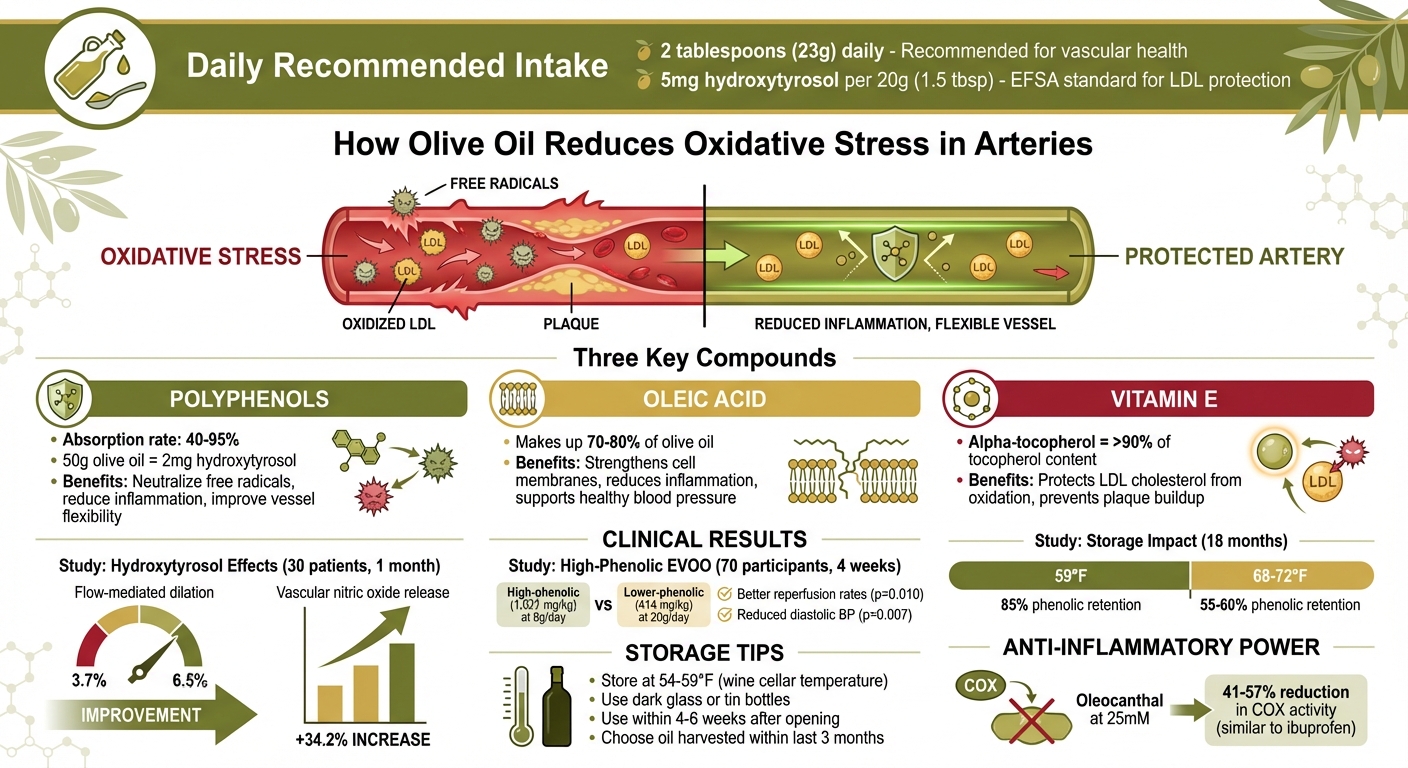
How Olive Oil Compounds Protect Your Arteries: Key Benefits and Daily Intake
Compounds in Olive Oil That Reduce Oxidative Stress
Polyphenols and Free Radical Protection
Beyond its well-known heart benefits, olive oil is packed with polyphenols that actively combat oxidative stress. Extra virgin olive oil, in particular, is rich in these compounds, which neutralize free radicals before they can harm your arteries. Among the most prominent polyphenols are hydroxytyrosol and tyrosol, with absorption rates ranging from 40% to 95%. A daily intake of about 50 grams (roughly 3.5 tablespoons) of olive oil provides around 2 milligrams of hydroxytyrosol.
These polyphenols don’t just stop at neutralizing free radicals. They also activate the Nrf-2 pathway, which promotes antioxidant enzyme production, while suppressing the NF-κB pathway to reduce inflammation.
Oleuropein, the compound responsible for the olive’s signature bitter flavor, plays a key role in regulating cholesterol levels and protecting heart tissue during ischemic events. Meanwhile, oleocanthal - a compound that gives high-quality olive oil its peppery kick - acts much like ibuprofen by inhibiting the COX-1 and COX-2 inflammatory enzymes.
In March 2023, a study led by Ignatios Ikonomidis at Attikon University Hospital explored the effects of hydroxytyrosol on 30 patients with chronic coronary artery syndrome. After taking 10 milligrams of hydroxytyrosol daily for one month, participants showed improved arterial flexibility - measured by flow-mediated dilation, which increased from 3.7% ± 2.1% to 6.5% ± 2.3%. The study also noted significant reductions in lipid peroxidation markers.
"Hydroxytyrosol-enriched olive oil may have beneficial effects on endothelial, arterial and LV diastolic function likely by reducing oxidative and inflammatory burden in CCAS."
- Ignatios Ikonomidis, Laboratory of Echocardiography and Preventive Cardiology
Oleic Acid's Heart-Protective Effects
Oleic acid, which makes up 70%–80% of olive oil, has a stable structure that strengthens cell membranes against oxidation.
Beyond its structural role, oleic acid is a natural anti-inflammatory. It counteracts the inflammatory effects of long-chain saturated fatty acids, like stearic acid, by suppressing the expression of intercellular adhesion molecule-1 (ICAM-1) and inhibiting NF-κB activation in human aortic endothelial cells. Additionally, oleic acid promotes healthy blood pressure by enabling nitric oxide–dependent relaxation of arterial walls. It also reduces tissue levels of arachidonic acid, which helps interrupt inflammation caused by oxidative stress.
Olive oil’s benefits don’t stop with fatty acids. Minor components, such as vitamin E and other antioxidants, further protect arteries.
Vitamin E and Other Antioxidants
Alpha-tocopherol, the dominant form of vitamin E in olive oil, accounts for over 90% of its tocopherol content. This potent antioxidant defends cell membranes and LDL cholesterol against lipid peroxidation, a major contributor to arterial plaque formation.
The unsaponifiable fraction of olive oil, which makes up 0.4%–5% of the olive fruit, is loaded with beneficial compounds like β-sitosterol, squalene, and triterpenes such as oleanolic acid. β-sitosterol reduces the release of reactive oxygen species within cells and boosts antioxidant enzyme activity, including manganese superoxide dismutase and glutathione peroxidase. Meanwhile, triterpenes enhance vascular health by increasing the expression of endothelial nitric oxide synthase, improving nitric oxide availability and overall vascular function.
These antioxidants work together to amplify the protective properties of extra virgin and virgin olive oil. However, it’s worth noting that refining processes strip away many of these essential compounds. To protect LDL particles from oxidative damage, the European Food Safety Authority recommends a daily intake of at least 5 milligrams of hydroxytyrosol and its derivatives.
Research on Olive Oil and Arterial Health
Clinical Studies on Oxidative Stress Reduction
Research continues to highlight olive oil's role in supporting arterial health, particularly through its antioxidative properties. Clinical trials have shown that high-polyphenolic extra virgin olive oil (EVOO) can significantly decrease markers of lipid peroxidation, such as malondialdehyde (MDA) and oxidized LDL (oxLDL).
A notable study conducted between October 2021 and March 2022 at the General Hospital of Messinia in Greece involved 70 participants - 50 hyperlipidemic patients and 20 healthy controls. The participants were given either high-phenolic EVOO (1,021 mg/kg) at 8 g/day or lower-phenolic EVOO (414 mg/kg) at 20 g/day over four weeks. The findings, published in 2025, revealed that hyperlipidemic patients experienced measurable improvements in endothelial function, including better reperfusion rates (p = 0.010) and reduced diastolic blood pressure (p = 0.007). Interestingly, the high-phenolic EVOO, even at a lower dose, provided more pronounced vascular benefits.
"EVOO consumption improved endothelial function and hemodynamic parameters in hyperlipidemic patients, with high-phenolic EVOO demonstrating superior vascular benefits at lower doses."
- Dr. Christos Kourek, Resident Physician, General Hospital of Kalamata
Additionally, hydroxytyrosol, a key compound in olive oil, has been shown to boost vascular nitric oxide release by as much as 34.2%. This increase improves blood vessel flexibility and reduces oxidative stress. Beyond mitigating oxidative damage, olive oil's bioactive components also target arterial inflammation - a major contributor to plaque buildup.
Effects on Arterial Inflammation and Plaque
Olive oil's bioactive compounds play a crucial role in reducing arterial inflammation. They achieve this by suppressing the production of inflammatory mediators such as cytokines (IL-1, IL-6, IL-8), chemokines (MCP-1), and adhesion molecules (VCAM-1, ICAM-1, E-selectin, and P-selectin). This inhibition prevents leukocytes from adhering to arterial walls, a key early step in the development of plaque.
Polyphenols like hydroxytyrosol and oleuropein further disrupt inflammation by blocking NF-κB signaling, a critical pathway in plaque formation. Another compound, oleocanthal, which gives high-quality olive oil its signature peppery kick, acts similarly to ibuprofen by inhibiting cyclooxygenase (COX) enzymes. At a concentration of 25 mM, oleocanthal reduces COX activity by 41–57%.
The EUROLIVE study, involving 200 healthy participants, found that olive oil's phenolic content directly influenced its benefits. Higher phenolic levels led to increased HDL cholesterol and reduced lipid oxidative damage. Regular consumption not only improved HDL functionality but also enhanced its ability to remove cholesterol from arterial walls, reducing plaque buildup.
"Olive oil bioactive compounds exhibited a potent capability to attenuate oxidative stress and improve endothelial function through their anti-inflammatory, anti-oxidant, and anti-thrombotic properties, therefore reducing the risk and progression of atherosclerosis."
- Volha Summerhill et al.
In the CORDIOPREV Trial (2009–2012), researchers followed 1,002 patients with coronary heart disease over seven years. Those adhering to a Mediterranean diet rich in olive oil showed better flow-mediated dilation and improved endothelial function compared to those on a low-fat diet. These benefits were especially evident among individuals with type 2 diabetes or prediabetes.
Adding Olive Oil to Your Daily Diet
Selecting Quality Extra Virgin Olive Oil
Picking the right olive oil can significantly impact your health, especially when it comes to protecting your arteries from oxidative stress. Extra virgin olive oil stands out because it retains its bioactive polyphenols, which are mostly lost during the refining process.
Look for oils with a distinct bitter or peppery taste - this indicates the presence of oleocanthal and other beneficial compounds called secoiridoids. Packaging matters too - opt for dark glass or tin bottles to shield the oil's antioxidants from light. Check the label for a harvest date and aim for the freshest oil, ideally harvested within the last three months, for maximum antioxidant benefits. For the oil to meet the European Food Safety Authority's standards for protecting blood lipids from oxidative stress, it should contain at least 5 mg of hydroxytyrosol and its derivatives per 20 g (about 1.5 tablespoons).
Storage is another key factor. Keep your olive oil at a cool 54–59°F (12.5–15°C) - similar to wine cellar conditions - to maintain its phenolic compounds. Studies reveal that oils stored at 59°F retain up to 85% of their phenolic content over 18 months, while oils kept at room temperature (68–72°F) hold onto only 55–60%. Once you open a bottle, aim to use it within 4–6 weeks to minimize oxidation. Proper storage and timely use ensure the oil retains its antioxidants, which directly support arterial health.
"The difference between storing olive oil at room temperature versus wine-cellar temperatures can mean the difference between preserving or losing half of the phenolic compounds that make extra virgin olive oil valuable for its health benefits."
- Marilyn Harding, Aristoleo
At Big Horn Olive Oil, their production methods focus on preserving these health-promoting compounds, ensuring their oils deliver the heart-health benefits you're looking for.
Easy Ways to Use Olive Oil in Cooking
Now that you have a high-quality olive oil, incorporating it into your meals is effortless. Consuming about two tablespoons (23 g) daily can help support heart health. Extra virgin olive oil is an excellent choice for frying vegetables, as its high oleic acid content and antioxidant phenols make it more resistant to oxidation compared to seed oils.
Use olive oil in various ways - drizzle it raw over salads to preserve heat-sensitive nutrients like vitamin E, or cook with it to enhance the flavor and nutritional profile of your meals. You can also add table olives to your diet for an extra dose of antioxidants. With these simple steps, you can make olive oil a delicious and healthful part of your daily routine.
sbb-itb-4066b8e
What Does Olive Oil Do to Your Arteries?
Conclusion
Olive oil’s powerful combination of polyphenols, oleic acid, and vitamin E works wonders for heart health. These compounds neutralize free radicals, prevent LDL oxidation, and encourage nitric oxide release, which helps protect arteries from oxidative damage. Together, they reduce inflammation, enhance vascular flexibility, and aid in clearing cholesterol from arterial walls.
Research backs these benefits:
"Olive oil bioactive compounds exhibited a potent capability to attenuate oxidative stress and improve endothelial function through their anti-inflammatory, anti-oxidant, and anti-thrombotic properties."
- Volha Summerhill et al., Frontiers in Cardiovascular Medicine
The EUROLIVE study further revealed that the cardiovascular benefits of olive oil increase with its phenolic content.
To maximize these advantages, choose a high-quality extra virgin olive oil. Big Horn Olive Oil’s ultra-premium options, cold-pressed within two hours of harvest and delivered fresh within three months, retain the highest levels of polyphenols and antioxidants. Incorporating about two tablespoons of this oil daily can provide your heart with the support it needs to fight oxidative stress and maintain healthy arteries over time.
FAQs
How does olive oil help protect arteries from oxidative stress?
Olive oil plays a key role in protecting arteries from oxidative stress, thanks to its rich supply of polyphenols like hydroxytyrosol and oleuropein. These antioxidants work to neutralize harmful free radicals, helping to minimize oxidative damage to blood vessels.
It’s also packed with oleic acid, a type of healthy monounsaturated fat that promotes the production of nitric oxide. This compound helps relax blood vessels, enhances circulation, and reduces inflammation - offering further protection for arterial health. Adding high-quality olive oil, like Ultra Premium Extra Virgin Olive Oil from Big Horn Olive Oil, to your meals is not only flavorful but also a smart choice for supporting your heart and overall wellness.
What makes olive oil good for heart health?
Olive oil is rich in compounds that support heart health, making it an excellent choice for promoting cardiovascular well-being. Two standout components include oleic acid, a monounsaturated fat that helps maintain healthy cholesterol levels, and polyphenols, antioxidants that combat oxidative stress in your arteries. Together, these nutrients play a key role in protecting your heart and supporting arterial health.
To maximize the benefits, opt for premium options like Ultra Premium Extra Virgin Olive Oil (EVOO), celebrated for its higher concentration of these heart-friendly compounds. For instance, Big Horn Olive Oil offers fresh, high-quality olive oils designed to deliver both exceptional health benefits and great taste.
How can I find high-quality extra virgin olive oil?
To pick a top-notch extra virgin olive oil (EVOO), there are a few things you’ll want to keep in mind. Start by ensuring the label explicitly says “Extra Virgin Olive Oil” and look for certifications that verify it meets strict quality guidelines. Freshness matters too - check for a harvest or bottling date, and try to choose oil harvested within the past 12–18 months.
EVOO with higher levels of polyphenols - natural antioxidants that help protect heart health by reducing oxidative stress - often has a slightly bitter or peppery flavor. These characteristics are a good sign of its nutritional value. For peace of mind, stick to trusted brands like Big Horn Olive Oil, which offers ultra-premium EVOO crafted from carefully selected olives to ensure maximum freshness and health benefits.