

Olive Oil Rituals for Good Luck in Sicily
In Sicily, olive oil is more than a kitchen staple - it’s a symbol of luck, protection, and abundance. For centuries, Sicilians have used it in rituals to ward off bad energy, celebrate milestones, and invite prosperity. From diagnosing the malocchio (evil eye) with olive oil drops in water to gifting premium oils at weddings, these customs remain deeply rooted in everyday life. Modern producers, like Big Horn Olive Oil, balance these age-old practices with advanced production methods, ensuring high-quality oils for both rituals and culinary use.
Key points:
- Olive oil symbolizes purity, blessings, and fertility.
- Rituals include malocchio diagnosis, pre-wedding anointing, and sprinkling salt over spilled oil to avoid bad luck.
- November 11, St. Martin’s Day, marks the harvest celebration with fresh olive oil tastings.
- Modern producers focus on quality while respecting heritage, offering premium oils like Big Horn’s EVOO at $8.99.
Sicilian olive oil bridges history and modernity, preserving its role as both a sacred and practical part of life.
Sicilian Olive Oil Rituals: History and Regional Differences
Sicily’s olive oil traditions, steeped in history and symbolism, trace their origins back to 3500 BC, when early Mediterranean civilizations began pressing olives. The Greeks and Romans, who referred to the island as "Sicilia Felix" because of its fertile lands, regarded olive groves as sacred. Olive oil was central to their daily lives, used for lighting temple lamps, polishing statues, and performing rituals that later intertwined with Catholic practices. These ancient customs laid the foundation for the variety of olive oil rituals practiced across Sicily today.
One of the most well-known rituals is the diagnosis of the malocchio, or evil eye, which is particularly prominent in Western Sicily, around areas like Trapani and Palermo. This practice involves dropping olive oil into a dish of water and observing how the oil behaves. If the oil forms large circles, it is believed to indicate the presence of the evil eye. As Nonna Bolognese explains:
If the oil circles are large, this means that the affected person has the 'evil eye'.
To ensure accuracy, the process is typically repeated three times, each time using fresh water.
In Eastern Sicily, the focus shifts from diagnosing to warding off bad luck. For example, in Messina, spilling olive oil is seen as an omen of misfortune. To counteract this, a quick ritual is performed: salt is immediately sprinkled over the spill. According to The Sicilian Housewife:
In Sicily, if you spill olive oil, you have to throw down some salt immediately. Accidentally spilling olive oil is a very, VERY bad sign.
The act of scattering salt is thought to confuse any negative forces or intentions.
Meanwhile, in Central and Southern Sicily, olive oil is celebrated as a symbol of prosperity and blessing. Known as "liquid gold", it represents wealth and good fortune. Olive oil is often given as a gift at significant life events like weddings, baptisms, and graduations to convey wishes of abundance and luck. Brides also use olive oil in pre-wedding beauty rituals to signify purity and ensure a prosperous union. Another cherished tradition involves reciting sacred incantations, or scongiuri, at midnight on Christmas Eve, a practice that continues to be passed down through generations.
These rituals, deeply rooted in history and regional identity, highlight the enduring cultural importance of olive oil in Sicily.
sbb-itb-4066b8e
1. Regional Sicilian Olive Oil Rituals
Cultural Significance
In Sicily, olive oil is more than just a kitchen staple - it's a symbol of life, history, and connection to the land. Some olive trees, like those on estates such as La Furtuna, have stood for over 1,500 years. This enduring vitality is deeply tied to family heritage and tradition. Angela Astarita, a facialist and makeup artist, sums it up beautifully:
Oil represents purity, abundance, and blessing.
Olive oil also plays a meaningful role in life’s most cherished events. At weddings and baptisms, Sicilians gift bottles of high-quality olive oil as tokens of good fortune. Brides often follow ancient customs by using olive oil-based soaps and shampoos before their wedding day, a practice believed to bring purity and blessings to their union. These traditions trace back to Greek and Roman times, when oil was used to anoint athletes and bless newlyweds for fertility. This deep-rooted symbolism continues to shape rituals and practices across the island.
Materials and Methods
Sicilian olive oil rituals are simple yet steeped in meaning, reflecting the island's cultural values. For example, the malocchio (evil eye) ritual only requires a dish of water and a spoonful of olive oil. Tradition dictates using fresh water for each drop of oil to ensure accuracy. The scongiuri - sacred incantations that accompany these rituals - are said to be passed down exclusively at midnight on Christmas Eve.
Harvesting olives is another cherished tradition, particularly in towns like Castelbuono. Families gather to spread nets beneath the trees, climb ladders, and hand-pick olives together. While modern tools like electric pickers are available, many farmers stick to wooden tools, preserving the age-old methods.
Symbolic Outcomes
The way olive oil behaves in water during rituals carries specific meanings. For instance, large circles in the water suggest the presence of the evil eye, while small, stationary circles or no circles indicate freedom from negative energy. Beyond protection rituals, olive oil is a marker of celebration and renewal. In southeastern Sicily, the first pressing of Tonda Iblea olives, known as Primo, inspires dishes like fave alla trappitara - a broad bean soup generously drizzled with the fresh oil. These culinary traditions turn the olive harvest into moments of shared gratitude and abundance.
Modern Adaptations
While these rituals remain central to Sicilian identity, modern practices are reshaping how they’re celebrated. Enzo Carollo, an olive farmer, reflects on this change:
Sicilians need to realize the value of what they possess. We need to better understand what the market wants.
Today, younger producers focus on organic certification and advanced milling techniques to meet global demand. However, this shift often comes at the cost of the communal spirit that once defined the olive harvest. As digital lifestyles take hold, the traditional harmony of collective harvesting is fading.
Even so, new traditions are emerging. Modern couples are opting for personalized bottles of premium olive oil as wedding favors, replacing decorative keepsakes. These thoughtful gifts create lasting sensory memories and deepen connections with their guests.
2. Big Horn Olive Oil Products
Cultural Significance
Big Horn Olive Oil's Ultra Premium EVOO has earned the nickname "liquid gold" and is often given as a gift to symbolize good fortune. This deep respect for olive oil's cultural importance is evident in every stage of Big Horn's production process.
Materials and Methods
Big Horn offers a range of products, including the Estate Reserve Ultra Premium EVOO and single-source Picual and Coratina varieties, priced at $8.99. These oils are crafted with the precision required for traditional Sicilian practices. For example, the malocchio (evil eye) ritual relies on fresh olive oil as a key component. To uphold these traditions, Big Horn ensures its oils are delivered to customers within three months of harvest. According to custom, if olive oil is accidentally spilled, scattering sea salt immediately is believed to ward off bad luck.
Symbolic Outcomes
Big Horn's commitment to quality not only preserves cultural traditions but also offers practical benefits. Premium olive oil is thought to attract prosperity, while its role in rituals to dispel misfortune underscores its significance. Spilling this "liquid gold" is seen as an ill omen. Beyond its ceremonial uses, olive oil plays a part in modern wellness routines. A traditional practice involves drinking a quarter cup of EVOO in the morning, followed by warm lemon water, to support detoxification and overall health. Packed with antioxidants and backed by rigorous quality standards, Big Horn Olive Oil products seamlessly blend traditional uses with contemporary health benefits.
Benefits and Drawbacks
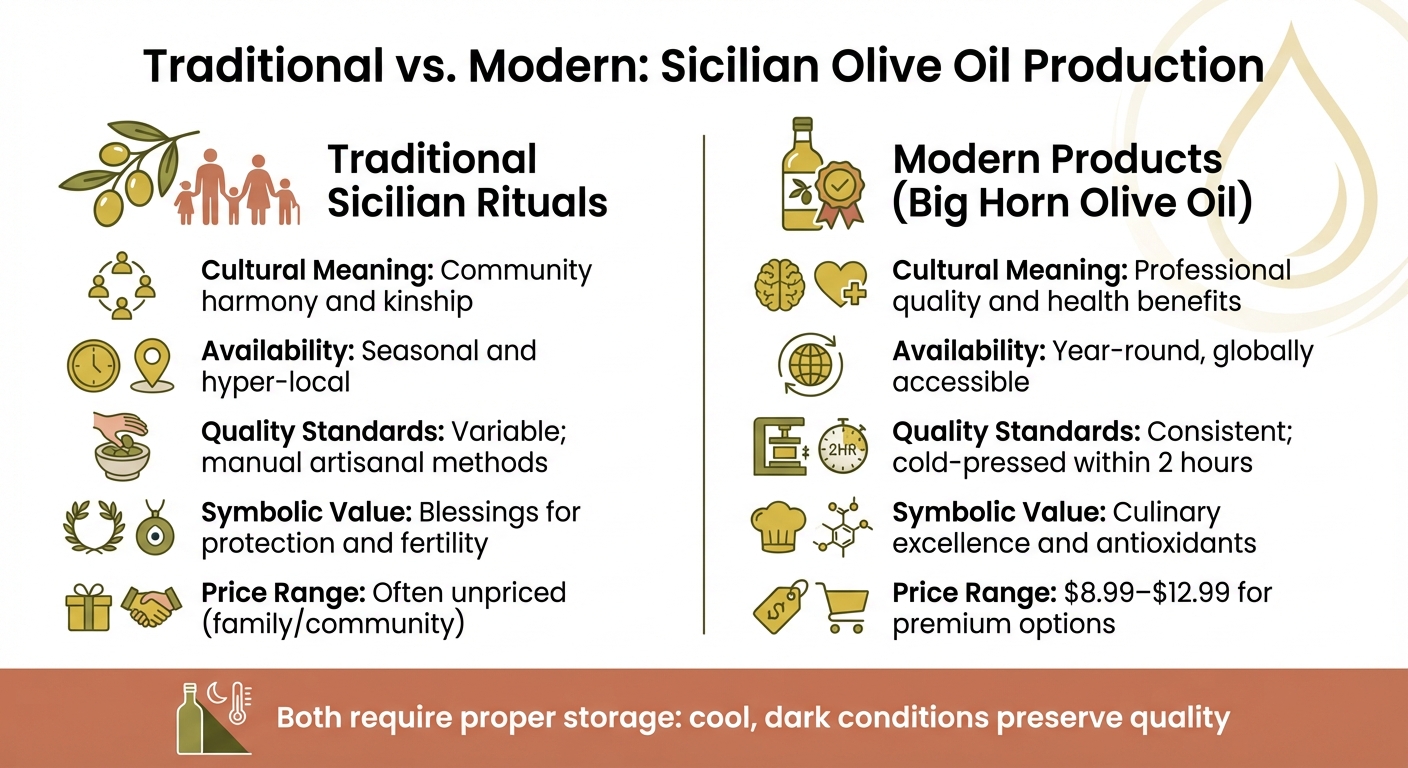
Traditional Sicilian vs Modern Olive Oil Production: Cultural Practices and Benefits
Sicilian rituals surrounding olive oil production carry a depth of meaning that modern products often struggle to replicate. As Vogue put it:
There's no modern product - however expensive or innovative - that could rival its unique blend of utility with a deeper meaning.
These age-old traditions foster a sense of community and togetherness, with families gathering for the labor-intensive olive harvest. Anna Franca Zangara reflected on this beautifully:
At one time there was a lot more harmony in the olive harvest... There was a festive feeling with so many people reuniting in the countryside.
The oil produced in these traditional settings becomes more than just a cooking ingredient - it’s a sacred commodity, steeped in blessings passed down through generations.
On the other hand, modern products like Big Horn Olive Oil bring their own set of advantages. These oils offer consistency, accessibility, and strict adherence to quality standards. For instance, Big Horn guarantees freshness within three months of harvest and offers premium varieties at an affordable $8.99. In contrast, traditional Sicilian oils are often seasonal and difficult to source outside the island. Additionally, modern certifications ensure authenticity, with extra virgin olive oil (EVOO) meeting an acidity threshold of 0.8% or less - something not always achievable through traditional manual methods. This highlights the practical trade-offs between the cultural richness of tradition and the efficiency of modern production.
Traditional olive harvests involve painstaking hand-picking, which creates a deep connection to the land and its history. However, modern machinery significantly speeds up the process, enabling cold-pressing within two hours of harvest for consistent quality. Enzo Carollo summed up the evolving dynamic:
Sicilians need to realize the value of what they possess. We need to better understand what the market wants.
This ongoing tension between preserving heritage and embracing innovation defines the olive oil industry today.
| Feature | Traditional Sicilian Rituals | Modern Products (Big Horn) |
|---|---|---|
| Cultural Meaning | Community harmony and kinship | Professional quality and health benefits |
| Availability | Seasonal and hyper-local | Year-round, globally accessible |
| Quality Standards | Variable; manual artisanal methods | Consistent; cold-pressed within 2 hours |
| Symbolic Value | Blessings for protection and fertility | Culinary excellence and antioxidants |
| Price Range | Often unpriced (family/community) | $8.99–$12.99 for premium options |
Both traditional and modern oils share a critical need for proper storage - cool, dark conditions help preserve their quality. Big Horn addresses this with opaque bottles and a freshness guarantee, demonstrating that despite their differences, both approaches prioritize maintaining the oil’s integrity. In blending the past with the present, Sicilian olive oil continues to bridge the gap between heritage and contemporary culinary demands.
Conclusion
From ancient rituals to the techniques of today, Sicily's olive oil remains a bridge between tradition and modernity. It carries the weight of history - whether in blessings for newlyweds or midnight chants against the mal occhio - while seamlessly adapting to contemporary practices.
Producers in Sicily have found a way to respect their heritage while addressing global demands. As Enzo Carollo wisely noted:
Sicilians need to realize the value of what they possess. We need to better understand what the market wants.
This isn't about discarding the wisdom of the past; it's about reinterpreting it for a wider audience. Companies like Big Horn Olive Oil exemplify this balance by offering ultra-premium EVOO for $8.99. They honor traditional cold-press methods while making these oils accessible to kitchens worldwide. It's a perfect blend of legacy and innovation, showing how olive oil continues to hold cultural and practical significance.
Modern brides and home cooks alike reap the benefits of olive oil's timeless appeal. While Biancolilla oil pairs beautifully with seafood - just as it did generations ago - modern extraction methods ensure consistent quality every time. What was once a seasonal, hyper-local product is now available year-round, backed by strict certifications and optimal storage practices to retain freshness.
Even with these advancements, the heart of Sicilian olive oil remains unchanged. Ancient trees, some over 1,500 years old, still bear fruit that is cold-pressed within 24 hours using modern equipment. Families continue to gather during the harvest, blending age-old traditions with tools like electric pickers to ease the process. Whether drizzled on I Muffuletti or used in everyday cooking, olive oil stands as a symbol of Sicily's enduring connection to both its roots and its future.
This seamless harmony of old and new encapsulates the spirit of Sicilian olive oil, a product that remains as relevant and cherished today as it was centuries ago.
FAQs
What role does olive oil play in Sicilian good luck rituals?
In Sicily, olive oil holds a special place beyond its role in cooking - it's woven into traditions of protection and good fortune. Accidentally spilling olive oil is often seen as a bad sign, sometimes linked to the "evil eye" or feelings of envy. To counteract this, Sicilians might sprinkle a pinch of salt over the spill, a ritual that underscores the symbolic power of olive oil in their culture.
Another fascinating tradition involves using olive oil to detect negative energy. A small drop of oil is placed into water, and if it swirls or moves, it’s believed to signal the presence of the evil eye. This practice is often paired with prayers, especially during Christmas, as a way to fend off misfortune. For those embracing these cherished customs, opting for premium extra virgin olive oil, such as the selections from Big Horn Olive Oil, ensures an authentic connection to these meaningful rituals.
How is the evil eye (malocchio) detected using olive oil?
In Sicilian tradition, the evil eye - referred to as malocchio - can be identified through a simple yet symbolic ritual involving olive oil and water. A few drops of olive oil are gently placed into a bowl of water. If the oil spreads out, forms an "eye" shape, or separates in an unusual way, it is taken as an indication of the presence of malocchio.
This ritual highlights the deep-rooted role of olive oil in Sicilian folklore. More than just a staple in the kitchen, olive oil is seen as a powerful symbol, embodying protection and a connection to ancestral traditions. It serves as a bridge between everyday life and the rich heritage of Sicily.
Why is olive oil seen as a symbol of good luck and prosperity in Sicily?
Olive oil, often referred to as "liquid gold", holds a special place in Sicilian heritage. Its importance is rooted in the ancient olive trees that dot the landscape - some of them centuries old - standing as enduring symbols of abundance, resilience, and stability. Beyond its practical uses, olive oil has long been a cornerstone of Sicilian life, representing both economic sustenance and spiritual richness.
In Sicily's rural communities, the olive harvest is more than just agricultural work - it’s a time of celebration and togetherness. This annual event marks the reward of months of labor and the hope for a prosperous year ahead. Olive oil also plays a starring role in Sicilian cuisine, where it is cherished not just for its flavor but for its ability to nourish both body and soul. Offering olive oil as a gift is seen as a meaningful gesture, symbolizing wishes for health, harmony, and lasting prosperity.