

Checklist for Using Olive Oil in Weight Loss Diets
Olive oil can help with weight loss when used correctly. Its monounsaturated fats may curb hunger, support fat burning, and improve metabolism. But portion control is essential, as each tablespoon has 119 calories. Here's how to use it effectively:
- Portion Control: Stick to 1–2 tablespoons daily to manage calorie intake.
- Choose Quality: Use extra virgin olive oil (EVOO) within nine months of its crush date for maximum nutrients.
- Pair with Healthy Foods: Combine olive oil with fiber-rich veggies, whole grains, and lean proteins for balanced meals.
- Cooking Tips: Use small amounts for sautéing, roasting, or as a salad dressing. Avoid deep frying.
- Monitor Progress: Track weight and adjust portions if needed.
Getting Started with Olive Oil for Weight Loss
Calculate Your Daily Calorie and Fat Needs
To incorporate olive oil into your weight loss plan, start by figuring out your daily calorie and fat goals. Generally, 20–35% of your daily calories should come from fat. For example, if you're following a 1,800-calorie diet, that means about 360–630 calories from fat, which is roughly 2–4 tablespoons of olive oil. Research indicates that when you manage your total calorie intake, controlled portions of olive oil can aid in weight loss efforts. Use precise measurements to stay on track, and once you know your targets, focus on selecting a high-quality olive oil.
Select Quality Extra Virgin Olive Oil
Opt for Ultra Premium Extra Virgin Olive Oil, especially those rich in antioxidants like biophenols. Freshness matters - try to use olive oil within nine months of its crush date to get the most nutrients. Brands like Big Horn Olive Oil, for instance, ensure top-tier quality by selecting only the best 5% of the olive harvest and shipping their oils within 1–3 months of production. Look for oils with a high smoke point (at least 410°F) to make them suitable for a variety of cooking methods. Checking the crush date on the label and choosing a container size you can finish within a few weeks or months will help preserve the oil's quality and flavor. Once you’ve chosen your oil, make sure you have tools to measure portions accurately.
Get the Right Tools for Measuring Portions
Accurate portion control is key when using olive oil for weight loss. Relying on visual estimates can often lead to overuse and extra calories. Invest in U.S. measuring spoons (teaspoons and tablespoons), a liquid measuring cup marked in fluid ounces, and a digital kitchen scale that measures in both grams and ounces. These tools will help you measure out 1–2 tablespoons per meal with precision. For cooking, consider using nonstick or ceramic pans - these allow you to use smaller amounts of oil while still achieving the desired texture and flavor in your dishes.
Use Olive Oil Daily to Lose Weight and Prevent Obesity
Daily Checklist for Adding Olive Oil to Your Diet
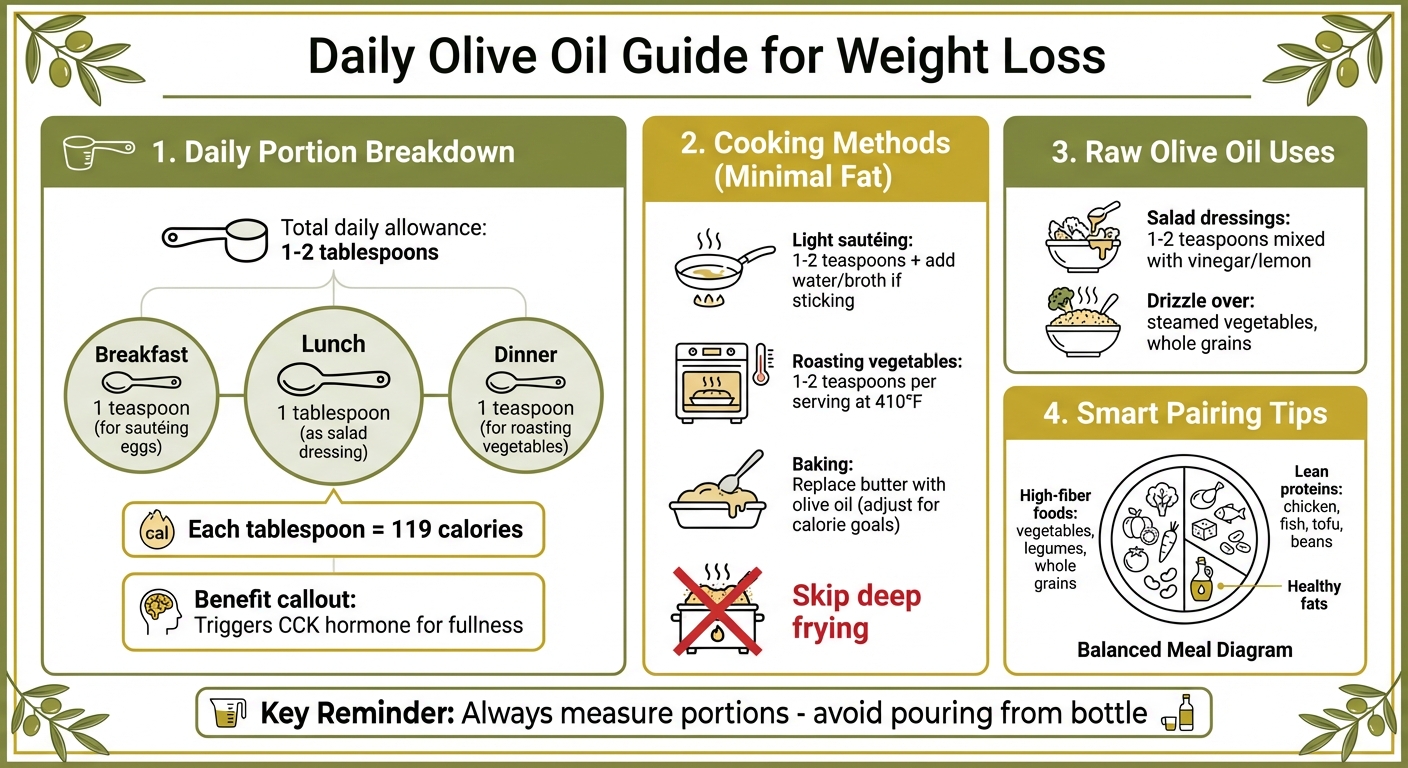
Daily Olive Oil Usage Guide for Weight Loss: Portion Control and Meal Planning
Here’s a practical guide to seamlessly incorporate olive oil into your daily meals while keeping your nutrition goals on track.
Measure Your Portions Thoughtfully
Stick to 1–2 tablespoons of olive oil per day to maintain a balanced calorie intake. Since each tablespoon contains about 119 calories, measuring your portions is key. A simple plan might look like this: use 1 teaspoon for breakfast (like sautéing eggs), 1 tablespoon for lunch (as a salad dressing), and 1 teaspoon for dinner (to roast vegetables). This approach ensures your total fat intake stays within the recommended 20–35% of daily calories.
Avoid pouring straight from the bottle - use measuring spoons to prevent overdoing it. This small habit can help you avoid consuming unnecessary extra calories.
Next, let’s look at how to cook with olive oil while keeping fat levels in check.
Cook with Olive Oil Using Minimal Fat
For light sautéing, start with just 1–2 teaspoons of extra virgin olive oil in your pan. If food begins to stick, add a splash of water or low-sodium broth. When roasting vegetables, toss them with 1–2 teaspoons of olive oil per serving, spread them evenly on parchment paper, and roast at 410°F for delicious results. For baking, you can replace butter or shortening with olive oil, adjusting the amounts to fit your calorie goals.
Skip deep frying entirely - it soaks food in oil and ramps up the calorie count. Instead, use nonstick or ceramic pans to achieve flavorful dishes with minimal oil.
Finally, raw olive oil can be a game-changer for flavor and satisfaction.
Enhance Meals with Raw Olive Oil for Fullness
Drizzle small, measured amounts of raw olive oil over salads, steamed vegetables, or whole grains. For homemade dressings, mix 1–2 teaspoons of olive oil with vinegar or lemon juice to create a simple, tasty topping that also boosts nutrient absorption from your veggies. Raw extra virgin olive oil (EVOO) may even help you feel fuller by triggering the release of CCK, a hormone that signals satiety.
For an extra flavor punch, try infused olive oils like Lemon, Rosemary, or Wild Mushroom from Big Horn Olive Oil. A tiny splash adds bold taste and supports long-lasting satisfaction. Pairing olive oil with Mediterranean-inspired meals - think veggie-packed salads, whole-grain bowls, or grilled proteins - can help you stay on track with your weight management goals.
sbb-itb-4066b8e
Pairing Olive Oil with Foods for Better Results
Pairing olive oil with the right foods can turn it into more than just a cooking staple - it can become a key part of your weight loss strategy. When combined with low-calorie, nutrient-packed ingredients, olive oil helps create meals that are satisfying, flavorful, and calorie-conscious.
Mix Olive Oil with High-Fiber Foods
Pairing olive oil with high-fiber foods like vegetables, legumes, and whole grains can work wonders for your weight loss journey. Fiber slows digestion, keeping you feeling full longer, which can help you stick to your calorie goals. For instance, toss some white beans or leafy greens with 1–2 teaspoons of olive oil, or drizzle infused olive oil over mashed sweet potatoes for a delicious and filling side dish.
Another idea? Combine 1 tablespoon of olive oil with cooked quinoa or farro and roasted vegetables. This combination not only boosts flavor but also helps your body burn fat more efficiently. Looking for a way to add bold flavors without piling on extra calories? Try using Big Horn Olive Oil's Traditional 18-Year Aged Dark Balsamic or their fruit-infused options like Blackberry Ginger. These balsamics pack a punch of flavor without needing heavy, calorie-laden dressings.
"I use both white and dark vinegars... on salads, grilled salmon, veggies - and I make 'fizzies' with different flavors of the vinegars - vinegar (to taste) and plain bubbly water - so flavorful and refreshing!" - Cat T., Verified Buyer
Pair Olive Oil with Lean Proteins
Combining olive oil with lean proteins such as chicken, fish, tofu, or beans is another smart way to create balanced, satisfying meals. For animal proteins, brush 1 teaspoon of olive oil on chicken breast or fish before grilling to lock in moisture and flavor.
If you prefer plant-based options, toss tofu and vegetables with 1 tablespoon of olive oil on a sheet pan for a simple, healthy dinner. You can also finish a hearty lentil stew with 1–2 teaspoons of olive oil per serving. This mix of plant protein, fiber, and healthy fats not only tastes great but also supports weight management and better blood sugar control when you’re mindful of your overall calorie intake.
Maintaining Weight Loss with Olive Oil Over Time
Monitor and Adjust Your Olive Oil Intake
Weigh yourself once a week, at the same time each time. Keep track of your energy levels to see how olive oil affects you. If you notice the scale creeping up over several months - even with a healthy diet - it might be time to reassess your portion sizes.
Watch for signs of overdoing it. Always measure your olive oil portions. Don’t fall into the trap of thinking olive oil alone guarantees weight loss. Keep an eye on all calorie sources. For example, if you find yourself adding more bread to your meals for dipping, it’s time to scale back and measure more carefully. Research backs the importance of portion control, especially with calorie-dense foods.
This kind of mindful monitoring lays the groundwork for a balanced and sustainable eating style.
Follow a Mediterranean-Style Eating Pattern
Let olive oil be your primary fat source as part of a Mediterranean-style diet. Studies consistently show that this eating approach supports long-term weight management. Pair olive oil with fresh vegetables, whole grains, legumes, fish, and lean proteins. At the same time, limit processed foods and saturated fats to maximize the benefits.
Select high-quality olive oil for better results. Big Horn Olive Oil offers premium, fresh extra virgin olive oils that deliver peak antioxidant benefits. For the best flavor and health perks, use your olive oil within nine months of its crush date. Their artisan-crafted balsamic vinegars from Modena, Italy, are a great way to add bold flavor without adding calories. For a creative twist, try mixing balsamic vinegar with plain sparkling water for a refreshing, low-calorie drink.
Make Olive Oil Part of Your Daily Routine
Once you’ve nailed portion control and embraced a Mediterranean eating style, find ways to make olive oil a regular part of your daily life.
Pre-measure your weekly olive oil supply. For example, set aside 14 tablespoons if you plan to use 2 tablespoons per day. Keep olive oil handy with your meal prep tools so it’s always within reach when cooking. Use a small measuring spoon to avoid free-pouring, and experiment with flavored options like Rosemary or Lemon olive oil. These can elevate dishes like breakfast omelets, mashed sweet potatoes, or grilled salmon without the need for heavy sauces.
Regularly evaluate your diet to ensure olive oil is replacing other fats rather than adding extra calories. If you have health concerns such as diabetes, high blood pressure, or heart disease, consult a registered dietitian. They can help you create a personalized plan that balances calories and fats to maintain weight and support overall health.
Conclusion: Main Points for Using Olive Oil in Weight Loss
Portion control is key. A single tablespoon of olive oil contains 119 calories, so measuring your portions is essential to avoid accidentally consuming extra calories. Use tools like measuring spoons, spray bottles, or a kitchen scale to ensure accuracy. Studies indicate that people who carefully monitor their olive oil intake are more likely to maintain a calorie deficit and achieve consistent weight loss.
Choose high-quality olive oil. Opt for premium extra virgin olive oil that’s packed with antioxidant biophenols for added health benefits and robust flavor. Look for oils with a smoke point of at least 410°F, which makes them suitable for cooking without breaking down. To enjoy its full benefits, use olive oil within nine months of its crush date for optimal freshness.
Pair it wisely for satisfying meals. Combine olive oil with nutrient-dense foods like high-fiber vegetables, whole grains, legumes, and lean proteins to enhance meal satisfaction and help maintain a calorie deficit. Research shows that people who follow a Mediterranean-style diet, with olive oil as the primary fat source, are nearly twice as likely to sustain long-term weight loss compared to those on low-fat diets.
Make it part of your daily routine. Incorporating olive oil into your meals regularly - while focusing on portion control, quality, and smart pairings - can turn it into a sustainable habit. Pre-measure your weekly olive oil supply to streamline meal prep. For example, drizzle a teaspoon over cooked fish or use it to make a simple vinaigrette for salads. Swap out calorie-heavy dressings and sauces for olive oil-based alternatives to add flavor without the extra calories. By establishing these habits, olive oil becomes more than just a diet addition - it becomes a foundation for a long-term, healthy lifestyle.
FAQs
How can olive oil support weight loss efforts?
Olive oil can play a helpful role in weight loss. Its monounsaturated fats not only contribute to a feeling of fullness but may also help curb overall calorie intake. Plus, it’s packed with antioxidants like polyphenols, which support metabolism and help reduce inflammation - key factors for maintaining good health. Adding olive oil to your meals, whether as a drizzle over salads or for light cooking, can be both a tasty and health-conscious choice for your weight loss journey.
How can I use olive oil effectively in a weight loss diet?
To make olive oil a part of your weight loss journey, it's all about incorporating it thoughtfully. Start by cooking with high-quality extra virgin olive oil (EVOO) - brands like Big Horn Olive Oil are known for their rich flavor and nutritional perks. Use it for sautéing, roasting, or even as a flavorful finishing touch on your favorite dishes.
Keep your portions in check - 1 to 2 tablespoons per meal is plenty to reap its benefits without adding too many calories. Try drizzling it over fresh salads, steamed veggies, or hearty whole grains. Pair it with lean proteins such as chicken or fish for a meal that's both satisfying and nutritious. Thanks to its versatility, olive oil can effortlessly boost the taste and health profile of your everyday meals.
What’s the best way to measure olive oil for a weight loss diet?
To keep aligned with your weight loss goals, portion out 1 to 2 tablespoons (15–30 ml) of olive oil per meal. Using a measuring spoon can help you avoid accidentally overdoing it - after all, even healthy fats can contribute more calories than you might expect. Opting for a premium olive oil, such as those from Big Horn Olive Oil, not only enhances the flavor of your meals but also ensures you're enjoying the health perks without compromising your plan.