

How Olive Oil Boosts Weight Loss in Vegetarian Diets
If you're trying to lose weight on a vegetarian diet, olive oil can be a helpful addition - when used in moderation. It provides healthy fats often missing in plant-based meals, enhances flavor, and increases satisfaction, making it easier to stick to your eating plan. Studies show that adding a small amount of olive oil daily (around 7 grams) is linked to less weight gain compared to other fats. Here's how olive oil supports weight loss:
- Healthy Fats for Satiety: Olive oil is rich in monounsaturated fats, like oleic acid, which slow digestion and help you feel full longer.
- Supports Metabolism: Polyphenols in extra virgin olive oil reduce inflammation and improve insulin sensitivity, aiding weight management.
- Better Nutrient Absorption: It helps your body absorb fat-soluble vitamins (A, D, E, K) from vegetables.
To use olive oil effectively, measure portions carefully (1 tablespoon = 120 calories) and incorporate it into calorie-conscious meals with high-fiber foods like vegetables, grains, and legumes. Opt for high-quality extra virgin olive oil for maximum health benefits and flavor.
Quick Tips:
- Use 1–3 tablespoons daily depending on your calorie goals.
- Pair olive oil with fiber-rich foods to stay full longer.
- Avoid overuse by measuring portions or using spray bottles.
- Experiment with infused olive oils for variety without extra calories.
By following these strategies, olive oil can become a flavorful, satisfying, and weight-loss-friendly part of your vegetarian diet.
Olive oil: How to unlock health benefits | Prof. Tim Spector & Elizabeth Berger
How Olive Oil Supports Weight Loss
Olive oil isn't just a kitchen staple; its unique properties can play a meaningful role in managing weight by promoting fullness and supporting metabolism.
Monounsaturated Fats and Satiety
One of olive oil's standout features is its monounsaturated fats, particularly oleic acid, which makes up about 73% of its fat content. These fats slow digestion, helping you feel full for longer after meals. Adding a small amount of olive oil to your food can curb hunger and reduce the urge to snack.
This is especially helpful in vegetarian meal prep. For instance, a large salad with chickpeas and quinoa might be packed with nutrients but can leave you hungry without a source of fat. A single tablespoon of olive oil (about 120 calories) not only enhances the meal's flavor but also makes it more filling. The smooth texture and rich taste of olive oil can transform plant-based dishes, making them more enjoyable and easier to stick with over time.
Metabolic and Anti-Inflammatory Benefits
Beyond keeping you fuller, olive oil also offers metabolic advantages. Oleic acid has been shown to improve insulin sensitivity, which helps stabilize blood sugar levels. Steady blood sugar can prevent the energy crashes and cravings that often lead to overeating or fat storage.
Extra virgin olive oil (EVOO) also contains polyphenols like oleocanthal and hydroxytyrosol, which act as antioxidants and anti-inflammatory compounds. Chronic low-level inflammation is closely linked to insulin resistance and difficulty losing weight. By reducing inflammation, olive oil makes it easier for your body to respond to a calorie deficit. Studies show that high-quality olive oil with more than 366 mg/kg of phenolic compounds is far more effective for weight loss than refined versions with only 2.7 mg/kg. Choosing ultra premium extra virgin olive oil, such as those from Big Horn Olive Oil, ensures you’re getting the freshest product with a higher polyphenol content, which can amplify these benefits.
These properties not only aid metabolism but also make vegetarian diets more manageable and satisfying, supporting long-term weight loss success.
Olive Oil Diets vs. Low-Fat Diets
It’s a common misconception that cutting fat is the quickest way to lose weight, but research suggests otherwise. For example, a study involving breast cancer survivors found that women following a plant-based diet enriched with 3 tablespoons of EVOO per day lost more weight than those on a low-fat diet recommended by the U.S. National Cancer Institute, despite both groups consuming similar calories. Importantly, participants on the olive oil diet reported better adherence, showing it was easier to maintain long term.
The Nurses' Health Study, which followed 121,119 participants over several decades, revealed that those consuming about 7 grams (roughly half a tablespoon) of olive oil daily gained less weight over time compared to those using other fats. Additionally, systematic reviews confirm that diets enriched with olive oil for at least 12 weeks lead to greater weight loss than control diets. The real takeaway? Olive oil doesn’t just help with weight loss - it makes vegetarian meals more satisfying, increasing the likelihood that you’ll stick to your plan over the long haul.
How to Use Olive Oil in Vegetarian Meal Prep
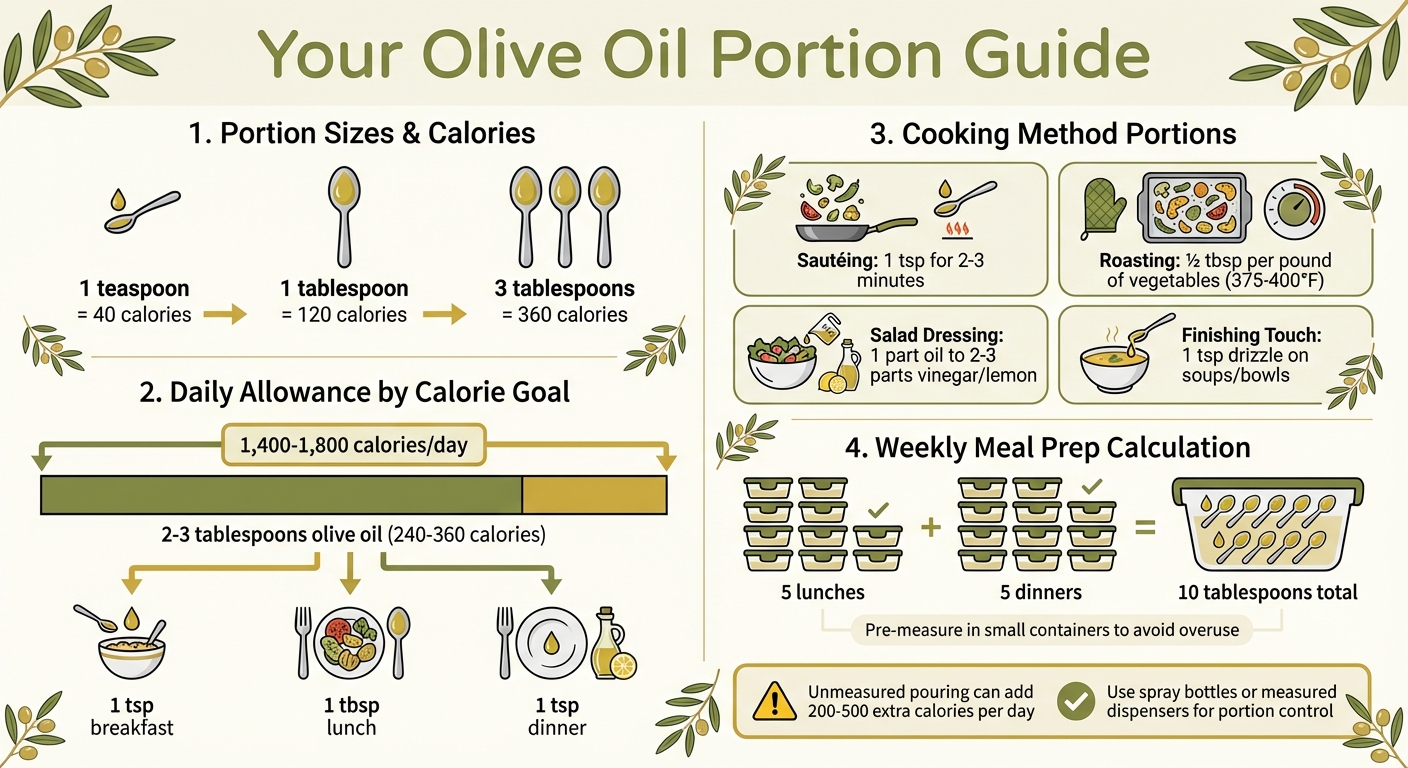
Olive Oil Portions and Calorie Guide for Vegetarian Weight Loss
Olive oil isn't just a pantry staple - it’s a key player in vegetarian meal prep. From its ability to support metabolism to its role in keeping you full, using olive oil strategically can make a big difference. The trick? Measure carefully, choose the right cooking methods, and pair it with hearty plant-based foods. Since each tablespoon contains about 120 calories, small changes in how you use it can have a noticeable impact over time.
Measuring Portions and Managing Calories
When it comes to olive oil, precision is everything. A single tablespoon equals 120 calories, so measuring with a spoon rather than pouring straight from the bottle can help you avoid unintended calorie overload. For example, unmeasured pouring can add an extra 200–500 calories a day, which could stall your progress if you're watching your intake.
Many nutrition plans, like Nutrisystem, count one tablespoon of olive oil as a serving of healthy fat because it helps you feel full without requiring you to cut calories elsewhere. To stay on track, consider logging your olive oil use in apps like MyFitnessPal. A handy tip? Pre-portion olive oil into small spray bottles or dispensers for salads and veggies. This approach keeps your portions consistent and prevents overuse.
Cooking Methods That Maximize Flavor
How you cook with olive oil can make or break your meal prep. For sautéing, use just 1 teaspoon for 2–3 minutes to lightly cook vegetables, then add another teaspoon or two to finish the dish and enhance flavor without overloading on calories. When roasting, toss vegetables like broccoli, Brussels sprouts, or eggplant with about ½ tablespoon of olive oil per pound. Bake at 375–400°F to achieve those perfectly caramelized edges. Since high-quality extra virgin olive oil has a smoke point of around 410°F, you don’t have to worry about it burning at these temperatures.
For salad dressings, create a lighter vinaigrette by mixing 1 part olive oil with 2–3 parts acid, such as lemon juice or vinegar, and adding herbs or mustard for extra flavor. Once you’ve mastered these techniques, pair olive oil with fiber-rich ingredients to create meals that are as satisfying as they are delicious.
Combining Olive Oil with High-Fiber Foods
Pairing olive oil with high-fiber foods not only enhances the flavor but also keeps you full longer. The fat in olive oil slows digestion, while fiber adds bulk, reducing the likelihood of mid-day snacking. Drizzle a tablespoon over lentil soup (which typically packs 15 grams of fiber per serving), toss it with chickpea salads, or mix it into quinoa bowls with kale. This combo also helps your body absorb fat-soluble vitamins A, D, E, and K from vegetables like carrots, tomatoes, and leafy greens.
For meal prep, try batch-roasting sweet potatoes and Brussels sprouts using just 1 tablespoon of olive oil for the entire batch. Or, layer mason jar salads with 1 teaspoon of olive oil at the bottom to keep your intake under 2 tablespoons a day. If you’re looking to switch things up, infused olive oils like garlic, basil, or lemon (such as those from Big Horn Olive Oil) can add bold flavors to grain bowls and hummus without increasing the calorie count. These small tweaks can transform simple vegetarian meals into something you’ll look forward to eating all week long.
sbb-itb-4066b8e
Vegetarian Meal Prep Ideas with Olive Oil
Creating a Weekly Meal Plan
Planning meals ahead can make sticking to a weight-loss plan much easier, especially when you're mindful of calorie intake. If you're working within a 1,400–1,800 calorie range, aim for a daily olive oil allowance of 2–3 tablespoons (240–360 calories). Here's a simple breakdown: use 1 teaspoon (40 calories) for cooking breakfast or dinner, 1 tablespoon (120 calories) for salad dressing at lunch, and, if needed, an extra 1 teaspoon for soups or grain bowls.
To keep things organized, pre-measure 10 tablespoons of olive oil for five lunches and dinners. Use small containers or a squeeze bottle with measurements to avoid over-pouring. This approach keeps calories in check while allowing you to enjoy a variety of ingredients like broccoli, Brussels sprouts, bell peppers, quinoa, farro, and plant-based proteins such as chickpeas and lentils. With your portions planned, you're ready to dive into some recipes that fit this structure.
Recipe Examples Using Olive Oil
Here are a few simple recipes to help you incorporate olive oil into your weekly meal prep:
- Mason Jar Salads: Layer ½ cup beans, ½ cup cooked farro, 2–3 cups of mixed greens, and a dressing made with 1 tablespoon olive oil and 1 tablespoon balsamic vinegar. These are easy to prep ahead and grab on busy days.
- Roasted Vegetable Bowls: Toss 3–4 cups of mixed vegetables (like broccoli, carrots, and bell peppers) with 2 teaspoons olive oil, then roast at 400°F until caramelized. Serve over 1 cup of brown rice with ½ cup black beans for a filling dinner.
- Vegetable-Lentil Soup: Start by sautéing aromatics with 1 teaspoon olive oil, then add your vegetables and lentils. Finish each bowl with an extra 1 teaspoon of olive oil for a rich, satisfying touch.
- Whole-Grain Bowls: Combine 1 cup cooked quinoa, ½ cup chickpeas, and fajita-style veggies sautéed in 1 teaspoon olive oil. Add a light drizzle of olive oil on top to bring all the flavors together.
Each recipe stays within 1–2 tablespoons of olive oil, helping you stick to your daily allowance without sacrificing flavor.
Using Infused Olive Oils for Added Flavor
Infused olive oils are a great way to add bold flavors to your meals without using extra oil. They pack a punch, so you can use smaller amounts while still enhancing your dishes. For example:
- Garlic-infused olive oil works wonders on sautéed spinach or kale, adding depth with just 1 teaspoon.
- Lemon-infused olive oil brightens roasted asparagus or grain bowls, giving them a fresh, zesty kick.
Big Horn Olive Oil offers a range of infused options, like Rosemary, Wild Mushroom, and Dill, which elevate vegetarian dishes effortlessly.
Nancy B., a verified customer, shared on July 27, 2025, her love for using Rosemary and Wild Mushroom olive oils on mashed sweet potatoes, while adding Dill oil to spring mix salads.
Anne L. commented on October 22, 2025, that the Whole Fruit Lemon Olive Oil brings a "PERFECT balance of sweet & savory" to dishes when paired with goat cheese.
These high-quality, polyphenol-rich oils allow you to use less while keeping meals flavorful and satisfying. With these meal prep ideas, olive oil becomes a key player in creating delicious, balanced vegetarian meals that support your weight-loss goals.
Avoiding Common Mistakes and Tracking Results
Preventing Olive Oil Overuse
One of the most common pitfalls when using olive oil is not measuring it. With each tablespoon containing about 120 calories, even an extra 2–3 unmeasured tablespoons can quietly derail your weight-loss goals. For instance, roasting vegetables with a generous, unmeasured drizzle of oil and then adding an olive oil–based dressing can turn what should be a 350-calorie meal into a 600-calorie one - without making it any more filling.
Another frequent mistake is combining multiple fat sources in one dish - like olive oil, cheese, nuts, or avocado - without adjusting portions. A smarter approach is to pick one or two fat sources per meal. For example, use olive oil for roasting but skip the cheese, or toss nuts into your salad and opt for a lighter dressing.
To keep your olive oil usage under control, try these tips:
- Measure oil with a spoon or use a spray bottle to lightly coat pans and vegetables.
- Set a daily "oil budget", such as 1–2 tablespoons (120–240 calories), which aligns with many weight-loss plans.
- Experiment with water or broth to sauté vegetables, finishing them with just a teaspoon of extra virgin olive oil for flavor.
By incorporating these small adjustments into your cooking routine, you can enjoy the flavor of olive oil without overdoing the calories. Once you’ve established control over portions, tracking your intake can help you refine your approach even further.
Tracking Progress and Adjusting Intake
Portion control works best when paired with consistent tracking. Record every measured use of olive oil, such as "1 Tbsp olive oil – salad dressing", to stay on top of your calorie intake. When roasting or baking, divide the total oil used by the number of servings. For example, if you use 4 tablespoons for 4 servings, that’s about 1 tablespoon per portion.
If your weight hits a plateau for 2–3 weeks despite sticking to a vegetarian meal plan, consider reducing your olive oil intake by ½–1 tablespoon per day (about 60–120 calories) and monitor the results over the following weeks. At the same time, increase non-starchy vegetables and high-fiber foods - like beans, lentils, and whole grains - to help you stay full while making these adjustments.
Pros and Cons of Olive Oil for Weight Loss
| Aspect | Pros for Weight Loss | Cons / Risks | How to Manage Drawbacks |
|---|---|---|---|
| Calories & energy density | Delivers concentrated energy when used in moderation. | At 120 calories per tablespoon, it’s easy to overdo. | Measure portions, set daily limits, and use sprays or misters. |
| Satiety & fullness | Monounsaturated fats slow digestion, helping you feel full longer. | Excess oil with low-fiber foods may still leave you feeling hungry. | Pair olive oil with high-fiber foods like beans, vegetables, and grains. |
| Nutrients & health effects | Provides healthy fats and polyphenols that support heart and metabolic health. | Some experts suggest avoiding added oils entirely. | Use small amounts as part of a whole-food diet. |
| Role in vegetarian meals | Enhances the flavor of vegetables, legumes, and grains, making meals more enjoyable. | Overuse can crowd out protein and fiber, pushing meals over calorie limits. | Plan meals to balance olive oil with other nutrients. |
High-quality extra virgin olive oils, such as those from Big Horn Olive Oil, offer bold flavors and higher polyphenol content, allowing you to use smaller amounts while still enhancing your meals. This not only helps you stay within your calorie goals but also makes your dishes more satisfying. Infused varieties, in particular, pack a flavorful punch, making each measured portion count toward your taste and health objectives.
Conclusion
Incorporating olive oil into your vegetarian weight loss plan can be a smart and effective strategy when done thoughtfully. Research highlights that those who include moderate amounts of olive oil in their diets - especially within a Mediterranean-style vegetarian framework - often experience better weight management and find it easier to stick to their meal plans compared to low-fat approaches. The secret lies in using olive oil as a tool, balancing your overall calorie intake, maintaining consistent habits, and pairing it with nutrient-dense, high-fiber foods.
For most individuals aiming to shed pounds, sticking to 1–3 tablespoons of olive oil daily, depending on calorie needs, is a practical guideline. To maintain control, measure your portions and use olive oil as a substitute for higher-calorie options like butter, creamy dressings, or cheese-heavy sauces. Opting for a high-quality extra virgin olive oil, such as an Ultra Premium EVOO from Big Horn Olive Oil, ensures you get maximum flavor and nutritional benefits with minimal calories.
Olive oil works best when paired with vegetables, whole grains, beans, and lentils, boosting satiety and nutrient absorption. This combination not only helps you feel full longer but also reduces the urge to snack. The natural monounsaturated fats and polyphenols in extra virgin olive oil promote metabolic health and help reduce inflammation, supporting a sustainable calorie deficit.
Keep track of your weight, energy levels, and hunger cues. If progress slows for two to three weeks, consider cutting back by 1 tablespoon (about 120 calories) and increasing your intake of non-starchy, fiber-rich foods. These small, mindful adjustments, along with consistent meal prep and portion control, can set you up for long-term success.
Think of olive oil as a versatile and supportive addition to your plant-based lifestyle. With mindful portioning and strategic use, it can elevate the flavor and nutritional value of your vegetarian meals, making healthy eating both satisfying and sustainable. Combined with consistent meal planning and tracking, this approach can help reinforce a balanced, plant-forward way of living.
FAQs
How can olive oil help with weight loss on a vegetarian diet?
Olive oil can play a key role in weight management within a vegetarian diet by offering healthy fats that help you stay full for longer periods. This can reduce the temptation to reach for less nutritious snacks. The monounsaturated fats in olive oil not only aid in keeping you satisfied but also contribute to heart health and a well-functioning metabolism.
Beyond its fat content, olive oil is packed with antioxidants that help fight inflammation and promote overall well-being. Adding olive oil to your vegetarian dishes - whether it's drizzled over a fresh salad, used to roast vegetables, or blended into a dressing - can enhance both the flavor and nutritional value of your meals, supporting a well-rounded and satisfying diet.
Why is extra virgin olive oil a better choice for cooking and meal prep?
Extra virgin olive oil (EVOO) is prized for its top-tier quality, bold flavor, and numerous health perks. Packed with antioxidants and biophenols, it not only adds depth to your dishes but also supports overall health. What sets EVOO apart is its minimal processing, which helps retain its natural nutrients and purity.
With a smoke point of about 410°F, EVOO is incredibly versatile in the kitchen. Whether you're sautéing veggies or roasting your favorite ingredients, it performs beautifully. Its rich flavor pairs perfectly with vegetarian recipes, and the healthy fats it contains may even help with weight management when enjoyed in moderation. Opting for premium EVOO can elevate both the taste and nutritional value of your meals.
What’s the best way to use olive oil in vegetarian meal prep without going over my calorie limit?
To keep your meals tasty while staying on track with your calorie goals, limit yourself to 1–2 tablespoons of olive oil per meal. Be sure to measure it carefully to avoid using too much. Olive oil is incredibly versatile - you can drizzle it over salads, toss it with roasted veggies, or use a small amount to coat your pan for sautéing. Not only does it boost flavor, but it also supplies healthy fats that are important for your weight loss efforts.