

Olive Oil and Weight Regain: What Studies Show
Struggling with weight regain after losing it? Olive oil might help. Despite being calorie-dense, extra virgin olive oil (EVOO) has been linked to better weight maintenance and smaller waistlines. Studies show that consuming about two tablespoons of EVOO daily can improve insulin sensitivity, reduce inflammation, and even curb appetite. Here's a quick breakdown:
- Long-term studies: EVOO users gained less weight over decades compared to those using butter or other oils.
- Hormonal benefits: Olive oil boosts satiety hormones like GLP-1, helping you feel fuller longer.
- Metabolic effects: Improves fat burning and reduces abdominal fat storage.
- Key research: The PREDIMED study found EVOO supports weight stability better than low-fat diets.
Switching to high-quality EVOO in your meals - like drizzling it on salads or replacing butter - can be a simple, effective way to manage weight over time.
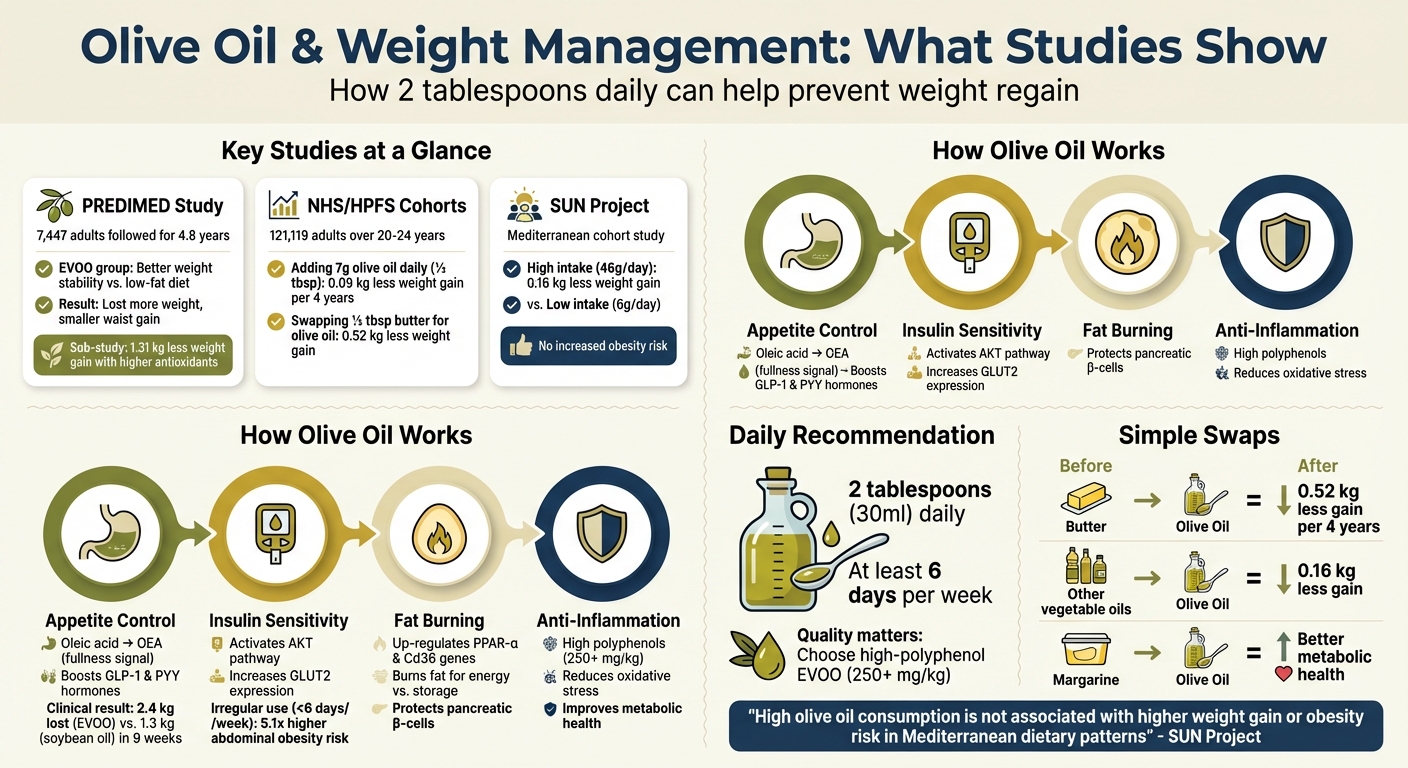
Olive Oil and Weight Management: Key Research Findings and Daily Benefits
What Research Shows About Olive Oil and Weight Regain
PREDIMED Study: Olive Oil and Weight Stability
The PREDIMED trial followed 7,447 adults, aged 55–80 and at high cardiovascular risk, over a median of 4.8 years to explore how olive oil impacts weight management. Participants were divided into three groups: a Mediterranean diet enriched with extra virgin olive oil (EVOO), a Mediterranean diet with mixed nuts, and a low-fat control diet.
The findings challenged the notion that high-fat foods inherently lead to weight gain. Those in the EVOO group showed better weight stability and smaller increases in waist circumference compared to the low-fat control group. Interestingly, participants on the Mediterranean diets, including the EVOO group, lost slightly more weight overall.
"In the PREDIMED study, those exposed to MedDiet lost slightly more weight and gained less in WC [waist circumference] than subjects on control diet." - PREDIMED Study Researchers
A smaller sub-study of 187 participants revealed another layer of insight. It found that individuals with higher plasma antioxidant levels - associated with olive oil consumption - experienced an average reduction of 1.31 kg in weight gain.
These results provide long-term evidence supporting olive oil's role in promoting weight stability and maintenance.
Long-Term Studies on Olive Oil and Weight Maintenance
Additional long-term studies further highlight olive oil's role in managing weight. Data from 121,119 adults across the NHS, NHS II, and HPFS cohorts, spanning 20–24 years, revealed that adding just 7 grams of olive oil daily (about half a tablespoon) was linked to 0.09 kg less weight gain over four years. Substituting half a tablespoon of butter with olive oil daily reduced weight gain by 0.52 kg over the same period, while similar increases in butter or other vegetable oils led to weight gains of 0.37 kg and 0.16 kg, respectively.
The SUN Project, a large Mediterranean cohort study, echoed these findings. Participants who consumed the highest amounts of olive oil (median 46 g per day, roughly 3 tablespoons) gained 0.16 kg less weight compared to those with the lowest intake (median 6 g per day). Notably, higher olive oil consumption in this real-world study was not linked to an increased risk of overweight or obesity.
"Our study, carried out in a sample of free-living people, shows that a high amount of olive oil consumption is not associated with higher weight gain or a significantly higher risk of developing overweight or obesity in the context of the Mediterranean food pattern." - SUN Project Investigators
The Horrible Truth of Olive Oil… It Makes You Fat!!!! | Educational Video | Dr. Layne Norton PhD
How Olive Oil Supports Weight Management
Olive oil isn't just a flavorful addition to your meals - it can also play a key role in maintaining a healthy weight. Let’s break down how this dietary staple supports weight management.
Increased Fullness and Reduced Appetite
One of olive oil's standout features is its high oleic acid content, which makes up 49% to 83% of its total fatty acids. When consumed, the small intestine converts oleic acid into a compound called oleoylethanolamide (OEA). This compound acts as a messenger, signaling to your brain that you're full and helping to naturally curb your appetite.
Olive oil also promotes the release of satiety hormones like Peptide YY (PYY) and Glucagon-like peptide-1 (GLP-1). These hormones extend the feeling of fullness after eating, making it easier to avoid overeating. Additionally, olive oil consumption is linked to higher levels of serotonin, a neurotransmitter that can further enhance feelings of satisfaction. Its monounsaturated fats also help stabilize blood sugar levels by slowing glucose absorption and improving insulin sensitivity. This prevents the blood sugar spikes and crashes that often lead to hunger and cravings.
In one clinical study involving women with excess body fat, participants who included extra virgin olive oil (EVOO) in an energy-restricted diet lost significantly more weight - about 2.4 kg (5.3 lb) - compared to those using soybean oil, who lost only 1.3 kg (2.9 lb) over nine weeks.
These appetite-suppressing effects work hand-in-hand with olive oil's metabolic benefits to help prevent fat accumulation.
Better Insulin Response and Fat Burning
Extra virgin olive oil doesn’t just help you eat less - it also supports your body in burning fat more efficiently. It improves insulin sensitivity by activating the AKT signaling pathway and increasing the expression of glucose transporter 2 (GLUT2) in the liver. This improvement in insulin response is crucial for reducing the risk of abdominal fat storage. In fact, irregular consumption of EVOO (less than six days a week) has been associated with a 5.1-fold increase in the likelihood of abdominal obesity.
Olive oil also enhances fat metabolism by up-regulating genes like PPAR-α and Cd36, which are responsible for breaking down fats to use as energy rather than storing them. It protects pancreatic β-cells, ensuring better insulin secretion when blood sugar levels rise. On top of that, the polyphenols found in high-quality EVOO combat systemic inflammation and oxidative stress - two factors that can lead to metabolic issues and weight regain.
"EVOO exerts a dual role in metabolic health, both mediating and independently enhancing the relationship between chrono-Mediterranean diet adherence and reduced abdominal obesity." - Antonio Moschetta, Department of Interdisciplinary Medicine, University of Bari "Aldo Moro"
sbb-itb-4066b8e
Adding Quality Olive Oil to Your Daily Diet
Now that you know how olive oil can help with weight management, it’s time to make it a regular part of your meals. The trick isn’t just using it here and there - it’s about weaving it into your routine and picking the right kind to get the most out of it.
Choosing the Right Extra Virgin Olive Oil
Look for extra virgin olive oil (EVOO) with at least 250 mg/kg of polyphenols. These natural compounds, like hydroxytyrosol and oleocanthal, are known for their anti-inflammatory effects and their role in supporting fat metabolism.
One standout option is Big Horn Olive Oil's Ultra Premium EVOO. It’s cold-pressed within two hours and bottled fresh (within three months), which helps retain its high polyphenol levels. Research shows that consuming about 2.5 tablespoons daily for two months can significantly reduce body weight and even improve fatty liver. If you’re looking for specific varieties, Picual and Coratina are particularly rich in these beneficial compounds.
And here’s a tip: incorporating olive oil into your meals is far more effective for improving fat distribution than taking it in capsule form.
Once you’ve got a quality oil, it’s easy to add it to your meals in ways that are both delicious and practical.
Easy Ways to Use Big Horn Olive Oil in Meals
Replace butter, margarine, or refined vegetable oils with olive oil to cut down on unhealthy fats. Even a small daily increase - just ½ tablespoon (7 g) - can help curb weight gain when it’s swapped for other fats.
- Breakfast: Skip the butter and drizzle Big Horn's Picual EVOO over whole-grain toast. Its bold, peppery flavor is perfect with avocado or fresh tomatoes.
- Lunch: Toss your salad greens with 2 tablespoons of Coratina EVOO and a splash of lemon juice. This simple dressing not only boosts the taste but also helps your body absorb fat-soluble vitamins and keeps you feeling full longer.
- Dinner: Use EVOO as your go-to cooking fat for sautéing vegetables or baking fish. Its high oleic acid content enhances the flavor of fiber-rich foods like legumes or steamed veggies, making healthy eating more enjoyable.
Conclusion
Long-term studies show that incorporating quality olive oil into your daily diet can help curb weight gain. Research suggests that consuming about 2 tablespoons of olive oil at least six days a week is linked to noticeable reductions in weight gain, especially when it replaces butter or other fats in your meals. These findings build on earlier evidence of olive oil's positive impact on metabolism.
What makes extra virgin olive oil (EVOO) stand out is its unique mix of monounsaturated fats and polyphenols. These components not only help you feel satisfied for longer but also improve insulin sensitivity and reduce inflammation. Clinical trials have even demonstrated that adding EVOO to calorie-restricted diets boosts fat loss. This distinction makes it a valuable tool for maintaining weight loss over time.
"Regular EVOO consumption... is independently associated with lower BMI and WC [waist circumference]. EVOO exerts a dual role in metabolic health, both mediating and independently enhancing the relationship between chrono-Mediterranean diet adherence and reduced abdominal obesity." - Antonio Moschetta, Department of Interdisciplinary Medicine, University of Bari "Aldo Moro"
The quality of olive oil plays a key role in achieving these benefits. High-polyphenol oils, like Big Horn Olive Oil's Picual and Coratina varieties, which are cold-pressed and freshly bottled, offer the bioactive compounds essential for these health advantages. These attributes align closely with the qualities highlighted in scientific research.
Switching to high-quality EVOO is easy. Use it as a replacement for the fats you already cook with - drizzle it over toast, mix it into salads, or cook your favorite meals with it. These small, consistent choices can make a big difference for your health and waistline over time.
FAQs
How does extra virgin olive oil help improve insulin sensitivity and reduce inflammation?
Extra virgin olive oil (EVOO) plays a crucial role in improving insulin sensitivity and reducing inflammation, thanks to its high levels of monounsaturated fats, like oleic acid, and potent antioxidants, including polyphenols and oleocanthal. These nutrients work together to regulate blood sugar, combat oxidative stress, and lower inflammation - key factors in addressing conditions such as obesity and insulin resistance.
Studies have highlighted EVOO's ability to boost metabolic health by enhancing cellular function, supporting liver performance, and aiding fat-burning mechanisms. Regularly incorporating EVOO into your meals has been associated with improved glucose levels and reduced inflammation, making it a smart choice for anyone aiming to maintain long-term health and wellness.
Why is extra virgin olive oil considered beneficial for maintaining a healthy weight?
Extra virgin olive oil (EVOO) is a fantastic option for supporting a healthy weight, thanks to its rich content of monounsaturated fats, especially oleic acid. These fats can help you feel satisfied after meals, making it easier to avoid overeating. When included in a balanced diet, EVOO may also play a role in maintaining a steady metabolism and promoting a healthier body composition.
On top of that, EVOO is loaded with antioxidants and compounds that help reduce inflammation. These natural properties not only contribute to overall well-being but may also assist in managing weight. Its wholesome, nutrient-dense profile makes it a great choice for meals aimed at long-term health.
What’s the best way to include extra virgin olive oil in my diet for weight management?
Adding extra virgin olive oil (EVOO) to your daily meals is an easy way to support weight management while boosting flavor. Swap out butter or margarine for EVOO when cooking, or drizzle it over salads, roasted veggies, or even cooked dishes to enjoy its nutritional perks. Studies indicate that using about 1 tablespoon (roughly 0.5 fl oz) of olive oil daily may help curb weight gain over time.
Packed with monounsaturated fats and antioxidants, EVOO not only aids in managing weight but also contributes to heart health and helps reduce inflammation. To get the most out of it, use EVOO in moderation and pair it with a well-rounded diet rich in whole foods like fruits, vegetables, lean proteins, and whole grains. These small, consistent adjustments can go a long way in maintaining a healthy weight while enhancing your overall well-being.