

How Olive Oil Workshops Boost Local Economies
Olive oil workshops are transforming rural economies by blending tourism with hands-on learning. These events let visitors experience the full olive oil-making process - from harvesting to tasting - while creating new revenue streams for farmers and local businesses. Here's why they matter:
- Economic Impact: In 2022, California's Central Coast saw $2.15 billion in tourist spending, with olive oil agritourism playing a key role. In Spain’s Andalusia, olive farming supports 35% of agricultural jobs, benefiting over 250,000 families.
- Tourism Growth: Workshops attract visitors during off-peak seasons, increasing hotel stays, restaurant visits, and local sales. For example, Italian olive tours in 2023 drew over 25,000 participants.
- Producer Benefits: Direct sales at workshops - like $32-per-liter extra virgin olive oil - help small producers counter market pressures and unpredictable harvests.
- Broader Impact: Local businesses, from accommodations to artisans, gain through partnerships, creating a ripple effect across communities.
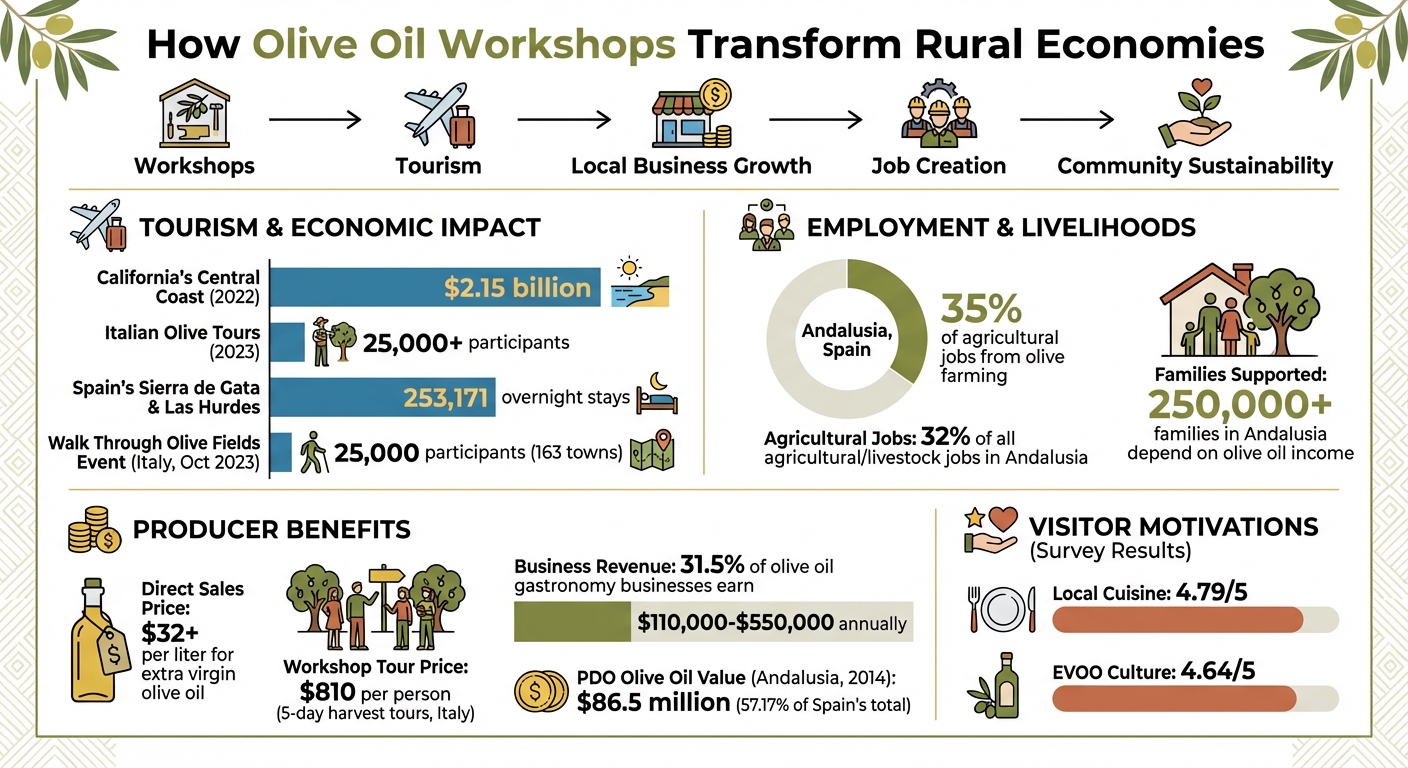
Economic Impact of Olive Oil Workshops on Local Economies
Economic Challenges in Olive Oil-Producing Regions
Rural Depopulation and Economic Decline
Regions known for olive cultivation are grappling with a serious demographic shift. Young people are leaving rural areas in search of better job prospects in cities, leaving behind older populations and creating a labor gap. With farming revenues shrinking and unemployment rising, many workers are drawn to urban areas where wages and opportunities are more appealing.
The impact of this labor shortage is most acute during harvest season. Eugenio Ranchino, who owns Frantoio Ranchino in Italy, describes the struggle:
"All the costs have increased for us due to inflation, and every year, it is harder to find specialized workers. However, we cannot raise prices too much; otherwise, we would have difficulties selling it to our loyal customers, who are mostly locals."
In California's Central Coast, Richard Meisler of San Miguel Olive Farm faced a tough reality in 2023. Even though 98% of his 1,200 trees were brimming with fruit, rising labor costs made hand harvesting financially unviable. Reflecting on the situation, he said:
"This year, the cost of labor and the density of trees made hand harvesting slower and more costly. Giving up so many beautiful olives makes my heart sad."
For many towns that rely heavily on olive farming, the stakes are even higher. These communities often function as mono-economies, depending almost entirely on olive cultivation. In Andalusia, Spain, for example, over 250,000 families rely on olives as their main source of income.
The Limitations of Commodity-Based Sales
Selling olive oil as a bulk commodity creates a challenging business model for small producers. They are often at the mercy of fluctuating markets and intense competition from cheaper vegetable oils. To put it into perspective, olive oil accounts for just 5% of the global market for vegetable fats.
This dependence on commodity sales becomes even riskier with unpredictable weather patterns. In 2012, Spanish olive oil production plummeted by 41% - dropping from 1.59 million tons in 2011 to only 657,300 tons - due to unfavorable weather conditions. Maria Genoveva Millán-Vazquez de la Torre, a professor at Universidad Loyola Andalucía, explains the financial strain this creates:
"The olive crop creates deep uncertainties for families with regards to their income, because the amount and quality of production every year is uncertain."
Adding to the challenge, the seasonal nature of olive farming means families often rely on earnings from just a few months of work to sustain them for an entire year. Between October 2022 and October 2023, olive oil prices surged - rising 49% in Italy and nearly 74% in Spain. While higher prices might seem like a silver lining, small producers often can't fully benefit, as extreme weather and unpredictable yields limit their output.
Conrad Bölicke, founder of the German cooperative arteFakt, warns of a bleak future for traditional producers:
"In 15 to 20 years, a European olive oil producer will no longer be able to make a living from his oil alone."
Without exploring new avenues, such as value-added products or diversified income streams, these producers face a precarious future. Rising costs, unreliable harvests, and market pressures underscore the urgent need for a shift in approach to ensure long-term economic stability for olive-growing communities.
How Olive Oil Workshops Drive Economic Growth
Attracting Tourists Through Hands-On Experiences
Olive oil workshops cater to the growing trend of immersive travel, where visitors seek meaningful experiences like walking through olive groves, touching ancient trees, and learning about the "tree to table" process. In 2022, tourists spent a staggering $2.15 billion in California's Central Coast, with many local producers embracing agritourism to educate and engage their guests.
These interactive farm experiences are redefining rural tourism. For example, in November 2023, Triptoscana, a Rotterdam-based travel organizer, hosted five-day harvest tours at I Moricci, a picturesque 19th-century farmhouse near Pisa. Guests paid $810 each to participate in olive harvesting. Maria Angela Macchia, the farmer at I Moricci, highlighted the importance of these workshops:
"The most important thing is that [people] get to see that you don't just open the faucet and oil comes out."
Such workshops also help fill hotel rooms during slower tourist seasons. Since olive harvesting typically happens in October and November, a time when traditional tourism tends to decline, these events provide a much-needed boost. For instance, in October 2023, over 25,000 participants joined the "Walk Through the Olive Fields" event spanning 163 Italian towns. According to Fabiola Pulieri:
"Now there are opportunities 365 days a year, not just during the harvest and pressing season... to take advantage of tourism and give an economic boost to producers."
The result? More visitors, more engagement, and increased visibility for producers - all of which translate to more sales.
Increasing Local Sales and Producer Visibility
One of the most immediate benefits of olive oil workshops is the boost in on-site sales. Visitors who enjoy tastings and guided tours are far more likely to buy products like extra virgin olive oil, balsamic vinegar, and other specialties before heading home. Many producers sweeten the deal with a 10% discount on same-day purchases. High-quality extra virgin olive oil often sells for more than $32 per liter directly from the source.
At San Miguel Olive Farm in California, co-owner Richard Meisler has seen a noticeable increase in both tours and product sales by offering guided tastings. He shared his perspective:
"If farm visits are good in quality, exciting and interesting, you will have it made."
Research supports this trend. In March 2019, a study led by José Antonio Folgado-Fernández from the University of Extremadura surveyed 208 tourists at the Olive Oil Museum in Monterrubio de la Serena, Spain. The findings revealed that the top reasons for visiting were local cuisine (4.79/5) and EVOO culture (4.64/5). The study concluded that these educational experiences not only enhance visitor satisfaction but also encourage loyalty and word-of-mouth recommendations.
By driving immediate sales and fostering lasting connections, workshops contribute significantly to the economic stability of their regions.
Supporting Related Local Businesses
The economic impact of olive oil workshops extends well beyond the producers themselves. These events generate additional revenue for nearby hotels, bed-and-breakfasts, and farmhouses, particularly in rural areas. For example, the Sierra de Gata and Las Hurdes regions in Spain recorded 253,171 overnight stays directly linked to olive oil tourism[doc]. Restaurants and chefs also benefit, often collaborating with workshops to host "cook-alongs" that feature regional ingredients.
One standout example is the Spilamberto Museum of Traditional Balsamic Vinegar in Italy. Visitors can explore barrel rooms and take part in a "Balsamic Vinegar in the Kitchen" cooking class, where they prepare and enjoy a full meal using the product. These partnerships not only support local artisans but also create opportunities for transportation providers who shuttle tourists between sites.
Additionally, workshops help boost sales of complementary products. Many producers offer curated gift sets that combine olive oils with items like truffle salts, aged balsamics, and other gourmet treats, making it easy for tourists to bring home a taste of their experience. Social media has amplified this trend, as producers share farm life content online, turning digital followers into loyal visitors and customers.
Inside Spain’s Olive Oil Capital | Harvest & Taste in Priego de Córdoba
sbb-itb-4066b8e
Big Horn Olive Oil: A Model for Economic and Culinary Excellence
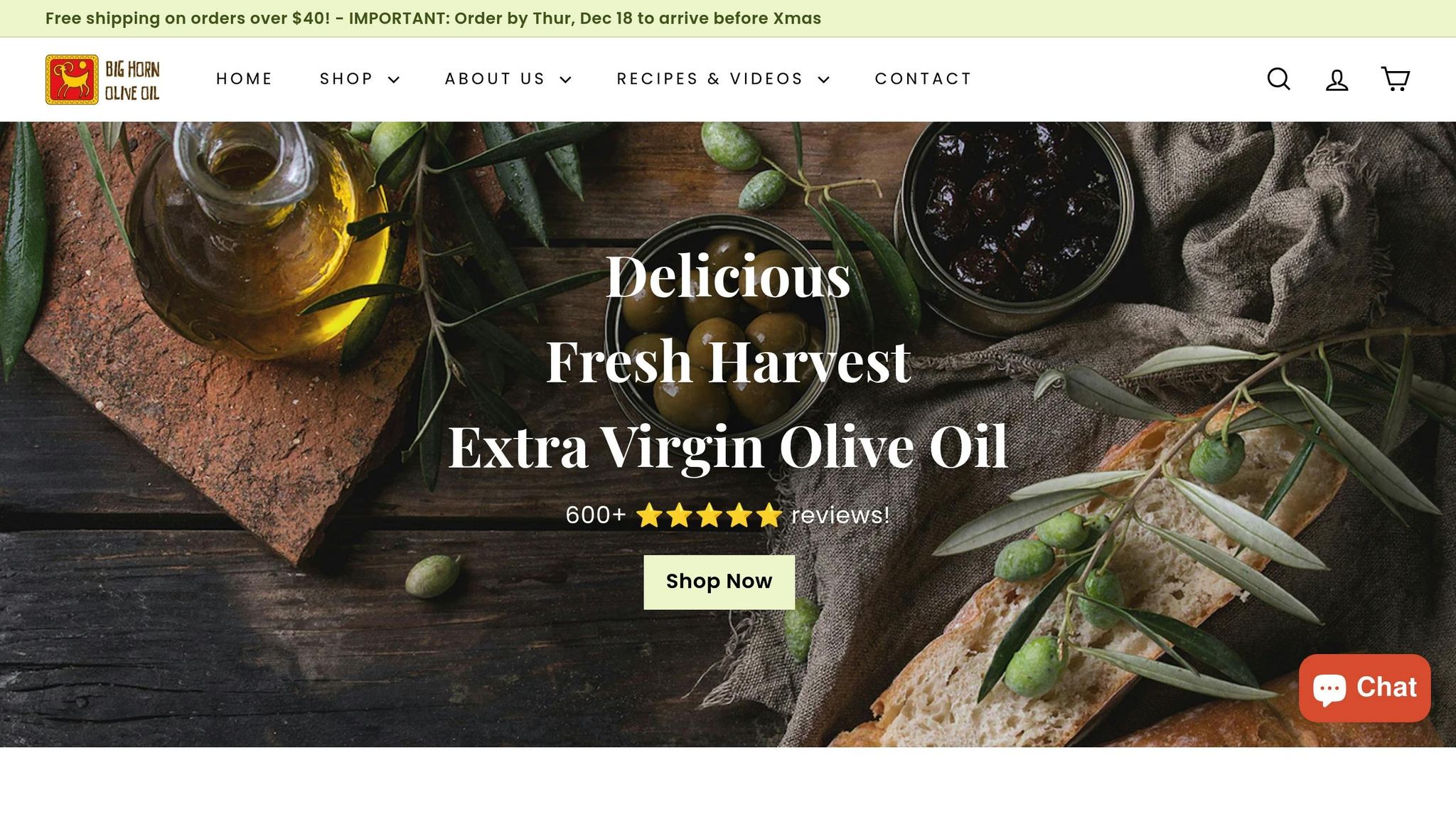
Big Horn Olive Oil has perfected a workshop model that combines the economic advantages of olive oil tourism with a focus on culinary mastery and regional development.
Products Showcased at Big Horn Olive Oil Workshops
At the heart of Big Horn Olive Oil workshops are Ultra Premium extra virgin olive oils (EVOOs) and aged balsamic vinegars from Modena, Italy. Highlights include the Estate Reserve EVOO, cold-pressed within two hours of harvest, and the Molto Denissimo 25-Year Aged Dark Balsamic Vinegar. These products attract those who appreciate authenticity and tradition. By spotlighting oils from fresh harvests and vinegars aged for decades, Big Horn Olive Oil demonstrates the highest standards of quality. This mirrors practices seen in regions like Andalucía, where producers use protected designations of origin as a "digital fingerprint" to prevent fraud and elevate product value.
Education and Heritage: A Core Focus
The workshops go beyond tasting sessions, offering insights into the health benefits of the Mediterranean diet. They emphasize the importance of high polyphenol content in reducing cardiovascular risks and oxidative stress. Attendees also learn about the production process, from precise harvesting techniques to modern extraction methods, fostering an appreciation for the craft and history behind each bottle.
These workshops don’t just educate - they preserve a rich agricultural heritage. By transforming casual visitors into informed enthusiasts, Big Horn Olive Oil builds a loyal customer base while celebrating the cultural significance of olive oil. As Mª Genoveva Millán Vázquez de la Torre from Universidad Loyola Andalucía explains:
"The landscape is a... favorable resource for economic activity capable of generating employment, income, and thus, essential for population retention in rural areas and promoting the development of those areas".
Economic Ripple Effects of Big Horn Olive Oil Workshops
By centering their workshops on Ultra Premium products, Big Horn Olive Oil fosters a connection between exceptional quality and support for local businesses. Local restaurants participate by hosting cooking demonstrations, while artisans showcase complementary offerings like truffle salts and specialty gift sets.
The workshops also generate broader economic benefits. Visitors often extend their stay, booking local accommodations, dining at nearby restaurants, and purchasing from other regional producers. This creates a ripple effect that strengthens the local economy, diversifying income sources beyond traditional agriculture. By linking education, tourism, and quality products, Big Horn Olive Oil not only boosts the economy today but also sets the stage for sustainable regional growth.
Sustaining Long-Term Economic Impact Through Workshops
Preserving Agricultural Heritage and Farming Practices
Olive oil workshops play a vital role in keeping traditional farming techniques alive by introducing visitors to historic production methods. For instance, in Monterrubio de la Serena, Spain, the local Olive Oil Museum educates tourists about Protected Designation of Origin (PDO) standards. These standards ensure that only olives harvested directly from the tree are used - an age-old practice that sets high-quality oils apart from mass-produced varieties. Through hands-on learning, participants gain a deeper appreciation for techniques like proper harvest timing and cold-pressing, ensuring that these methods remain relevant.
Spain boasts 32 Protected Designations of Origin for olive oil, each serving to safeguard regional farming traditions. Workshops that highlight these geographic and cultural ties not only preserve heritage but also promote sustainable agriculture. Visitors who witness ancient olive trees and traditional mills often leave with a new commitment to protecting these agricultural landscapes. This connection to heritage not only fosters conservation but also supports broader tourism strategies that drive regional economic growth.
Integrating Workshops into Regional Tourism Strategies
Workshops thrive when they’re part of a larger tourism ecosystem, acting as key stops along culinary tourism routes that connect multiple local businesses. Take San Luis Obispo County, California, as an example: in 2022, its integrated tourism approach generated $2.1 billion in spending, marking a 7% increase compared to 2019. Chuck Davison, President and CEO of the county's tourism office, emphasized that tourism is the region's second-largest economic driver.
In Spain’s Andalusia region, olive oil workshops are a prime example of how collaboration fuels economic activity. Approximately 31.5% of businesses involved in olive oil gastronomy routes reported annual revenues ranging from $110,000 to $550,000, showcasing the financial potential of these partnerships. By incorporating workshops into digital itineraries, regions can further enhance local engagement and create sustainable revenue streams.
Measuring Success: Economic Growth Metrics
The impact of workshops can be assessed using several key metrics. These include registration fees, on-site sales, visitor overnight stays, and employment figures. Broader tourism indicators, such as visitor numbers and hotel occupancy rates, also shed light on whether workshops successfully attract and retain tourists.
Employment data provides additional insights. In Andalusia, the olive oil sector accounts for roughly 32% of all agricultural and livestock jobs, with workshops creating supplementary roles in hospitality, education, and retail. The economic value of PDO olive oils in the region reached $86.5 million in 2014, representing 57.17% of Spain’s national total. Beyond numbers, qualitative measures like resident satisfaction and repeat visits help gauge the long-term sustainability of these initiatives.
Conclusion
Olive oil workshops are breathing new life into rural communities, turning what was once just a simple product into a rich, engaging experience. These workshops draw tourists willing to spend on more than just olive oil, benefiting local businesses across various sectors. Take California's Central Coast, for example, where tourism has become the region's second-largest economic driver. This hands-on approach also fosters a deeper educational connection between visitors and the olive oil industry.
Education is at the heart of these workshops' success. As Ruth Mercurio of We Olive puts it:
"Extra virgin olive oil agritourism is all about building connections – to the land, with the farmers, and to the products. It can turn an agritourist into a lifelong fan and consumer".
By forging these connections, workshops transform casual visitors into loyal supporters, creating a steady stream of revenue.
A great example of this synergy is Big Horn Olive Oil, which combines premium products with education. They offer Ultra Premium Extra Virgin Olive Oils - cold-pressed within two hours of harvest - alongside traditional and infused flavors, as well as authentic Balsamic Vinegars from Modena, Italy. This blend of quality and heritage gives participants a deeper appreciation for olive oil's global significance.
Beyond boosting the economy, these workshops preserve traditional farming practices and cultural heritage. In places like Andalusia, where olive farming is a lifeline for over 250,000 families, such initiatives help sustain rural communities and combat depopulation.
FAQs
How do olive oil workshops help support local economies?
Olive oil workshops play an important role in energizing local economies. They draw visitors who spend on tastings, guided tours, and distinctive farm-stay experiences. This influx of tourism not only supports the hospitality industry but also provides a boost to small businesses, from local artisans to food producers.
These workshops often highlight premium products like Ultra Premium Extra Virgin Olive Oils and infused balsamic vinegars. By introducing visitors to these high-quality goods, they encourage purchases that directly support local producers. Beyond sales, these events serve as an opportunity to educate attendees about the craftsmanship behind olive oil production and its health benefits, further increasing its appeal and demand in the market.
What obstacles do rural olive oil producers face?
Rural olive oil producers face a host of challenges that directly impact their livelihoods and the economies of their communities. One major issue is the rising cost of production. Expenses for essentials like fuel, labor, and farming supplies have soared, leaving small-scale growers with shrinking profit margins. On top of that, unpredictable weather patterns, such as extreme heat, heavy rains, and late-season storms, can wreak havoc on crops, affecting both the quantity and quality of olives.
Another hurdle is the lack of infrastructure and limited access to markets. Many olive farms are located in remote areas, far from distribution hubs, which drives up transportation costs. The seasonal nature of olive harvesting adds another layer of difficulty, often causing cash flow problems for producers. While agritourism - like hosting olive oil workshops or tastings - could provide additional income, these ventures require upfront investments in areas like marketing, infrastructure, and technology. Unfortunately, many rural producers simply don’t have the resources to make these investments.
Demographic shifts add to the challenges. Younger generations are increasingly reluctant to pursue careers in agriculture, leading to labor shortages and a gradual loss of traditional farming knowledge. Tackling these issues is crucial for keeping rural olive oil production viable and supporting the communities that depend on it.
How do olive oil workshops help preserve cultural traditions?
Olive oil workshops offer hands-on experiences that celebrate the deep-rooted traditions of olive oil production. These events bring to life age-old techniques like traditional harvesting, stone-mill pressing, and the nuanced art of tasting extra virgin olive oil (EVOO). They pass down essential knowledge about olive varieties, the perfect harvest timing, and sensory evaluation, keeping this heritage vibrant for the next generation.
In the United States, these workshops do more than educate about the Mediterranean roots of olive oil - they also spotlight its role in family traditions, festive gatherings, and regional identity. Participants gain a newfound respect for the skill and dedication behind every bottle, transforming olive oil from a simple ingredient into a meaningful link to history and tradition.
By attending and supporting these workshops, communities play a vital role in sustaining local producers, encouraging tourism, and honoring the stories behind olive oil. This ensures the legacy of this ancient craft remains alive and thriving.