

How to Pair Ancient Grains with Balsamic Vinegar
Ancient grains like farro, quinoa, and barley pair beautifully with balsamic vinegar, creating meals that are flavorful and balanced. The earthy, nutty taste of these grains complements the sweet and tangy profile of balsamic, especially when combined with quality olive oil and fresh ingredients. Here's a quick guide:
- Farro: Best with aged dark balsamic for its rich, deep flavor. Add roasted root vegetables and nuts for texture.
- Quinoa: Pairs well with lighter white balsamic or fruit-infused varieties. Fresh herbs and berries enhance its delicate taste.
- Barley: Ideal for balsamic reductions or glazes. Combine with mushrooms, caramelized onions, or roasted carrots.
To create the perfect dish, cook grains like pasta in salted water, toast them for nuttiness, and let them cool before adding a vinaigrette. Use a 2:1 or 3:1 ratio of olive oil to balsamic for dressings. Enhance flavors with Dijon mustard, honey, or garlic. For extra depth, try balsamic reductions or infused varieties like fig or pomegranate. Finish with fresh herbs and a drizzle of raw balsamic for a polished touch.
Cooking with Science | Episode 7: Ancient Grains – Farro Salad
sbb-itb-4066b8e
Basic Principles for Pairing Grains with Balsamic Vinegar
Pairing grains with balsamic vinegar is all about finding the right balance of flavor, texture, and the perfect touch of extra virgin olive oil.
Balancing Sweetness and Acidity
Hearty grains like farro and barley can handle the rich sweetness of aged dark balsamics, which often carry caramel or honey-like undertones. On the other hand, lighter grains such as quinoa and millet pair better with tangy white balsamics that let their delicate flavors shine through.
For extra depth, try cooking your grains in a savory stock and whisking up a dressing with a bit of Dijon mustard or agave. This creates a smooth, emulsified blend that balances the balsamic’s acidity.
Choosing the Right Texture and Dressing
Texture plays a crucial role in how grains interact with balsamic vinegar. Chewy grains like wheat berries and farro maintain their structure under thick balsamic glazes, making them great for salads that might sit for a while. Meanwhile, lighter, fluffier grains like quinoa or amaranth work best with thinner vinaigrettes to avoid clumping.
For sturdy grains, a balsamic glaze adds a rich finishing touch, while a lighter vinaigrette is ideal for evenly coating more delicate grains. If you’re working with smaller grains like millet, toasting them in a dry skillet for about 4 minutes before cooking can help them retain their shape and soak up flavors more effectively.
Incorporating Extra Virgin Olive Oil
Extra virgin olive oil is the key to tying everything together. It softens balsamic vinegar’s sharpness and enhances the overall flavor. A good starting ratio is 2:1 - two parts olive oil to one part balsamic vinegar. For a milder taste, you can adjust to a 3:1 ratio.
Match the olive oil to the grains and balsamic you’re using. Light, fruity olive oils pair well with delicate grains and white balsamics, while bold, peppery oils complement aged dark balsamics and heartier grains like farro or barley. Big Horn Olive Oil's Estate Reserve Ultra Premium EVOO is a standout option for its fresh, cold-pressed quality that enhances any dressing.
Pro tip: After cooking, spread your grains out on a baking sheet to cool and dry for at least 30 minutes. This simple step prevents gumminess and allows the grains to absorb the flavors more effectively.
Step-by-Step Guide to Building a Grain and Balsamic Dish
Create a dish that brings together the earthy richness of grains and the tangy depth of balsamic vinegar for a perfectly balanced flavor experience.
Cook and Prepare the Grains
When cooking grains, think of them like pasta - skip the strict water-to-grain ratios. Christina Chaey, Senior Food Editor at Bon Appétit, recommends:
"Treat your grains just like pasta and cook them in one big stockpot of boiling, well-salted water until al dente, tasting for doneness as you go".
This approach helps the grains shed excess starch, avoiding that unpleasant gummy texture.
For an extra layer of flavor, toast the dry grains first - either on the stovetop for about 4 minutes or in the oven at 350°F for 10–15 minutes. This simple step enhances their nuttiness, making them an ideal match for balsamic vinegar. You can also infuse flavor into the grains by adding aromatics like garlic cloves, bay leaves, or fresh rosemary to the boiling water. Or, swap plain water for vegetable or chicken stock to give the grains even more depth.
Once the grains are cooked to an al dente texture, drain them and spread them out on a rimmed baking sheet to cool and dry for at least 30 minutes. This ensures they’re ready to soak up all the flavors from the vinaigrette.
Mix a Basic Balsamic Vinaigrette
To make a simple yet flavorful balsamic vinaigrette, whisk together 3/4 cup extra virgin olive oil and 1/4 cup balsamic vinegar, maintaining a classic 3:1 ratio. Add 1 tablespoon of Dijon mustard and 2 tablespoons of honey to create a smooth and stable emulsion.
For even more flavor, mince a clove of fresh garlic and let it sit in the vinegar for about 5 minutes before blending in the oil. Using high-quality ingredients, like Big Horn Olive Oil's Estate Reserve Ultra Premium EVOO and their Traditional 18-Year Aged Dark Balsamic Vinegar, can elevate the dressing. Season with salt and pepper to taste, and whisk until everything is well combined.
Combine Flavors and Textures
With your grains and vinaigrette ready, toss the cooled grains with the dressing while they’re still slightly warm. This helps the grains absorb the vinaigrette deeply, enhancing their flavor.
Next, layer in roasted vegetables for extra texture and taste. Brussels sprouts, carrots, or zucchini work wonderfully - just roast them at 400°F or higher until they’re caramelized and golden-brown. For crunch, add toasted almonds or pepitas, and balance the flavors with a touch of sweetness, such as dried cranberries.
Right before serving, fold in fresh herbs to brighten the dish. Finish with a drizzle of balsamic vinegar or a squeeze of fresh lemon juice for a final pop of flavor.
Grain-by-Grain Pairing Guide with Balsamic Styles
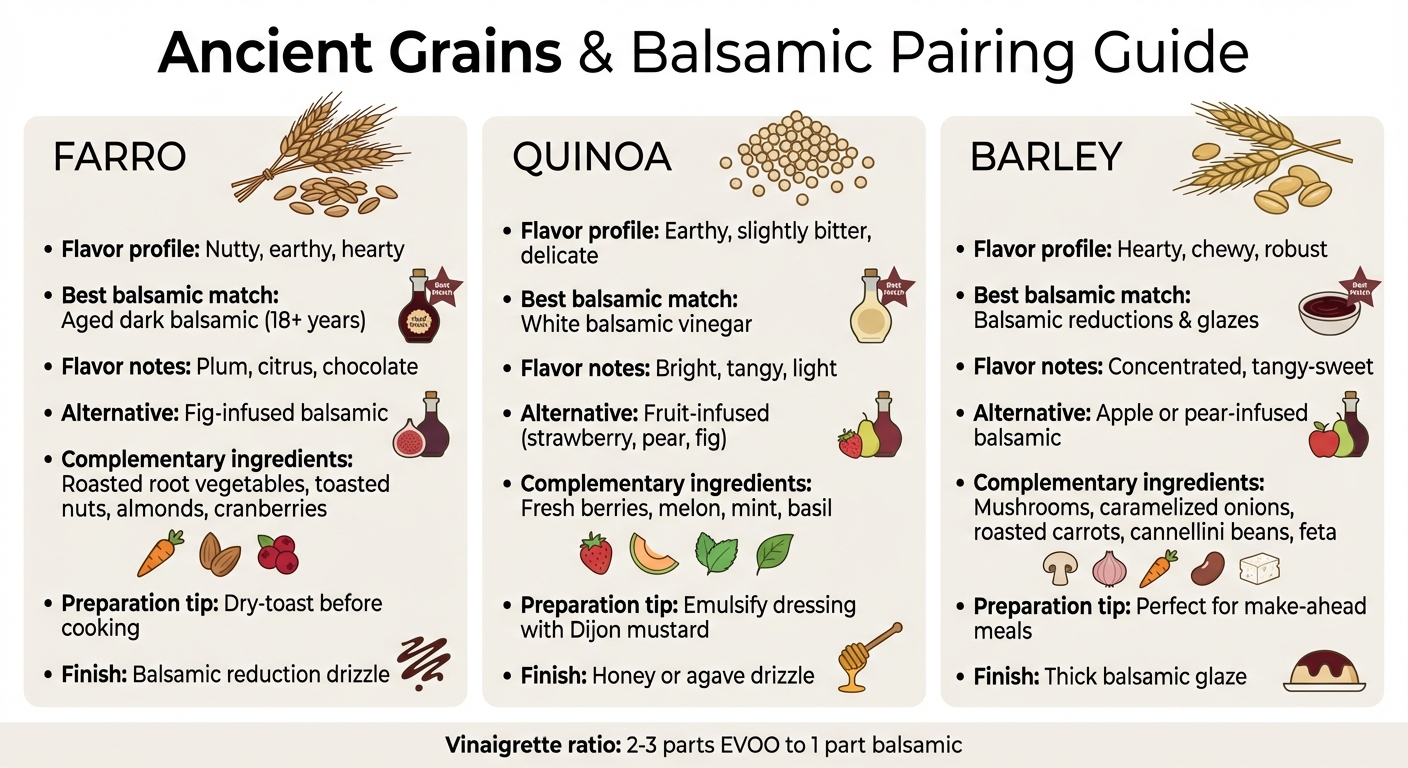
Ancient Grains and Balsamic Vinegar Pairing Guide
Ancient grains provide a fantastic base for balsamic vinegar, creating endless opportunities for flavor pairings that highlight their natural qualities. Here’s a closer look at how to pair three popular grains with balsamic vinegar to bring out their best.
Farro and Balsamic
Farro’s nutty, earthy flavor is a perfect match for aged dark balsamic vinegars - like Big Horn Olive Oil's Traditional 18-Year Aged Dark Balsamic Vinegar. These vinegars deliver rich notes of plum, citrus, and chocolate that beautifully complement farro's hearty taste. For a sweeter option, try fig-infused balsamic; its sweet-tart balance pairs wonderfully with farro, especially when combined with ingredients like almonds and cranberries.
To enhance farro’s natural nuttiness, dry-toast it briefly before cooking. Pair it with roasted root vegetables, toasted nuts, and finish the dish with a drizzle of balsamic reduction for a concentrated sweetness that ties everything together.
Quinoa and Balsamic
Quinoa’s earthy and slightly bitter flavor works best with lighter balsamic styles. White balsamic vinegar, with its bright and tangy profile, complements quinoa without overpowering its delicate taste.
Fruit-infused balsamics, such as strawberry, pear, or fig, also balance quinoa’s bitterness with a hint of sweetness. To ensure your dressing clings to quinoa’s tiny, smooth seeds, emulsify it with Dijon mustard. For a vibrant quinoa bowl, add fresh ingredients like sliced strawberries, blackberries, or melon, and sprinkle in herbs like mint or basil. A drizzle of honey or agave can tie the flavors together seamlessly.
Barley and Balsamic
Barley’s hearty, chewy texture makes it an ideal partner for balsamic reductions and glazes. Its robust nature allows it to hold up to bold, concentrated flavors, making it a great choice for warm, savory dishes.
Pair barley with umami-packed ingredients like sautéed mushrooms, caramelized onions, roasted carrots, or cannellini beans. Finish the dish with a thick balsamic glaze for a tangy-sweet punch. For a sweeter twist, mix balsamic with honey or maple syrup and toss with roasted root vegetables or dried apricots.
Barley is also fantastic for make-ahead meals since it reheats well. Try it in a barley “risotto” by stirring in a balsamic reduction at the end for a glossy, flavorful finish. Add creamy elements like crumbled feta or herbed buttermilk to balance the grain’s density and elevate the dish further.
Advanced Techniques with Balsamic and Grains
Once you’ve mastered the basics of pairing balsamic vinegar with grains, you can take things up a notch by experimenting with more refined techniques to create layers of flavor.
Creating Balsamic Reductions
A balsamic reduction can turn ordinary vinegar into a rich, syrupy glaze that delivers a concentrated sweetness to grain dishes. To make it, simmer 1 cup of balsamic vinegar over medium heat for about 5–15 minutes, letting it reduce by half until it’s thick enough to coat a spoon. Be sure to remove it from the heat just before it reaches the desired thickness - it will continue to thicken as it cools. Once cooled, store the reduction in a squeeze bottle in the refrigerator for up to three months. If it hardens, just reheat it with a splash of water or warm the container in hot water to restore its consistency.
Using Infused Balsamic Vinegars
Infused balsamic vinegars, like those from Big Horn Olive Oil, bring unique flavor profiles to the table, making them perfect for pairing with ancient grains. For quinoa, berry-infused varieties - think raspberry, strawberry, or pomegranate - add a tart sweetness that complements its light, earthy flavor. Farro pairs beautifully with fig or rosemary-infused balsamic, especially when mixed with ingredients like spinach, cranberries, and almonds. To create a simple dressing, whisk together 3 parts extra virgin olive oil and 1 part infused balsamic vinegar, season with salt and pepper, and drizzle over warm grains. For barley, apple or pear-infused balsamic works particularly well, especially when combined with sautéed mushrooms and kale. These infused vinegars allow for creative flavor layering, where reductions and raw balsamic can each play a role.
Layering Sweetness and Acidity
For a truly dynamic flavor profile, try combining a balsamic reduction with a splash of raw balsamic vinegar. This technique balances the deep, smoky sweetness of the reduction with the bright, tangy acidity of the raw vinegar. Start by tossing warm, cooked grains with the reduction, letting it absorb the rich sweetness. Then, just before serving, finish with a light drizzle of raw balsamic vinaigrette. This approach ensures that both elements stand out, creating a dish with depth and complexity.
Conclusion and Key Takeaways
When pairing grains with balsamic vinegar, aim to balance acidity and richness. Stick to the basic ratios: mix 2 to 3 parts extra virgin olive oil with 1 part balsamic vinegar for dressings, or go for a 1:1 ratio in marinades. These proportions help tone down the vinegar's sharpness while bringing out the nutty, earthy flavors of grains like farro, quinoa, and barley.
Invest in top-notch ingredients for the best results. High-quality balsamic vinegars, such as those from Big Horn Olive Oil, which are sourced from Modena, Italy, offer a rich, sweet flavor thanks to their slow-cooked grape must and aging in wooden barrels. Pair this with fresh, cold-pressed extra virgin olive oil, which not only enhances the flavor but also provides valuable health benefits.
Once you’ve got the basics down, don’t hesitate to get creative. Infused vinegars like fig, pomegranate, or cherry can add depth and complexity. For an extra burst of flavor, drizzle a balsamic reduction over your dish.
This pairing isn’t just for salads - try it in grain-based pilafs, hearty breakfast porridges, or even as a finishing touch for roasted vegetables. Start with the recommended ratios, then adjust to suit the specific grain. These tips can help elevate your dishes and bring new life to everyday meals.
FAQs
What types of balsamic vinegar pair best with ancient grains?
Pairing ancient grains like farro, spelt, or quinoa with traditional aged balsamic vinegars - such as 12-year or 18-year varieties - can elevate their earthy, nutty flavors. These vinegars bring a depth and richness that works beautifully with the hearty profile of these grains. For a sweeter twist, consider fruit-infused balsamic vinegars like fig, cherry, or pomegranate. Their natural sweetness creates a delightful contrast that enhances the grains' taste.
When choosing balsamic vinegar, go for high-quality options crafted in Modena, Italy. These are celebrated for their authenticity and exceptional flavor. Don’t hesitate to try different varieties to discover the one that perfectly complements your dish!
How do I keep grains from getting sticky when adding balsamic vinegar?
To achieve light, fluffy grains, start by giving them a good rinse under cold water. This step helps wash away excess starch that can make the grains clump together. Next, make sure to use the right water-to-grain ratio based on the type of grain you're cooking - this is key to getting the texture just right.
If you're planning to add balsamic vinegar, wait until the grains are done cooking and have cooled slightly. Adding it earlier can cause the natural sugars in the vinegar to coat the grains, leading to stickiness. Use just a small amount at first, then adjust to your taste for a balanced flavor.
What are some creative ways to use balsamic reductions with ancient grains?
Balsamic reductions bring a sweet, tangy, and slightly smoky punch to ancient grains like farro, spelt, or quinoa, making them an ideal pairing for these earthy, nutty ingredients. They’re a simple way to add depth and richness to your dishes.
To create a flavorful meal, try tossing cooked farro with roasted vegetables, then finish it off with a light drizzle of balsamic reduction. This adds a glossy, sweet-savory layer that ties everything together beautifully. Another option? Use the reduction to coat a warm grain pilaf. Combine it with lightly toasted grains and nuts to create a caramelized, flavorful crust that’s hard to resist.
You can also use balsamic reduction in a sautéed topping. Deglaze a pan of caramelized onions, mushrooms, or zucchini with the reduction, then stir the mixture into cooked grains for a side dish packed with rich, umami flavors. For a refreshing twist, drizzle it over a cold grain salad - like farro mixed with spinach, dried cranberries, and toasted almonds. The sweetness and acidity of the reduction perfectly balance salty cheeses or grilled proteins, transforming a simple salad into something memorable. These easy techniques can turn any grain-based dish into a standout on your table.