

PDO Certification and Modena's Geography
PDO certification guarantees that balsamic vinegar is made entirely within Modena, Italy, following strict guidelines. This includes using 100% cooked grape must, aging in wooden barrels for at least 12 years, such as our Traditional 18-Year Aged Italian Dark Balsamic Vinegar, and passing expert sensory evaluations. Modena's climate, with hot summers and cold winters, plays a key role in the fermentation and aging process, shaping the vinegar's flavor.
Key points:
- PDO (Protected Designation of Origin): Requires exclusive production in Modena, specific grape varieties, no additives, and a minimum 12-year aging process.
- PGI (Protected Geographical Indication): Allows for larger production areas, shorter aging (60 days minimum), and up to 2% caramel for color.
- Modena's seasonal temperature swings and humidity are vital for the vinegar's development.
- PDO vinegar is bottled in a signature 100ml design, while PGI vinegar offers more flexibility in packaging and price.
Quick takeaway: PDO balsamic vinegar is ideal for special occasions due to its long aging and strict standards, while PGI vinegar suits everyday use with its affordability and versatility.
1. PDO Traditional Balsamic Vinegar of Modena
Certification Standards
Every bottle of PDO Traditional Balsamic Vinegar of Modena undergoes a rigorous evaluation process. A panel of five expert tasters assesses it against strict sensory criteria, ensuring it meets a minimum density of 1.240 at 68°F and a total acidity of 4.5°. Only vinegar that passes these benchmarks is bottled in a distinctive 100ml spherical glass container, sealed with a Consortium-issued numbered seal. These measures ensure consumers receive a product that upholds traditional standards.
The packaging plays a key role in guaranteeing authenticity. Designed by Giorgetto Giugiaro, the bottle's unique spherical design with a rectangular base is instantly recognizable. To access the vinegar, the seal must be broken, further emphasizing its exclusivity. Additionally, labels are tightly regulated - terms like "extra", "fine", or "superior" are prohibited unless the vinegar qualifies as "Extravecchio". These requirements highlight the meticulous care taken to preserve the product's heritage and quality, which is deeply tied to Modena's geography.
Geographical Influence
From start to finish, every step of production - grape cultivation, processing, and bottling - must take place within the Province of Modena. The region's unique microclimate, characterized by cold winters and hot, humid summers, plays a crucial role in shaping the vinegar's flavor. Traditional vinegar lofts, known as acetaie, harness these natural temperature fluctuations to drive the fermentation and concentration processes.
Acetaie are typically located in attics, where proper ventilation and exposure to Modena's seasonal extremes contribute to the vinegar's distinct characteristics. This reliance on natural conditions ensures each batch reflects the essence of its origin.
Production Requirements
The vinegar is made exclusively from 100% cooked grape must, with no additives allowed. Approved grape varieties include Lambrusco, Trebbiano, Ancellotta, Sauvignon, Sgavetta, Berzemino, and Occhio di Gatta. These grapes must achieve a minimum sugar content of 15° to qualify for use.
The must is cooked over an open flame in traditional vats at temperatures of at least 176°F for no less than 30 minutes. Strict limits govern production: grape yields are capped at 16 tons per hectare, and the must yield for concentration cannot exceed 70%. These precise methods ensure the vinegar's quality and set the foundation for its aging process, which is deeply influenced by Modena's climate.
Aging Process
The aging process involves yearly transfers of the vinegar through a series of progressively smaller casks made from different woods, including oak, chestnut, cherry, mulberry, juniper, ash, and acacia. This method uses natural evaporation driven by Modena's changing seasons to achieve the vinegar's thick, syrup-like consistency.
There are two aging categories: "Affinato", which requires a minimum of 12 years, and "Extravecchio", which demands at least 25 years. This extended aging period allows the vinegar to develop its signature balance of sweetness and acidity.
sbb-itb-4066b8e
2. PGI Balsamic Vinegar of Modena
Certification Standards
PGI Balsamic Vinegar of Modena follows less stringent guidelines compared to PDO-certified vinegar. To meet these standards, the vinegar must contain at least 20% grape must, 10% wine vinegar, and a minimum of 10 years of aged vinegar. Unlike PDO regulations, which strictly forbid additives, PGI allows up to 2% caramel to be added for color stabilization. Each batch is subjected to both chemical and sensory tests to ensure it meets the minimum total acidity of 6% and a density of at least 1.06 at 68°F. Labels must include "Aceto Balsamico di Modena" along with the official PGI logo. Terms like "extra", "fine", or "superior" are not permitted, though the term "Aged" can be used if the product has matured for over three years. This certification framework reflects how the region’s environment influences the final product.
Geographical Influence
The geographical scope of PGI production, which covers the provinces of Modena and Reggio Emilia, is larger than that of PDO-certified vinegar. This extended area benefits from a seasonal climate that supports fermentation and aging. The Po River basin, particularly near the Secchia and Panaro rivers, creates a humid environment with frequent fog in late autumn and winter. The region also receives about 750 mm of rainfall annually. These conditions, combined with the unique soil composition, help cultivate grape varieties that achieve the right balance of sugar and acidity.
Production Requirements
To retain its PGI certification, every step of production - from sourcing raw materials to processing, maturation, and aging - must take place within Modena and Reggio Emilia. The grape must is concentrated until it achieves a density of at least 1.240 at 68°F, and it must have a total acidity of no less than 8 gr/kg. Traditional methods are used during processing, including bacterial colonies, "slow surface" acetification, or the "slow wood shavings" (truciolo) technique.
Aging Process
The aging process for PGI Balsamic Vinegar is significantly shorter than that of PDO-certified vinegar. A minimum of 60 days of maturation in wooden containers is required, starting from the moment the raw materials are combined. For the "Aged" designation, the vinegar must mature in wooden barrels - made from oak, chestnut, mulberry, or juniper - for at least three years. Unlike PDO-certified products, PGI vinegar offers more flexibility in packaging, with container sizes ranging from 0.1 liters to 5 liters. These containers can be made from glass, wood, earthenware, or terracotta, providing a variety of options to suit different needs.
Balsamic Vinegar of Modena and Traditional Balsamic Vinegar of Modena
How Modena's Geography Affects Quality and Authenticity
Modena's geography and climate play a major role in shaping the distinctive character of its PDO balsamic vinegar. The region experiences a semi-continental climate, marked by significant seasonal temperature changes. Winters average around 36°F, while summer highs can soar to 95°F. These temperature swings are crucial: hot summers speed up bacterial activity and water evaporation, concentrating flavors, while the cooler winters encourage natural settling and clarification. This balance of extremes contributes to the unique terroir behind Modena's renowned balsamic vinegar.
The region's soil and topography further enhance the quality of the product. PDO certification requires the use of specific grape varieties grown in traditional Modena vineyards. These vineyards, nestled in the Secchia and Panaro river basins, benefit from a unique mix of soil composition and microclimatic conditions. Together, these factors ensure an ideal sugar-to-acidity ratio in the grapes, which is vital for producing high-quality must. Combined with rigorous certification standards, these environmental influences guarantee a product that stands apart in authenticity.
An integral part of the production process takes place in traditional lofts or attics, known as acetaie. These spaces are designed to take full advantage of natural seasonal temperature shifts. Modena's annual rainfall of approximately 750 mm and the frequent fog during late autumn and winter create a humid environment. This humidity supports the growth of bacterial colonies essential for converting ethanol into acetic acid, a key step in the fermentation process that defines the vinegar's authentic character.
The aging process adds another layer of complexity. Balsamic vinegar is matured in a series of wooden barrels made from different types of wood, including chestnut, cherry, mulberry, juniper, and oak. Each type of wood imparts its own aromatic qualities, enriching the vinegar as it ages over decades. To meet PDO standards, the final product must reach a density of at least 1.240 (measured at 68°F) and contain no less than 4.5 grams of acetic acid per 100 grams. These strict requirements highlight how Modena's unique environment influences every aspect of production.
Pros and Cons
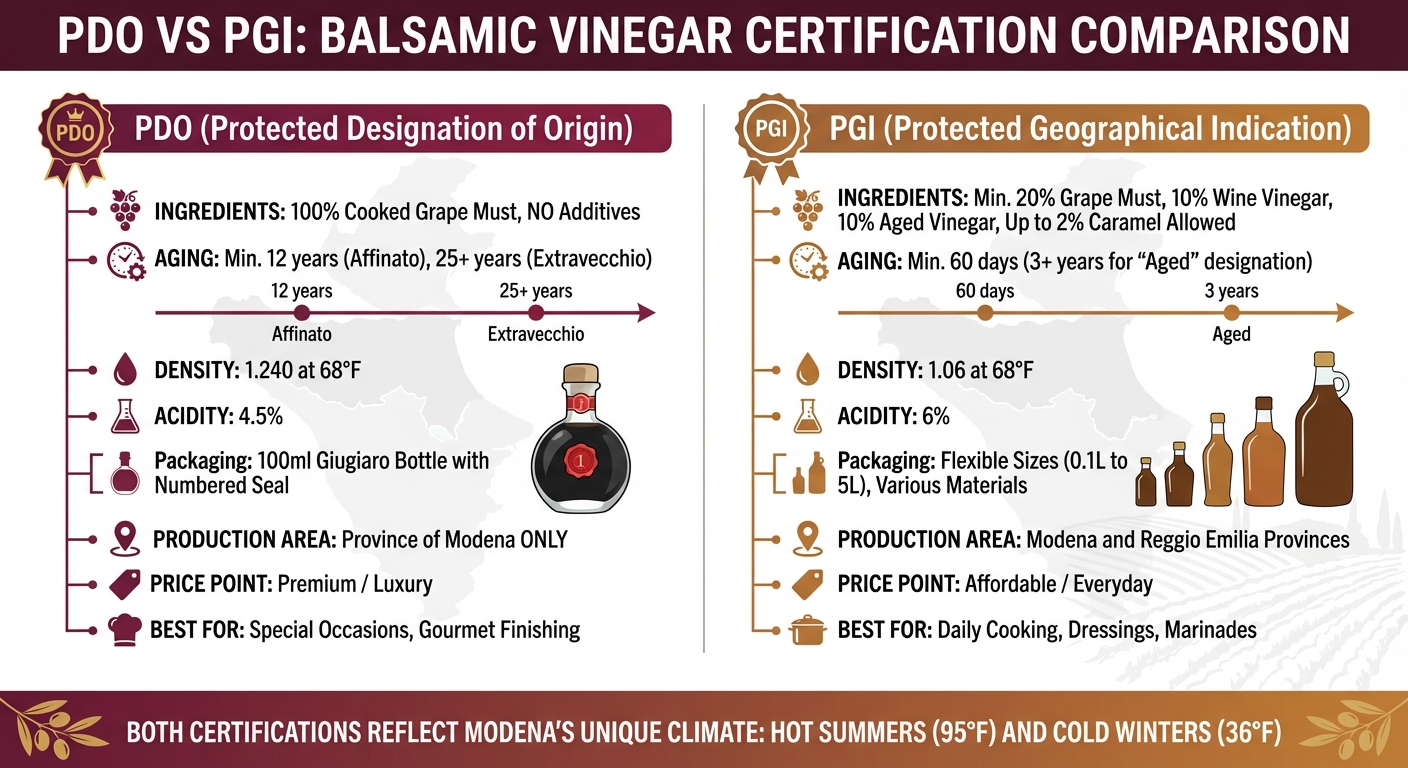
PDO vs PGI Balsamic Vinegar Certification Comparison
When it comes to PDO and PGI certifications, the choice boils down to a balance between tradition and practicality. PDO-certified balsamic vinegar represents a dedication to time-honored methods and unmatched quality, while PGI-certified vinegar offers versatility and convenience for everyday use.
PDO Certification: This certification is all about preserving tradition. PDO balsamic vinegar is crafted using exclusive production techniques and must age for a minimum of 12 years - Extravecchio varieties, such as our 25-year aged dark balsamic, are aged for at least 25 years. This long, meticulous process results in a product of extraordinary quality and flavor. Its premium pricing reflects not just the extended aging but also its unique packaging: a 100 ml Giugiaro-designed bottle with a numbered seal, ensuring its authenticity. However, the strict standards and lengthy aging process mean that PDO vinegar is best reserved for special occasions. For producers, the extended aging also delays the time it takes to bring their product to market.
PGI Certification: On the other hand, PGI-certified balsamic vinegar offers more flexibility. It allows for ingredient blending and requires just a 60-day aging period in wooden containers. This makes it a more affordable and versatile option, perfect for everyday cooking. PGI vinegar comes in a variety of bottle sizes, making it practical for a range of uses. However, the relaxed standards - such as permitting up to 2% caramel for color consistency - mean it may not achieve the same depth of flavor or exclusivity as PDO balsamic vinegar.
The differences between these certifications are deeply rooted in the unique climate and production traditions of Modena. Here's a closer look at how they compare:
| Feature | PDO Advantages | PDO Limitations | PGI Advantages | PGI Limitations |
|---|---|---|---|---|
| Quality Standards | 100% cooked grape must with no additives | Extremely rigid production methods | Flexibility in blending ingredients | Additives allowed, affecting purity |
| Aging Process | Minimum 12 years for complex flavors | Lengthy aging delays market entry | Quick market entry (just 60 days) | Shorter aging limits flavor complexity |
| Price Point | Premium pricing reflects exclusivity | Higher cost per unit | Affordable for daily use | Lower per-unit value |
| Authenticity | Unique 100 ml bottle with numbered seal | Limited to a standardized format | Variety of practical bottle sizes | Less rigorous authenticity checks |
| Culinary Use | Perfect for special occasions and gourmet dishes | Too precious for everyday cooking | Great for cooking, dressings, and marinades | May lack refined character for gourmet use |
If you're someone who values traditional craftsmanship and geographical authenticity, PDO balsamic vinegar is a luxurious choice, ideal for enhancing special dishes. On the other hand, if you're looking for a budget-friendly, versatile option for your everyday kitchen needs, PGI balsamic vinegar is the way to go.
Conclusion
PDO and PGI certifications set balsamic vinegars apart in terms of purity, aging processes, and where they’re produced. PDO-certified vinegar follows stricter traditional methods, while PGI certification allows for a more adaptable approach, making it perfect for everyday use.
The distinct climate of Modena plays a key role in creating its exceptional balsamic vinegar. The region experiences notable seasonal shifts, with winter temperatures averaging 36°F and summer highs exceeding 95°F. These natural temperature swings, combined with high humidity from the Po River and nearby basins of the Secchia and Panaro rivers, create the perfect environment for fermentation and concentration. With about 29.5 inches of annual rainfall, the conditions support the growth of native acetic flora, which contributes to the vinegar's rich, syrupy texture and complex flavor profile. This unique climate solidifies Modena’s reputation as the heart of balsamic vinegar tradition.
"Modena's natural climate is vitally important to us: in particular, the variation between the province's hot summers and cold winters, and with the year-round high humidity that comes from being beside the slow-flowing Po river."
For those who appreciate genuine craftsmanship and tradition, PDO-certified balsamic vinegar stands out. Each bottle undergoes meticulous testing and is sealed in a distinctive 100 ml Giugiaro-designed bottle, symbolizing centuries of heritage. Whether you're enhancing everyday dishes like salads and marinades or adding a luxurious finishing touch, both PDO and PGI options bring something special to the table. Together, they represent the harmony of tradition and the unique environment of Modena.
At Big Horn Olive Oil, we’re proud to source authentic balsamic vinegars from Modena, ensuring you can enjoy products that honor these time-honored traditions and the remarkable geography that makes them possible.
FAQs
Why is PDO balsamic vinegar considered a better choice for special occasions compared to PGI?
PDO balsamic vinegar is made only in Modena or Reggio Emilia, following strict guidelines that demand a minimum aging period of 12 years and prohibit the use of additives. This careful process results in a vinegar with deep, layered flavors, perfect for elevating special meals or marking celebratory occasions.
On the other hand, PGI balsamic vinegar is produced on a larger scale, with shorter aging times and a simpler, sweeter flavor. While each type has its own appeal, the richness and exclusivity of PDO balsamic vinegar make it the go-to choice for moments that deserve something truly extraordinary.
How does Modena's unique climate enhance the flavor of PDO balsamic vinegar?
Modena’s climate is a major factor in crafting the distinctive taste of PDO balsamic vinegar. The region enjoys a temperate continental climate, marked by warm, sunny days and cooler nights. This perfect balance helps the grapes achieve high sugar levels while preserving their acidity - a key combination for creating the vinegar’s rich, sweet-tart, and layered flavor.
When paired with time-honored production techniques, these conditions give rise to a balsamic vinegar that reflects the unique essence of Modena’s landscape and weather.
What distinguishes PDO balsamic vinegar from PGI balsamic vinegar in terms of production standards?
PDO (Protected Designation of Origin) balsamic vinegar follows a strict set of production rules. It must be crafted entirely within Modena's province, using specific types of grape must that are cooked in open vats without any additives. The vinegar is then aged for several years in wooden barrels, creating a product that reflects Modena's unique geography and rich heritage.
On the other hand, PGI (Protected Geographical Indication) balsamic vinegar allows for more flexibility in its production. While it still maintains a connection to Modena, PGI standards permit the use of additional ingredients and have less rigorous aging requirements. This results in a product that differs in its adherence to traditional methods and authenticity.