

10 Ways To Repurpose Olive Oil Bottles At Home
You can turn an empty olive oil bottle into something useful in just a few minutes - if you clean it well first. This article boils the process down to 10 home uses, plus the key safety checks: wash out oil, dry the bottle all the way, remove labels, and recycle any bottle with chips or cracks.
Here’s the short version:
- Best indoor uses: soap dispenser, vase, reed diffuser, pantry storage, propagation jar
- Best kitchen uses: infused oils or vinegars, dish soap bottle
- Best outdoor uses: bird feeder, bottle lantern, painted decor, watering bottle
- Main safety rule: leftover oil can turn bad, and damaged glass is not safe for food, heat, or liquids
- Food-use tip: oil infusions should be refrigerated after opening and used within 7 days
- Cleaning tip: a vinegar rinse can help with smell, and full drying matters because even a small amount of oil or water can cause problems later
If I had to sum it up in one line, it’s this: keep intact bottles in use a bit longer, and recycle the ones that are chipped, cracked, or no longer worth keeping.
Quick Comparison
| Idea | Best for | Food-safe use | Main caution |
|---|---|---|---|
| Soap dispenser | Kitchen sink or bathroom | No | Label it so no one mistakes it for oil |
| Infused oils/vinegars | Kitchen storage | Yes | Refrigerate oil infusions after opening; use within 7 days |
| Flower vase | Table or shelf | No | Decor use only after paint, glue, or etching |
| Candle holder/lantern | Table, shelf, patio | No | Watch heat and smooth any cut edges |
| Reed diffuser | Bathroom, bedroom, office | No | Keep away from pets, kids, and heat |
| Watering bottle | Houseplants | No | Remove all oil before adding water |
| Propagation vessel | Herb cuttings | Yes | Check for chips before filling |
| Bird feeder | Garden or patio | No | Clean often; no oil residue |
| Painted decor/wind chime | Shelf, patio, garden | No | Wear eye and hand protection if cutting or etching |
| Pantry/craft storage | Pantry or hobby room | Sometimes | Bottle must be fully dry before filling |
This is a simple list, but the main point is not the bottle itself. It’s how you prep it and which job fits its shape.
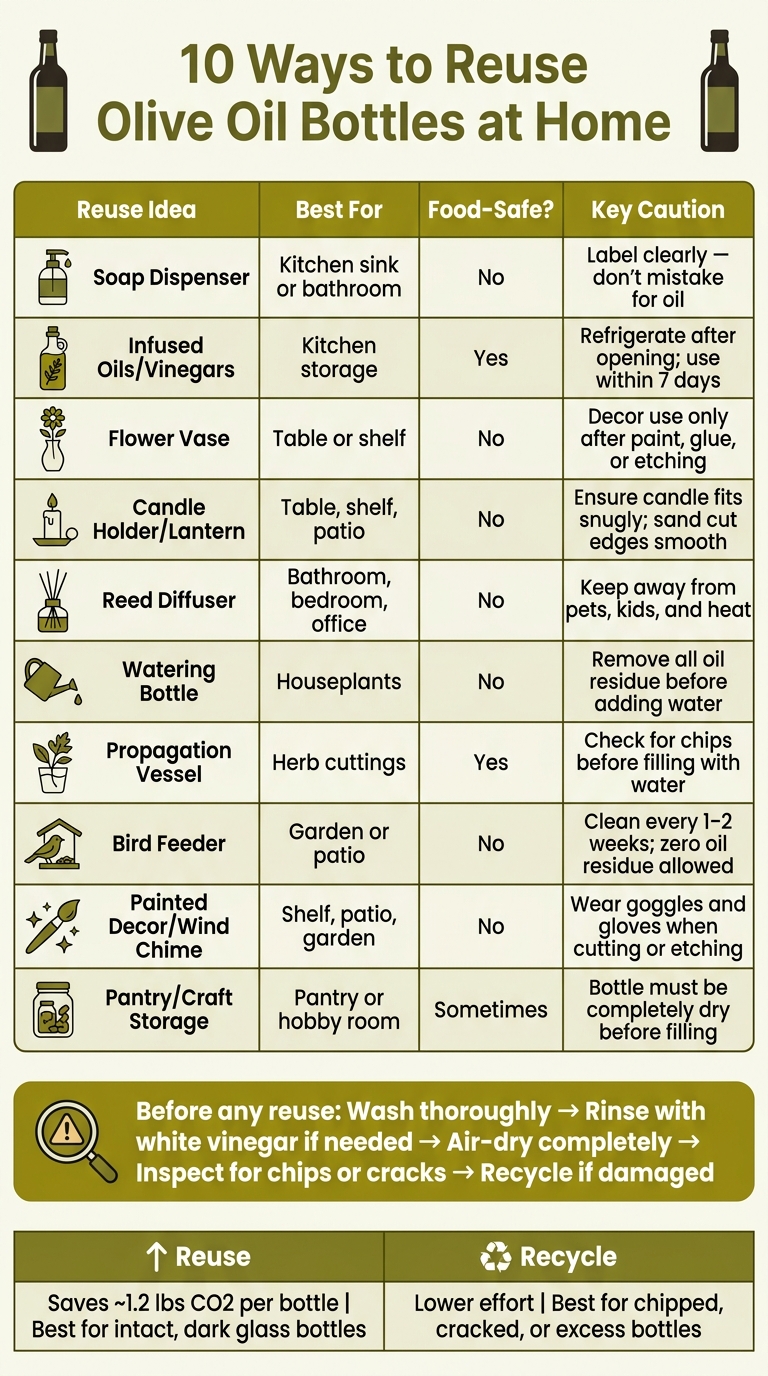
10 Ways to Reuse Olive Oil Bottles: Quick Comparison Guide
Recycle Olive Oil Bottle Into Fragrance Diffuser
sbb-itb-4066b8e
How To Clean and Prepare Olive Oil Bottles for Reuse
Before you reuse an olive oil bottle, clean it well. Leftover oil, odors, and hidden cracks can turn a simple DIY or kitchen reuse into a mess.
Rinse Out Oil Residue
First, wipe the inside with a paper towel or cloth to pull out as much leftover oil as you can. Then rinse the bottle several times with hot water.
Hot water helps loosen oil. Cold water can make it thicken, which makes cleanup harder.
Wash With Dish Soap
Add a few drops of dish soap and scrub the inside with a long-handled bottle brush. Pay extra attention to the bottom and the narrow neck, since oil tends to hang out there.
If the bottle still feels greasy, let it soak in warm, soapy water until the residue loosens.
Use a White Vinegar Rinse if Needed
If the bottle still smells after washing, pour in a mix of 1/4 cup of white vinegar and warm water. Shake it well, then let it sit for 5–10 minutes.
For stains that won't budge, use a baking soda paste and a brush to scrub the inside.
Let the Bottle Dry Completely
After the final rinse, turn the bottle upside down and let it air-dry all the way. Tasting Table puts it plainly:
"Let it dry completely; even a trace of oil will go rancid over time."
That last bit matters more than it seems. If you're using the bottle again for food, heat, or a light-based project, even a little moisture or oil can cause problems.
Remove Labels and Adhesive
Soak the bottle in warm, soapy water until the label starts to loosen. In many cases, it will peel off cleanly after a good soak.
If sticky adhesive is still stuck on the glass, rub it gently with a cloth and a small amount of rubbing alcohol or eucalyptus oil until it comes off.
Check for Damage Before Reuse
Take a close look at the rim, base, and sides before you use the bottle again. Chips, cracks, and rough edges can make it unsafe, especially if the bottle will hold liquid, food, or anything hot.
If you notice damage, recycle the bottle instead. Once it's clean, dry, and intact, it's ready for the first project below.
1. Kitchen Soap or Dish Soap Dispenser
One of the easiest ways to reuse a bottle is to turn it into a soap dispenser for the kitchen sink. Once it's cleaned well, it can hold liquid hand soap or dish soap. Glass is non-porous, which helps, but you still need to remove all grease before you refill it. The narrow neck also does a nice job of controlling the pour, so the bottle stays neat on the counter.
Best Use
A tall bottle with a pour spout works well for dish soap. A smaller tinted bottle with a pump is a good fit for hand soap.
Materials Needed
You’ll need:
- A pump top or metal pour spout
- A funnel for clean refills
- A label
Cleaning and Safety Notes
A few quick checks make this setup safer and easier to use. Look over the bottle for chips or hairline cracks before adding a pump top, since damaged glass can become a safety problem with repeat use. Label the bottle clearly so no one mistakes it for cooking oil. And when you wash it, use hot water, not boiling water, to avoid thermal shock.
2. Homemade Infused Olive Oils and Vinegars
If you want a kitchen-friendly way to reuse the bottle, turn it into an infusion container. A cleaned olive oil bottle works well for homemade infused oils and vinegars. Glass doesn’t affect flavor, and it helps protect aroma.
Food-Safe Suitability
Use dark glass when possible. It helps protect flavor and slow oxidation. Low-acid oil infusions, especially garlic, can carry botulism risk without visible warning signs. Oil-based infusions should be refrigerated after opening and used within 7 days.
Storage
Store infused bottles in a cool, dark pantry away from heat.
For food use, storage and sanitation matter just as much as the ingredients.
Extra Materials Needed
You’ll need a few simple tools to make the process easier: a small funnel for clean pouring, a thermometer if you’re using the heated method, a pour spout, and labels. If you’re using heat, keep the oil at or below 150°F.
Oil infusions need refrigeration after opening. Vinegar infusions can stay in a cool, dark place.
Cleaning and Safety Notes
Use only a dry, sterilized bottle. As Paul Haigh, author of Oil & Vinegar, puts it:
"The bottle must be completely dry before you refill it. Water and oil do not mix, and residual moisture can compromise the quality of the oil and shorten its shelf life."
For sterilization, place dry bottles in an oven at 220°F for 20 minutes or submerge them in boiling water for 10 minutes. Let the infusion cool before bottling, leave 3/4 inch of headspace, and label the bottle with the contents and date.
3. Decorative Flower Vase or Table Centerpiece
Once the bottle is clean and fully dry, it can do one more job: simple decor. An empty olive oil bottle works well as a vase or table centerpiece. The heavy base helps it stay put, and the tinted glass gives flowers a clean, understated backdrop.
If you want it to look a bit more styled, add details with paint, twine, or etching.
Best Placement
Tall bottles fit nicely on dining tables or mantels. Smaller bottles work well as bud vases on windowsills or in bathrooms.
Optional Materials
You can use:
- paint and tape
- twine and adhesive
- etching cream and stencils
Let painted designs dry all the way before handling the bottle.
Cleaning and Safety Notes
Wash, rinse, and dry the bottle completely before you decorate it. Remove the cap and any plastic pourer insert first.
When using etching cream, wear gloves and work in a ventilated area.
After painting, gluing, or etching the outside, treat the bottle as decorative only.
If you want a reuse idea that does more than look nice, the next ideas shift back to the kitchen and garden.
4. Candle Holder or Bottle Lantern
Turn that empty olive oil bottle into something that does more than sit on a shelf. It can become a candle holder, a lantern, or an LED light display with almost no extra waste.
The setup is simple. Place a tapered candle in the bottle neck for a clean, classic look. If you're using a cut-bottle version, set the bottle over a tea light or pillar candle like a glass sleeve. Want a flameless pick? Add battery-powered LED cork lights or string lights instead. It works well on dining tables, shelves, coffee tables, or patios.
Extra Materials Needed
What you need depends on the version you make:
- Tapered candle: a candle that fits securely in the neck
- Cut-bottle version: a glass cutting tool and sandpaper to smooth the edges
- LED option: battery-powered LED cork lights or string lights
Cleaning and Safety Notes
Start with a bottle that is clean and fully dry. If you cut the bottle, sand every edge smooth before handling it. And if you're using a candle in the neck, make sure it fits snugly so it doesn't lean or tip.
5. Reed Diffuser for Home Fragrance
This bottle works well as a reed diffuser for home fragrance. The narrow neck helps slow evaporation, and dark green or amber glass helps shield essential oils from light, which can wear down the scent over time.
Why This Bottle Fits
Leftover oil can leave behind odors and make the new scent weaker. After cleaning, leave the bottle uncapped and let it air-dry for at least 48 hours before you put the diffuser together.
Best Room or Use Area
Reed diffusers tend to work best in smaller, enclosed spaces, such as bathrooms, entryways, bedrooms, and home offices. Start with 3 to 4 reeds, then add more only if you want a stronger scent.
Extra Materials Needed
You’ll need:
- A light carrier oil, such as sweet almond or fractionated coconut oil
- 20 to 25 drops of essential oil per 1/4 cup of carrier oil
- 1 to 3 tablespoons of high-proof vodka to thin the mixture
- Rattan reeds, which wick oil better than bamboo skewers
Avoid olive oil as the carrier. It’s too heavy and can go rancid.
Cleaning and Safety Notes
Keep the diffuser away from heat sources and direct sunlight. Also keep it away from pets and children. Some essential oils, including tea tree, eucalyptus, and peppermint, are toxic to cats and dogs.
Flip the reeds once a week to refresh the scent, and replace them when they get clogged.
If you want a more hands-on reuse, the next idea turns the bottle into a small watering tool.
6. Mini Watering Bottle for Houseplants
Here’s another smart use for a narrow-neck bottle: turn it into a mini watering bottle for houseplants. The slim neck gives you more control, which is handy for succulents, herb pots, and other plants that need water right at the base.
Olive oil bottles are made from sturdy, non-porous glass, so they’re a good fit for watering edible herbs and houseplants. The dark glass can also help if you add liquid plant food.
That’s part of what makes this so handy in small indoor spots.
Best Room or Use Area
It works well on tight surfaces like windowsills, desks, and small shelves, where a full watering can can feel clunky.
Extra Materials Needed
If your bottle has a plastic drip-free insert, take it out before cleaning or refilling.
Cleaning and Safety Notes
Wash the bottle well, rinse out any oil residue, and let it dry all the way before adding water or plant food.
If you want a bottle that stays in sight and earns its keep indoors, the next idea turns it into a propagation vessel for herbs and cuttings.
7. Propagation Vessel for Herbs and Cuttings
For a plant-focused reuse, this bottle works well as a simple propagation jar. The thick base helps it sit steady on a counter or windowsill, and the shape helps keep stems in place while they root in water. The dark glass also helps shield the water from light, which can cut down on algae growth.
Safe for Edible Herbs
Because the bottle is made from food-grade glass, it can be used for cuttings from edible herbs like basil, mint, and rosemary. Just fill the clean bottle with fresh water and place the cuttings in the neck so the stems stay upright.
Best Spot
A bright kitchen windowsill or counter is a good place for it.
Extra Materials Needed
You may need pliers to remove the plastic insert from the neck. Taking it out makes the opening wide enough for most herb stems to slide through more easily.
Cleaning and Safety Notes
Start with a fully clean, dry bottle. Remove the insert if needed, and check for chips before adding water.
8. DIY Bird Feeder for the Garden
That same sturdy bottle can do one more job outside: it can become a simple bird feeder for the garden.
The setup is pretty straightforward. Turn an empty olive oil bottle upside down over a shallow dish or small wooden tray, and let the seed drop down as birds feed. It’s a basic gravity-fed design, and it works well without much fuss. You only need a few common supplies to put it together.
Cleaning and Safety Notes
Start with a bottle that’s fully clean and completely oil-free. Any leftover residue can go rancid and harm birds.
Before you assemble anything, sand down sharp edges, use a low- or no-VOC sealer on the wood, and plan to wash the feeder every 1–2 weeks with hot soapy water.
Best Location
Place or hang the feeder in a quiet garden or patio area, at least 5 feet off the ground and away from low bushes. That gives birds a safer spot to feed and helps keep the setup out of easy reach.
Extra Materials Needed
For a sturdy wall-mounted version, you’ll need:
- A wooden backboard and base
- A drill
- Wire or hose clamps to hold the bottle in place
- A shallow dish to catch the seed
- A screw hook for hanging
Cedar or bamboo are smart picks for the wood since they tend to hold up better outdoors.
"Any metal or plastic with rust or peeling paint should be avoided as well, as some paints and metals are toxic to birds." - Cayla Leonard, Lifestyle Writer
If you want something with a bit more charm than function, the next idea leans more toward style.
9. Painted Bottle Decor or Wind Chime
An empty olive oil bottle can still do a job after the oil is gone. It doesn't have to be "just trash" or "just recycling." You can turn it into decor and keep it in use at home.
Start by wiping the outside with rubbing alcohol so paint has a clean surface to stick to. Then pick one finish: glass paint, etching cream, or decoupage. If you want the easier route, painted bottles are a good pick because you can skip cutting the glass.
If you're making a wind chime, score and snap the glass with care, then sand every edge smooth right away. No shortcuts here. Once the edges are smooth, the bottle is ready to hang.
Cleaning and Safety Notes
Treat painted, etched, or decoupaged bottles as decor only. Keep all treatments off the rim and the inside. If you're cutting or drilling glass, wear safety goggles. If you're using etching cream, wear gloves and work in a well-ventilated space.
Best Room or Use Area
Painted bottles fit nicely on a shelf, mantel, or table centerpiece. Wind chimes make more sense outdoors, especially in a garden or on a patio where they can catch the breeze.
Extra Materials Needed
Painted Decor:
- Glass paint
- Brushes
- Painter's tape
- Rubbing alcohol
- Mod Podge
- Decorative paper or fabric
- Etching cream
- Stencils
Wind Chime:
- Glass scoring tool
- Safety goggles
- Sandpaper
- Fishing line
- Wood circles
- A drill
- Corks
- Outdoor-grade paint
- Decorative beads or stones
If you want something more useful day to day, the next idea turns the bottle into storage.
10. Storage Bottle for the Pantry or Craft Room
One of the easiest ways to reuse an olive oil bottle is simple storage. Once it's cleaned, the bottle becomes a sturdy container, and the narrow neck gives you better pour control. It works especially well in two spots: the pantry and the craft room.
In the pantry, you can use it for vinegars, dressings, syrups, or dry goods like herbs, rice, and lentils. If you're storing larger dry goods, a wider-mouth bottle is usually the better pick. Dark-tinted glass also helps shield light-sensitive contents from oxidation and degradation.
In a craft room, the same bottle can keep small items in one place, like beads, buttons, salts, or sand.
Food-Safe Suitability
Make sure the bottle is completely dry before you add dry goods. Even a small bit of moisture can cause herbs or spices to mold.
Best Room or Use Area
The pantry is the best fit for food storage. For non-food items, a craft room shelf makes more sense. The heavy base also helps the bottle stay steady on shelves.
Extra Materials Needed
A funnel makes filling the bottle much less messy, especially with dry goods. For labels, chalkboard stickers or twine-tied tags are easy to switch as the contents change.
If you want a more permanent label, stencils and etching cream such as Armour Etch can mark the glass with words like "Rice" or "Herbs".
Cleaning and Safety Notes
Before filling the bottle, check that it's fully dry. Use the cleaning steps above before storing food or craft supplies inside.
If the bottle is chipped, stained, or no longer useful, recycle it instead.
Reuse vs. Recycle: A Quick Comparison for Olive Oil Bottles
After the DIY ideas, the last call is simple: keep the bottle in use or send it to recycling. That choice depends on the bottle’s condition, what you want to use it for, and whether your local program accepts glass.
| Method | Impact | Effort | Best Use Cases |
|---|---|---|---|
| Reuse | Highest - saves about 1.2 lbs of CO2-equivalent emissions per bottle | Moderate - requires thorough cleaning, label removal, and prep | Intact, dark glass bottles for soaps, oils, or decor |
| Recycle | Moderate - reduces landfill waste and raw material use, but is energy-intensive | Low - rinse and place in a curbside bin if your local program accepts glass | Chipped, cracked, or excess bottles that you do not have a use for |
When Reuse Makes Sense
Reuse is the better pick when the bottle is still intact. Dark glass works especially well for light-sensitive contents. And if that bottle can take the place of a new plastic dispenser or container, reuse is the more practical move.
When Recycling Is the Better Option
If the rim is chipped or the base is cracked, recycle the bottle instead of reusing it. Damaged glass can be a safety risk, especially for food or liquid storage. The same goes for extra bottles you know you won’t use.
How To Balance Both at Home
A good middle ground is to keep only the intact bottles for reuse and recycle the rest through your local program. That way, the best bottles stay in use, and the extras don’t pile up.
Conclusion
An empty olive oil bottle already has a lot going for it. The thick, dark glass works well for all kinds of reuse at home, from soap dispensers to vases and propagation jars. That’s why the easiest projects are the smartest place to begin.
Start simple with a vase or soap dispenser. Before you pick a project, check the bottle for damage.
Inspect it first. If you spot chips or cracks, recycle it. If the bottle is intact, match its shape to the job that fits best. Then give it one more useful turn around the house.
The goal is simple: give intact bottles a useful second life before recycling.
FAQs
Can any olive oil bottle be reused?
Yes - any glass olive oil bottle can be reused if it’s cleaned well and dried all the way.
These bottles are sturdy, block light, and seal tightly. That makes them handy for all kinds of projects around the house.
Wash out all oil and residue with hot water and dish soap. If needed, add a little white vinegar to help cut through the leftover film. Once the bottle is clean and fully dry, you can use it again for olive oil, other kitchen liquids, or even home decor items like vases, lamps, or soap dispensers.
How do I know if a bottle is safe for food use?
An empty olive oil bottle is safe to use for food again if you clean it well first.
Rinse out any leftover oil with hot water and a drop of dish soap. Then swirl in a little white vinegar to clear out any oil still clinging to the inside.
Let the bottle dry all the way before you refill it. If any water or old oil is left behind, the new contents can go rancid over time.
What’s the easiest olive oil bottle project to start with?
The simplest project is to clean your empty Big Horn Olive Oil bottle well and refill it with fresh olive oil. This works especially well if you buy oil in bulk.
After you wash and dry the bottle, you can use it again to store your favorite Ultra Premium Extra Virgin Olive Oils or balsamic vinegars. You can even add a pour spout, which makes drizzling and cooking a lot easier.