

Sage-Infused Olive Oil: Flavor Profile Explained
Sage-infused olive oil offers a bold, earthy flavor with herbaceous notes that enhance dishes like roasted vegetables, poultry, and pasta. Its aroma lingers, adding depth to both simple and complex recipes. Compared to rosemary and thyme-infused oils, sage provides a balanced taste, ideal for autumn-inspired meals. Store it in a cool, dark place and use within six months for the best quality. A 375 mL bottle costs $23.99, making it a premium addition to elevate your cooking.
1. Sage-Infused Olive Oil
Flavor Notes
Sage-infused olive oil brings a refined, herb-forward taste that captures the essence of wild sage's natural character. Its bright and layered flavor profile shines when paired with earthy ingredients like Cremini, Shiitake, or Porcini mushrooms, adding a deep umami richness to any dish. Made from early-harvest olives, high-quality oils intensify the sage's herbal qualities, creating a truly elevated culinary experience.
"Infused with the essence of fresh wild sage... this award-winning oil delivers a refined, herbaceous flavor experience." - Big Horn Olive Oil
The oil’s vibrant taste is complemented by its aromatic qualities, which add another dimension to its versatility in cooking.
Aroma Persistence
The aroma of sage-infused olive oil lingers beautifully, enhancing its role in both simple and sophisticated recipes. Its long-lasting fragrance is particularly effective in dishes like pasta or in creative drinks such as the Sage Olive Oil Sour, a gin-based cocktail that highlights its unique scent. Whether used as a finishing drizzle or a basting agent for roasted meats, the aroma encapsulates sage's essence, making it a standout addition to gourmet meals. This aromatic depth allows it to shine in a variety of culinary contexts.
Culinary Pairings
The oil’s bold flavors and enticing aroma make it a versatile ingredient across many dishes. It pairs exceptionally well with poultry and game birds, serving as a perfect basting oil for roasted chicken or pheasant. Its herbaceous notes also complement white fish, especially when grilled to bring out smoky undertones. For pasta and risotto, using it as a finishing oil preserves its delicate flavors, which can fade under high heat. Beyond these dishes, it enhances legumes, adding richness to hummus or soups when drizzled on top. It’s also an excellent choice for brushing over flatbreads or focaccia before baking, delivering a subtle yet flavorful upgrade.
sbb-itb-4066b8e
2. Rosemary-Infused Olive Oil
Flavor Notes
Rosemary-infused olive oil brings a bold, intense flavor to the table, standing in contrast to the gentler, more subtle profile of sage-infused oil. Its pronounced taste makes it a perfect match for richer, more robust ingredients, adding depth to a variety of dishes. This oil’s strong character ensures it holds its own in hearty recipes, making it a standout choice in the kitchen.
Aroma Persistence
One of the defining features of rosemary-infused olive oil is its powerful aroma. Packed with concentrated essential oils, it delivers a fragrance that not only enhances the dish during cooking but also lingers, elevating the overall dining experience.
Culinary Pairings
Thanks to its bold aroma and flavor, rosemary-infused olive oil shines in dishes with hearty ingredients. It’s a natural fit for marinating red meats like lamb, beef, and pork, especially for grilling. Roasted root vegetables - think potatoes, carrots, and parsnips - gain extra complexity with its addition. It’s also a fantastic finishing touch for bread, pizza dough, or even heartier pasta dishes with tomato-based sauces, infusing them with a Mediterranean flair.
3. Thyme-Infused Olive Oil
Flavor Notes
Thyme-infused olive oil boasts a rich, savory flavor that instantly transports you to the heart of Greece. Made by crushing Greek thyme alongside early-harvest Koroneiki olives, this oil offers a bold herbal profile with a comforting depth. While sage-infused olive oil leans toward brightness, thyme brings a heartier, more robust character that pairs beautifully with richer ingredients. The method of fusing fresh thyme with the olives ensures the herb's essence is captured, resulting in an oil that delivers a true Mediterranean touch to your cooking. Its flavor is matched by an equally enticing aroma that enhances its appeal.
Aroma Persistence
The aroma of thyme-infused olive oil is as striking as its flavor. Its concentrated herbal scent lingers, enhancing dishes both during cooking and at the table. This aromatic intensity makes it an excellent choice as a finishing oil, where its fragrance can shine without being compromised by high heat. The scent evokes images of sun-drenched Greek hillsides, adding an extra sensory dimension to your meals.
Culinary Pairings
This oil is a natural fit for Mediterranean cuisine. Drizzle it over roasted lamb to highlight the meat's earthy richness, or use it to add a traditional herbal touch to Greek salads. It also elevates the simplest dishes, like a comforting chicken noodle soup, or pairs beautifully with balsamic vinegar for unforgettable marinades. To maintain its fragrant quality, store it in a cool, dark place and use it within six months for the best experience.
Pros and Cons
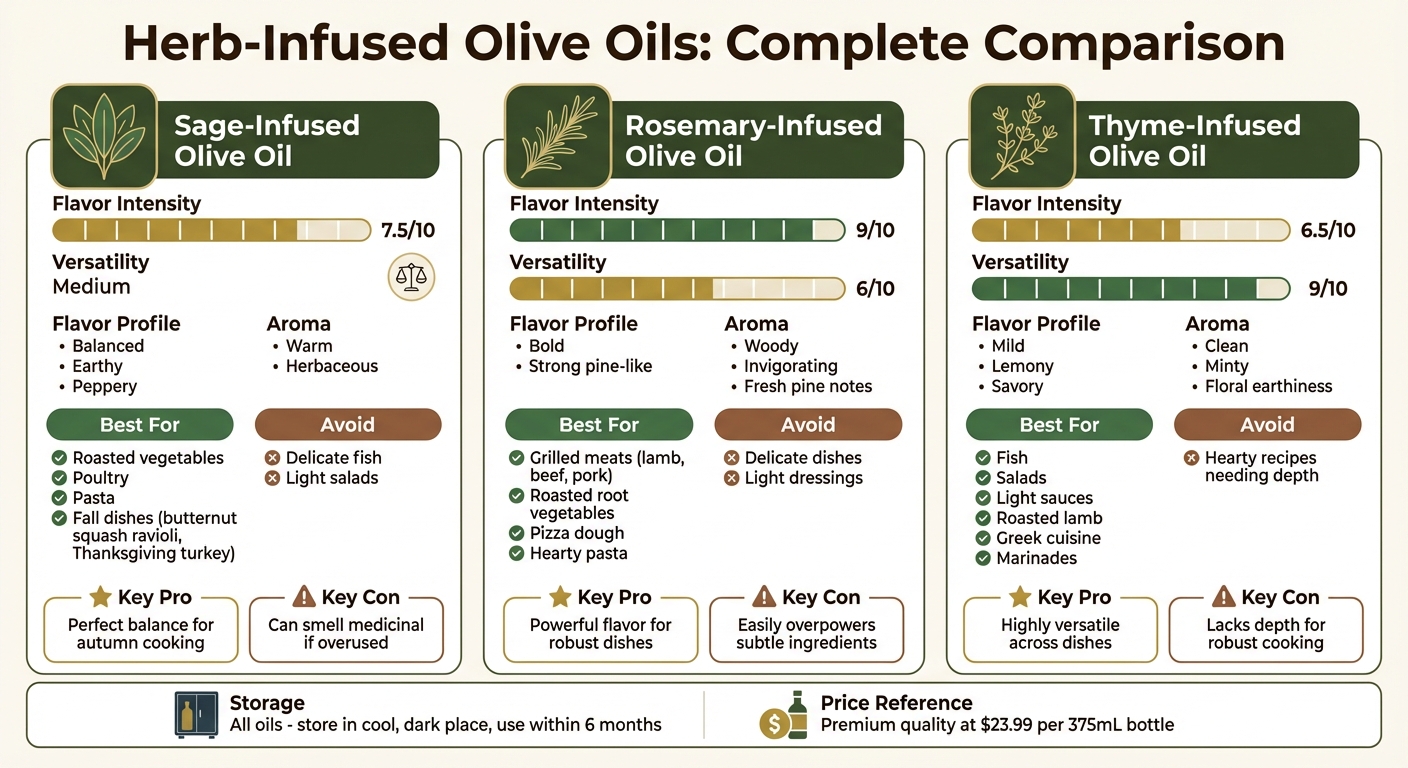
Sage vs Rosemary vs Thyme Infused Olive Oil Comparison Chart
Breaking down the characteristics of each oil makes it easier to understand their unique roles in the kitchen. Herb-infused olive oils each bring their own strengths and limitations, and knowing these can help you choose the right one for specific dishes and cooking methods.
Sage-infused olive oil delivers a balanced, earthy, and peppery flavor (7.5/10), making it perfect for roasted vegetables, poultry, and fall dishes like butternut squash ravioli or Thanksgiving turkey. Its warm, herbaceous aroma enhances recipes beautifully. However, it shines best in moderate-heat cooking and may develop a medicinal scent if used excessively. It’s also not the best choice for delicate fish or light salads.
Rosemary-infused olive oil packs a bold punch (9/10) with its strong pine-like flavor, making it an excellent match for grilled meats and hearty dishes. Its woody, invigorating scent complements robust recipes. That said, its intense nature (6/10 versatility) can easily overpower more subtle dishes, so it’s best used sparingly in lighter fare.
Thyme-infused olive oil offers a mild, lemony taste (6.5/10) with high versatility (9/10). Its clean, minty profile and floral earthiness work well with fish, salads, and light sauces. However, its gentler flavor might not provide the depth needed for heartier recipes.
Here’s a quick comparison of their key attributes:
| Aspect | Sage-Infused | Rosemary-Infused | Thyme-Infused |
|---|---|---|---|
| Flavor Intensity |
Pro: Balanced earthiness (7.5/10) Con: Fades in heavily spiced dishes |
Pro: Bold pine punch (9/10) Con: Overpowers delicate foods |
Pro: Mild consistency (6.5/10) Con: Lacks depth in hearty meals |
| Cooking Uses |
Pro: Great for poultry, pasta, fall veggies Con: Limited for fish or salads |
Pro: Perfect for grilled meats Con: Too strong for lighter recipes |
Pro: Highly versatile (9/10) Con: Less effective in robust cooking |
| Aroma |
Pro: Warm, herbaceous scent Con: Can smell medicinal if overused |
Pro: Fresh, woody pine notes Con: Too sharp for delicate dressings |
Pro: Clean floral earthiness Con: Subtle aromatic presence |
These differences highlight how each oil excels in certain contexts while falling short in others, helping you make thoughtful choices in your cooking.
Conclusion
Sage-infused olive oil brings a refined, earthy warmth to your cooking, thanks to its herbaceous profile. Its balanced flavors work beautifully with ingredients like wild mushrooms, delivering an umami-rich touch that complements autumn and winter comfort foods without overpowering subtle notes.
This oil shines in dishes such as poultry, pasta, risotto, roasted vegetables, holiday stuffing, and creamy soups. For a standout vinaigrette, try pairing it with Sicilian Lemon White Balsamic, or add depth to your recipes with Traditional 18-Year Balsamic.
To keep its flavor at its best, store the oil in a cool, dark place. At $23.99 for a 375 mL (12.7 fl oz) bottle, Big Horn Olive Oil’s sage-infused variety offers premium quality for those looking to elevate their culinary creations.
If you're aiming to add a cozy, farmhouse feel to your meals with a touch of earthiness, sage-infused olive oil is an excellent choice. Its unique flavor profile sets it apart from other herb-infused oils like rosemary or thyme, making it a standout addition to your kitchen.
FAQs
Can I cook with sage-infused olive oil over high heat?
Sage-infused olive oil works wonderfully for low-heat cooking, marinades, dressings, or as a finishing touch. These techniques help maintain its subtle flavor and overall quality.
How can I tell if sage-infused olive oil has gone bad?
You can identify if sage-infused olive oil has spoiled by checking a few key indicators. Look for cloudiness, an unpleasant or rancid smell, visible mold, or any discoloration. If you notice any of these signs, it’s best to throw the oil away. To keep it fresh for longer, make sure to store it properly.
What’s the easiest way to use sage-infused olive oil in everyday meals?
Sage-infused olive oil is perfect for adding a burst of flavor to your dishes. Use it as a finishing touch by drizzling it over pasta, roasted chicken, fish, or grilled meats just before serving. It also works wonders in marinades, giving them a savory, herb-forward twist.