

Science of Browning with Olive Oil
Browning food is all about unlocking flavor through heat. Two key processes make this happen: the Maillard reaction (proteins + sugars) and caramelization (sugars only). Both require temperatures above 212°F, and extra virgin olive oil (EVOO) is a game-changer in achieving the perfect results. Here's why:
- Maillard Reaction (280°F–330°F): Creates savory, nutty, and toasted flavors in meats, vegetables, and more. EVOO helps by transferring heat evenly and reducing surface moisture.
- Caramelization (230°F–356°F): Focuses on sugars, producing sweet, buttery, and toasty notes. EVOO prevents burning and stabilizes heat.
- EVOO Benefits: High heat stability, rich flavor, and antioxidants ensure better cooking performance compared to refined oils.
To get the best results, pat food dry, avoid overcrowding the pan, and preheat EVOO until it shimmers. Whether you're roasting, sautéing, or searing, EVOO ensures crispy, golden results with a tender interior.
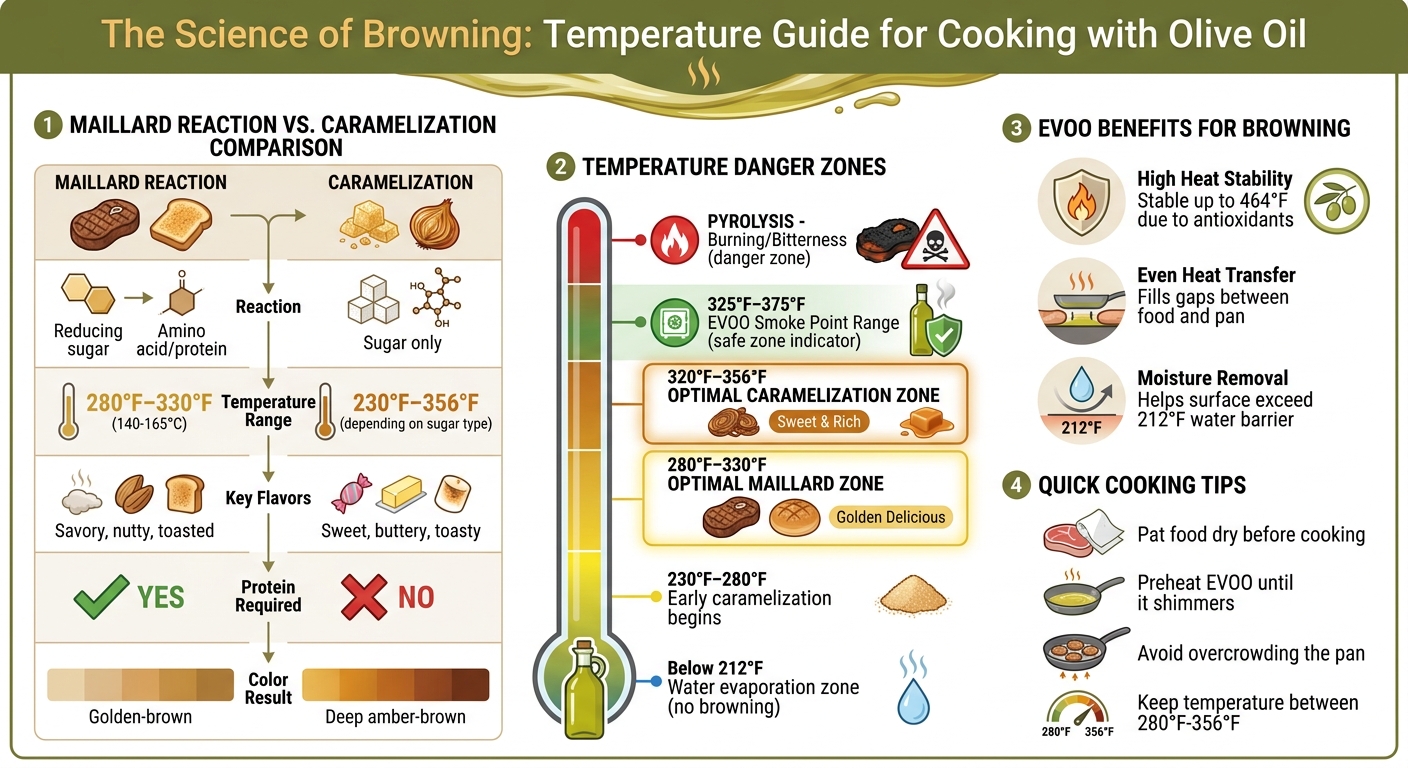
Maillard Reaction vs Caramelization Temperature Guide for Cooking with Olive Oil
The Maillard Reaction: How Proteins and Sugars Create Flavor
The Maillard reaction is a fascinating chemical process where amino acids from proteins interact with reducing sugars under heat, creating hundreds of new flavor compounds. This is what gives a seared steak or roasted vegetables their rich, savory taste. The resulting flavors can range from nutty pyrazines to meaty thiazoles and malty Strecker aldehydes. Chemistry Nobel laureate Jean‑Marie Lehn once remarked:
"The Maillard is, by far, the most widely practiced chemical reaction in the world."
This reaction works best at temperatures between 280°F and 330°F. Below this range, browning is minimal, while exceeding 355°F can lead to pyrolysis, which introduces unpleasant bitterness. The formation of melanoidins - those large brown polymers - gives food its golden-brown color and contributes to the crispy, caramelized surfaces we love.
To optimize browning, it’s important to pat ingredients dry. Excess moisture keeps the temperature capped at 212°F, preventing the reaction from fully taking place.
How Olive Oil Improves the Maillard Reaction
Extra virgin olive oil plays a key role in enhancing the Maillard reaction. It acts as a heat conductor, filling tiny gaps between the food and the pan for even heat distribution. This allows the food’s surface to quickly surpass the 212°F water barrier and reach the ideal temperature range of 280°F–330°F, where the reaction flourishes. Olive oil also aids in dehydrating the surface, creating the perfect environment for amino acids and sugars to bond into complex flavor molecules. Additionally, its natural fatty acids and phenolic compounds add layers of savory, nutty, and spicy flavors during cooking.
To maximize results, preheat the oil until it shimmers but avoid letting it smoke. This ensures food sears immediately when it hits the pan, locking in flavor and moisture. Overcrowding the pan should also be avoided, as too much food releases steam, lowering the oil’s temperature and hindering browning. For an extra edge, a small pinch of baking soda can be added to vegetables like onions to raise the pH, speeding up the browning process. This simple trick deepens flavors and enhances the final dish.
Foods That Use the Maillard Reaction with Olive Oil
A wide range of foods benefit from the Maillard reaction when cooked with olive oil. Meats like seared steaks, burgers, roast pork, and chicken develop a delicious crust as the reaction transforms amino acids into rich, roasted flavors.
Vegetables also undergo a flavorful transformation. Roasted potatoes, onions, tomatoes, and cauliflower take on a sweet-savory complexity with crispy, caramelized edges that raw or boiled versions can’t achieve. Starches and legumes - such as fried dumplings, falafel, French fries, and even bread crusts - gain a golden-brown color and a toasty, malty flavor. Even roasted peanuts and chickpeas benefit, becoming crunchier and more deeply flavored when the Maillard reaction is done right.
sbb-itb-4066b8e
Caramelization: How Heat Transforms Sugars
Caramelization is a fascinating process where heat transforms sugars, creating entirely new flavors and aromas. Unlike the Maillard reaction, which requires both sugars and proteins to produce savory notes, caramelization works with sugar alone. This heat-driven transformation results in flavors that are sweet, buttery, and toasty. Compounds like diacetyl (buttery), maltol (toasty sweetness), and hydroxymethylfurfural are key contributors to the distinct taste profile of caramelized foods.
Different types of sugar caramelize at varying temperatures. Fructose starts caramelizing at 230°F, while glucose and sucrose need higher temperatures, typically around 320°F. Sucrose, in particular, can require up to 356°F. However, it's important to stay within the right temperature range - exceeding 356°F leads to pyrolysis, where sugars burn instead of caramelizing. Next, we’ll explore how extra virgin olive oil (EVOO) plays a role in optimizing this process.
| Factor | Maillard Reaction | Caramelization |
|---|---|---|
| Reactants Required | Reducing sugar + amino acid/protein | Sugar only |
| Onset Temperature | ~284–329°F | ~230–356°F depending on sugar |
| Key Flavor Notes | Savory, nutty, toasted | Sweet, buttery, toasty |
| Protein Dependence | Required | None |
This table highlights the differences between the Maillard reaction and caramelization, showing how EVOO enhances both processes.
How EVOO Helps with Caramelization
Extra virgin olive oil isn’t just great for the Maillard reaction - it’s also a game-changer for caramelization. Its ability to distribute heat evenly prevents hot spots that can burn sugars, ensuring a perfect caramelization every time. Additionally, EVOO helps drive off surface moisture, allowing the temperature to exceed the 212°F boiling point of water, which is essential for proper caramelization.
What sets EVOO apart is its oxidative stability. Research shows that EVOO remains stable even when heated to 464°F, outperforming other common cooking oils. This stability comes from its antioxidants and monounsaturated fats, which help the oil maintain its quality during prolonged high-heat cooking. As Holly Herrington, a Registered Dietitian at Northwestern Memorial Hospital, explains:
"Oxidative stability, not smoke point, is the best predictor of how an oil behaves during cooking."
Foods That Caramelize Well with Olive Oil
Thanks to its stability and even heat distribution, EVOO is ideal for caramelizing a variety of foods. Caramelized onions are a classic example, benefiting from both Maillard and caramelization reactions to develop a rich, sweet, and savory flavor. Cooking them slowly in EVOO prevents burning and delivers a jammy texture that’s perfect for soups, sauces, or as a topping.
Vegetables like carrots also shine when roasted with EVOO. Their natural sugars concentrate during cooking, creating a deep, sweet flavor that works beautifully in side dishes or soups. Fruits with high fructose content - like pears, apples, and stone fruits - are another excellent choice. Since fructose caramelizes at just 230°F, these fruits develop a luscious sweetness when roasted with EVOO, which ensures the oil’s quality holds up throughout the process.
Even baked goods benefit from caramelization when EVOO is used. The sugars in doughs and batters transform into golden-brown crusts with complex, toasty flavors that elevate the final product.
Why Extra Virgin Olive Oil Works Best for Browning
Extra virgin olive oil (EVOO) is an excellent choice for browning due to its unique composition. Its polyphenols and Vitamin E offer protection against heat-induced breakdown, something refined oils lose during processing. This means EVOO retains its quality and stability even when exposed to high temperatures.
Another factor is its fat composition. EVOO contains 73–80% monounsaturated fats, mainly oleic acid, which makes it more resistant to heat compared to oils rich in polyunsaturated fats (7–10%). This stability ensures better performance during cooking.
When it comes to freshness, EVOO certified under Ultra-Premium (UP) standards sets the bar. These oils undergo immediate lab testing to verify low oxidation levels and high freshness, which directly influence their ability to maintain flavor and essential qualities during browning. According to EVOO Marketplace, UP certification guarantees measurable freshness and sensory quality, making these oils particularly reliable for high-heat cooking.
Smoke Point and Heat Stability of EVOO
EVOO's smoke point typically falls between 350°F and 410°F, aligning with the temperatures needed for most browning methods. For example, stovetop sautéing usually happens at 250°F to 350°F, while roasting or pan-frying ranges from 325°F to 375°F.
However, smoke point isn't the only consideration. EVOO's oxidative stability - thanks to its polyphenols and monounsaturated fats - makes it highly resistant to thermal breakdown. These antioxidants neutralize free radicals during heating, reducing the risk of harmful compounds forming. To ensure optimal results, watch for a gentle shimmer or ripples in the oil. If it starts to smoke, it’s breaking down and should be discarded.
Besides its cooking performance, EVOO offers impressive health benefits when used in high-heat applications.
Health Benefits of Using EVOO in High-Heat Cooking
One standout feature of high-quality EVOO is that it retains its antioxidants, even at elevated temperatures. Its heart-healthy monounsaturated fats are more stable under heat than the polyunsaturated fats found in many vegetable oils.
To maximize these benefits, choose EVOO varieties that have been independently lab-tested for high antioxidant levels and low oxidation. Oils certified as "Ultra-Premium" are a great option, as their verified freshness and purity ensure better performance during high-heat cooking. As EVOO Marketplace explains:
"Naturally occurring polyphenols and vitamin E, plus heart-healthy monounsaturated fats - key reasons fresh EVOO is prized."
For an added touch, drizzle fresh EVOO over your dish after cooking. This helps preserve the delicate aroma compounds that may evaporate during browning, enriching both the flavor and nutritional value of your meal. EVOO not only excels at browning but also enhances the overall healthfulness of your dishes.
Techniques for Browning with Olive Oil
Temperature Ranges for Browning
When it comes to browning with extra virgin olive oil (EVOO), knowing the right temperature range is key to achieving those rich, savory flavors and golden hues. The Maillard reaction, which gives food its deliciously browned surface, happens between 280°F and 330°F (140–165°C). This reaction is responsible for creating those deep, savory notes and the classic golden-brown color you’re aiming for. However, if you push the heat beyond 355°F, you risk entering pyrolysis territory. This is where food burns, turns bitter, and can even produce harmful compounds.
Caramelization, on the other hand, occurs at a slightly higher range - between 320°F and 360°F. This process transforms natural sugars into sweet, nutty flavors that add complexity to your dishes. Most high-quality EVOOs have a smoke point of 325°F to 375°F, giving you a safe window to work with both reactions while avoiding oil breakdown or acrid flavors.
| Reaction/Threshold | Temperature Range (°F) | Outcome |
|---|---|---|
| Maillard Reaction | 280°F – 330°F | Savory flavors, golden-brown color |
| Caramelization | 320°F – 360°F | Sweet, nutty flavors from sugar transformation |
| EVOO Smoke Point | 325°F – 375°F | Oil breakdown, acrid flavor, nutrient loss |
| Pyrolysis (Burning) | > 355°F | Charring, bitterness, potential carcinogens |
Using this temperature guide, you can confidently sauté, sear, or roast while maximizing flavor and maintaining the integrity of your ingredients.
Tips for Sautéing, Searing, and Roasting with EVOO
Once you’ve got the temperature ranges down, it’s time to put them into practice. Start by ensuring your food surfaces are completely dry. Excess moisture can prevent browning since water must evaporate before the surface temperature rises enough for the Maillard reaction to kick in. Pat meats and vegetables dry with paper towels to speed up browning while keeping the interiors tender.
For sautéing, heat your pan over medium-high heat and add just enough EVOO to coat the bottom. When searing meat, preheat the pan, add the oil, and immediately place the meat in the pan. Be patient - let it develop a crust before flipping to lock in flavor.
For roasting, stick to a range of 325°F to 375°F. This allows for even browning while avoiding oil degradation. Toss vegetables or proteins in a light coating of EVOO before placing them in the oven. Pre-searing proteins like chicken or beef before roasting can add extra depth to the flavor, though you might want to skip this step with lamb, as it can sometimes produce off-notes. The oil not only helps achieve a beautifully browned surface but also slows moisture loss from the interior, keeping your food juicy and flavorful.
Big Horn Olive Oil Products for Browning
Recommended EVOO Varieties for Browning
When it comes to browning, not every olive oil is up to the task. Big Horn Olive Oil offers Ultra Premium EVOO varieties that shine in high-heat cooking, thanks to their high phenolic content and cold-pressed production. These oils are crafted to enhance both flavor and performance during browning.
Picual Ultra Premium EVOO is a medium-intensity option with a phenolic content of 435 ppm. At $23.99 for a 375 ml (about 12.7 fl oz) bottle, it’s a fan favorite, earning a 4.8/5 rating from 26 reviews. One satisfied customer shared:
"Picual olive oil is my favorite oil to use to pour over breads, pizza, roasted veggies, shrimp...... it has an amazing delightful flavor." – Jane I.
For those who prefer a stronger flavor, Coratina Ultra Premium EVOO delivers a bold profile with an impressive phenolic content of 580.30 ppm. This makes it perfect for browning meats and vegetables. Rated 5/5 by 14 reviewers, it boasts high antioxidant levels, helping it resist oxidation during cooking. Its flavor profile includes hints of unripe banana and green almond, adding depth to the Maillard reaction. As one reviewer put it:
"Coratina has a very pleasant flavor. Strong but smooth. Taste great on my fresh garden tomatoes!" – Donna F.
Both oils are cold-pressed and should be used within six months to preserve their flavor and antioxidant benefits. To maintain their quality, store them at room temperature in a dark place - never in the refrigerator. These features make them an excellent choice for the browning techniques discussed earlier.
Comparison Table: EVOO vs. Refined Oils
The table below highlights how Big Horn's Ultra Premium EVOO varieties outperform typical refined oils in browning applications.
| Feature | Big Horn Ultra Premium EVOO (Picual/Coratina) | Typical Refined Olive Oils |
|---|---|---|
| Antioxidant Levels | High (435–580.30 ppm) | Low to none |
| Flavor Profile | Bold and fruity with distinct notes | Neutral and bland |
| Processing | Cold-pressed, early harvest | Chemically or heat refined |
| Best Use | Browning, roasting, dressings, finishing | Deep frying, high-heat searing |
| Acidity | Very low (<0.8%) | Higher (up to 2% before refining) |
Big Horn’s EVOOs are designed to enhance the Maillard reaction, offering complex flavors and excellent heat stability. Unlike refined oils, which merely transfer heat, these oils combine low acidity and high oleic acid content to achieve browning temperatures (280°F–330°F) without breaking down or developing bitter notes.
Conclusion
Browning isn't just about cooking - it's about creating layers of flavor through science. Both the Maillard reaction and caramelization generate hundreds of new flavor compounds and aromatic molecules that raw ingredients simply can't offer. However, moisture can get in the way, as it keeps the temperature too low for browning to occur.
This is where extra virgin olive oil (EVOO) shines. It not only helps transfer heat beyond water's boiling point but also adds its own distinct "green" flavors that enhance the browning process. Big Horn's Ultra Premium EVOO varieties are crafted to perform within the ideal range of 280°F to 330°F, where the Maillard reaction works its magic.
To get the best browning results, focus on technique. Start by patting ingredients dry to remove excess moisture, avoid overcrowding the pan to let steam escape, and always preheat your cooking surface for immediate browning. Big Horn Olive Oil's Ultra Premium EVOO is specifically designed to maintain performance within these optimal temperature ranges. Keeping your heat below the burning point ensures rich, complex flavors without the bitterness of burnt food.
With the right oil and proper methods, you can elevate your cooking by creating flavors on a molecular level. Whether you're searing a steak, roasting vegetables, or caramelizing onions, the formula stays the same: control heat, manage moisture, and let high-quality EVOO work its magic.
FAQs
How can I tell my pan is hot enough for browning with EVOO?
When checking if your pan is ready for browning with extra virgin olive oil (EVOO), pay attention to visual signs. The oil should shimmer or show a slight ripple - this means it has reached the right temperature. If you see tiny wisps of smoke, the oil is nearing its ideal browning point. Be careful not to overheat, as burning the oil can lead to bitter flavors. These simple cues ensure excellent browning while keeping your dish flavorful.
Why does wet food stop browning even in hot oil?
When wet food is placed in hot oil, it doesn’t brown because water interrupts crucial chemical reactions, such as the Maillard reaction. The moisture keeps the surface temperature from getting hot enough to trigger browning, as the water must fully evaporate before the food can reach the necessary heat. This slows down or even prevents the formation of that golden, crispy crust we associate with browning.
When should I use EVOO vs. when should I switch to a different fat?
Extra virgin olive oil (EVOO) works best for medium-heat cooking or when you want to boost flavor in your dishes. However, for high-heat methods like pan-frying or roasting, it’s better to use a more heat-resistant option, such as refined olive oil. EVOO’s bold flavor and nutritional perks are ideal for moderate cooking or as a finishing drizzle to elevate your meal.