

Seasonal Harvesting Tips for Premium Olive Oil
Harvest timing is the single most important factor in producing high-quality olive oil. Picking olives too early or too late impacts the oil’s flavor, health benefits, and shelf life. Here’s what you need to know:
- Early Harvest (Late Sept - Mid Nov): Produces bold, peppery oil with high antioxidants but lower yield. Best for long shelf life (18–24 months).
- Mid-Season Harvest (Nov): Balanced, fruity oil with moderate polyphenol levels. Offers the highest oil yield relative to dry weight.
- Late Harvest (Dec & Beyond): Milder, buttery oil with higher yield but shorter shelf life (9–12 months) and lower antioxidants.
Factors like olive variety, climate, and ripeness stage determine the ideal harvest time. Early picking preserves antioxidants, while late picking prioritizes oil volume. Proper handling, storage, and timely processing (within 24–48 hours) are critical for maintaining quality.
Key takeaway: Align your harvest strategy with your oil goals - whether bold and peppery or mild and buttery.
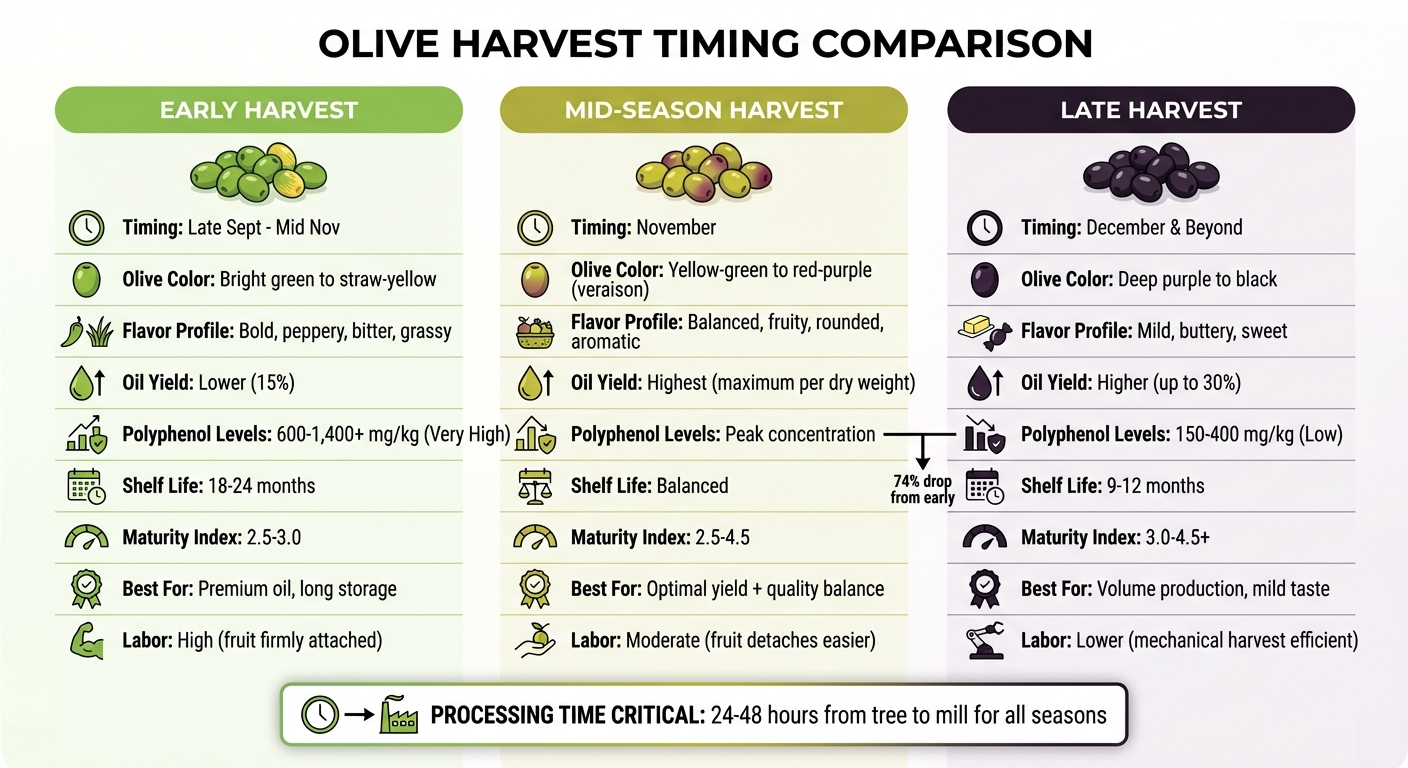
Olive Harvest Timing Comparison: Early vs Mid vs Late Season
How Seasons Affect Olive Harvesting
How Seasons Affect Olive Ripeness and Oil Quality
The journey of olives from green to black isn't just about color - it's a chemical transformation that directly impacts the flavor and quality of olive oil. During late September to early October, olives are green, packed with chlorophyll and polyphenols. This stage produces what Italian producers call "Olio Nuovo", known for its vibrant green hue and peppery intensity. As Vito Giaramida, Mill Owner at Frantoio Giaramida, explains:
If it doesn't make you cough, it's not real olio nuovo.
By November, olives begin veraison, transitioning to shades of yellow-green or red-purple. Oils from this phase are more balanced, with softened sharpness and a fruitier profile. Giaramida describes this stage:
This is when the oil starts to breathe a little. The fruit relaxes, the aromas open.
By December and beyond, fully ripened black olives yield a mild, golden oil. However, these late-stage oils have lower polyphenol levels and a shorter shelf life.
Early harvest oils offer notable advantages. They boast 600–1,400+ mg/kg of polyphenols and can remain fresh for 18–24 months. In contrast, late harvest oils drop to 150–400 mg/kg and oxidize within 9–12 months. A 2018 study published in the Journal of Agricultural and Food Chemistry observed a Koroneiki grove over 12 weeks, noting a steep decline in polyphenol levels - from 1,240 mg/kg in early October to just 320 mg/kg by late December, a 74% drop.
These chemical shifts are influenced by the season, but factors like local climate and olive varieties also play a critical role in determining harvest timing.
Climate and Regional Differences in Harvest Timing
Olive ripening doesn't follow a strict timeline, even within a single orchard. Research conducted by the University of California Davis from 2016 to 2018 revealed that Arbequina and Arbosana varieties reached their peak oil content by November, while Koroneiki olives continued to accumulate oil until early December. This underscores the importance of tailoring harvest timing to specific cultivars rather than adopting a one-size-fits-all approach.
Weather also plays a major role. A hot fall can speed up ripening, pushing farmers to harvest earlier, while a cooler fall may delay the process, leaving olives vulnerable to frost damage if left too long. Juan J. Polari from UC Davis highlights:
Phenolic and volatile compounds are profoundly affected by cultivars and crop seasons, suggesting the relevance of these factors on the sensory and nutritional properties of virgin olive oil.
Even subtle climate differences within the same region - referred to as pedoclimatic variations - can significantly influence the oil's aroma and flavor profile.
sbb-itb-4066b8e
Early Season Harvesting: Bold and Peppery Flavors
When to Start Early Harvest
Early harvest olives are easy to spot - they’re bright green with little to no color change, signaling the beginning of veraison. Their firm texture keeps them tightly attached to the tree, making them a bit more challenging to pick. In the Northern Hemisphere, this prime harvesting window usually falls between late September and mid-November.
To ensure the olives are ready, cut one open and look for the first signs of purple pigment inside, rather than relying solely on the skin color. On a maturity scale from 0 to 7, early harvest olives typically score between 2.5 and 3.0. Oils produced from these olives pack a punch, as Vito Giaramida describes:
a "fierce" peppery bite with a "back-throat catch" due to high oleocanthal content.
Though early harvest olives yield less oil by weight compared to fully ripe ones, the timing preserves polyphenols and extends the oil’s shelf life - key factors for creating premium-quality oil. Once you’ve confirmed the right moment, use careful manual harvesting methods to protect the fruit.
Manual Picking Techniques for Better Quality
To maintain the quality of early harvest olives, hand-picking is the way to go. It minimizes bruising, which can lead to oxidation and fermentation. Since early olives are firmly attached to the tree, gentle techniques are essential. Instead of pulling the olives, use pruning shears to cut the clusters, and place tarps or collection sheets under the trees to catch the fruit and keep it off the ground. Olive oil expert Marco Antonucci cautions:
Too low a reading [of epicarp resistance] risks compromising the integrity of the fruit and consequently the quality of the oil, resulting in sensory defects, increased acidity, and peroxide levels.
While hand-picking is more time-consuming and expensive, it’s crucial for preserving the delicate fruit and achieving the high standards required for premium extra virgin olive oil during early harvest.
Storage and Handling for Early Olives
Once picked, proper storage and quick processing are critical. Mary Louise Bucher, Master Miller and Owner of Trattore Farms, advises:
The ideal timing is for olives to go from the tree to the mill the next day or within 48 hours.
Store the olives in a cool, dark, and well-ventilated area, away from contaminants, until they’re ready for milling. Never mix fallen olives with freshly picked ones; fallen fruit should remain on the ground to avoid compromising the oil’s quality. Many mills require olives to be processed within 48 hours and may reject fruit that’s been refrigerated or stored for too long. Check with your local mill for their specific guidelines on delivery timing and quality standards. Following these steps is essential to capture the bold, peppery essence that defines early harvest olive oil.
Mid-Season Harvesting: Balanced Flavor Profile
Checking for Optimal Ripeness During Mid-Season
Mid-season harvesting happens during veraison (or invaiatura), the phase when olive skins transition from green to yellow-green, and eventually to red-purple. At this stage, the fruit softens slightly but remains firm enough to avoid bruising during handling .
To determine ripeness precisely, the Maturity Index scale (ranging from 0 to 7) is a reliable tool. Randomly select 100 olives from different parts of the tree and sort them by color. A score between 2.5 and 4.5 indicates the ideal stage, where olives reach their highest oil content relative to their dry weight.
As Vito Giaramida, Mill Owner at Frantoio Giaramida, describes:
The fruit relaxes, the aromas open... This is when the oil starts to breathe a little.
At this stage, the sharp bitterness and peppery notes of early-harvest oils mellow into a more rounded, aromatic, and fruity flavor. However, weather plays a significant role - hot fall conditions can speed up ripening, narrowing the harvest window, while cooler temperatures may extend the green stage.
Using Combs and Rakes for Harvesting
Once ripeness is confirmed, choosing the right harvesting tools is essential. Plastic hand rakes and combs are effective for gently dislodging olives onto tarps or nets. This method is quicker than hand-picking while still protecting the fruit from damage .
For larger groves, electric harvesters with vibrating comb arms can significantly boost productivity, often doubling or tripling the output of a single operator.
After harvesting, olives should be stored in small, ventilated crates (holding 33–55 lbs) to prevent bruising and overheating. Transport the fruit to the mill within a few hours and process it immediately to preserve freshness and quality .
Early vs. Mid-Season Harvesting Comparison
Choosing between early and mid-season harvesting depends on your goals for flavor, yield, and oil quality. Here's how the two approaches compare:
| Feature | Early-Season | Mid-Season |
|---|---|---|
| Color | Bright green to straw-yellow | Yellow-green to red-purple |
| Flavor Profile | Bitter, grassy, and peppery | Balanced, fruity, rounded |
| Oil Yield | Lower (difficult to extract) | High (maximum per dry weight) |
| Polyphenol Level | Very high (long shelf life) | Peak concentration (balanced shelf life) |
| Labor Intensity | High (fruit firmly attached) | Moderate (fruit detaches easier) |
| Texture | Very firm | Softening |
Mid-season harvesting offers a middle ground, combining higher oil yields with the robust polyphenol levels that define premium extra virgin olive oil. This balance is particularly critical for low-polyphenol varieties like Arbequina, where timing can make or break quality. A one-month delay in harvesting Arbequina olives, for instance, could shorten the oil's shelf life by as much as four months.
Late-Season Harvesting: Higher Oil Yield and Milder Taste
Monitoring Ripeness Levels in Late Fall
Late-season olives, which turn deep purple or black, can yield more oil - sometimes up to 30% compared to 15% earlier in the season. However, this higher yield comes with risks. Relying solely on color to judge ripeness can be deceptive, as factors like drought or temperature changes may alter the fruit's appearance before it reaches optimal ripeness chemically.
To accurately gauge ripeness, three tests are recommended:
- A dynamometer (≈US$22) to measure detachment force, which should exceed 300 grams.
- A penetrometer (≈US$44) to assess skin resistance, keeping it above 350 g/mm².
- The Jean Index, which involves sorting 100 olives into seven color categories. A score between 3.0 and 4.5 typically indicates peak oil content.
Start testing biweekly, increasing the frequency as detachment force approaches 400–500 grams. Be vigilant for environmental factors like autumn frosts or heavy rain, which can spoil late-season fruit more quickly. Also, remember that the middle and upper canopy holds most of the olives (60–65%), which often have the highest oil and polyphenol concentrations.
Using Mechanical Shakers and Nets
Once ripeness is confirmed, mechanical harvesting methods can save time and labor while maintaining quality. Fully ripened olives are softer, making mechanical tools both effective and gentle. Trunk shakers, for instance, can achieve up to 95% efficiency by vibrating the tree, while electric harvesters equipped with vibrating arms can reach deep into the canopy. These tools can cut labor costs by up to 80% compared to manual picking.
To protect the fruit, lay nylon nets or sheets under the trees to catch the olives and prevent soil contamination. Adjust the vibration settings on your equipment to the lowest effective level to minimize bruising, and avoid harvesting during or right after heavy rain, as wet olives are more prone to damage.
After harvesting, store the olives in shallow, ventilated crates rather than deep sacks or overfilled bins. This prevents the fruit at the bottom from being crushed, which could lead to oxidation. Aim to process and transport the olives within 24 hours to preserve their quality.
Risks of Late Harvesting and How to Avoid Them
While late harvesting can increase oil yield and produce a milder flavor, it also introduces some serious challenges. Giuliano Conforti of Tenute Conforti explains:
Overripe olives harvested or those fallen to the ground can compromise the goodness of the final oil, as they present a greater risk of oxidation and fermentation.
As olives fully mature, their polyphenol content drops significantly, which shortens shelf life and reduces health benefits. The softer pulp becomes more fragile, increasing the risk of bruising and lesions during handling. Additionally, cooler and wetter fall conditions can exacerbate issues like olive fruit fly infestations, leading to more oxidation and bacterial growth. The weakening bond between fruit and branch also raises the likelihood of olives falling to the ground, where they can become contaminated.
To protect quality, avoid mixing fallen olives with those that are hand-picked. Harvest before the pulp consistency falls below 250 g/mm², as measured by a penetrometer. Closely monitor olive fly activity throughout the season. For producers focused on premium oil, timing is key. Harvesting when the skin is only partially brown helps preserve a balanced mix of phenols and aromatic compounds. These steps ensure that late-season harvesting yields a sweeter, milder oil without sacrificing quality.
| Ripeness Stage | Visual Characteristics | Oil Profile | Quality Risk |
|---|---|---|---|
| Veraison | Green to purple skin | Balanced, aromatic | Low |
| Fully Ripe | Nearly entirely black skin | High quantity, milder | Moderate |
| Overripe | Black skin, brown flesh | Low polyphenols, flat | High (Fermentation, Acidity) |
Adjusting Harvesting Methods to Regional Climates
Regional Climate Considerations in the U.S.
Seasonal ripeness is only part of the equation - regional climates across the U.S. also play a major role in determining the best harvesting practices. For example, California's hot, dry Mediterranean-style climate aligns well with traditional olive-growing methods, making standard harvesting techniques effective. However, areas like Oregon, with their cooler and wetter conditions, demand a different approach. Growers in these regions often have to adjust their timing and work in more sheltered areas to tackle these environmental challenges effectively.
Temperature is another key factor when planning a harvest. Warm conditions can speed up fermentation, which compromises oil quality if processing is delayed. For instance, in regions like Texas or southern California, where heat waves are common, processing delays of more than 4 hours can negatively impact the final product. To counter this, growers often focus on rapid harvesting and use ventilated containers during transport to reduce heat buildup.
On the other hand, frost presents a completely different issue. Freezing temperatures can damage olives, making them unsuitable for producing high-grade extra virgin oil. In regions prone to sudden cold snaps, close monitoring of weather forecasts is crucial to ensure harvesting happens before frost hits. Additionally, in areas with fluctuating temperatures, equipment like pneumatic harvesters with magnesium alloy motors can help maintain efficiency even in near-freezing conditions.
These temperature adjustments are just one part of the equation. Managing moisture challenges is equally important.
Adjusting for Temperature and Rain Patterns
Rainfall and humidity also significantly influence harvest timing and handling methods. In regions with autumn rains, wet olives are more prone to bruising, so it’s best to schedule harvests during short dry periods to minimize damage.
Moisture levels also impact how olives are stored. Containers used for harvested fruit should have less than 5% foreign material, like leaves or twigs, to preserve quality. Additionally, maintaining storage temperatures between 59°F and 64°F helps prevent oxidation. In hotter regions, growers often expedite processing, ideally within 24 hours, to maintain oil quality.
Tools and Preparation for Seasonal Harvesting
Must-Have Tools for Harvesting
Having the right tools makes all the difference when it comes to a successful olive harvest. For smaller-scale production of fresh harvest extra virgin olive oil, manual tools like plastic rakes, secateurs, and gloves are indispensable. These are especially useful for early-season green olives, which are firmer and more prone to bruising. Secateurs, in particular, help minimize damage that could affect the oil's quality.
For those seeking efficiency, powered harvesters - either electric or pneumatic - offer a great solution. These devices use lightweight vibrating prongs to gently detach olives without harming the branches. Many come with telescopic extension poles, making it easy to reach high branches without the need for ladders. Pneumatic models, capable of operating at speeds up to 1,800 strokes per minute, do require an air compressor. For larger groves, trunk shakers are another option, capable of harvesting up to 300 kilograms per hour with an impressive 95% efficiency in fruit detachment .
Once the olives are dislodged, collection nets or specialized shadecloth placed under the trees are essential for catching the fruit. Durable polyethylene nets with reinforced eyelets are ideal, as they can withstand the forces from mechanical harvesters. Agronomist Angelo Bo highlights the importance of careful handling:
If the tissues are damaged, causing the rupture of cell walls... the deterioration processes accelerate and their effects intensify. For this reason, timely delivery to the mill is essential.
With the right tools in hand, the next step is ensuring proper storage and transport to maintain the quality of the harvest.
Preparing for Harvest: Storage and Transport
Preparation begins well before the first olive is picked. Use perforated, food-grade plastic crates instead of sealed containers. Limiting each crate to no more than 25 kilograms prevents the fruit at the bottom from being crushed, and keeping foreign material under 5% ensures a cleaner harvest .
Temperature control is equally critical during transport. Harvested olives should be kept in a cool, dark, and ventilated area at temperatures between 41°F and 50°F. Avoid airtight containers that trap moisture, and never store olives below 35°F to prevent chill damage. These steps help preserve the delicate flavors and nutritional qualities of the oil.
Mary Louise Bucher, Master Miller and Owner of Trattore Farms, underscores the importance of timing:
The ideal timing is for olives to go from the tree to the mill the next day or within 48 hours.
Harvesting olives & determining when they're ripe!
Conclusion
The quality of premium olive oil hinges on a combination of timing, technique, and preparation. Harvesting olives early results in bold flavors packed with antioxidants, while mid-season harvests strike a balance between flavor and aroma. Late-season harvesting, on the other hand, prioritizes yield, producing a milder taste profile. By tailoring techniques to each season’s characteristics, producers can ensure both exceptional flavor and health benefits.
Equally important is the harvesting method. Handpicking remains the preferred approach to protect the integrity of the olives, while mechanical methods, like trunk shakers, can achieve up to 95% efficiency when used with care. Speed is critical in maintaining quality - olives are typically processed within 4 to 24 hours to lock in freshness and prevent oxidation. Proper post-harvest handling, such as using ventilated containers and avoiding overfilling, plays a vital role in preserving the delicate compounds that define the excellence of extra virgin olive oil.
FAQs
How do I choose the best harvest date for my olive variety?
To determine the best time for harvesting, keep an eye on the maturity stage and watch for visible signs of ripeness. The prime period is usually during veraison, the phase when olives transition from green to shades of violet, purple, or black. It's best to harvest when roughly half of the olives have shifted color, as this often corresponds to the highest oil content and quality. Remember, the timing can differ depending on the olive variety, climate, and specific local conditions.
What’s the fastest way to tell if olives are truly ripe (not just dark)?
To determine if olives are ripe, check for a darker color and see if the flesh comes off the pit easily. These are reliable signs that the olives are ready to be harvested.
How can I keep harvested olives cool and undamaged until milling?
To ensure the best olive oil quality, it’s crucial to process olives promptly. Delays can lead to fermentation, oxidation, and oil degradation. If milling right away isn’t possible, store the olives in a cool, well-ventilated area to slow down enzymatic activity and prevent microbial growth. However, avoid keeping them in storage for too long, as this can cause defects in the oil. Quick processing and proper handling are key to producing high-quality olive oil.