

Shelf Life of Extra Virgin Olive Oil: What to Know
Extra virgin olive oil (EVOO) doesn't last forever. Its quality starts to decline as soon as it's harvested. Here's what you need to know:
- Unopened EVOO: Best quality lasts 18–24 months from the harvest date if stored in a cool, dark place.
- Opened EVOO: Peak flavor and nutrients last 30–60 days, though it can be usable for up to 3–6 months.
- Storage Tips: Keep it in a cool, dark pantry, away from heat and light. Use dark glass bottles or stainless steel containers to reduce exposure to air and UV rays.
- Signs of Spoilage: Rancid oil smells like crayons, glue, or stale nuts and tastes dull or greasy.
For the best experience, always check the harvest date, store it properly, and use it quickly after opening. EVOO loses up to 40% of its antioxidants within six months of opening.
Does olive oil expire?
sbb-itb-4066b8e
How Long Does Extra Virgin Olive Oil Last?
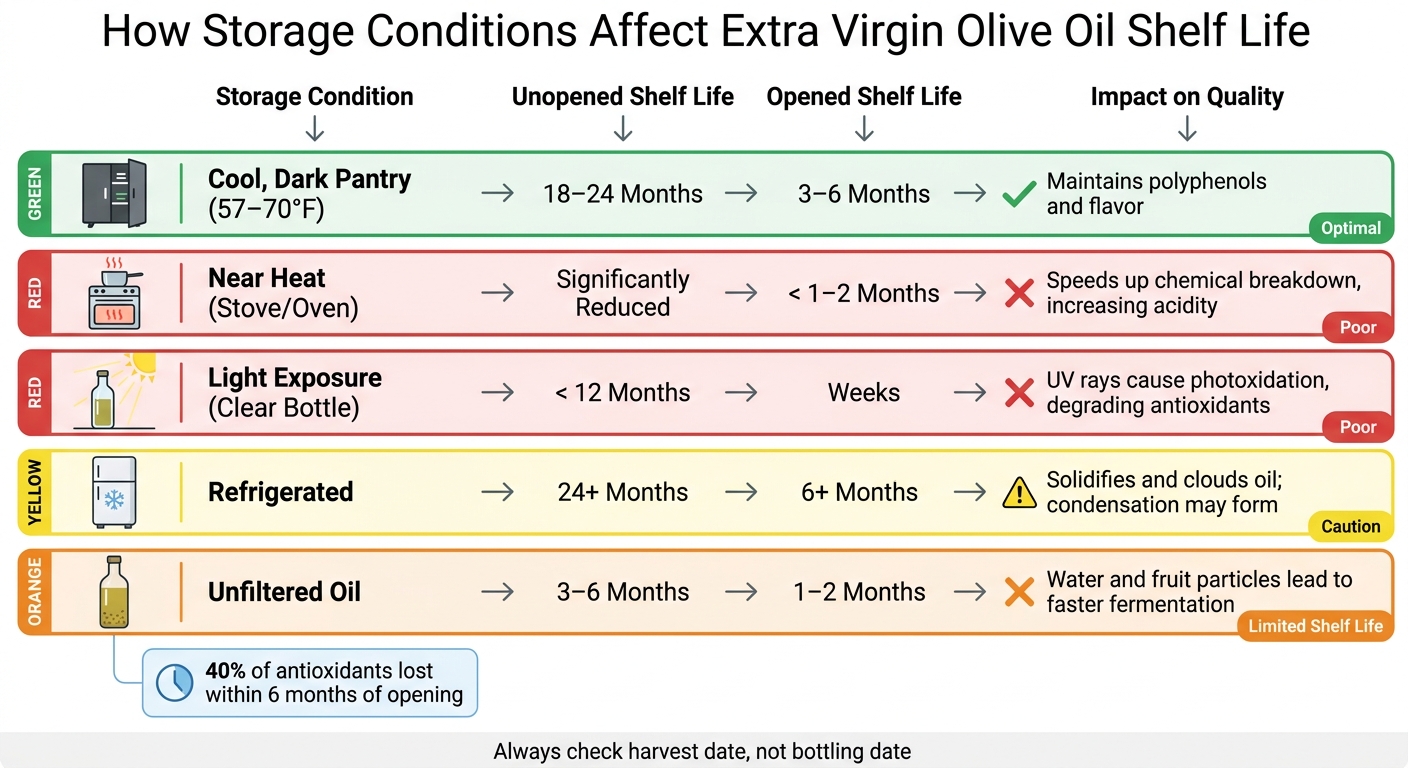
Extra Virgin Olive Oil Storage Conditions and Shelf Life Comparison
The clock starts ticking on extra virgin olive oil (EVOO) the moment it's harvested. High-quality, unopened EVOO can stay fresh for 18 to 24 months from the harvest date - not the bottling date - if stored correctly. Some experts suggest using it within 12 to 18 months to enjoy the best flavor and nutritional benefits. Once you open the bottle, though, the timeline shortens significantly. Opened bottles are at their peak for 30 to 60 days, though they might still be usable for up to 3 to 6 months.
Unopened vs. Opened Bottles
The difference between sealed and opened bottles is huge. An unopened bottle stored properly in a cool, dark pantry can retain its polyphenols and signature peppery flavor for nearly two years. But once you open it, air exposure speeds up its decline. This is why the harvest date matters more than the "best by" label - olive oil can sometimes sit in tanks for up to a year before bottling. Here's a closer look at how storage impacts both unopened and opened bottles.
Storage Condition Comparison
Proper storage is key to preserving EVOO's quality. Heat, light, and air are its biggest enemies. The table below highlights how different storage conditions affect shelf life:
| Storage Condition | Unopened Shelf Life | Opened Shelf Life | Impact on Quality |
|---|---|---|---|
| Cool, Dark Pantry (57–70°F) | 18–24 Months | 3–6 Months | Maintains polyphenols and flavor |
| Near Heat (Stove/Oven) | Significantly Reduced | < 1–2 Months | Speeds up chemical breakdown, increasing acidity |
| Light Exposure (Clear Bottle) | < 12 Months | Weeks | UV rays cause photoxidation, degrading antioxidants |
| Refrigerated | 24+ Months | 6+ Months | Solidifies and clouds oil; condensation may form |
| Unfiltered Oil | 3–6 Months | 1–2 Months | Water and fruit particles lead to faster fermentation |
Unfiltered EVOO is worth noting separately. It contains water and fruit particles that ferment quickly, cutting its shelf life down to just 3 to 6 months. If you love its rustic charm, make sure to use it up quickly.
What Causes Extra Virgin Olive Oil to Spoil?
Extra virgin olive oil (EVOO) can spoil due to oxidation triggered by environmental factors. To maintain its quality, it’s important to understand how heat, light, air exposure, and even the oil’s inherent properties contribute to this process.
Heat, Light, and Air Exposure
Heat, light, and air are major culprits in speeding up oxidation. Among these, light is especially harmful. UV rays cause photo-oxidation, which breaks down the beneficial compounds in EVOO. For example, an April 2025 study revealed that amber bottles exposed to light reached a peroxide value of 56.7 meq O2/kg - almost three times the legal limit - within eight weeks. In contrast, oils stored in darkness stayed within safe limits.
"Light is one of olive oil's biggest enemies." - Bill's Premium Olive Oil
Air exposure is another factor. Once a bottle is opened, oxygen reacts with the unsaturated fats in the oil, forming hydroperoxides and peroxides, which lead to rancidity. The larger the airspace in the bottle, the faster this process occurs. Heat further exacerbates the issue by accelerating these chemical reactions. This is why storing EVOO near heat sources, like stoves or ovens, can drastically shorten its shelf life.
How Oil Quality Affects Longevity
The quality of the oil itself also plays a significant role in how long it lasts. High-quality EVOO, which is rich in polyphenols, tocopherols, and carotenoids, is naturally more resistant to oxidation. Oils made from early harvest olives tend to have higher concentrations of these protective compounds, helping them retain their flavor and health benefits for longer.
"The presence of pro-oxidant factors as chlorophylls, free fatty acids, and trace metals, can accelerate oxidation, while some minor components, as polyphenols, tocopherols, and carotenoids are known to counteract these oxidative processes." - European Food Research and Technology
The fatty acid composition of EVOO also matters. With 75% to 80% monounsaturated fats, it is more stable than oils rich in polyunsaturated fats. However, even monounsaturated fats are vulnerable to deterioration when exposed to heat, light, or air. Refined or "light" olive oils, which undergo a process that removes reactive compounds, can last longer - up to 18 to 24 months. However, this refining process also strips away much of the flavor and health benefits that make EVOO stand out.
How to Store Extra Virgin Olive Oil Properly
Keeping extra virgin olive oil (EVOO) fresh is all about proper storage. The way you store it directly affects its flavor, shelf life, and nutritional value. To keep your EVOO at its best, you need to protect it from heat, light, and oxygen.
Best Storage Temperature and Location
The ideal temperature for storing EVOO is between 55°F and 65°F (13°C to 18°C). A cool, dark pantry away from heat sources like stoves, ovens, and dishwashers is the perfect spot. Avoid refrigerating it - cold temperatures can change the oil's texture and lead to condensation, which might affect its quality over time.
Choosing the Right Container
The container you choose plays a big role in protecting the oil from light and air. Here’s a quick guide:
- Dark Glass Bottles: Green, brown, or black glass bottles help block harmful UV rays, making them great for daily use or finishing oils.
- Metal Tins and Stainless Steel Containers: These provide the best protection against light and air, making them ideal for bulk storage or long-term use.
- Clear Glass Bottles: These offer little protection from light and can lead to faster degradation, so they aren’t recommended.
- Plastic Containers: These may allow oxygen to seep in or even leach chemicals into the oil, making them a poor choice for storage.
| Container Type | Light Protection | Air Barrier | Best Use Case |
|---|---|---|---|
| Dark Glass | Good | Good | Daily use and finishing oils |
| Metal Tins | Excellent | Excellent | Bulk and long-term storage |
| Stainless Steel | Excellent | Excellent | Professional standard |
| Clear Glass | Poor | Good | Not recommended |
Reducing Air Contact
Once a bottle of EVOO is opened, oxygen starts to degrade the oil. To slow this process, always reseal the bottle tightly after each use. As the oil level drops, the air space inside the bottle increases, exposing more oil to oxygen. If you’re using large containers, transfer smaller amounts into an airtight bottle for daily use. Keep the main container sealed and stored in a cool, dark place. This simple step helps maintain the oil’s freshness for a longer time.
How to Tell if Your Extra Virgin Olive Oil Has Spoiled
Even with proper storage, extra virgin olive oil (EVOO) doesn’t last forever. Over time, it starts to lose its flavor and health benefits, even under ideal conditions. Knowing how to spot the signs of spoilage can help you decide when it’s time to replace your bottle.
Identifying Rancid Oil
Your senses are your best tools for detecting rancid EVOO. Fresh EVOO typically has a vibrant, grassy, and fruity aroma, often compared to fresh herbs. On the other hand, spoiled oil gives off a waxy smell that might remind you of crayons, glue, old cardboard, or even stale nuts. As Emily Lichty from Allrecipes explains:
"If you feel like you are cooking with school supplies instead of vegetable oil, it's time to find a new bottle."
To test your oil, warm a tablespoon in your hand for 20–30 seconds and then take a small sip while drawing in air. Fresh oil should have a sharp, peppery bite in the throat, which indicates the presence of polyphenols. Spoiled oil, however, will taste dull, greasy, or metallic, lacking that distinctive peppery finish. It may also feel heavier or leave a sticky residue in your mouth.
While appearance isn’t always a reliable sign, unexplained cloudiness or sediment at room temperature can be a warning. Keep in mind that cloudiness in the refrigerator is normal and doesn’t mean the oil has gone bad.
Uses for Expired Oil
If your EVOO has spoiled, don’t pour it down the drain - it’s better to repurpose it. Though it’s no longer suitable for cooking, rancid oil can still be useful for various household tasks. Here are some ideas:
- Use it as a natural wood polish for cutting boards or furniture.
- Condition leather items like shoes and bags.
- Lubricate squeaky door hinges.
- Remove sticky label residue.
If repurposing isn’t an option, let the oil solidify in the refrigerator before scraping it into a sealed container for disposal. Alternatively, you can take it to a local cooking oil recycling center. This way, you can dispose of it responsibly without harming your plumbing or the environment.
Big Horn Olive Oil's Approach to Freshness
When it comes to olive oil, freshness isn’t just a nice-to-have - it’s essential. Big Horn Olive Oil takes this seriously, using precise methods to ensure their oils remain fresh and flavorful for as long as possible.
Fresh Harvest and Cold-Pressing
Big Horn Olive Oil ensures their products are delivered to you within three months of harvest. Why is this quick turnaround so important? Olive oil expert Erica Booth explains:
"Olive oil begins degrading the moment it's pressed. Oleocanthal, hydroxytyrosol, and other beneficial compounds that make extra virgin olive oil special start breaking down immediately".
To combat this, Big Horn Olive Oil cold-presses olives like Picual and Coratina within just two hours of harvest. This process uses mechanical extraction without heat or chemicals, preserving flavor and helping the oil maintain its quality. By following these steps, they align with best practices for keeping extra virgin olive oil (EVOO) at its best.
High Polyphenol Content
Fresh harvesting is just the start. Big Horn Olive Oil’s cold-pressing technique also helps retain high levels of polyphenols - antioxidants like Oleuropein and Hydroxytyrosol. These compounds are key to protecting the oil from oxidation, which not only keeps it fresh longer but also gives it that distinctive peppery kick.
Thanks to these antioxidants, Big Horn Olive Oil can maintain peak quality for 18 to 24 months when unopened and stored correctly. That’s a big advantage over refined oils, which often turn rancid within a year [3, 8]. It’s this careful attention to detail that sets their EVOO apart.
Conclusion
Knowing the shelf life of extra virgin olive oil (EVOO) can help you make smarter choices when buying and storing it. EVOO is a perishable product that starts to degrade as soon as the olives are harvested.
When stored unopened in a cool, dark place at temperatures between 57°F and 70°F, high-quality EVOO can last for about 18 to 24 months from the harvest date. However, once opened, it’s best to use it within 30 to 60 days. Keep in mind that an open bottle can lose up to 40% of its polyphenols within six months.
To protect your oil, choose dark glass bottles or tins that block UV light, and always seal the cap tightly after use. Avoid placing the bottle near heat sources like your stove or the top of your refrigerator.
For the freshest oil, look for a harvest date on the label. Brands like Big Horn Olive Oil ensure freshness by delivering oil within three months of harvest and cold-pressing olives within two hours of picking, preserving the polyphenols that contribute to its longevity.
FAQs
Does “best by” matter, or should I rely on the harvest date?
The harvest date plays a much bigger role than the 'best by' date when it comes to judging the freshness and quality of extra virgin olive oil (EVOO). Since EVOO is a fresh product, it naturally loses its quality over time, no matter what the label says. Choosing oils with a recent harvest date is the best way to enjoy peak flavor and get the most health benefits.
Should I refrigerate extra virgin olive oil to make it last longer?
No, you shouldn't refrigerate extra virgin olive oil. Doing so can make the oil solidify and appear cloudy, which doesn't affect its safety but can alter its texture and usability. Instead, keep it in a cool, dark place to maintain its quality. When stored correctly, unopened bottles usually last between 12 and 24 months.
Can I still cook with EVOO that smells slightly off?
It’s a good idea to avoid cooking with extra virgin olive oil (EVOO) that has a slightly off smell. This could be a sign of oxidation or spoilage, which can affect both the taste and the quality of the oil.