

Tadla-Azilal Olive Oil: Key Characteristics
Tadla-Azilal olive oil stands out for its quality, rooted in Morocco's central region. This oil is crafted primarily from the Moroccan Picholine olive, cultivated in a Mediterranean climate with fertile soils. Key features include:
- High Oleic Acid Content (72–78%): Enhances stability and flavor.
- Rich in Antioxidants: Polyphenols (400–600 mg/kg) and tocopherols (200–300 mg/kg) contribute to health benefits and shelf life.
- Low Acidity and Peroxide Levels: Ensures freshness and meets extra virgin standards.
- Cold Extraction Process: Maintains quality by processing olives within 24 hours of harvest at temperatures below 77°F (25°C).
- Geographical Indication Certification: Guarantees origin and authenticity.
The combination of ideal growing conditions, precise cultivation methods, and rigorous quality standards makes this olive oil highly sought after in global markets.
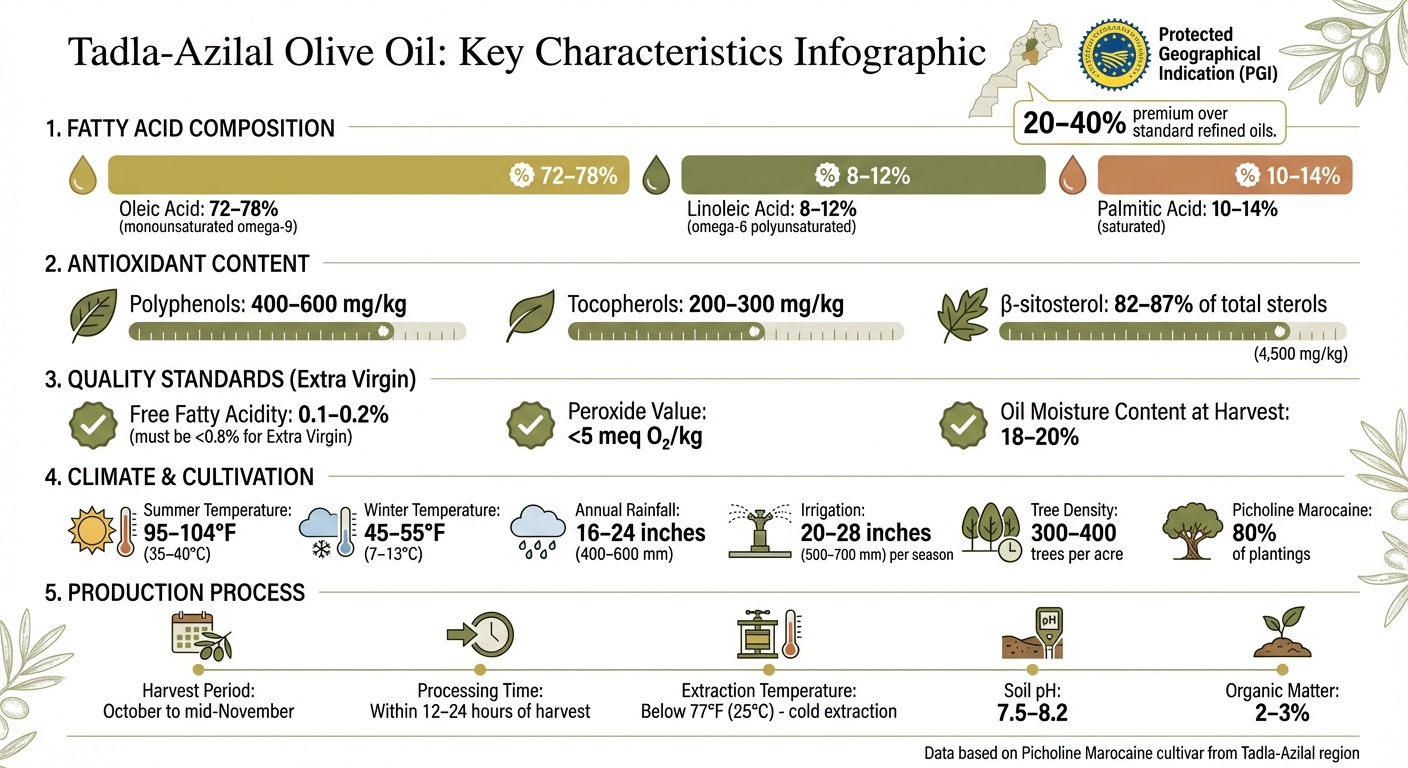
Tadla-Azilal Olive Oil Chemical Composition and Quality Metrics
Regional Factors Affecting Tadla-Azilal Olive Oil
Climate and Soil Composition
The Tadla-Azilal region of central Morocco thrives under a Mediterranean climate, ideal for olive cultivation. Summers are typically hot and dry, with temperatures ranging between 95–104°F (35–40°C), while winters are mild and wet, averaging 45–55°F (7–13°C). The area receives 16–24 inches (400–600 mm) of rainfall annually, mostly concentrated in the winter months. Adding to this, Morocco's largest irrigation network spans 346,000 acres (140,000 hectares), ensuring a reliable water supply for olive groves.
This climate plays a direct role in shaping the olive oil's composition. The consistent summer heat encourages oleic acid levels of 70–80% of fatty acids, which contributes to the oil's fruity flavor and extended shelf life. At the same time, the region's significant day-to-night temperature shifts of 20–30°F (11–17°C) slow the ripening process. This delay allows polyphenol content to reach up to 500 mg/kg, giving the oil its signature peppery and bitter notes.
The soil is another key factor in the oil's distinctive qualities. Fertile alluvial loams and clay-loams from the Tensift and Oum Er-Rbia river basins dominate the region. These soils, with a pH of 7.5 to 8.2 and organic matter content of 2–3%, provide excellent drainage and nutrients. This combination supports strong root systems, enhancing antioxidant levels like tocopherols (200–300 mg/kg) and imparting subtle green apple aromas. Additionally, the calcium-rich soil composition reduces oxidation risks, further extending the oil's shelf life.
Together, these natural factors set the stage for producing olive oil with a distinctive chemical and sensory profile, further refined by careful cultivation and harvesting practices.
Cultivation and Harvesting Methods
Farmers in Tadla-Azilal build on the region's natural advantages with meticulous cultivation and harvesting methods designed to maximize quality. Many olive groves utilize drip irrigation systems, delivering 20–28 inches (500–700 mm) of water per season. This controlled irrigation supports high-density orchards with 300–400 trees per acre, reducing tree stress and preserving volatile compounds that contribute to the oil's herbaceous aromas. As a result, acidity levels are kept below 0.3%, meeting extra virgin olive oil standards.
The region's olive production is dominated by the Picholine Marocaine cultivar, which makes up 80% of the plantings. This variety thrives in the area’s calcareous clay-loam soils, achieving oleic acid levels of 72–78% and sterol content like β-sitosterol at 4,500 mg/kg, both of which improve oxidative stability.
Harvesting takes place from October to mid-November, timed to capture olives at 18–20% oil moisture content. Farmers use both manual and mechanical methods to minimize bruising. This early harvest ensures high polyphenol levels (400–600 mg/kg) and keeps peroxide values below 5 meq O₂/kg, indicators of freshness and quality. The olives are pressed within 12–24 hours using cold extraction techniques at temperatures below 77°F (25°C). This process reduces free fatty acidity to 0.1–0.2% and boosts antioxidant levels by 20–30% compared to delayed processing.
These practices, combined with the region's natural conditions, result in olive oil of exceptional quality, distinguished by its robust flavor, low acidity, and high antioxidant content.
sbb-itb-4066b8e
How Traditional Moroccan Olive Oil Is Made 🇲🇦 | 4K
Chemical Composition of Tadla-Azilal Olive Oil
The unique cultivation methods of the Tadla-Azilal region directly influence the oil's chemical composition, reinforcing its reputation for high quality.
Fatty Acid Composition
The fatty acid makeup of Tadla-Azilal olive oil is a key indicator of its quality. Oleic acid, a monounsaturated omega-9 fatty acid, makes up 72–78% of the total fatty acids, enhancing the oil's oxidative stability. Linoleic acid, an omega-6 polyunsaturated fatty acid, accounts for 8–12%, ensuring the oil retains its fluidity. Meanwhile, palmitic acid, a saturated fatty acid, represents 10–14% of the profile, contributing to its texture. This well-balanced composition not only keeps the oil fluid at room temperature but also ensures stability when used in moderate cooking. These ratios also play a critical role in forming a distinctive triacylglycerol (TAG) profile, which helps confirm the oil's regional origin.
Triacylglycerol (TAG) Profiles
The triacylglycerol (TAG) profile is another defining feature of Tadla-Azilal olive oil. TAGs make up about 98% of the total weight of olive oil. In the case of Picholine Marocaine olives from this region, the TAG profile serves as a chemical "fingerprint" that supports geographical identification. Researchers have identified 21 unique TAG species in these oils, with their distribution varying depending on the production area. High-Performance Liquid Chromatography (HPLC) is used to analyze these profiles, helping verify the oil's origin. This precise TAG composition also supports Morocco's Geographic Indication labeling system, ensuring authenticity.
Sterol Content and Antioxidants
Sterols are another important element of Tadla-Azilal olive oil. β-sitosterol, which constitutes 82–87% of the total sterols, is a primary marker of the oil's purity. Other sterols, such as Δ5-avenasterol, campesterol, and stigmasterol, are also present, with campesterol and stigmasterol levels kept below the 4% standard limit. Additionally, triterpene dialcohols like erythrodiol and uvaol contribute to the oil's unique profile. These components work together to form a natural antioxidant network, which helps protect the oil from oxidation and extends its shelf life.
Quality Classification and Standards
Tadla-Azilal olive oil stands out not just for its chemical composition but also for the rigorous testing it undergoes to meet international quality standards. These evaluations align with the guidelines set by the IOC, EU, and USDA, ensuring the oil's exceptional quality is consistently verified through both scientific and sensory methods.
Acidity and Peroxide Levels
One of the primary indicators of olive oil quality is its free fatty acid content, expressed as oleic acid. For an oil to qualify as Extra Virgin, it must have less than 0.8 grams of free fatty acids per 100 grams. Virgin Olive Oil, on the other hand, allows up to 2.0 grams per 100 grams. In addition to acidity, laboratories measure peroxide values and conduct ultraviolet spectrophotometric analyses to evaluate oxidation levels. These tests are performed under ISO 17025 standards, ensuring the oils meet the strictest quality requirements. These methods help confirm that only oils produced under optimal conditions achieve the highest grades.
Sensory Characteristics
While chemical testing is critical, it’s not the whole story. Sensory evaluation by trained panels plays a crucial role in determining olive oil quality. Following IOC protocols, these panels assess the oil’s flavor, aroma, and any potential defects. To earn the Extra Virgin label, an oil must have a defect median of zero and a fruitiness median greater than zero. Virgin Olive Oil can have minor imperfections, with a defect median ranging from 0 to 2.5 under USDA standards, or up to 3.5 under IOC guidelines.
Defects like rancidity, fustiness, and mustiness - 12 recognized issues in total - can disqualify an oil from being labeled as Extra Virgin. Fruitiness, reflecting the fresh aroma of olives, is a non-negotiable quality marker. Oils with a defect median above 2.5 or lacking fruitiness are classified as Lampante olive oil, which cannot be consumed directly.
Through these comprehensive benchmarks, Tadla-Azilal olive oil consistently achieves international recognition for its quality, blending scientific precision with sensory excellence to meet the highest global standards.
Conclusion
Tadla-Azilal olive oil stands out as a top-tier product, thanks to the region's natural advantages and strict production standards. The semi-arid climate and distinct soil of the Atlas Mountains foothills create perfect conditions for growing the Picholine Marocaine olive - a variety celebrated for its rich flavor and high yield.
What truly sets this oil apart is its composition. It boasts a high oleic acid content along with notable levels of polyphenols and tocopherols, which provide strong antioxidant properties and related health benefits.
The production process is equally meticulous. Cold extraction at temperatures below 81°F (27°C) and processing olives within 24 hours of harvest ensure the oil retains its quality and low acidity. These practices are key to maintaining the Protected Geographical Indication (PGI) status, which guarantees the authenticity of the Tadla-Azilal name.
Such careful production methods also shape the oil’s market appeal. Early harvesting, typically in October and November, results in oils with higher polyphenol levels, though at the cost of lower yields. This focus on quality allows producers to sell Tadla-Azilal olive oil at a 20%–40% premium over standard refined oils in major markets like the European Union and North America, where certifications are essential for premium placement.
FAQs
How can I verify Tadla-Azilal olive oil is authentic PGI?
To ensure Tadla-Azilal olive oil is genuine and holds its Protected Geographical Indication (PGI) status, check for official certification labels or documents issued by recognized authorities. These certifications confirm the oil adheres to strict regional standards for both origin and quality, providing assurance of its authenticity.
What do high polyphenols mean for taste and use?
High levels of polyphenols in olive oil mean it’s packed with antioxidants. These not only enhance the oil's flavor - giving it a more complex and slightly bitter taste - but also bring added health perks. Plus, they improve the oil’s stability, helping it last longer and handle cooking or storage better.
Why do low acidity and peroxide numbers matter?
Low acidity and peroxide levels are crucial markers of high-quality olive oil. These values indicate proper processing and freshness, showing that the oil has undergone minimal oxidation. This not only improves its chemical stability but also enhances its flavor and aroma. Keeping these numbers low helps retain the oil's overall quality and its potential health benefits.