

Tortas de Aceite: Spanish Olive Oil Crackers
Tortas de Aceite are thin, crisp crackers from Andalusia, Spain, made with extra virgin olive oil, wheat flour, and aromatic spices like anise and sesame. These crackers balance a light sweetness with Mediterranean flavors and have been enjoyed for centuries. First referenced in 16th-century literature, they gained commercial popularity in 1910 thanks to Inés Rosales, who turned a family recipe into a global brand. Today, her factory produces over 120,000 tortas daily, relying on hand-rolling techniques passed down through generations.
Key highlights:
- Main ingredient: High-quality extra virgin olive oil (at least 1/3 of the recipe), which adds flavor, texture, and acts as a natural preservative.
- Flavor profile: Subtle sweetness with notes of anise, sesame, and sometimes orange zest or blossom water.
- Cultural roots: Deeply tied to Andalusian heritage, with mentions in classic Spanish literature.
- Preparation: Hand-rolled to near transparency, brushed with egg whites, and topped with sugar for a caramelized finish.
These crackers pair perfectly with coffee, tea, cheese, or even sparkling wine. Proper storage in an airtight container ensures they remain crispy and flavorful for up to five days.
Spanish Olive Oil Crisp Recipe - TORTAS DE ACEITE
Key Ingredients for Tortas de Aceite
Crafting authentic tortas de aceite hinges on a few simple yet high-quality ingredients. Each one contributes to the crackers' signature crunch, subtle sweetness, and aromatic flavor, turning everyday pantry staples into something extraordinary.
Choosing the Right Olive Oil
The foundation of tortas de aceite is Spanish extra virgin olive oil, known for its ability to create a soft, fragrant dough with a natural shine and a faint green tint. Its unrefined nature brings out the best in the recipe.
"Extra virgin olive oil isn't just a flavor booster; it plays a fundamental role in the Mediterranean diet, known for its numerous health benefits." – Fernando, Author, The Spanish Apron
For the best results, consider using ultra-premium EVOO from brands like Big Horn Olive Oil. These oils often have fruity and peppery notes that complement the other ingredients beautifully. After baking, a light brush of olive oil on the tortas adds a touch of richness and enhances their golden appearance.
Spices and Flavorings
The aromatic blend of spices is what gives tortas de aceite their distinctive character. Anise and fennel seeds are key players, adding a licorice-like sweetness and warm herbal undertones. Sesame seeds contribute a slight nuttiness and a satisfying crunch. To maximize their flavor, gently crush the seeds with a mortar and pestle to release their essential oils.
Citrus elements bring brightness to the dough. Grated orange zest is a common addition, while a splash of orange blossom water provides a delicate floral aroma, a hallmark of Southern Spanish pastries. This combination of spices and citrus has been a staple of the recipe since the early 20th century.
"The fruity, peppery flavor of olive oil is complemented by fragrant orange zest and fennel seeds; sesame and cinnamon are a delicious pairing in the variation." – Hisham Ali Hassan, Recipe Developer, Milk Street
For the finishing touch, use raw sugar or sugar-in-the-raw instead of standard granulated sugar. This creates the signature frosty, caramelized topping that makes these crackers so irresistible.
Sugar and Leavening Agents
To achieve the classic light and flaky texture, yeast is used as the primary leavening agent. It helps create a crisp, airy cracker without making it overly bready. A small amount of sugar is essential for activating the yeast in warm water (about 100°F). Sugar also plays a dual role: a little is added to the dough for a hint of sweetness, while a generous sprinkle on top forms a crunchy, caramelized crust when combined with an egg white wash.
The dough needs time to rise - anywhere from 45 minutes to 2 hours - until it doubles in size. Rolling the dough thinly, to about 4 to 6 inches in diameter, is crucial. This near-translucent thinness ensures the crackers bake up crisp and delicate, allowing the spices to meld seamlessly without compromising their structure during baking.
How to Make Tortas de Aceite
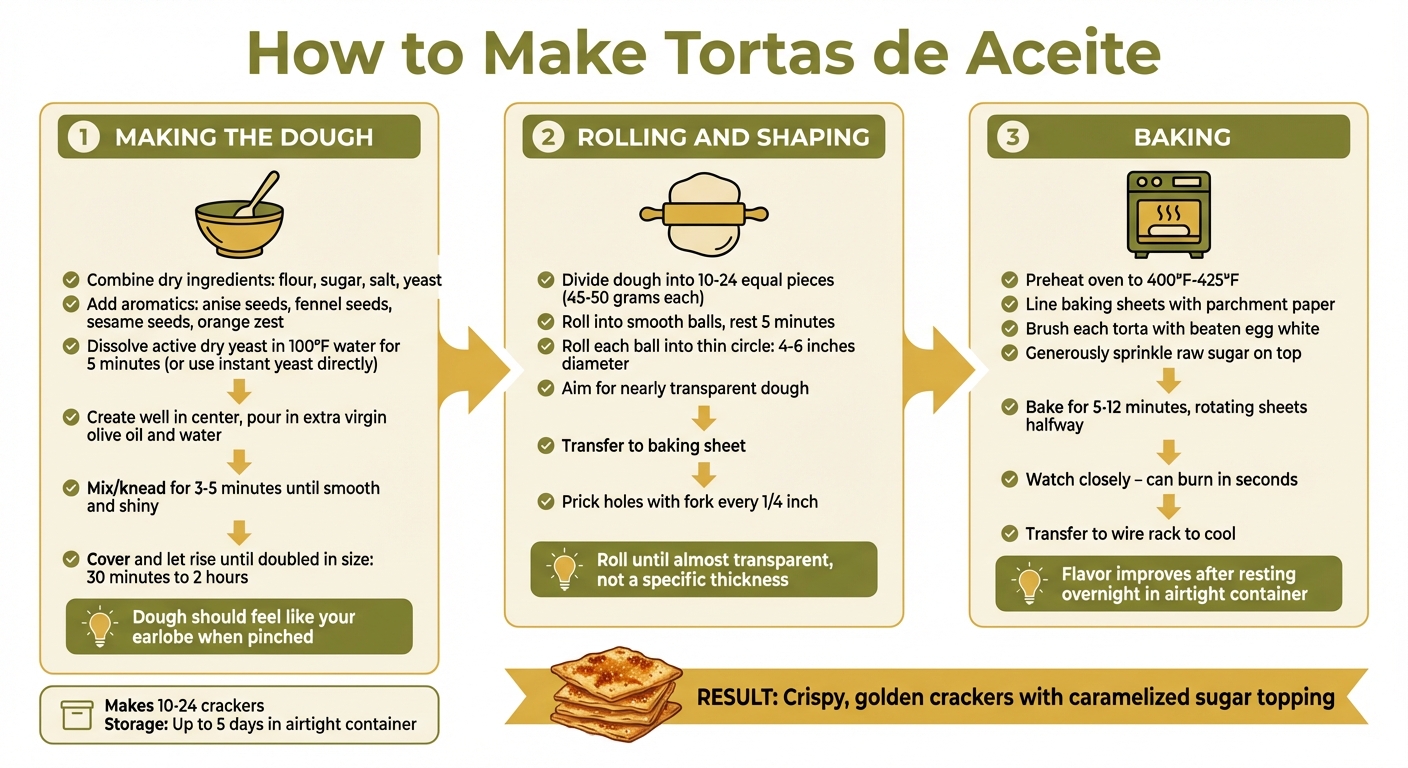
How to Make Tortas de Aceite: Step-by-Step Guide
Ready to bring the flavors of Spain into your kitchen? Here's how you can make these delicate olive oil crackers step by step.
Making the Dough
Begin by combining your dry ingredients in a large bowl or the bowl of a stand mixer: flour, sugar, salt, and, if using, yeast. Add your aromatics - anise seeds, fennel seeds, sesame seeds, and orange zest - for that classic flavor. If you're working with active dry yeast, dissolve it in 100°F water and let it sit for 5 minutes until it turns frothy. Instant yeast, on the other hand, can go straight into the mix.
Next, create a well in the center of your dry ingredients. Gradually pour in the extra virgin olive oil and water. Using high-quality olive oil here is key - it enhances the flavor and gives the crackers their signature crispness. Mix everything on low speed or knead by hand for about 3–5 minutes until the dough is smooth and soft. The dough will have a shiny look, thanks to the olive oil. If it feels sticky, sprinkle in a bit more flour, up to 1 cup, until it's easier to handle.
"You're looking for a texture that feels like your earlobe when you pinch a bit of it." – Molly Watson, Food Writer and Cookbook Author
Once the dough is ready, cover it and let it rise at room temperature until it doubles in size, which can take anywhere from 30 minutes to 2 hours. If you'd like to try a sourdough version, use 100 grams of active starter, reduce the water by 1/4 cup, and extend the proofing time to 3–4 hours.
Rolling and Shaping
When the dough has doubled, divide it into 10–24 equal pieces, each weighing about 45–50 grams. Roll each piece into a smooth ball and let them rest for 5 minutes. This short rest relaxes the gluten, making the dough easier to roll out.
Now, roll each ball into a thin circle, about 4 to 6 inches in diameter. Aim for a nearly transparent dough.
"It's not a specific thickness, such as 1/16 or 1/8 inch, that you want to look for with the dough. Rather, it's when the dough becomes so thin as to be almost transparent." – David Leite, Founder, Leite's Culinaria
Thanks to the olive oil, the dough is easy to work with, so you likely won't need extra flour for rolling. Some bakers like to roll the dough over raw sugar, embedding tiny crystals into the surface for added texture and sweetness. Once rolled out, transfer each circle to a baking sheet and use a fork to prick holes every 1/4 inch. This helps release air during baking.
Baking Instructions
Preheat your oven to 400°F–425°F and prepare your baking sheets. Line them with parchment paper or lightly dust them with confectioners' sugar to keep the tortas from sticking.
Before baking, brush each torta with beaten egg white and generously sprinkle raw sugar on top. This creates the signature caramelized crust. Bake for 5 to 12 minutes, rotating the sheets halfway through and swapping their positions if needed for even browning. Keep a close eye on them - they can go from golden to burnt in seconds.
"Watch the tortas closely as they can burn in seconds." – David Leite, Founder, Leite's Culinaria
Once baked, transfer the tortas to a wire rack to cool. Their flavor and texture improve after resting overnight in an airtight container, making them even better the next day. Enjoy!
sbb-itb-4066b8e
Serving, Pairing, and Storage
How to Serve Tortas de Aceite
Tortas de aceite are best served at room temperature or slightly warmed. This enhances the flavors of olive oil and spices, making them even more enjoyable. For a classic Spanish touch, pair them with morning coffee or afternoon tea. These crisp, slightly sweet crackers are a perfect companion to hot beverages and are often enjoyed as breakfast or a mid-afternoon snack, known as merienda.
For a more elevated approach, consider adding them to a tapas spread. Pair them with aged Manchego or Gouda cheese, olives, and cured meats. The salty richness of these accompaniments beautifully balances the tortas' sweetness. As James Beard Award-winning author David Leite puts it:
"They're oh so lovely with sparkling wine and go uncannily well with salty nibbly things such as olives and hard cheeses".
For dessert lovers, these crackers can double as a sweet treat. Try topping one with a scoop of vanilla ice cream or spreading goat cheese and honey for a quick gourmet snack. These serving ideas honor the Andalusian tradition of enjoying tortas de aceite while offering creative ways to savor them.
Pairing with Big Horn Olive Oil Products
The unique flavors of tortas de aceite - anise, sesame, and orange - pair wonderfully with Big Horn Olive Oil's infused olive oils and balsamic vinegars. To highlight their Mediterranean character, drizzle citrus-infused olive oil over the crackers. Or, for a more indulgent experience, serve them with a small dish of Traditional 18-Year Aged Dark Balsamic Vinegar for dipping. The sweet-tart complexity of the balsamic enhances the crackers' subtle sweetness, creating a perfect flavor balance.
For a cheese board with flair, pair tortas with aged cheeses and include a tasting of Big Horn's Estate Reserve Ultra Premium EVOO. The richness of quality olive oil elevates the simplest ingredients, making every bite memorable.
How to Store Tortas de Aceite
Proper storage is key to preserving the signature crunch of tortas de aceite. Once cooled completely on a wire rack, place them in an airtight container to keep moisture out. This ensures they stay fresh for up to five days. For added protection, wrap individual tortas in wax paper before sealing them in a zip-top bag. Store the container in a cool, dry spot away from sunlight to prevent the olive oil from going rancid or the sugar topping from melting.
Interestingly, the flavor and texture improve after resting overnight, so there's no need to rush through them. Letting them sit allows the flavors to deepen, making them even more enjoyable the next day.
Conclusion
Making tortas de aceite at home is a delicious way to connect with centuries of Spanish tradition. These crispy crackers show how a few simple, high-quality ingredients - especially extra-virgin olive oil - can create something truly special. As Fernando from The Spanish Apron puts it, "Extra virgin olive oil isn't just a flavor booster; it plays a fundamental role in the Mediterranean diet... and adds unmistakable richness to these tortas".
With at least one-third EVOO in the recipe, choosing a premium option like Big Horn Olive Oil's Ultra Premium EVOO adds that fruity, peppery touch and delicate texture that make these crackers stand out.
To get it just right, focus on the details: roll the dough paper-thin for optimal crispness, keep a close eye on the oven during the last few minutes, and don't skip pricking the dough with a fork. These small steps elevate your tortas from good to exceptional.
FAQs
Can I make tortas de aceite without yeast?
Yes, it’s possible to make tortas de aceite without yeast. While yeast is often used in traditional recipes to achieve a crisp texture, some versions rely on baking powder or skip leavening agents entirely. These approaches still produce a tasty, flat cracker with a slightly altered texture. Regardless of the method, olive oil and flour are essential for that classic flavor and crunch.
Why did my tortas turn out chewy instead of crisp?
Chewy tortas often result from too much moisture or not baking them long enough. To get that perfect crisp texture, make sure to roll the dough very thin and bake it at a high temperature - around 400–450°F. This helps evaporate moisture properly during baking. Keep in mind, things like high humidity or adding too much olive oil to the dough can also lead to chewiness. Tweaking these factors can make all the difference in achieving the crispness you’re aiming for.
Can I freeze tortas de aceite dough or baked tortas?
Freezing tortas de aceite dough or the baked tortas isn't the best idea. The dough's elasticity means it could shrink, and freezing might mess with its texture. As for the baked tortas, freezing could take away their crispness. A better approach? Keep the dough or baked tortas in airtight containers. Store them at room temperature or in the refrigerator to maintain their freshness for a short period.