

Traceability in Olive Oil: Benefits for Consumers
When you buy olive oil, how can you be sure it's pure and high-quality? Traceability provides a clear record of the oil's journey - from the grove to your table. It helps verify labels like "extra virgin", ensures quality through lab tests, and combats fraud in an industry where up to 69% of imported oils fail to meet standards. Here’s what you need to know:
- What is Traceability? It's a system that tracks every step of olive oil production, from harvest to bottling, often accessible through QR codes or batch numbers.
- Why It Matters: It confirms the oil's origin, quality, and health properties while reducing fraud like mislabeling or blending with cheaper oils.
- How It Works: Tools like QR codes, online platforms, and blockchain technology provide detailed data, including harvest dates, chemical tests, and grove locations.
Traceability empowers you to make informed choices, ensuring your olive oil is pure, fresh, and worth the price.
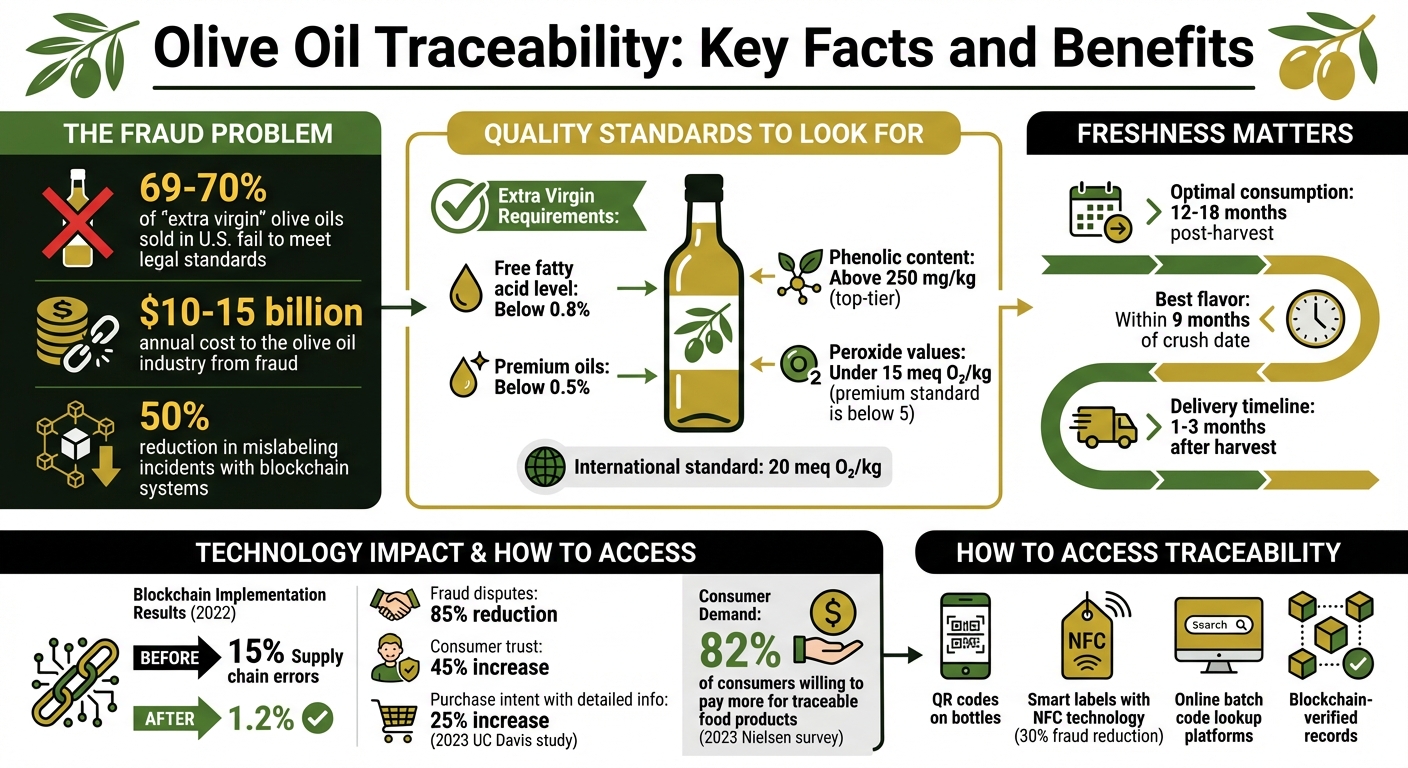
Olive Oil Traceability Benefits and Quality Standards Infographic
Main Benefits of Traceability for Consumers
Confirming Authenticity and Quality
Traceability ensures you know exactly what you're getting when you buy olive oil. For instance, a Certificate of Analysis (COA) linked to your bottle's batch number gives you access to lab-tested chemical data, proving the oil's authenticity. This is especially important since up to 70% of "extra virgin" olive oils sold in the U.S. fail to meet the legal standards for that label.
To qualify as extra virgin, olive oil must have a free fatty acid level below 0.8%. However, premium oils often go beyond this, maintaining levels below 0.5%. As O-Liv explains:
Certification acts as a guarantee for the consumer. It provides independent verification that the oil you are buying is what it says it is: real, unadulterated extra virgin olive oil. Think of it as a truth check for the product's purity, freshness, and nutritional value.
This verification system is a powerful tool against fraud and mislabeling.
Preventing Fraud and Mislabeling
Traceability brings clarity by connecting each bottle to detailed records about the olives used, where they were harvested, and how the oil was processed. This transparency helps eliminate deceptive practices, like blending older oils with fresh ones or mislabeling refined oils as extra virgin. For example, when a bottle specifies an olive variety like Koroneiki or Picual, it's a sign of tighter quality controls and more predictable nutritional profiles.
Verifying Health Properties
Traceability isn’t just about authenticity - it’s also about ensuring the health benefits of olive oil. Freshness is key, as Bill's Premium Olive Oil puts it:
Olive oil is freshly pressed fruit juice. Like any fresh product, it degrades over time.
Instead of relying on vague "best by" dates, traceable systems focus on the actual harvest date, ensuring the oil is consumed within the optimal 12–18 months post-harvest.
Traceable data also confirms that the oil meets high standards for phenolic compounds like oleocanthal and hydroxytyrosol, which contribute to its health benefits. For example, top-tier oils often have phenolic content above 250 mg/kg and peroxide values under 15 meq O₂/kg, far exceeding the international standard of 20. This means you’re not just trusting a label - you’re verifying the oil’s nutritional quality with hard data.
sbb-itb-4066b8e
How Consumers Can Access Traceability Data
QR Codes and Smart Labels
QR codes make it easy for consumers to dive into traceability data. By scanning the QR code on a bottle, you can access information like harvest dates, grove locations, producer details, and even lab results. For instance, a quick scan might pull up a map showing an olive farm in Tuscany, Italy, along with chemical tests confirming the oil's extra virgin quality.
Some producers take it a step further with smart labels powered by NFC (Near Field Communication) technology. These labels provide instant access to the entire supply chain journey. You might see detailed chemical analyses, such as polyphenol levels and peroxide values, or even videos of the harvest process and lab certificates. Certain apps linked to these labels go as far as offering GPS-tracked olive transport, which helps cut down fraud risks by as much as 30%.
With tools like these, consumers can view specifics like the estate location (whether in Spain, Italy, or elsewhere), the producer's name and certifications, milling dates, and batch-specific test results. Claims like "single estate" or "cold-pressed" can be verified through downloadable reports.
Beyond smart labels, online platforms provide another way to access this level of detail.
Online Platforms for Product Information
Many olive oil producers also offer online platforms where you can enter a bottle's batch code or lot number to unlock comprehensive traceability information. These platforms often feature interactive maps, audit reports, and historical records showing the oil's journey from grove to bottle.
The best platforms go even further, offering tools like batch-code searches, multilingual support, and downloadable lab certificates. These features make it easier to compare polyphenol content across batches or confirm PDO (Protected Designation of Origin) status. Big Horn Olive Oil, for example, uses its website (bhooc.com) to provide customers with detailed information about the sourcing, freshness, and quality tests of its Ultra Premium EVOO.
Additionally, apps like "Olive Oil Trace" bring even more transparency by offering GPS-mapped grove locations, real-time harvest updates, and sensory profile analyses. Blockchain-verified records back up these details, ensuring the authenticity of the products.
Big Horn Olive Oil: Traceability in Practice
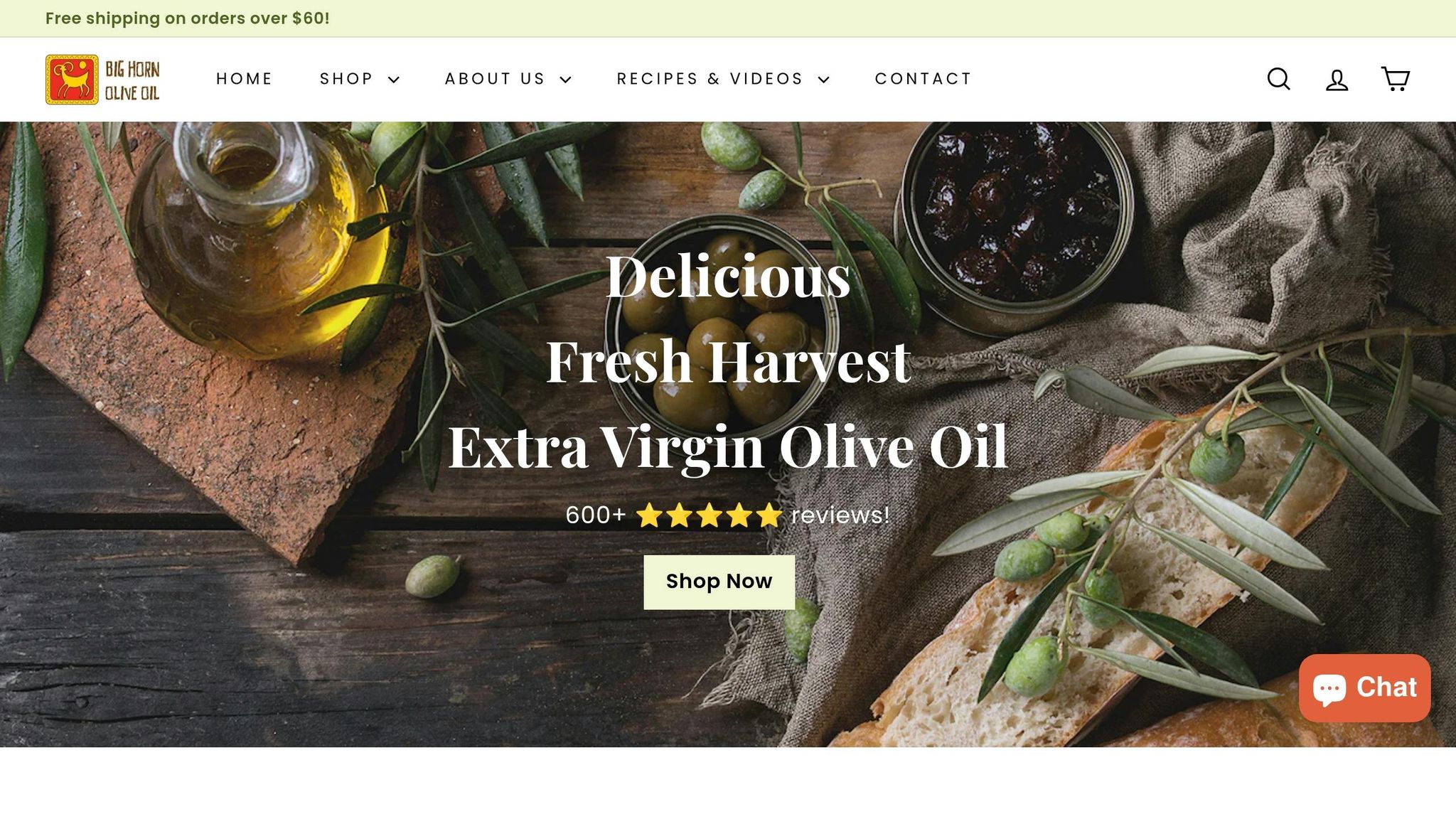
Traceability in Estate Reserve Ultra Premium EVOO
Big Horn Olive Oil takes pride in sourcing its Estate Reserve Ultra Premium EVOO from single-estate groves in Tuscany and Sicily. Detailed records are kept for growers, harvest dates, and olive varietals, with only the top 5% of harvests making the cut for this ultra-premium product.
Harvesting happens during a precise window - typically October to November - when olives are at their peak ripeness. Each batch is meticulously logged, and olives are cold-pressed within 4–6 hours of harvest at temperatures below 80°F. This ensures the preservation of polyphenol levels, which average over 500 mg/kg in these batches. Each press run is assigned a unique batch ID that links to harvest records, filtration details, and bottling data. After pressing, the oil is filtered and bottled in dark glass under a nitrogen flush to maintain freshness, then stored at around 60°F. Batch numbers and Certificates of Analysis confirm peroxide values below 5 meq/kg, documenting every step from harvest to bottling.
Products are delivered to customers within 1 to 3 months of harvest, with each bottle clearly marked with its crush date. Customers are encouraged to consume the oil within 9 months for the best flavor and quality. This level of transparency ensures that consumers receive a product that is not only fresh but also certified and traceable.
This rigorous approach guarantees the purity of the EVOO and reflects the company’s broader commitment to traceability in all its offerings.
Quality Control Across All Products
Big Horn Olive Oil extends its meticulous traceability practices to its entire product range. For both traditional and infused olive oils, lot-specific tracking is implemented. This system documents the origins of Modena-sourced bases and global blends, records the addition of natural essences, and ensures consistent flavor profiles through sensory evaluations.
The company’s balsamic vinegars from Modena, Italy, also undergo stringent traceability measures. These vinegars carry IGP/IGP DOP certifications, with detailed aging records that span 12 to 25 years in wooden barrels. Batch testing verifies acidity levels (6–8%) and proper density, while production logs include harvest maps, lab results, and third-party audit data to ensure compliance with IOOC standards.
In 2025, Big Horn Olive Oil achieved a 95% traceability compliance rate during audits. Additionally, its blockchain-integrated tracking pilot, launched in 2024, received a 98% customer satisfaction rating, with many customers citing enhanced trust in the purity of the products.
These practices not only reinforce the company’s dedication to quality but also highlight the benefits of traceability for consumers, making it easy to verify the authenticity and integrity of every product.
New Technologies Improving Traceability
Blockchain for Supply Chain Tracking
Blockchain technology is transforming supply chain transparency by creating a secure, unchangeable record of every step in the process, from harvest to bottling. Each transaction is logged in a decentralized digital ledger that consumers can verify, making any tampering immediately noticeable. This system not only enhances trust but also ensures accountability across the supply chain.
In 2022, companies like IBM Food Trust and Oracle collaborated with organizations such as Carapelli and Dcoop to implement blockchain solutions. The results were impressive: supply chain errors dropped from 15% to just 1.2%, fraud disputes decreased by 85%, and consumer trust saw a 45% boost. For example, IBM partnered with Carapelli to track 500,000 bottles of olive oil using data from 50 farms. Meanwhile, Oracle worked with Dcoop, the world's largest olive oil cooperative based in Spain, enabling consumers to trace 100,000 liters of extra virgin olive oil (EVOO) back to specific Andalusian groves. This included details like polyphenol levels exceeding 500 mg/kg.
By scanning a QR code on a blockchain-tracked bottle, consumers can access vital information such as the grove location, harvest date, and lab test results. This level of detail not only confirms certifications like PDO (Protected Designation of Origin) but also prevents the use of cheaper seed oils in adulteration. According to the International Olive Council, blockchain systems have reduced mislabeling incidents by up to 50%, giving buyers confidence that they’re purchasing authentic EVOO.
Digital Tracking Systems
Digital tracking systems take transparency a step further by using tools like RFID tags, IoT sensors, and cloud-based software to collect real-time data. These systems provide insights into key factors such as storage temperature (kept below 64°F to maintain quality), humidity levels, and GPS-tracked shipping routes.
For instance, AgriDigital's platform uses RFID tags on bottles and pallets to monitor olive oils from Australia and the Mediterranean, capturing detailed production data. In the U.S., California Olive Ranch employs GS1 standards with barcodes that link to a digital dashboard. This allows consumers to view critical details online, such as harvest dates and lab test results. These systems make it possible to verify essential quality markers like free fatty acid content (which must stay below 0.8% for authentic EVOO) and crush dates - information that traditional labels often lack.
A 2023 UC Davis study revealed that providing this level of detailed product information increased purchase intent by 25% among consumers. Beyond enhancing trust, digital tracking ensures quality by monitoring storage conditions and shipping timelines, so bottles reach customers within 1 to 3 months of harvest, retaining their full health benefits.
Conclusion
The traceability journey described earlier gives consumers access to verifiable information about the quality, origin, and ethical standards of their olive oil. Instead of relying on vague marketing claims, look for specifics like harvest dates, verified quality metrics, and a free fatty acid content below 0.8% - all essential indicators of genuine extra virgin olive oil. This level of transparency tackles fraud head-on, an issue that costs the olive oil industry $10–15 billion annually and affects up to 69% of imported olive oils sold in major U.S. retailers, according to a 2018 UC Davis study. Beyond ensuring product quality, traceability also highlights the oil's health benefits and ethical sourcing practices.
Traceability confirms the presence of beneficial compounds like oleocanthal, known for supporting heart health and reducing inflammation. It also ensures these health benefits are tied to sustainable practices, such as water conservation in drought-affected areas and adherence to fair labor standards. This empowers consumers to support producers who align with their values. In fact, a 2023 Nielsen survey revealed that 82% of consumers are willing to pay more for food products with traceable origins, reflecting the growing demand for transparency.
Big Horn Olive Oil stands out in this effort, offering Ultra Premium Extra Virgin Olive Oils with complete transparency. They provide detailed information on origins and harvest dates, along with batch-specific data to verify the quality from grove to bottle - continuing the practices emphasized throughout this guide.
"For the best tasting experience, we recommend consumption within 9 months of the olive oil crush date." - Big Horn Olive Oil
When you're shopping, prioritize brands that disclose crush dates, provide QR codes for batch-specific details, and share full harvest and testing information. This way, you ensure you're purchasing authentic, fresh olive oil packed with verified health benefits - not the diluted or mislabeled products that often fill conventional store shelves.
FAQs
What should I check after scanning an olive oil QR code?
When you scan the QR code on an olive oil bottle, you can access key details such as its origin, quality certifications, and the production process. You might also find information about testing or verification procedures. These insights help confirm the olive oil's authenticity, safety, and adherence to quality standards.
How can I tell if a Certificate of Analysis (COA) is legit?
To confirm a Certificate of Analysis (COA) is authentic, make sure it’s from an independent third-party lab that follows strict standards such as those set by IOC or COOC. The COA should cover both chemical analysis and sensory evaluation, providing clear and detailed results. These results should match the product’s origin and production specifics. Consistency and transparency in the information are key indicators of legitimacy.
What’s the best way to store olive oil after I buy it?
To keep olive oil at its best, store it in a cool, dark spot like a pantry or cupboard. Exposure to light, heat, and air can harm its flavor and nutrients, so it's important to avoid these. Opt for containers made of dark glass or metal to shield it from light, and ensure the bottle is tightly sealed to minimize oxidation.