

How to Use Olive Oil in Pastry Dough
Switching butter for olive oil in pastry dough can make your baking simpler and yield tender, flaky results. Instead of cutting in cold butter, you whisk olive oil into dry ingredients for a texture resembling coarse oatmeal. This method is quicker and still delivers excellent pastries. Use mild extra virgin olive oil for a subtle flavor that pairs well with sweet fillings.
Key Tips:
- Ingredients: 2 cups flour, ½ cup olive oil, ½ cup cold water, 1 egg, 1 tbsp white balsamic vinegar, 2 tsp baking powder, 1 tsp sea salt.
- Olive Oil Quality: Choose mild, high-quality extra virgin olive oil for better flavor and texture.
- Dough Prep: Mix olive oil into dry ingredients, then add liquids. Chill dough for at least 20 minutes before rolling.
- Pre-Baking: Bake crust at 350°F for 10 minutes to prevent sogginess with wet fillings.
This method works great for pies, tarts, and galettes, offering a flavorful and forgiving alternative to butter-based doughs.
How to make a flaky pastry with Extra Virgin Olive Oil
sbb-itb-4066b8e
Key Ingredients and Their Role in Pastry Dough
Creating olive oil pastry dough calls for a handful of key ingredients, each contributing to the texture and flavor of the final product. At its core, you’ll need 2 cups of all-purpose flour, which forms the structural base of the dough. To this, you’ll mix in ½ cup of mild extra virgin olive oil, ½ cup of cold water, 1 egg, 1 tablespoon of white balsamic vinegar, 2 teaspoons of baking powder, and 1 teaspoon of fine sea salt.
Here’s how these ingredients work together: The olive oil coats the flour, limiting gluten development and keeping the pastry tender instead of chewy. The egg enriches the dough and acts as a binder, while cold water hydrates the flour without making the dough too soft. White balsamic vinegar brings a slight acidity that tenderizes the crust and balances the flavors. Baking powder adds a bit of lift for a lighter texture, and sea salt sharpens the overall flavor profile.
Choosing the Right Olive Oil
The olive oil you choose can make or break your pastry. For sweet recipes like pies, galettes, or tarts, mild extra virgin olive oil is ideal, as it adds richness without overshadowing the flavors of fruit or custard fillings. If you want to take it up a notch, premium options like Big Horn Olive Oil’s Estate Reserve or Picual varieties are excellent choices. These oils are cold-pressed within hours of harvesting and delivered fresh, ensuring you’re baking with a high-quality fat that enhances both texture and taste. Once you’ve selected your olive oil, sticking to the proper ratios is key for a well-balanced dough.
Ingredient Ratios for Proper Dough
To achieve a balanced dough for a 10-inch crust, stick to this tried-and-true ratio: 2 cups of flour, ½ cup of olive oil, and ½ cup of cold water. This combination provides just the right amount of fat for a tender crust while keeping the dough manageable and not overly greasy. The egg and vinegar contribute moisture and binding power without making the dough sticky, while the baking powder and salt ensure the crust is light and flavorful. This careful balance of ingredients lays the groundwork for the next steps in mixing and resting the dough.
Step-by-Step Guide to Making Olive Oil Pastry Dough
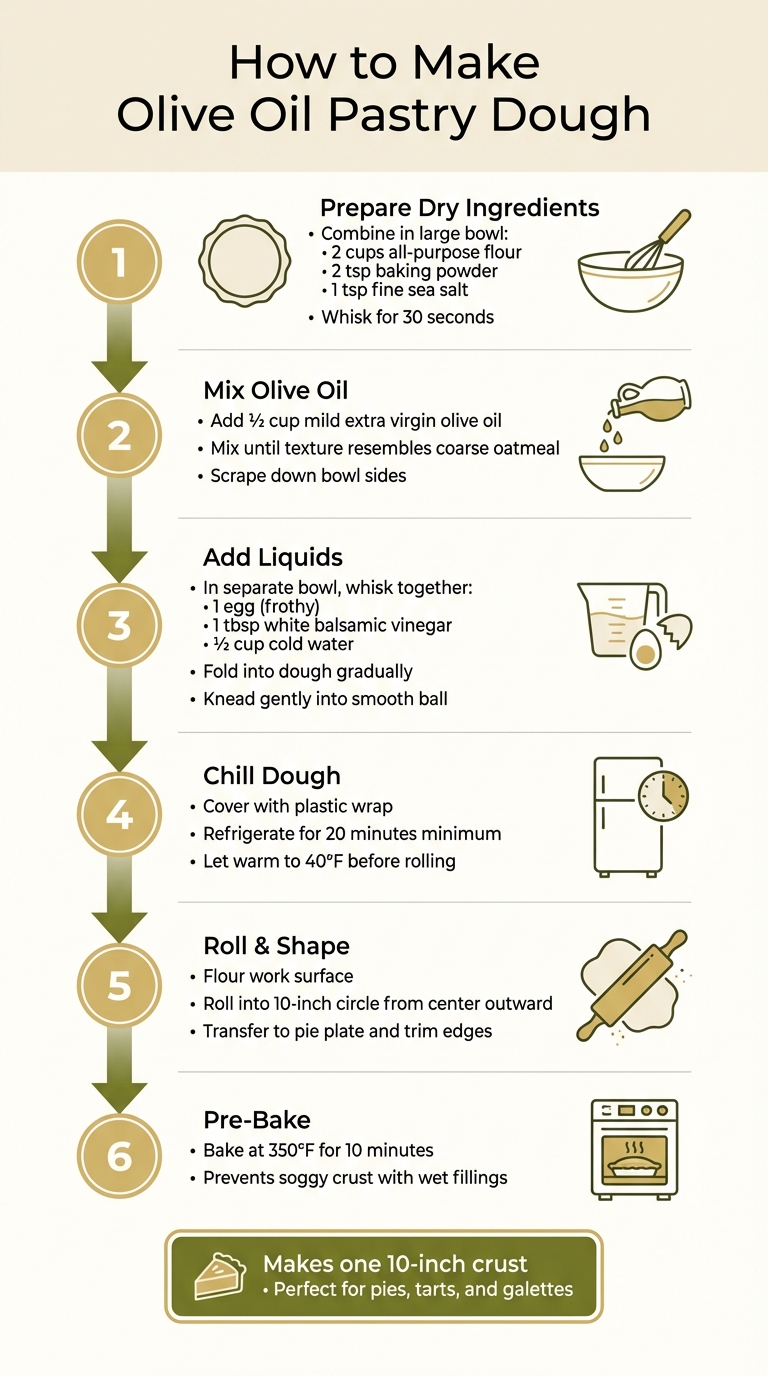
Step-by-Step Guide to Making Olive Oil Pastry Dough
Preparing the Dry Ingredients
Start by combining 2 cups of all-purpose flour, 2 teaspoons of baking powder, and 1 teaspoon of fine sea salt in a large mixing bowl. Whisk these together for about 30 seconds. This ensures the salt and baking powder are evenly distributed, reducing the risk of uneven flavor or texture in your final dough.
Mixing Olive Oil and Liquids
Pour ½ cup of mild extra virgin olive oil into the dry ingredients. Mix it in until the mixture takes on a texture similar to coarse oatmeal. Be sure to scrape down the sides of the bowl to incorporate everything. In a separate small bowl, whisk an egg until frothy, then stir in white balsamic vinegar and cold water. Gradually fold this liquid mixture into the dough, ensuring no dry spots remain. Knead gently until the dough comes together into a smooth ball, making sure to include any stray dry bits.
Resting and Chilling the Dough
Place the dough ball in a bowl and cover it with plastic wrap or a lid to keep it from drying out. Refrigerate for 20 minutes to allow the gluten to relax, which will make rolling easier. If you're not using the dough right away, you can refrigerate it for several hours or overnight. Just remember to let it warm up slightly - to around 40°F - before rolling, so it's pliable and easy to work with.
Once you've rolled and shaped the dough, chilling it again before baking is key. As Stella Parks, Editor Emeritus at Serious Eats, explains:
"After rolling and shaping the dough, whether for a single- or double-crusted pie, it will need to be refrigerated for at least two hours before use. This gives the gluten time to unwind... so the dough is cool and relaxed when it hits the oven, producing a tender, flaky crust".
Following these steps ensures your olive oil pastry dough will deliver a tender, flaky texture. Once chilled, you're ready to move on to rolling and shaping, as described in the next section.
Rolling, Shaping, and Baking Olive Oil Pastry Dough
Rolling and Shaping Tips
Once your dough has had time to rest, sprinkle a bit of flour on your countertop or a pastry cloth to prevent sticking. Take the dough and shape it into a ball, making sure to press in any loose crumbs. Roll it out evenly into a 10-inch circle, which works well for pie plates or tarts. Roll from the center outward to maintain an even thickness. If you're making a pie, carefully transfer the rolled dough into your pie plate, center it, and press it gently into place. Pinch the edges to secure the crust and trim any extra dough. For turnovers or galettes, cut the dough into the shapes you need directly on the floured surface.
Once your dough is shaped, it's time to set its structure with a quick pre-bake.
Pre-Baking for Flaky Results
Pre-baking, also called par-baking, is a must for recipes with wet fillings. To do this, place your shaped crust in an oven preheated to 350°F and bake for about 10 minutes. This step helps the crust hold its shape and prevents it from becoming soggy, all without overbrowning. If you're not ready to bake right away, you can freeze the dough and bake it directly from frozen when needed.
Tips for Achieving the Right Consistency and Flavor
Adjusting Dough Consistency
If your dough turns out dry or crumbly, with stray crumbs lingering in the bowl, resist the urge to add more liquid. Instead, gather the dough together gently into a smooth ball. Over-mixing can make the dough tough, so handle it with care. On the other hand, if the dough feels sticky, transfer it to a floured surface before shaping - it’ll be much easier to work with.
Choosing Olive Oil for Flavor
Once the dough's texture is spot-on, the olive oil you choose can take its flavor to the next level. For sweet treats like fruit tarts, galettes, or dessert pies, go for a mild extra virgin olive oil that enhances the sweetness without overpowering it. For example, Big Horn Olive Oil’s Estate Reserve Ultra Premium EVOO is an excellent choice, offering a subtle and balanced taste that works beautifully in sweet pastries. With flavor locked in, keeping an eye on dough temperature becomes the next step toward achieving perfect flakiness.
How Olive Oil Temperature Affects Flakiness
Temperature plays a big role in getting that flaky texture. While you don’t need to chill the olive oil itself, always use cold water when mixing your liquids. This helps keep the dough cool, which is key for flakiness. After mixing, refrigerate the dough for at least 20 minutes before rolling it out. This resting period not only firms up the dough but also makes it easier to handle.
| Temperature Approach | Effect on Flakiness | Best Practice |
|---|---|---|
| Room-temperature olive oil with cold water | Good flakiness with easier mixing | Use cold water (½ cup) and refrigerate dough for 20+ minutes before rolling. |
| Room-temperature olive oil with warm water | Reduced flakiness with a softer texture | Avoid warm water - stick to cold water for a better dough structure. |
| Chilled olive oil with cold water | Excellent flakiness, but harder to mix evenly | Cold water alone is enough to maintain the right temperature for flakiness. |
Conclusion
Switching to olive oil can transform your pastry dough, creating a tender texture and rich flavor that butter just can't replicate. Using ultra-premium extra virgin olive oils adds a silky finish and subtle flavor notes that take your baking to the next level. Whether you're crafting sweet galettes, fruit tarts, or savory pies, a high-quality oil - like Big Horn Olive Oil's Estate Reserve Ultra Premium EVOO - ensures consistent results with a polished, refined touch. Plus, it simplifies your baking process without compromising on quality.
To get the best results, choose an oil that complements your recipe. For delicate sweets, go with mild oils that won't overpower flavors like vanilla or citrus. For maximum freshness and aroma, use oils produced within the last year and opened within 3–6 months. When substituting butter, follow the 0.8 conversion rule: replace 80% of the butter's weight with olive oil and add about 16% of the butter's weight in liquid to maintain proper hydration and texture.
Don't be afraid to experiment with olive oil in your pastry techniques - it works wonderfully for both sweet and savory recipes. It's also a fantastic choice for plant-forward baking, delivering quality and mouthfeel without compromise. As you experiment with these premium ingredients, you'll refine your dough's texture and flavor balance.
Start your baking journey with Big Horn Olive Oil's Estate Reserve Ultra Premium EVOO, and experience the difference that quality olive oil can bring to your pastries.
FAQs
Can I make this dough without the egg?
Yes, you can make this dough without the egg. While the recipe includes an egg, it’s completely optional. Thanks to the combination of olive oil, flour, water, and vinegar, the dough will still come together beautifully. For the best results and a flavorful crust, try using a high-quality olive oil like Ultra Premium Extra Virgin Olive Oil from Big Horn Olive Oil.
What filling types work best with olive oil pastry dough?
Olive oil pastry dough is incredibly versatile, making it a great match for both savory and sweet dishes. For savory creations, consider using it for vegetable tarts, quiches, or recipes with Mediterranean flavors that highlight the dough’s gentle fruity undertones. On the sweeter side, it’s perfect for fruit pies, galettes, or tarts, as the olive oil crust naturally complements and elevates these flavors. The best filling depends on the recipe and the flavor profile you’re aiming to achieve.
How do I store or freeze olive oil pastry dough?
To store or freeze olive oil pastry dough, wrap it securely in plastic wrap and then place it into an airtight container or a freezer bag. You can freeze it for up to six months. When you're ready to use it, move the dough to the fridge to thaw fully - this typically takes about a day. Wrapping it well is key to avoiding freezer burn and keeping the dough in good condition.