

Springtime Violet Vinegar Recipes
Violet-infused vinegar is a simple way to bring a light, floral touch to your cooking. Made by steeping wild violet blossoms in white wine or balsamic vinegar for 5–14 days, this infusion delivers a subtle sweetness and vibrant color. From salad dressings to marinades, desserts, and even drinks, violet vinegar offers endless possibilities for spring-inspired recipes. Here's what you can do with it:
- Make a vinaigrette: Combine violet vinegar with olive oil, honey, and Dijon mustard for a flavorful salad dressing.
- Marinate vegetables: Use it as a base for grilling or roasting seasonal produce like asparagus or carrots.
- Create a dessert drizzle: Simmer it with sugar or honey for a syrupy topping on ice cream, cakes, or fruit.
- Mix refreshing drinks: Add it to sparkling water with herbs or fruits for a unique spritzer or tonic.
- Cook pan sauces: Deglaze a pan with violet vinegar for meats, adding butter and herbs for depth.
Store your infusion in a cool, dark place, and it will last 6–12 months. Always use edible wild violets, not ornamental varieties, and opt for high-quality ingredients like extra virgin olive oil or balsamic vinegar to complement the floral notes. This versatile ingredient captures the essence of spring in every drop.
How to Make Violet-Infused Vinegar: Step-by-Step Guide
1. How to Make Violet Vinegar at Home
A Simple Recipe for Violet-Infused Vinegar
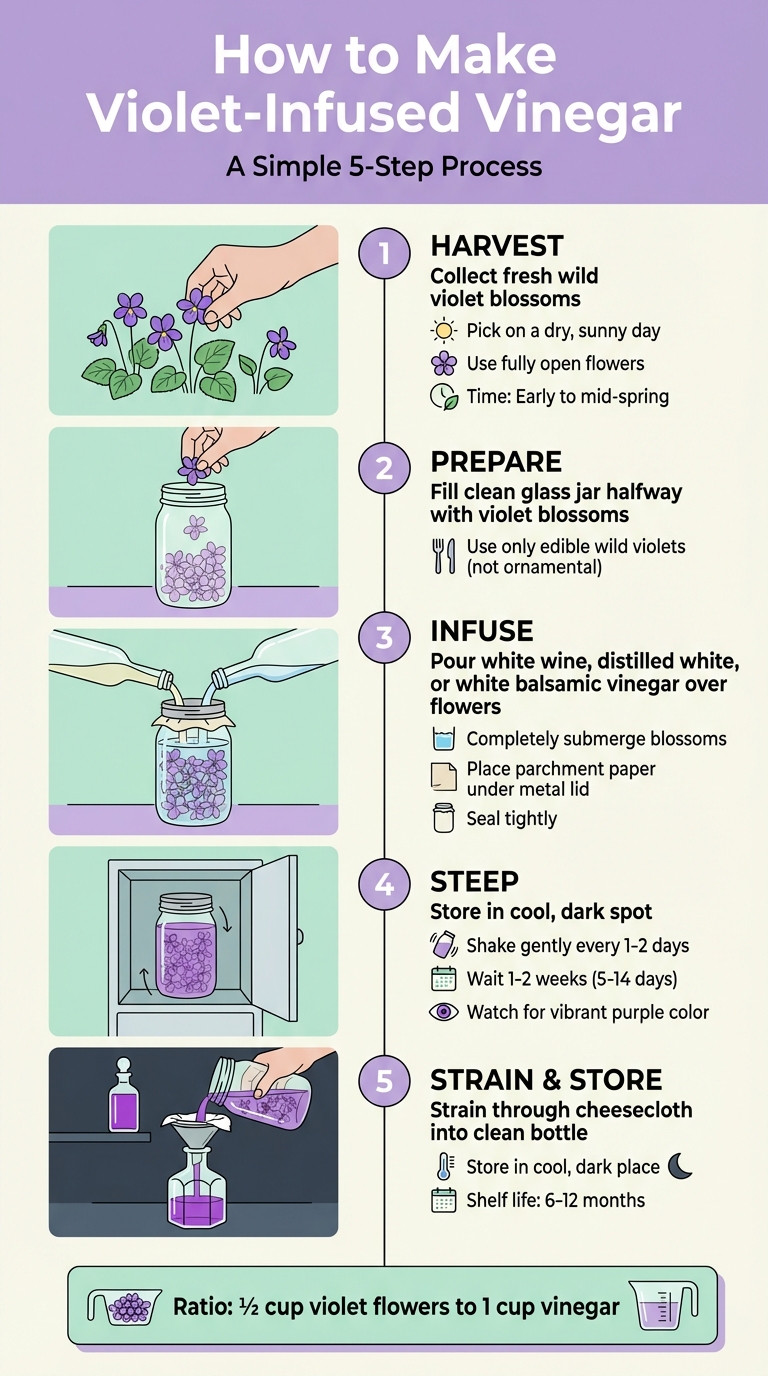
Creating violet vinegar at home is surprisingly straightforward and requires just three ingredients: fresh wild violet blossoms, a clean glass jar, and a mild vinegar base. Opt for white wine vinegar, distilled white vinegar, or white balsamic vinegar - these options highlight the violet's natural purple hue and subtle floral flavors.
A Celebration of Spring's Freshness
Wild violets typically bloom in early to mid-spring, making this vinegar a true nod to the season. For the best results, harvest fully open blossoms on a dry, sunny day to capture their peak fragrance and color.
Step-by-Step Preparation and Storage Tips
To begin, fill a clean glass jar about halfway with violet blossoms. Next, pour your chosen vinegar over the flowers until they’re completely submerged. If your jar has a metal lid, place a piece of parchment paper between the lid and jar to avoid any reaction with the vinegar. Seal the jar tightly and store it in a cool, dark spot. Shake it gently every day or two to help the infusion process.
After 1–2 weeks, the vinegar will take on a vibrant purple color and a floral aroma. Once it’s ready, strain the liquid through cheesecloth into a clean bottle. Properly sealed and stored in a cool, dark place, your violet vinegar can last for 6–12 months. With this infusion, you’ll have a versatile ingredient ready to enhance your culinary creations.
Elevate Recipes with Violet Vinegar and Complementary Ingredients
Violet vinegar is a perfect base for spring-inspired recipes. One of the simplest ways to use it is in a vinaigrette. Mix ¼ cup of violet vinegar with ¾ cup of extra virgin olive oil, a drizzle of honey, a dollop of Dijon mustard, and a pinch of salt and pepper. For a deeper flavor, try a robust extra virgin olive oil like Big Horn Olive Oil’s cold-pressed variety, which adds a fruity, peppery note that complements the vinegar's floral tang. Adjust the intensity of the violet flavor by varying the number of blossoms used during infusion, tailoring it to your taste.
2. Wild Violet Vinaigrette for Spring Salads
Violet-Infused Vinegar: The Star Ingredient
Wild violet vinaigrette transforms violet-infused vinegar into a stunning floral dressing with a delicate pink-to-amethyst hue. Its mild tang and floral undertones create a perfect harmony when paired with oil. Stick to the classic ratio: ¼ cup violet vinegar to ¾ cup extra virgin olive oil. For the best results, opt for a high-quality olive oil like the Ultra Premium Extra Virgin Olive Oil from Big Horn Olive Oil, which ensures a smooth blend without any bitterness.
Celebrating Spring's Fresh Flavors
This vinaigrette is the perfect complement to spring’s bounty, enhancing seasonal salads with its vibrant taste. It pairs wonderfully with fresh greens such as baby spinach, arugula, or mixed lettuces. Add a touch of sweetness and texture with sliced strawberries, thinly sliced radishes, peas, or asparagus tips. For a bit of crunch, toss in toasted pecans or almonds, and for creaminess, try mild goat cheese or fresh mozzarella - both of which enhance the violet’s floral notes without overpowering them. Finish your salad with a flourish of violet blossoms and fresh herbs like parsley or tarragon for a dish that’s as visually stunning as it is flavorful.
How to Make It: A Simple Recipe
To whip up this vinaigrette, whisk together 2 tablespoons of violet vinegar, 1 tablespoon of honey, 1 minced garlic clove, and a pinch of salt and pepper. Gradually whisk in 4–6 tablespoons of extra virgin olive oil until the mixture turns glossy. For a creamier texture, add a small squirt of Dijon mustard. If your violet vinegar was made with white balsamic, you can enhance the sweetness and depth by blending in an extra 1–2 teaspoons of white balsamic vinegar. This floral-forward dressing doesn’t just elevate salads - it can bring a fresh twist to countless spring dishes.
Quick to Make, Endless Possibilities
With violet vinegar already prepared, this vinaigrette comes together in just minutes using basic kitchen tools - a whisk, a small bowl, and measuring spoons. Stored in a sealed glass jar, it keeps fresh in the fridge for up to a month. Beyond salads, this versatile dressing shines in other roles: drizzle it over grilled or roasted spring vegetables like asparagus or baby potatoes, toss it with grains such as quinoa or farro for a hearty lunch, or use it to dress soft cheeses served with toasted bread for a vibrant and flavorful appetizer. The possibilities are endless!
3. Violet Vinegar Marinade for Grilled Vegetables
The Magic of Violet-Infused Vinegar
Violet-infused vinegar brings a gentle, floral tang that not only tenderizes vegetables but also adds a subtle purple hue to items like onions and fennel. It’s a beautiful way to highlight fresh, seasonal produce. The floral notes pair perfectly with naturally sweet vegetables like bell peppers, carrots, and asparagus, enhancing their caramelized flavors when grilled. This makes violet vinegar the centerpiece of a marinade that’s as functional as it is visually stunning.
A Celebration of Spring Flavors
This marinade builds on the vibrant flavor profile of violet vinegar, making it ideal for spring vegetables. Think asparagus, baby carrots, snap peas, and cherry tomatoes. Toss these in the marinade and grill them at 400–450°F for 8–12 minutes, adjusting the time for denser vegetables. The floral vinegar complements the tender, fresh quality of early-season produce without overpowering their natural flavors.
Adding Depth with Extra Virgin Olive Oil and Balsamic Vinegar
To make the marinade, combine 2 tablespoons of violet vinegar with 3 tablespoons of extra virgin olive oil, 1 teaspoon of honey, 1 small minced garlic clove, 1 tablespoon of chopped herbs, and a pinch of salt and pepper. This yields about ½ cup of marinade. For a twist, swap 1 tablespoon of violet vinegar with white balsamic or traditional balsamic vinegar, a nod to the infusion process often used with white balsamic. Using a high-quality olive oil, like Big Horn Olive Oil's Ultra Premium EVOO, adds a fresh, peppery base that stands up well to grilling while complementing the floral vinegar.
Simple to Make, Endless Ways to Use
Toss 1 pound of mixed vegetables with ¼–⅓ cup of the marinade and let them sit for 15–30 minutes (or up to 2 hours for firmer veggies). Grill them in a single layer at 400–450°F until tender and slightly charred - about 6–10 minutes for softer vegetables and 12–15 minutes for denser ones. This marinade isn’t just for grilling; it’s incredibly versatile. Use it as a pre-grill coating, a finishing drizzle, or even as a warm pan sauce for freshly grilled veggies. If you have leftover marinade (as long as it hasn’t touched raw vegetables), it can double as a dressing for grain bowls or pasta salads, a quick glaze for grilled tofu or halloumi, or the base for a skillet sauce after searing meat. The possibilities are endless!
4. Floral Violet Dessert Drizzle
Adding a Floral Touch with Violet-Infused Vinegar
Violet-infused vinegar isn't just for savory dishes - it can bring a delightful floral twist to desserts too. When simmered with sugar or honey, the vinegar transforms into a syrupy drizzle that’s as visually stunning as it is flavorful. The subtle floral notes and gentle acidity make it a versatile topping for desserts like vanilla ice cream, pound cake, yogurt parfaits, or fresh strawberries. It’s especially great for creamy treats like cheesecake, where the acidity balances the richness, while the floral essence adds a light, springtime vibe.
Celebrating Spring Flavors
This violet drizzle pairs beautifully with seasonal fruits like strawberries, blueberries, blackberries, and rhubarb, highlighting the fresh flavors of spring. It also complements light desserts such as lemon bars and angel food cake, often enjoyed at springtime gatherings. To keep the flavors lively, consider adding a touch of finely chopped mint, a strip of lemon peel, or a splash of citrus juice. These additions echo the herbs and fruits available at farmers' markets during the season. Serve the drizzle slightly warm or at room temperature to preserve its delicate floral aroma and enhance your dessert presentation.
Customizing the Drizzle’s Flavor and Texture
For a silky texture, whisk in a mild, fruity extra virgin olive oil to emulsify the reduction. White balsamic vinegar is an excellent base for violet infusions due to its natural sweetness and lightness, which also helps retain the vibrant violet color - perfect for dessert syrups. If you prefer a richer flavor profile with hints of caramel or dried fruit, traditional dark balsamic vinegar can be used, though it may slightly darken the drizzle’s color. For premium results, try using Big Horn Olive Oil's extra virgin olive oil or Modena balsamic vinegar to achieve a smooth and consistent flavor.
Simple Preparation and Versatile Uses
Making this drizzle is easy. Simmer 1/2 cup of violet vinegar with 1/4 cup of sugar (or 3 tablespoons of honey) over low heat for 8–12 minutes until it thickens into a syrup. Once cooled, it will thicken further. Use it to elevate a variety of dishes: swirl it into plain yogurt for a floral parfait, drizzle it over fruit salads, or add it to crepes, pancakes, or waffles for a special brunch treat. For a restaurant-quality touch, streak it beneath panna cotta or stir a few drops into whipped cream for a subtle floral tang. Store any leftovers in a glass jar in the refrigerator for 1–2 weeks, and let it sit at room temperature for a few minutes before serving to regain its pourable consistency.
5. Violet Vinegar Beverage Spritzer
Violet-Infused Vinegar: The Star Ingredient
Violet-infused vinegar isn't just for salads and marinades - it brings a floral, tangy twist to springtime drinks. This ingredient creates a light, refreshing base for spritzers, combining bright acidity with a hint of earthy sweetness. To make a single 12-ounce serving, mix 1–2 tablespoons of violet vinegar into chilled sparkling water or club soda. The result? A gorgeous pale pink to purple drink that’s as pleasing to the eye as it is to the palate.
For the best results, use white balsamic or white wine vinegar as your infusion base. These options maintain a mild flavor and light color, perfect for sipping. One standout choice is Big Horn Olive Oil's white balsamic vinegar from Modena, Italy. Its natural sweetness and smooth acidity perfectly complement the violet's floral notes without overpowering them. This base also opens the door to endless creativity, allowing you to experiment with seasonal fruits and herbs.
Springtime Flavors in Every Sip
Once you’ve got your violet-infused base, it’s time to bring in the flavors of spring. Classic combinations like strawberry-violet or cucumber-mint transform your spritzer into a garden-inspired treat. For a strawberry twist, muddle 2–3 fresh strawberries with a splash of lemon juice, add 1–2 tablespoons of violet vinegar, then top with ice and 8 ounces of sparkling water. Prefer something greener? A cucumber-mint variation highlights early-season produce you’ll often find at U.S. farmers' markets from March to May. Fresh herbs like mint, lemon balm, or even chives enhance the violet’s floral notes, turning your beverage into a sophisticated seasonal delight that tastes like spring in a glass.
Quick to Make, Easy to Adapt
Crafting a violet vinegar spritzer is quick and effortless. Simply combine 1–2 tablespoons of violet vinegar with 1–2 teaspoons of honey or simple syrup (adjusting for your sweetness preference), fill a glass with ice, and pour in 8–10 ounces of chilled sparkling water.
"I make 'fizzies' with different vinegar flavors and sparkling water - they're flavorful and refreshing!" – Cat T., Verified Customer
Hosting a gathering? Prepare in advance by mixing ½ cup of violet vinegar with ¼ cup of honey in a small jar and refrigerating it. Guests can then customize their drinks by adding 1–2 tablespoons of the sweetened concentrate to sparkling water or club soda. Whether you’re making casual family drinks with just a teaspoon of vinegar for a milder taste, or crafting elegant mocktails with muddled berries and tonic water, this spritzer is versatile enough to suit any occasion. You can even elevate it into a cocktail with a splash of gin or vodka.
Unlike sugary sodas that pack 30–40 grams of sugar per 12 ounces, violet spritzers let you control the sweetness. Go low-sugar or unsweetened to let the floral and tangy flavors take center stage, creating a drink that’s light, refreshing, and undeniably spring-ready.
sbb-itb-4066b8e
6. Spring Herb and Violet Vinegar Tonic
Violet-Infused Vinegar: The Heart of the Tonic
Violet-infused vinegar takes center stage in this refreshing spring tonic, blending beautifully with fresh herbs and water for a drink that feels as rejuvenating as the season itself. To prepare a single serving, mix 1–2 tablespoons of violet vinegar with 8–12 fl oz of cold still or sparkling water. The vinegar’s floral, tangy notes create a unique base, while its pale purple color adds a touch of elegance. For the best results, use violet vinegar made with white wine or white balsamic vinegar. Simply infuse ½ cup of fresh violet flowers in 1 cup of vinegar and let it sit in a cool, dark spot for 1–2 weeks. This simple yet striking ingredient sets the stage for a drink that’s equal parts flavorful and visually appealing.
Celebrating Springtime with Fresh Herbs
Spring herbs elevate this tonic into a vibrant, garden-inspired refreshment. Gently crush 2–3 tablespoons of fresh herbs like mint, lemon balm, or parsley - these early spring staples pair wonderfully with violet’s floral essence. Add a squeeze of lemon and 1–2 teaspoons of honey or maple syrup to balance the tangy acidity. The result? A drink that feels like a sophisticated take on lemonade, offering a bright, lightly sweet flavor that captures the essence of spring. For a final flourish, garnish with whole violet blossoms or a sprig of mint to highlight the seasonal theme.
Adding Depth with Complementary Ingredients
For a more layered flavor, consider creating a shrub-style tonic by blending violet vinegar with a touch of white balsamic vinegar. Big Horn Olive Oil’s white balsamic from Modena, Italy, is a great choice, bringing gentle sweetness and a smooth finish that complements violet’s delicate flavor. This versatile base can even double as a light salad dressing or marinade. While most drink-style tonics skip oil, you can whisk in ½ teaspoon of fruity extra virgin olive oil per serving for added richness - just shake well before serving to emulsify.
Quick to Make, Endless Possibilities
Crafting this tonic is quick and simple. Combine violet vinegar, honey, and herbs in a glass, add cold water, stir, and adjust to taste. Hosting a gathering? Prepare a concentrated base by mixing ½ cup violet vinegar with ¼ cup honey and your choice of herbs in a jar, then refrigerate. Guests can customize their drinks by adding 1–2 tablespoons of this concentrate to still or sparkling water. Experiment with different herb combinations, like a citrus-mint version with lemon slices, or a savory mix featuring parsley, chives, and a pinch of sea salt. No matter the variation, violet vinegar remains the star, while seasonal herbs from U.S. markets and gardens keep the tonic fresh and exciting.
7. Violet Vinegar Pan Sauce for Meats
Adding a Spring Twist with Violet-Infused Vinegar
Violet-infused vinegar is a game-changer when it comes to making pan sauces feel fresh and spring-inspired. After searing your meat, pour off most of the fat, leaving about a tablespoon along with the browned bits (fond) at the bottom of the pan. Over medium heat, add 2–3 tablespoons of violet vinegar and stir, scraping up those flavorful bits as the vinegar bubbles for about 30–60 seconds. The vinegar not only deglazes the pan but also brings a gentle floral acidity and a touch of honey-like sweetness, creating a sauce that smells and tastes like spring.
Building Depth with Aromatics and Herbs
To keep the sauce light and seasonal, pair the violet vinegar with aromatics and fresh herbs. Start by sautéing a minced shallot before deglazing the pan. Then, add ½–¾ cup of stock and let it simmer until reduced by half, which should take 2–4 minutes. Lower the heat, whisk in 1–2 tablespoons of cold unsalted butter, and stir in chopped herbs like chives, tarragon, or parsley. A little lemon zest or a drizzle of honey can balance the flavors, softening any sharpness and highlighting the brightness of the vinegar. If you want to make it extra special, garnish with fresh violet petals and serve the sauce alongside spring vegetables like asparagus, peas, or baby carrots.
Enhancing Flavor with Complementary Ingredients
For even more complexity, violet vinegar pairs beautifully with high-quality extra virgin olive oil or white balsamic vinegar. Try deglazing with 2 tablespoons of violet vinegar and 1 teaspoon of white balsamic - a good option is Big Horn Olive Oil's white balsamic from Modena, Italy. This combination deepens the floral notes without overwhelming the sauce, adding a subtle, syrupy sweetness that rounds out the flavor.
Quick, Versatile, and Beginner-Friendly
This sauce is ready in just 5–10 minutes, making it a perfect choice for weeknight dinners or last-minute meals. Use medium heat during deglazing to avoid burning the vinegar, and always taste as you go. If the sauce feels flat, add a splash more violet vinegar; if it’s too sharp, a teaspoon of honey can mellow it out. The technique is incredibly flexible - you can create a violet-tarragon sauce for chicken, a violet-mustard version for pork chops, or a violet-herb sauce to complement lamb. Keep your violet vinegar stored in a clean glass jar in a cool, dark spot, and you’ll have a secret weapon for creating vibrant pan sauces all spring long.
Foraging Wild Violets & Making Violet Infused Vinegar 🌷🌿
Conclusion
Making violet-infused vinegar is a simple and satisfying way to celebrate spring. After collecting wild violet blooms and letting them steep in a mild vinegar for one to two weeks, you'll have a beautiful purple vinegar that can elevate your entire spring menu. Whether you're crafting bright salad dressings, marinades for grilled vegetables, floral dessert toppings, refreshing spritzers, herbal tonics, or quick pan sauces, this infusion brings a light floral flavor and soft acidity that captures the essence of the season.
For the best results, pair your violet vinegar with high-quality ingredients. For example, Big Horn Olive Oil's extra virgin olive oil adds a rich, fruity balance to the vinegar's floral notes, while their artisan balsamic vinegars provide a naturally sweet complexity. This combination gives you a solid base for experimenting with recipes.
To get started, steep ½ cup of violet flowers in 1 cup of white vinegar (or white balsamic vinegar) until it takes on a vibrant purple hue. For a quick vinaigrette, mix 2 tablespoons of your violet vinegar with 2 tablespoons of olive oil, 1 tablespoon of honey, a small dollop of Dijon mustard, and a pinch of salt and pepper. Store your infusion in a cool, dark place, and it will stay fresh for weeks, ready to add a burst of springtime flavor whenever you need it.
When violets bloom in your yard or nearby parks, gather a handful and create your own seasonal secret ingredient. Pair it with Big Horn Olive Oil's premium olive oils and balsamic vinegars to keep your dishes lively and full of springtime charm. With just a touch of violet, you can transform your menu and bring the season to life.
FAQs
How can I safely use wild violets to make violet-infused vinegar?
To use wild violets safely, ensure they are properly identified as Viola sororia or Viola odorata, the edible types. Stay away from plants that might have been treated with pesticides, chemicals, or exposed to pollution. Always gather them from clean, uncontaminated areas. If you're unsure, consult a reliable foraging guide or an expert to verify their safety.
Can I use violet vinegar in recipes other than salads, marinades, and desserts?
Violet vinegar brings a light, floral flavor that can elevate a variety of dishes. Use it to whip up colorful salad dressings, drizzle it over roasted veggies for a subtle tang, or stir it into sparkling water or cocktails for a refreshing kick. It also works wonderfully in sauces and glazes, adding a hint of elegance that feels like a breath of spring on your plate.
Why is white balsamic vinegar a good choice for violet infusions?
White balsamic vinegar works wonderfully for violet infusions thanks to its mild, slightly sweet taste that pairs beautifully with the soft floral essence of violets. Its gentle tang provides a refreshing contrast, making it an ideal addition to spring favorites like salads, marinades, or even desserts. Plus, its pale color helps maintain the bright, eye-catching shade of the violet infusion, adding a touch of elegance to your dishes.