

White Wine Vinegar: Flavor Profile Explained
White wine vinegar is a mild yet tangy ingredient that enhances dishes with its crisp acidity, subtle sweetness, and fruity undertones. Made by fermenting white wine into acetic acid, it typically has an acidity level between 5% and 7%. This versatile vinegar is perfect for vinaigrettes, marinades, pan sauces, and even pickling, offering a lighter touch compared to red wine or distilled white vinegar. Look for high-quality options with simple ingredients and at least 6% acidity for the best results.
Key points:
- Acidity: 5%–7%, adds tang without overpowering.
- Flavor: Lightly fruity, slightly sweet.
- Uses: Salad dressings, marinades, deglazing, pickling.
- Quality Tip: Choose vinegars with no additives and simple labeling.
White wine vinegar's delicate flavor makes it an essential for lighter proteins, vegetables, and sauces.
Vinegar 101-White Wine Vinegar
The Flavor Profile of White Wine Vinegar
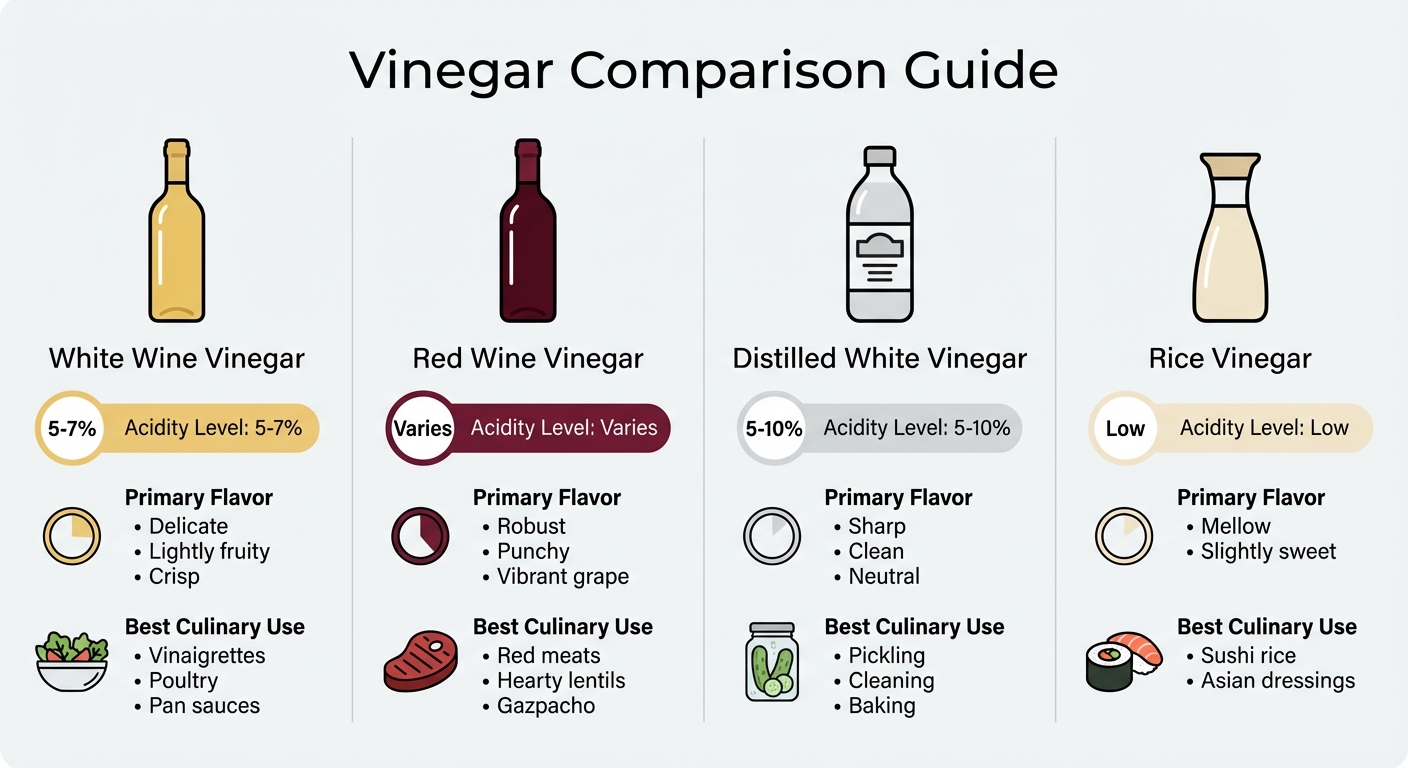
White Wine Vinegar vs Other Vinegars: Acidity Levels and Best Uses
Building on its origins and culinary flexibility, white wine vinegar’s flavor is shaped by three key elements. These components come together to create its unique character, making it a go-to ingredient in many kitchens.
Acidity: The Tangy Foundation
At its core, white wine vinegar is known for its sharp, tangy acidity, typically falling between 5% and 7%. This acidity serves as the vinegar’s backbone, perfect for deglazing pans or enhancing flavors without overpowering delicate ingredients like fish, poultry, or leafy greens.
Sweetness: A Gentle Counterbalance
Unlike heavily sweetened vinegars, white wine vinegar features a subtle, natural sweetness. This sweetness, derived from the fermentation of white wine, balances its acidity and creates a smoother, more rounded flavor that complements a wide variety of dishes.
Fruity and Floral Undertones
What sets white wine vinegar apart from more neutral options is its delicate fruity and floral notes. These hints, reminiscent of fresh grapes, provide a light aromatic quality. While less intense than the bold fruitiness of red wine vinegar, these nuances depend largely on the quality of the base wine and the fermentation method. Vinegars aged using traditional surface culture fermentation - where they mature slowly in wooden casks with natural oxygen exposure - yield the most complex and flavorful results.
"Vinegar produced by this slow [surface] method are complex, flavorful as fine wines, and expensive" – Martina Crocker, Cooking Instructor and Personal Chef at Secolari
These subtle flavor characteristics make white wine vinegar an excellent choice for recipes that demand a lighter touch.
| Vinegar Type | Acidity Level | Primary Flavor Profile | Best Culinary Use |
|---|---|---|---|
| White Wine | 5%–7% | Delicate, lightly fruity, crisp | Vinaigrettes, poultry, pan sauces |
| Red Wine | Varies | Robust, punchy, vibrant grape | Red meats, hearty lentils, gazpacho |
| Distilled White | 5%–10% | Sharp, clean, neutral | Pickling, cleaning, baking |
| Rice Vinegar | Low | Mellow, slightly sweet | Sushi rice, Asian dressings |
Culinary Uses and Pairings
White wine vinegar brings a gentle tang to dishes, enhancing flavors without overwhelming them.
Salad Dressings and Marinades
With its light, fruity profile, white wine vinegar is a go-to for vinaigrettes. A classic mix of two parts extra virgin olive oil to one part white wine vinegar, seasoned with salt and pepper, creates a bright dressing that lets fresh greens shine. For an extra layer of flavor, try using an ultra-premium extra virgin olive oil, like those from Big Horn Olive Oil (https://bhooc.com).
When it comes to marinades, white wine vinegar’s mild acidity works wonders on lighter proteins like chicken and fish. Combine it with lemon juice, garlic, and butter for a marinade that both tenderizes and enhances the flavor of poultry and seafood. Its versatility also makes it a great choice for vegetable dishes.
Pairing with Proteins and Vegetables
White wine vinegar shines when paired with delicate proteins and vegetables. It complements chicken, fish, and other poultry by enhancing their subtle flavors. For example, after searing chicken breasts in butter and garlic, deglaze the pan with 1/4 cup of white wine vinegar and lemon juice to create a rich, buttery sauce that captures all the savory pan juices. As Bon Appétit explains:
"White wine vinegar tends to be a bit lighter and more delicate in flavor, which means it won't pair as well with big ingredients like red meat".
For vegetables, just a splash of white wine vinegar can brighten roasted asparagus, fresh tomatoes, or tender salad greens. It cuts through richness and highlights their natural sweetness, making it a versatile addition to vegetable dishes.
Baking and Preserving
White wine vinegar also plays a role in preserving and baking. Its acidity is ideal for pickling, offering the necessary tang for quick pickles and brines while being milder than distilled white vinegar. As WebstaurantStore notes:
"Reach for the white vinegar for canning or cleaning, and use white wine vinegar for creating delicious sauces and marinades".
In baking, it can activate leavening agents, though it’s more often celebrated for its contributions to savory recipes like dressings and sauces than for sweet treats.
sbb-itb-4066b8e
How to Choose High-Quality White Wine Vinegar
Reading Labels and Understanding Ingredients
When selecting white wine vinegar, start by checking the label for at least 6% acidity. This ensures the vinegar delivers that bright, tangy flavor essential for many dishes. Stick to products with a simple ingredient list - just "white wine vinegar" and water. Avoid options containing additives like distilled vinegar, caramel coloring, or artificial flavors. As Kate Shannon Levine, Editorial Director at ATK Reviews, shares:
"Look for at least 6 percent [acidity] for the most vibrant flavor."
Some premium vinegars even highlight the grape variety used, which can add a unique touch to their flavor profile. Paying attention to these details can help you select a vinegar that retains its character and enhances your recipes.
The Role of Freshness and Quality
Though vinegar's acidity makes it naturally long-lasting, its flavor can change over time. White wine vinegar is at its best within about two years of production. After that, exposure to air can dull its sharpness and reduce its fruity notes. To preserve its quality, store the vinegar in a tightly sealed bottle, away from light and heat.
A quick sniff and taste test can also help. Fresh vinegar should have a sharp, fruity brightness that elevates your culinary creations.
Premium White Wine Vinegar Options
For those seeking something special, premium white wine vinegars offer more depth and complexity. Look for labels mentioning "Orléans style" or aging in wooden barrels like oak or cherry. These traditional fermentation methods, which can take anywhere from 50 days to a year, create a richer, more harmonious flavor profile. As Michael Harlan Turkell puts it:
"Good vinegar will consist of nothing more than the base ingredient, water, and time."
For ultra-premium options, consider brands like Big Horn Olive Oil (https://bhooc.com). They offer carefully curated white wine vinegars alongside their renowned extra virgin olive oils. With a focus on quality and freshness, these vinegars are crafted to elevate your dishes. Prices range from $0.16 to $0.58 per ounce.
Conclusion
White wine vinegar brings a tangy acidity, a hint of sweetness, and light fruity undertones that can brighten up a dish without overwhelming it. Its crisp flavor works beautifully to enhance recipes while allowing the main ingredients to shine - perfect for deglazing pans, dressing salads, or adding depth to sauces.
Thanks to its subtle flavor profile, it pairs wonderfully with lighter proteins and delicate ingredients. As Bon Appétit aptly puts it, "Using the right one at the right time can take a perfectly fine meal and turn it into something remarkable."
When choosing a white wine vinegar, aim for those with 5%–7% acidity and a short, clean ingredient list for the best taste. Premium options, occasionally aged in wooden barrels, offer added depth and complexity. For example, Big Horn Olive Oil (https://bhooc.com) provides high-quality white wine vinegars that pair effortlessly with ultra-premium extra virgin olive oils, helping you achieve restaurant-quality dishes at home.
Don’t hesitate to get creative with white wine vinegar. Add a splash to butter sauces to balance richness, use it in sweet-and-sour recipes to highlight its fruity notes, or even mix a small amount with seltzer water for a tangy, refreshing drink. These inventive uses highlight its versatility, making white wine vinegar a must-have for any well-stocked kitchen.
FAQs
What makes white wine vinegar unique compared to other types of vinegar?
White wine vinegar is known for its gentle, fruity taste and moderate acidity (usually between 5-7%). Compared to the sharper profile of distilled white vinegar or the bolder character of red wine vinegar, it offers a more refined balance. This makes it a go-to ingredient for dressings, marinades, and lighter sauces. Its slight sweetness and soft tang enhance flavors without dominating the dish, earning it a spot as a staple in many kitchens.
How can I use white wine vinegar creatively in my cooking?
White wine vinegar brings a mild acidity and a touch of fruity flavor to the table, making it an ideal ingredient for adding depth to dishes without overwhelming them. Its delicate taste shines in light salads, seafood marinades, and even quick pickles.
Here are some creative ways to use it:
- Whip up a fresh vinaigrette: Combine white wine vinegar with Big Horn Olive Oil’s ultra-premium extra virgin olive oil, a pinch of salt, and a drizzle of honey. This simple dressing works beautifully on salads or drizzled over roasted veggies.
- Deglaze for a tangy sauce: After cooking chicken or seafood, add a splash of white wine vinegar to the pan. Let it reduce, then stir in a bit of butter to create a silky sauce with a subtle tang.
- Quick-pickle your veggies: Slice onions, cucumbers, or radishes thinly and soak them in a mix of white wine vinegar, water, sugar, and salt. In just 15–30 minutes, you’ll have a crisp, flavorful topping for sandwiches, tacos, or grain bowls.
Whether you’re dressing up a salad or adding a spark to sauces, white wine vinegar paired with the rich taste of Big Horn Olive Oil’s premium products can effortlessly elevate your meals.
What should I look for when choosing a high-quality white wine vinegar?
When choosing a good white wine vinegar, focus on ones crafted from high-quality white wine and made using time-honored fermentation techniques, like aging in wooden barrels. The label can be a helpful guide - look for clear information about the vinegar's origin and how it’s made. Aging plays a big role in flavor, so pick a vinegar that's been aged for weeks or even months for a richer, more nuanced taste.