

Why Use Olive Oil in Custards?
Swapping butter for extra virgin olive oil in custards can improve flavor, texture, and nutrition. Olive oil adds depth, enhances citrus and chocolate notes, and creates a silky consistency. It’s also healthier, with less saturated fat and more heart-friendly monounsaturated fats compared to butter. Plus, it’s easy to prepare custards with olive oil using a blender or water bath for smooth results.
Key Benefits of Using Olive Oil in Custards:
- Better Flavor: Adds fruity, grassy, or peppery notes that complement ingredients like citrus and chocolate.
- Smoother Texture: Liquid consistency prevents dense, waxy custards.
- Healthier Option: Lower in saturated fat and cholesterol, rich in antioxidants and polyphenols.
- Convenience: Quick preparation with a blender; holds texture well even after freezing.
For the best results, use high-quality olive oils like Big Horn Olive Oil, which offers options like Picual and Coratina for vibrant flavors. Try their infused lemon olive oil for a bolder citrus custard. Whether you’re making a classic vanilla custard or experimenting with chocolate, olive oil transforms this dessert into a flavorful, creamy, and nutritious treat.
Problems with Butter-Based Custard Recipes
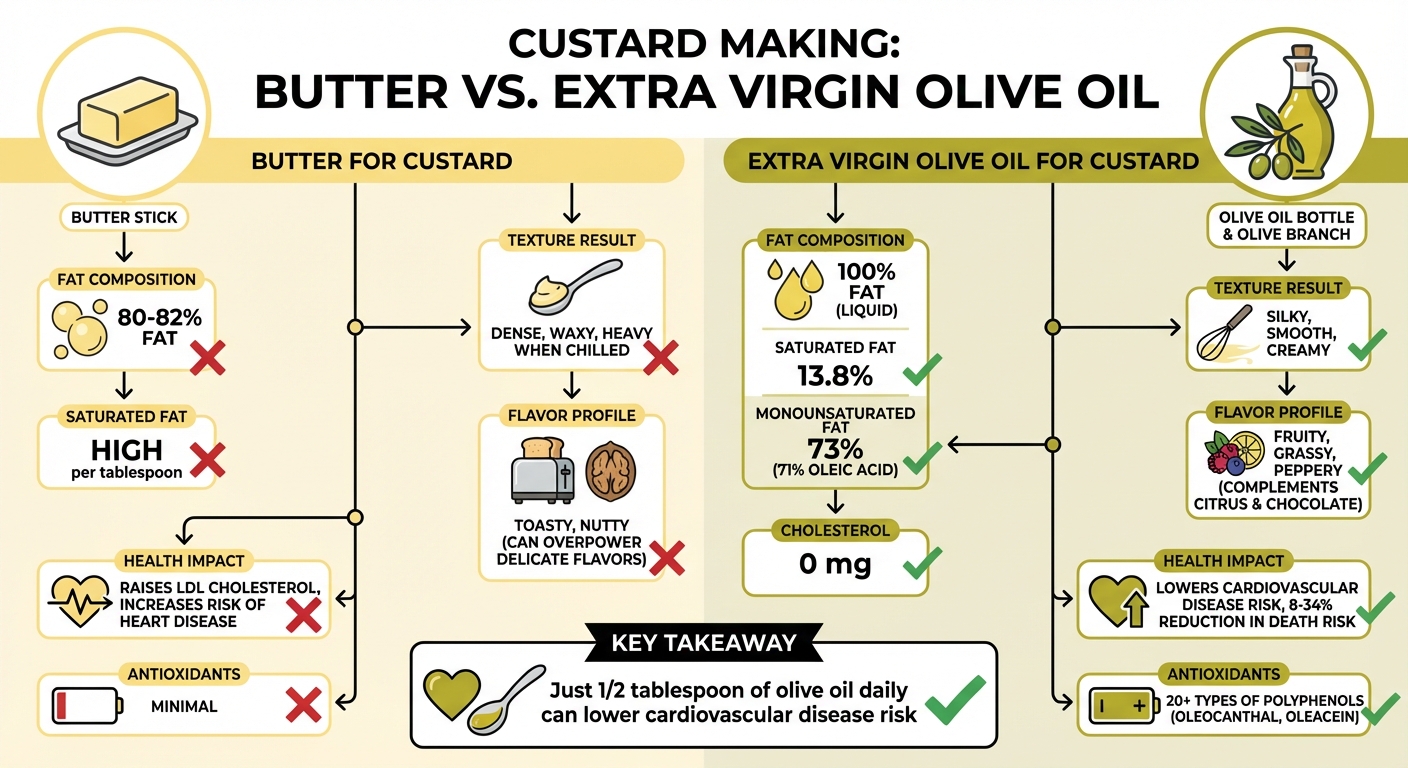
Butter vs Olive Oil in Custards: Nutritional and Texture Comparison
Dense Texture and Limited Flavor
Butter often leads to a custard that's heavier and firmer, falling short of the silky smoothness many people crave. This texture issue stems from butter's composition - 80–82% fat, with the remainder being water and milk solids. When chilled, butter hardens, creating a dense, waxy texture.
While the milk solids in butter contribute a toasty, nutty aroma, this richness can overshadow the more delicate flavors in your dessert. On the other hand, olive oil introduces grassy, peppery, or fruity notes that elevate ingredients like chocolate or citrus, offering far greater versatility than butter's singular flavor profile.
These limitations in texture and flavor highlight the potential for an alternative ingredient that brings both sophistication and flexibility to your recipes.
High Saturated Fat Content
Beyond its impact on texture and taste, butter comes with health concerns due to its high saturated fat content. Saturated fats are known to raise LDL (bad) cholesterol levels, increasing the risk of heart disease, atherosclerosis, and stroke .
Olive oil provides a healthier alternative. It contains only 13.8% saturated fat, with 71% of its fat content being heart-friendly oleic acid.
"You really only reap the dietary benefits of EVOO if you use it as a replacement ingredient for, say, butter or other types of oil".
Extra virgin olive oil (EVOO) is also packed with over 20 types of polyphenols, which act as antioxidants and anti-inflammatory agents. Research shows that consuming just 1/2 tablespoon of olive oil daily can lower the risk of cardiovascular disease. Additionally, high olive oil intake has been linked to an 8% to 34% reduction in the risk of death from various diseases over a 28-year period .
sbb-itb-4066b8e
How Extra Virgin Olive Oil Improves Custards
Smoother Texture and Better Flavor
Extra virgin olive oil brings a silky smoothness to custards, enhancing their overall taste. Its liquid consistency helps create a refined texture while letting flavors like citrus and vanilla stand out. Unlike butter, which stays solid at room temperature and can overpower delicate notes, olive oil offers a milder balance that complements bright citrus, such as Meyer lemon, and aromatic vanilla beautifully.
Better Nutritional Profile
When it comes to nutrition, extra virgin olive oil (EVOO) is a standout choice. It contains 73% monounsaturated fats, which are heart-healthy, and has zero cholesterol. This is a stark contrast to butter, which is loaded with saturated fats and contains 31 mg of cholesterol per tablespoon. Additionally, EVOO is packed with polyphenols like oleocanthal and oleacein, making it a powerhouse of antioxidants compared to butter. Choosing high-quality varieties, such as Picual or Coratina, not only enhances the freshness of your custard but also boosts its nutritional value.
These qualities make premium EVOO a must-have ingredient for custards, with examples like those offered by Big Horn Olive Oil standing out.
Big Horn Olive Oil Options for Custards
Big Horn Olive Oil provides excellent EVOO options that pair perfectly with custard recipes. Their Picual variety is known for its fresh, fruity flavor, which enhances citrusy notes in desserts. This single-source EVOO is cold-pressed within two hours of harvest, ensuring top-notch freshness and quality. For those seeking a robust flavor and a higher antioxidant punch, Big Horn Olive Oil's Coratina is an excellent choice. Both options are priced at $8.99, offering a balance of exceptional taste and nutritional benefits for your custards.
Recipe: Making Custards with Olive Oil
Step-by-Step Instructions
Start with 3 room-temperature eggs - this helps ensure a smooth mixture. Whisk them together with 1/2 cup sugar (or use monkfruit sweetener if you want a lower-sugar option) until the blend is smooth and slightly pale. Add in 1/2 teaspoon vanilla extract, 2 tablespoons lemon zest, and 1/2 cup lemon juice to build a fragrant, citrusy base. For a bolder citrus flavor, swap out regular extra virgin olive oil for Big Horn's Whole Fruit Lemon Olive Oil.
Slowly incorporate 1/2 cup Big Horn Extra Virgin Olive Oil, whisking to create a stable emulsion. If you're using a blender, blend the mixture for about 90–105 seconds until it thickens. The final texture should resemble homemade mayonnaise.
Cook the custard gently in a water bath. Use a stovetop double boiler or bake the mixture in ramekins, ensuring it reaches an internal temperature of 160°F and firms up around the edges. Once done, let it cool. The custard can be stored in the refrigerator for up to 3 days or frozen for longer while maintaining its creamy consistency.
After cooling, you can elevate your custard with complementary flavors.
Flavor Pairings for Olive Oil Custards
Top your custard with a drizzle of Big Horn's 18-Year Aged Dark Balsamic Vinegar ($8.99) for a delightful contrast to its creamy richness. For variety, try pairing citrus-infused olive oils with dark chocolate custards or add basil-infused oil to strawberry custards for a unique twist.
Tips for Making Olive Oil Custards
Avoiding Curdling and Overcooking
When it comes to custards, temperature control is everything - especially when working with eggs and olive oil. If you're making a stovetop custard, avoid boiling the mixture unless you've added cornstarch. Erin McDowell, Test Kitchen Manager at Food52, offers this advice:
"Slowly add the hot liquid to the eggs in a slow, steady stream while whisking constantly to combine the two. This allows you to bring the eggs to a higher temperature in a more controlled way, which means you're less likely to coagulate those proteins."
This gradual process helps prevent the eggs from cooking too quickly, which can lead to unwanted coagulation.
Start whisking with a wire whisk to keep the mixture moving smoothly. Once the custard begins to thicken, switch to a silicone spatula to scrape the bottom and corners of the pan, where heat tends to concentrate. For baked custards, a water bath is your best friend. It ensures gentle, even cooking by regulating the temperature. McDowell explains:
"The water's cooler temperature encourages a slow and steady coagulation of the eggs, which (ideally) prevents curdling or over-baking."
If you're using a blender, timing is key. Run the blender on high for 4–5 minutes to generate heat through friction before adding the olive oil. Then, emulsify the oil by blending on high for an additional 90 seconds. This creates a firm, mayo-like texture without the risk of scrambling the eggs. One more tip: avoid combining eggs and sugar too early, as sugar can draw out moisture from the eggs, leading to clumps that ruin the custard's smooth finish.
Once you've nailed the texture, proper storage is essential to maintain the custard's quality.
Storage and Serving Guidelines
Even after cooking, the work isn’t done. To keep your custard smooth, cover it with plastic wrap while it cools to prevent a skin from forming. For the best texture, refrigerate for at least four hours. Professional chef Gemma Stafford emphasizes the importance of this step:
"Chilling them for about four hours gives the perfect consistency - smooth, creamy, and pudding-like. If they sit in the fridge too long, they can firm up a bit more than I prefer."
Olive oil custards will stay fresh in the fridge for up to three days. If you need to store them longer, freezing is a good option - they’ll regain their creamy texture once defrosted. Save any toppings, like whipped cream, sea salt, or fruit sauces, for just before serving to keep the textures distinct and appealing.
Conclusion
Olive oil brings a fresh twist to custards, improving texture, flavor, and even nutritional value. Swapping butter for extra virgin olive oil results in a custard that's smoother, creamier, and holds its structure well, whether refrigerated or frozen. It also introduces a richer flavor that pairs beautifully with ingredients like citrus, chocolate, and nuts. As pastry chef Alice Medrich notes:
"Extra-virgin olive oil is a significant flavor ingredient, not just a neutral fat or 'healthy' substitute for another fat".
This flavor upgrade turns an ordinary dessert into something unforgettable.
Beyond flavor and texture, olive oil offers heart-healthy perks and is naturally gluten-free. It’s also easy to adapt recipes for low-sugar diets by using alternative sweeteners. Plus, blending the ingredients speeds up the preparation process, making it even more convenient.
To achieve the best results, choose a high-quality olive oil that aligns with your flavor goals. Big Horn Olive Oil's infused selections, such as their Whole Fruit Lemon Olive Oil, add a natural citrus brightness that works seamlessly in custards. Their Extra Virgin Olive Oils, cold-pressed within two hours of harvesting, deliver unmatched freshness and flavor.
Whether you're crafting a classic vanilla custard or experimenting with Meyer lemon or dark chocolate variations, olive oil offers endless possibilities. The process is simple, the texture stays consistently smooth, and the flavor boost is well worth the effort. Give this modern twist a try to elevate your custard game.
FAQs
What kind of extra virgin olive oil works best in custard?
When making custards, the best extra virgin olive oil (EVOO) is one that's high-quality, fresh, and mild in flavor. A mild EVOO brings subtle fruity undertones that enhance the dessert's creamy texture without overwhelming its delicate taste. For a premium option, consider brands like Big Horn Olive Oil, which offers a selection of Ultra Premium EVOOs perfect for desserts.
Will olive oil make my custard taste oily or bitter?
When used properly, olive oil doesn’t make custards taste oily or bitter. Instead, it adds a rich, fruity layer of flavor. The trick is to use high-quality extra virgin olive oil, which avoids overpowering bitterness while giving the custard more depth and a silky texture.
Can I use olive oil custard in recipes like crème brûlée or pie filling?
Yes, olive oil custard can be a fantastic addition to recipes like crème brûlée or pie fillings. It not only boosts the flavor with its rich, slightly fruity notes but also brings some added nutritional perks. This makes it an excellent option for elevating custard-based desserts.