

Why Use Olive Oil Instead of Butter in Baking?
When baking, olive oil can be a better choice than butter for several reasons:
- Longer Moisture Retention: Olive oil keeps baked goods moist for 3–5 days, compared to butter, which often dries out in 24 hours.
- Healthier Fat Content: Olive oil contains only 14% saturated fat, while butter has 51%. It also provides heart-healthy monounsaturated fats and antioxidants.
- Ease of Use: Olive oil doesn’t require softening or creaming - just measure and pour.
- Vegan and Dairy-Free: Ideal for those avoiding animal products or lactose.
- Flavor Boost: High-quality olive oil adds subtle fruity, grassy, or peppery notes that pair well with citrus, chocolate, and spices.
To substitute, use 3/4 cup olive oil for every 1 cup of butter, add a small amount of liquid, and reduce the oven temperature slightly. Olive oil works best in cakes, quick breads, and muffins, but avoid it in recipes needing solid fats like pie crusts or cookies that hold shape.
Switching to olive oil improves texture, extends freshness, and offers health benefits without sacrificing flavor.
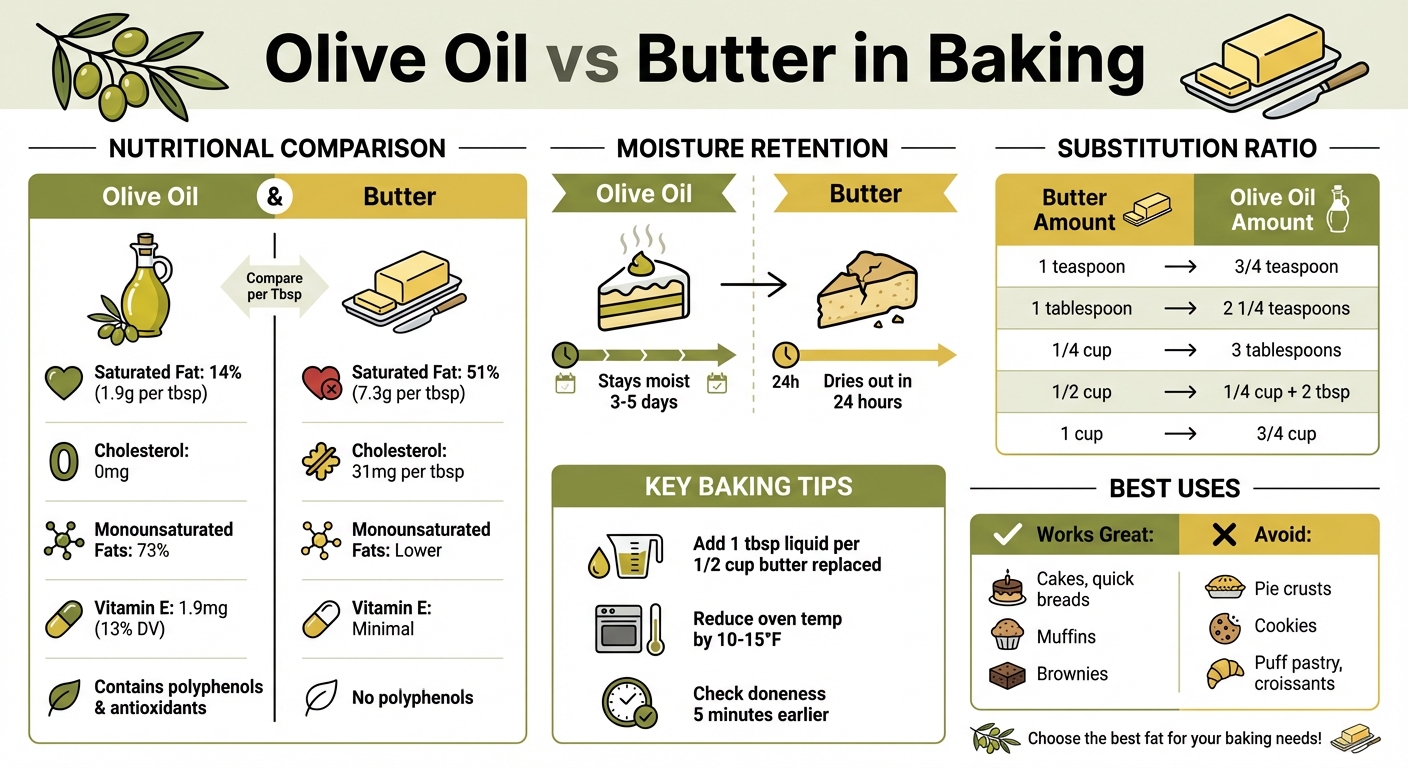
Olive Oil vs Butter in Baking: Nutritional Comparison and Substitution Guide
When Baking with Olive Oil is Even Better Than Butter
sbb-itb-4066b8e
Health Benefits of Olive Oil Over Butter
These benefits not only promote better health but also enhance the texture and moisture of baked goods.
Nutritional Value of Olive Oil
Olive oil stands out for its nutritional makeup, primarily due to its high levels of monounsaturated fats - making up about 73% of its total fat content. These fats help lower LDL cholesterol levels, contributing to heart health. Each tablespoon of olive oil contains around 1.9 mg of Vitamin E (13% of the daily value) and a notable amount of Vitamin K. Extra virgin olive oil (EVOO) is also packed with polyphenols like oleocanthal, which possess natural anti-inflammatory properties, functioning similarly to ibuprofen by inhibiting specific enzymes.
The PREDIMED study, which involved 7,500 participants, showed that consuming EVOO was linked to a 30% reduction in the risk of major cardiovascular events. On the other hand, butter lacks these powerful antioxidants and is high in saturated fats, which can activate inflammatory pathways, including TLR4 signaling. This difference in nutritional content highlights olive oil's clear advantages in promoting heart health.
Lower Saturated Fat Content
One of the most significant differences between butter and olive oil lies in their saturated fat content. Butter contains 50–60% saturated fat, equating to about 7.3 grams per tablespoon (36% of the daily value), while olive oil contains only 14%, or roughly 1.9 grams per tablespoon (9% of the daily value). When used in baking, this lower saturated fat content results in lighter, healthier treats that retain moisture without contributing to inflammation caused by excessive saturated fats.
As Erica Booth, author and nutrition advocate, explains:
"Saturated fat doesn't just affect cholesterol; it activates inflammatory pathways in your body."
Additionally, replacing just 10 grams of butter daily with olive oil has been associated with a significant reduction in cardiovascular-related deaths. Another point in olive oil's favor is that it contains no cholesterol, whereas butter has approximately 31 mg per tablespoon. This clean nutritional profile makes olive oil an excellent choice for those looking to reduce saturated fat and cholesterol in their diets.
Olive Oil as a Plant-Based Alternative
Olive oil offers a vegan and dairy-free option, making it perfect for individuals avoiding animal products. Its plant-based origin aligns with ethical and health-conscious eating habits while still providing heart-healthy fats and antioxidants that butter cannot match. Best of all, olive oil performs just as well as butter in baking, proving to be a versatile and health-forward alternative.
Flavor and Texture Advantages in Baking
Olive oil doesn’t just bring health perks to the table - it also transforms baked goods with flavors and textures that keep them fresh and moist for days.
Rich, Complex Flavors
When baked, high-quality extra virgin olive oil infuses dishes with subtle fruity, grassy, or peppery notes. These flavors, derived from its polyphenols, add depth to recipes while softening during baking. For instance, Big Horn Olive Oil's Ultra Premium EVOO varieties retain 40–80% of their phenolic compounds, even when baked at 350°F. Olive oil also naturally boosts citrus flavors like lemon or orange, and its moisture complements the bold richness of chocolate. For delicate sweets, mild and fruity oils like Arbequina are ideal, while medium-robust oils shine in recipes featuring chocolate or spices. These flavor enhancements go hand-in-hand with olive oil’s ability to lock in moisture.
Enhanced Moisture in Recipes
Unlike butter, which is about 80% fat and 20% water and milk solids, olive oil is pure fat. This allows it to coat flour proteins more effectively, reducing gluten formation and creating a tender crumb. Olive oil’s moisture-retaining properties also help baked goods stay fresh longer. Cakes made with olive oil can remain moist for 3–5 days, compared to just one day for butter-based cakes. Research from America’s Test Kitchen highlights that olive oil slows starch retrogradation - the process that makes baked goods go stale. As a result, treats like banana bread, brownies, and muffins maintain their soft, fresh-baked texture for nearly a week.
Substitution Ratios and Best Practices
Switching from butter to olive oil in your recipes is simple once you understand a few key adjustments.
How to Substitute Olive Oil for Butter
The general rule is to use 3/4 cup of olive oil for every 1 cup of butter. This accounts for the differences in composition - while butter is about 80% fat and 20% water and milk solids, olive oil is entirely fat. Using a 1:1 ratio could make your baked goods overly greasy. However, for recipes already calling for vegetable or canola oil, you can stick with a 1:1 substitution.
Since olive oil lacks water content, you’ll need to make up for that. Add 1 tablespoon of liquid (like water, milk, or citrus juice) for every 1/2 cup of butter replaced. Also, reduce the oven temperature by 10–15°F and start checking for doneness about 5 minutes earlier.
Here's a quick reference chart for substitutions:
| Butter Amount | Olive Oil Substitution |
|---|---|
| 1 teaspoon | 3/4 teaspoon |
| 1 tablespoon | 2 1/4 teaspoons |
| 1/4 cup (4 tbsp) | 3 tablespoons |
| 1/2 cup (1 stick) | 1/4 cup + 2 tbsp |
| 1 cup (2 sticks) | 3/4 cup |
Once you’ve got the substitution down, the next step is choosing the right olive oil for your recipe.
Choosing the Right Olive Oil for Baking
The flavor of the olive oil you use can make or break your baked goods, so it’s important to choose wisely. For delicate desserts like vanilla cakes or citrus-based treats, go for a mild, fruity extra virgin olive oil. Arbequina varietals are a great example - they offer subtle, complementary flavors. On the other hand, for recipes with bold flavors, like chocolate or spiced cakes featuring cinnamon or ginger, opt for a medium-robust extra virgin olive oil that can hold its own.
Avoid "light" or "pure" olive oils, as they lack the depth of flavor and health benefits of extra virgin varieties. As chef and author Jackie Freeman advises:
"The rule of thumb is that if you don't like the flavor for dipping bread or drizzled on salads, you won't like it in your baked goods".
Lastly, always check the harvest date on the bottle. Fresh oil ensures your baked goods taste vibrant, while old or oxidized oil might leave an unpleasant, flat taste.
When Not to Use Olive Oil
While olive oil works wonders in many recipes, it’s not a one-size-fits-all substitute. Avoid using it in recipes that depend on solid fats for structure, like flaky pie crusts, croissants, puff pastry, or cookies that need to maintain a crisp shape. Similarly, olive oil doesn’t work for recipes that rely on the creaming method, where butter and sugar are beaten to incorporate air. Since olive oil can’t aerate, these recipes won’t achieve the desired texture.
If you’re new to baking with olive oil, try starting with a 50/50 blend of butter and olive oil. This approach helps ease into the flavor and texture differences while still improving the nutritional profile of your baked goods.
Recommended Olive Oils for Baking
Choosing the right olive oil can elevate your baked goods, enhancing both their flavor and texture. Here are some standout options to consider.
Big Horn Ultra Premium EVOO
Big Horn Olive Oil's Ultra Premium Extra Virgin Olive Oils are a fantastic choice for baking, offering a balance of bold flavors and health benefits. Their Coratina Ultra Premium EVOO, priced at $23.99 (with smaller options starting at $8.99), boasts a phenolic content of 580.30 ppm, which highlights its freshness and antioxidant richness. This oil brings out flavors of unripe banana, green almond, and a touch of capsicum, making it ideal for recipes like chocolate brownies, spiced cakes, or any dessert that benefits from a strong flavor profile.
For more delicate treats, such as vanilla cakes or citrus-based desserts, the Estate Reserve Ultra Premium EVOO ($8.99) offers a milder taste that complements these recipes beautifully. Both oils are cold-pressed within 2 hours of harvest and delivered fresh within 3 months, ensuring peak quality. To preserve their flavor and nutrients, store them at room temperature in a dark cabinet. The Coratina variety, in particular, has received glowing reviews, holding a 5/5 rating from 14 customers.
These oils are also vegan and gluten-free, making them excellent plant-based substitutes for butter. Plus, Big Horn offers free shipping on orders over $60, making it easier to stock up on these kitchen essentials.
Infused Olive Oils for Unique Flavors
If you’re looking to add a creative twist to your baking, Big Horn's infused extra virgin olive oils are worth exploring. These oils bring a burst of flavor without the need for additional ingredients, making them perfect for customizing recipes. For example, a citrus-infused oil can elevate a lemon pound cake, while an herb-infused variety is a great match for savory breads like focaccia.
When using infused oils, it’s best to pair them with recipes that naturally complement their flavors. A vanilla-infused EVOO can add depth to sugar cookies or shortbread, while a citrus-infused option shines in muffins or quick breads. Keep in mind that these oils are already flavor-packed, so you may want to adjust other ingredients to avoid overpowering the dish. The goal is to let the infusion enhance the recipe, serving as both a flavorful ingredient and a source of fat.
Conclusion
Switching from butter to olive oil can transform your baking. Olive oil's lower saturated fat content and its pure fat composition help keep baked goods moist for longer, resulting in a tender crumb. While butter-based treats tend to dry out after a day, olive oil can lock in moisture for 3–5 days, all while offering added health benefits.
Making the switch is simple. Replace 1 cup of butter with 3/4 cup of olive oil, add 1 tablespoon of liquid for every 1/2 cup of butter substituted, and lower your oven temperature by 10–15°F. For the best results, pair mild, fruity olive oils like Arbequina with lighter desserts, and use bolder oils for recipes featuring chocolate or spices.
Big Horn Olive Oil provides Ultra Premium EVOO options that maintain their beneficial properties even under baking conditions. Their cold-pressed oils are shipped fresh within three months of harvest and retain 40–80% of their phenolic compounds during baking. Plus, their infused oils add exciting new flavors to your recipes without extra ingredients.
This simple substitution not only boosts the health profile of your baked goods but also enhances their flavor and shelf life. Start experimenting with recipes like banana bread or muffins, and soon you’ll be rethinking all your butter-based favorites. The improved texture, taste, and freshness will speak for themselves.
FAQs
Will olive oil make my baked goods taste savory?
Olive oil brings a rich, fruity depth to baked goods, complementing both sweet and savory dishes. That said, it usually won't make your baked treats taste savory - unless you're using a bold, intensely flavored olive oil. For a more subtle touch, stick with a milder variety.
Which baking recipes work best with olive oil?
Olive oil is a fantastic ingredient for recipes like olive oil bundt cake or chocolate olive oil cake. It not only keeps the crumb moist but also brings a distinctive depth of flavor. Cakes with bold or fruity profiles, in particular, shine when paired with olive oil's unique taste.
How do I adjust eggs, liquids, or mixing when swapping butter for olive oil?
When swapping butter for olive oil in baking, you'll need to tweak the liquids and mixing process to keep the texture just right. Since olive oil doesn't contain water like butter does, add about ¼ cup of extra liquid (such as water or milk) for every cup of butter you replace. For the fat content, use ¾ cup of olive oil in place of 1 cup of butter. This adjustment helps balance moisture and fat, ensuring your baked goods turn out perfectly.