

Baccalà: Italian Salt Cod Traditions
Baccalà, or salted and dried Atlantic cod, has been a cornerstone of Italian cuisine for centuries. Its long shelf life and rich flavor make it a versatile ingredient in recipes across Italy. Introduced in 1432 by Venetian merchant Pietro Querini, baccalà became essential during religious fasting periods like Lent. Today, it remains a key part of Italian celebrations, including Christmas Eve's Feast of the Seven Fishes.
Key points about baccalà:
- Preservation: Salt and drying techniques allow it to last years without refrigeration.
- Preparation: Requires soaking in water for 1-3 days to remove excess salt before cooking.
- Dishes: Popular recipes include Baccalà alla Vicentina (slow-cooked with polenta), Baccalà Mantecato (whipped cod spread), and Filetti di Baccalà (fried cod fillets).
High-quality salt cod and extra virgin olive oil are essential for the best results. Whether baked, fried, or whipped, baccalà brings centuries of Italian culinary tradition to your table.
Baccala (Salt Cod) with Potatoes, Capers, and Olives
sbb-itb-4066b8e
History of Baccalà
Salt cod, or baccalà, holds a special place in Italian culinary traditions, but its history of preservation and trade is just as fascinating as its role in the kitchen.
Origins of Salt Cod
The story of salt cod begins with the medieval Nordic peoples and Vikings, who first air-dried cod using the Arctic winds to create stockfish. This method ensured the fish stayed edible for long periods, making it ideal for extended voyages and harsh winters.
By the 13th century, Basque fishermen developed a new preservation method: wet salting. They layered fresh cod with coarse sea salt, creating a hypersaline environment that prevented bacterial growth by reducing the fish's water activity to below 0.95. As Lalo González Rodríguez, a Master Cod Craftsman, explained:
Basque fishermen not only fished for cod, but transformed a perishable food into a durable commodity that fed Europe for centuries.
The discovery of Newfoundland in 1497 opened up vast fishing grounds, and explorer John Cabot noted that the locals already referred to the fish as "bacalao". By the 17th century, salt cod had become a crucial economic staple in Southern Europe, thanks to the region's affordable salt. It even served as a form of currency, connecting fisheries in the North Sea with markets in the Mediterranean.
How Baccalà Entered Italian Cuisine
The preservation techniques perfected by Nordic and Basque communities eventually brought salt cod into Italian kitchens.
In 1431, Venetian merchant Pietro Querini was shipwrecked near Norway's Lofoten Islands after a storm. While stranded, he observed local fishermen drying cod in the open air for months. When he returned to Venice in 1432, he brought this stockfish - known locally as stoccafisso - into Italian trade.
Salted cod, or baccalà, likely made its way to Italy later through trade with Bay of Biscay fishermen, who had adapted their salting methods specifically for cod. These advancements, combined with Italy's religious fasting traditions established by the Council of Trent, helped integrate baccalà into the country's cuisine. By 1570, Bartolomeo Scappi, chef to Popes Pius IV and V, included cod recipes in his renowned cookbook Opera, solidifying baccalà's status in Italian high cuisine.
How to Preserve and Prepare Baccalà
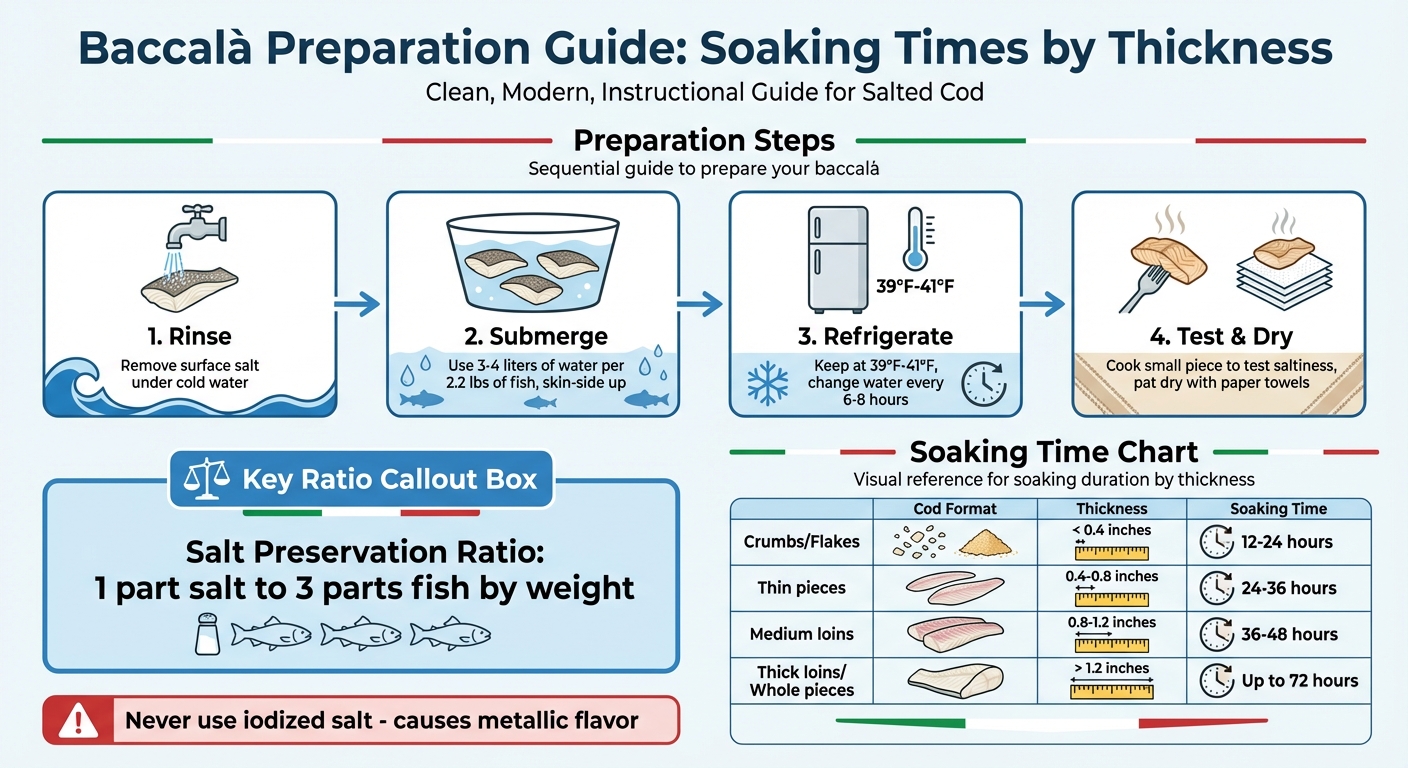
How to Prepare Baccalà: Soaking Times by Thickness Guide
Salt Preservation Techniques
Preserving baccalà traditionally involves dry salting, a method where fresh cod is coated with coarse sea salt or kosher salt. The salt works by drawing out moisture through osmosis, dehydrating the fish and preventing bacterial growth. This process not only extends the fish's shelf life but also gives it a firm texture that makes it ideal for later use.
For home curing, the typical ratio is 1 part salt to 3 parts fish by weight. To do this, layer the fish fillets and salt alternately in a non-reactive container like glass or ceramic, ensuring the fish is completely covered. Depending on the thickness of the fillets, the curing process usually takes 1 to 2 days. It’s important to avoid iodized salt, as it can give the fish an unpleasant metallic flavor. After this initial salting, the fish is often air-dried to further enhance its texture and longevity.
Once preserved, the fish needs to be properly desalted before it’s ready for cooking.
Preparing Baccalà for Cooking
Desalting is a critical step to prepare baccalà for cooking. Start by rinsing the fish under cold water to remove surface salt. Then, place it in a container filled with cold water - 3 to 4 liters (approximately 0.8 to 1 gallon) of water for every 2.2 pounds of fish. Always position the fish skin-side up to let gravity aid in draining the salt.
The soaking process should only be done in the refrigerator, ideally at a temperature of 39°F–41°F, to prevent bacterial growth. Change the water every 6 to 8 hours to ensure effective desalting. Most recipes call for soaking the fish for 24 to 48 hours, but thicker cuts may require up to 72 hours. To check if the fish is ready, cook a small piece briefly - it should have a mild saltiness. Once desalting is complete, pat the fish dry with paper towels. This step is essential because wet fish won’t brown or fry properly.
| Cod Format | Thickness | Optimal Soaking Time |
|---|---|---|
| Crumbs/Flakes | < 0.4 inches | 12–24 hours |
| Thin pieces | 0.4–0.8 inches | 24–36 hours |
| Medium loins | 0.8–1.2 inches | 36–48 hours |
| Thick loins/Whole pieces | > 1.2 inches | Up to 72 hours |
Regional Italian Baccalà Recipes
Baccalà alla Vicentina
Hailing from the Veneto region, Baccalà alla Vicentina is a slow-cooked dish that celebrates the rich, hearty flavors of salt cod. The fish is simmered gently over low heat for hours, allowing it to soften and absorb the seasonings fully. Traditionally paired with soft polenta, this dish is a favorite during chilly months. Its preparation reflects the region's culinary traditions while honoring the timeless appeal of baccalà.
Baccalà Mantecato
Baccalà Mantecato, a Venetian specialty, is a whipped salt cod spread known for its smooth, airy texture. The name refers to the vigorous mixing process that transforms cod and olive oil into a creamy mousse. By slowly emulsifying olive oil into warm, desalted cod, the natural proteins bind with the oil, creating a pale, spreadable consistency. This dish is a staple in Venice's bacari (traditional wine bars), served as a small bite. The authentic recipe keeps it simple, relying solely on cod and olive oil, without any fillers like potatoes, butter, or milk.
Baccalà alla Pizzaiola
This Neapolitan classic combines salt cod with a bold tomato sauce infused with garlic and oregano, showcasing the vibrant flavors of Southern Italy. The cod is lightly seared in olive oil before being nestled into the sauce and baked at 400°F for 20–30 minutes. Additions like capers and olives bring a savory depth reminiscent of puttanesca. James Delmage, Founder of Sip and Feast, highlights the cultural significance of this dish:
While fresh cod is widely available, it's the tradition of preparing baccala, salted preserved cod, that makes baccala alla Napoletana such a special and beloved dish for Italian-Americans.
Given the naturally salty nature of baccalà, along with capers and olives, there's no need for extra seasoning.
Filetti di Baccalà
A Roman street food favorite, Filetti di Baccalà features battered and fried strips of salt cod. The fish is desalted, cut into fillets, and coated in a light batter before being fried to a golden crisp. Drying the fish thoroughly before frying ensures a perfectly crunchy exterior while keeping the inside tender and flaky. Often served hot with a squeeze of lemon, this dish is a staple at Roman trattorias and street vendors, offering a satisfying balance of textures and flavors.
Key Ingredients for Cooking with Baccalà
The Role of Extra Virgin Olive Oil
Extra virgin olive oil plays a key role in baccalà dishes. It not only helps retain moisture when drizzled over the fish before baking but also creates a creamy texture when emulsified into desalted cod for recipes like Baccalà Mantecato. The quality of the olive oil you choose directly affects the final flavor, so it's worth investing in a high-grade option. For example, Ultra Premium Extra Virgin Olive Oils from Big Horn Olive Oil, cold-pressed within two hours of harvest, provide the depth and richness that elevate baccalà dishes. Whether you're sautéing aromatics or adding a finishing touch, a premium oil makes a noticeable impact.
Of course, olive oil is just one piece of the puzzle. The quality of the salt cod itself is equally important.
Choosing Quality Salt Cod
When selecting salt cod, go for thick, center-cut fillets. Thin tail sections often lack the meaty texture that makes baccalà so satisfying. As Sasha Marx, Senior Culinary Editor at Serious Eats, explains:
This dish is meant to feature meaty, thick portions of baccalà, but here in the US, shoppers rarely have a say about the size of the pieces they purchase, and often end up with thin scraps from the tail or belly.
Good salt cod should feel dense and deliver a firm yet tender texture with a slight chew. Keep in mind that salinity levels vary between producers, so soaking times may need to be adjusted. For particularly dry or heavily salted cod, you might need up to four days of soaking, changing the water every six to twelve hours. Expect to pay around $18.95 per pound for high-quality baccalà.
Once you've secured your cod and olive oil, a few other ingredients complete the dish.
Other Important Ingredients
The classic flavor base for baccalà recipes includes garlic, onions, and parsley. Northern Italian dishes like Baccalà alla Vicentina often feature milk and onions for a creamy, comforting finish, while Southern versions lean on tomatoes, capers, and olives for a bold, briny kick. White wine is another staple, adding both moisture and complexity.
Potatoes are a traditional accompaniment, whether braised alongside the fish or layered beneath it. Additional ingredients like dried oregano, bay leaves, red pepper flakes, pine nuts, or anchovies can enhance flavor and texture. Be cautious with extra salt - properly desalted baccalà retains enough natural salinity to season the entire dish.
Conclusion
For more than 500 years, baccalà has transitioned from a practical method of preserving fish to a cherished staple in Italian cuisine. Its lasting appeal stems not only from its historical role - prominent in religious traditions like Lent and the Feast of the Seven Fishes - but also from its adaptability in countless recipes.
As Deana Sidney aptly puts it:
Fish was a pious choice for the believers and cod was king.
This reputation endures, with Italy still ranking among the world's top importers of Norwegian dried cod.
To bring out the best in baccalà, the key lies in using high-quality ingredients. For instance, premium extra virgin olive oil - like Big Horn Olive Oil's cold-pressed varieties, processed within hours of harvest - can elevate dishes such as Baccalà Mantecato. This approach embodies the Italian culinary ethos: let exceptional ingredients shine.
Whether crafting a creamy Venetian-style mantecato or a hearty tomato-based Neapolitan dish, the guiding principle remains the same. Start with excellent ingredients, ensure proper desalination, and use quality salt cod and olive oil to honor centuries-old traditions. And who knows? You might even explore the famed Neapolitan saying about the 365 ways to prepare baccalà.
FAQs
What’s the difference between baccalà and stoccafisso?
The main distinction comes down to how the cod is preserved. Baccalà undergoes salt-curing, where the fish is preserved with salt, making it accessible throughout the year. On the other hand, Stoccafisso (or stockfish) is air-dried without salt, typically in cold regions like Norway. While baccalà needs to be soaked to remove the salt before cooking, stoccafisso is naturally dried and requires rehydration before it can be used.
How can I tell when baccalà is fully desalted?
To ensure baccalà is fully desalted, change the soaking water at least twice a day. Taste a small piece to check - it's ready when the flavor is mild and the saltiness is no longer overpowering. Regular water changes and tasting are key to achieving the perfect balance before cooking.
Can I freeze baccalà after soaking it?
After soaking, baccalà should be kept in the refrigerator and eaten within 2 days. Freezing it isn't usually advised according to the available sources.