

5 Balsamic Olive Oil Marinades for Steak
The short answer: the best steak marinade depends on two things: how sharp or sweet your balsamic is and how long you marinate the meat. In this guide, I’d boil it down to 5 options: rosemary-garlic, Italian herb, soy-Worcestershire, lemon-pepper, and brown sugar-smoked paprika.
Here’s the core idea in plain terms:
- Aged, sweeter balsamic gives steak a darker crust and deeper flavor, but it can burn fast.
- Younger, sharper balsamic keeps the taste brighter and handles high heat a bit better.
- A solid starting point is about 3 parts olive oil to 1 part balsamic.
- Most steaks do well in the 30-minute to 8-hour range, depending on the acid level and cut.
- For food safety, cook steak to 145°F and let it rest for 3 minutes.
If I wanted to pick fast, I’d match them like this:
- Herb-heavy and rich: sweet balsamic + garlic + rosemary
- Bright and clean: sharp balsamic + garlic + Italian herbs
- Savory and bold: balsamic + soy sauce + Worcestershire
- Tangy and peppery: balsamic + lemon + crushed black pepper
- Sweet and smoky: balsamic + brown sugar + smoked paprika
One detail matters more than most people think: sugar changes how steak grills. Sweet marinades brown faster, so blot the steak dry and keep a cooler grill zone ready.
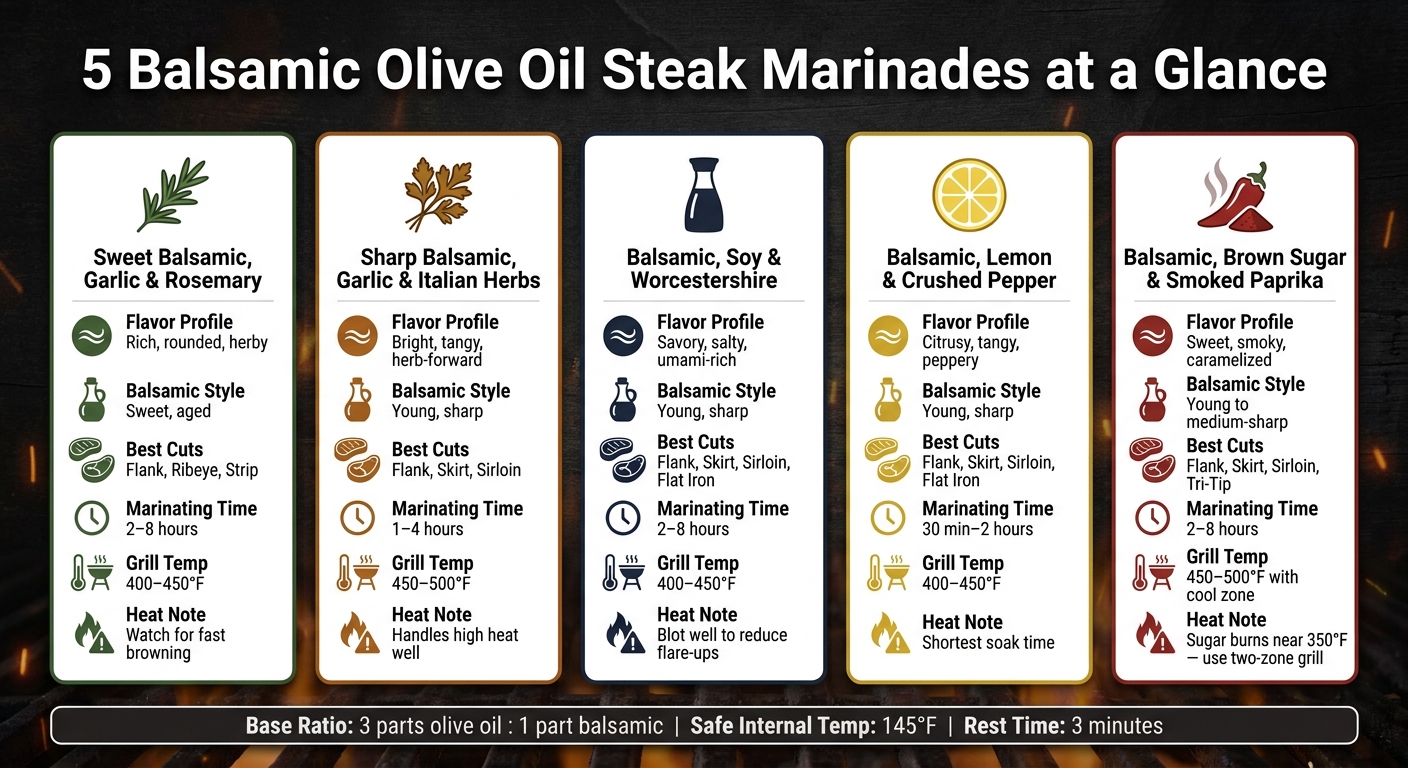
5 Balsamic Olive Oil Steak Marinades: Quick Comparison Guide
Balsamic Steak Marinade
sbb-itb-4066b8e
Quick Comparison
| Marinade | Main Taste | Best Balsamic Style | Good Steak Cuts | Usual Marinating Time | Grill Heat |
|---|---|---|---|---|---|
| Garlic + Rosemary | Rich, herby | Sweet, aged | Flank, strip, ribeye | 2–8 hours | 400–450°F |
| Garlic + Italian Herbs | Bright, herby | Young, sharp | Flank, skirt, sirloin | 1–4 hours | 450–500°F |
| Soy + Worcestershire | Savory, salty, umami | Young, sharp | Flank, skirt, sirloin, flat iron | 2–8 hours | 400–450°F |
| Lemon + Crushed Pepper | Citrusy, tangy, peppery | Young, sharp | Flank, skirt, sirloin, flat iron | 30 minutes–2 hours | 400–450°F |
| Brown Sugar + Smoked Paprika | Sweet, smoky | Young to medium-sharp | Flank, skirt, sirloin, tri-tip | 2–8 hours | 450–500°F with cool zone |
So if you want a steak marinade that works, I’d keep it simple: balance oil, acid, and seasonings, then match the balsamic style to the flavor you want.
How Balsamic Style Affects a Steak Marinade
Balsamic doesn’t all behave the same way. Some bottles are older, sweeter, and syrupy. Others are younger, lighter, and more tart. That changes how your marinade tastes and how the steak cooks once it hits the grill.
Aged balsamic is thicker and sweeter, so it browns fast. Younger balsamic is thinner, sharper, and a bit brighter. EVOO helps smooth out the vinegar, spread the herbs over the steak, and give the marinade a rounder taste. A good place to start is about 3 parts EVOO to 1 part balsamic, then tweak it based on how sweet or sharp your vinegar tastes. That small shift can make a big difference on the grill.
Sweet, Aged Balsamic: Richer Flavor, Faster Charring
Aged balsamic brings deeper fruit and caramel notes to a marinade. That can give steak a gorgeous crust, but there’s a catch: the sugars brown in a hurry. So the outside can get dark before the center reaches the right internal temperature.
To keep that under control, wipe off extra marinade before grilling. Cook over medium-high heat, and if the steak starts darkening too fast, slide it to a cooler part of the grill. This kind of balsamic works well with bolder flavors like garlic, rosemary, brown sugar, and smoked paprika.
Younger, Sharper Balsamic: More Acidity, More Brightness
Younger balsamic leans more on acidity than sweetness. That sharper edge plays nicely with oregano, basil, parsley, red-pepper flakes, lemon, and savory add-ins like soy sauce or Worcestershire sauce.
Since it has less sugar, it can handle hotter direct heat a bit better. Still, it’s smart to pat the steak dry before grilling so you don’t get flare-ups. And if your marinade already has a sweet note, a sharper balsamic helps keep the whole thing in balance.
Use those differences to pair the vinegar style with each marinade below.
Steak Marinade Basics Before You Grill
Before you try any of the five balsamic olive oil steak marinades, start with a few ground rules. They help the marinade stay in balance and keep your steak from going sideways on the grill.
How to Mix and Store the Marinade Safely
Whisk together the oil, balsamic, and seasonings. Then give it another whisk right before you add the steak. That second mix matters because ingredients can settle fast. Once the steak is in, turn it so the surface gets coated evenly.
Use a glass dish, a stainless steel container, or a food-safe plastic bag. Acidic vinegar can react with some metals, so it’s best to avoid anything reactive.
Set aside a clean portion if you want some marinade for serving later. Any marinade that touched raw meat should be discarded or boiled before use. After that, seal the bag or container and refrigerate it at 40°F or below. Don’t leave steak marinating on the counter.
How Long to Marinate Without Overdoing the Acid
Acid mostly works on the outside of the meat. That’s why thin steaks, or marinades with a sharper bite, don’t need much time. If you’re using younger balsamic or lemon juice, 30 minutes to 2 hours is usually plenty. Leave it too long, and the outer layer can turn soft or a little mushy instead of tender.
Thicker cuts can handle more time, especially with marinades balanced by olive oil, soy sauce, or sweeter balsamic. In those cases, 2 to 8 hours tends to work well without taking over the meat. If you push past that, check the surface and pull it as soon as the texture starts to change.
How to Grill Marinated Steak with Fewer Flare-Ups
When the steak comes out of the marinade, pat the surface dry with paper towels. Don’t rinse it. Rinsing can spread contamination, and it also makes it harder to get good browning.
A two-zone grill setup makes life a lot easier. Keep one side hotter for searing and the other cooler for finishing. Sweet marinades need moderate-high heat and a close eye, since sugar can burn fast. If the flames jump up, slide the steak to the cooler side instead of spraying water on the grates.
Minimum Safe Beef Temperature and Rest Time
Use an instant-read thermometer and check the thickest part of the steak. The USDA minimum for whole cuts of beef - steaks, roasts, and chops - is 145°F (63°C), followed by a 3-minute rest before slicing. That short rest helps the juices stay where you want them: in the meat, not on the cutting board.
1. Sweet Balsamic, Garlic, and Rosemary Marinade
If you want a deeper crust with a strong rosemary note, start with this one. It leans on sweet aged balsamic, which helps the steak brown fast and adds a rich finish. Whisk together ¼ cup extra-virgin olive oil, ¼ cup sweet aged balsamic vinegar, 2 minced garlic cloves, 2 tablespoons minced fresh rosemary, ½ teaspoon kosher salt, and ½ teaspoon black pepper.
Vinegar style
Use sweet, aged balsamic. The sugar in it browns fast, so keep an eye on the grill heat so it doesn’t scorch.
Best steak cut
This mix pairs best with leaner cuts that slice well. Flank steak is the best fit here. Its broad, lean surface takes on flavor well, and when you slice it thin across the grain after resting, it stays tender. Ribeye and strip steak also work if you want something richer with more marbling.
Marinating time
Marinate flank steak for 2 to 6 hours. Thicker cuts can go up to 8 hours. Before grilling, pat the steak dry. Brush off any loose garlic and rosemary so they don’t burn.
Grill heat level
Grill over medium-high direct heat, around 400 to 450°F. If the balsamic starts darkening too fast, shift the steak to the cooler side of the grill. If you want a sharper, brighter flavor, move to the next marinade.
2. Sharp Balsamic, Garlic, and Italian Herb Marinade
Use this marinade when you want a bright, herb-led steak with clean acidity instead of a deeper, sweeter profile. Here, the balsamic is meant to stand out.
For about 1½ pounds of steak, whisk together ¼ cup extra virgin olive oil, 2 tablespoons sharp balsamic vinegar, 2–3 minced garlic cloves, 1 teaspoon dried Italian seasoning or 1 tablespoon chopped fresh herbs, such as rosemary, oregano, basil, or thyme, ½ teaspoon kosher salt, and ¼ teaspoon black pepper. If you want, add a little Dijon to help the marinade hold together and give it more depth.
Vinegar style
Go with a younger, sharper balsamic. Its acidity cuts through the olive oil, garlic, and herbs without pushing the marinade into sweet territory.
Best steak cut
Flank steak is the best fit here. It’s lean, grills well, and slices neatly after cooking. Skirt steak and sirloin also do the job nicely. If you're using rib-eye or strip steak, keep the marinating time short so the vinegar backs up the beef instead of covering it.
Marinating time
Refrigerate for 2 to 4 hours for a good balance of flavor and texture. Thin skirt or flank steak may be ready in 1 to 3 hours, while a thicker sirloin or tri-tip can sit closer to the long end of that range.
Before grilling, take the steak out, pat it fully dry with paper towels, and brush off any thick bits of garlic or herbs so they don’t burn on the grates.
Grill heat level
Grill over high direct heat, around 450 to 500°F. Set up a cooler zone too, then shift the steak over if the outside starts to darken too fast. Check the thickest part with an instant-read thermometer and cook to a minimum internal temperature of 145°F, then let it rest for at least 3 minutes before slicing.
For flank or skirt steak, slice thinly against the grain after resting so each bite stays tender. If you want a more savory, punchier profile, the next marinade brings in soy sauce and Worcestershire.
3. Balsamic, Soy, and Worcestershire Marinade
If you want a savory change of pace from herb-heavy mixes, this balsamic, soy, and Worcestershire marinade does the job. It’s the boldest option in the lineup. Soy sauce brings salt and umami, Worcestershire adds tang and depth, and balsamic keeps the whole thing bright instead of heavy.
For about 1½ to 2 pounds of steak, whisk together ¼ cup olive oil, 3 tablespoons balsamic vinegar, 2 tablespoons low-sodium soy sauce, 1 tablespoon Worcestershire sauce, 1 minced garlic clove, and ½ teaspoon black pepper. Don’t add extra salt. The soy sauce and Worcestershire already bring plenty. If you want more sharpness, add a bit more balsamic. If you want a smoother finish, use a little more olive oil.
Vinegar style
Use a younger, sharper balsamic. It stands up to the soy and Worcestershire without making the marinade sweet. A sweeter balsamic will also brown faster.
That sharper mix works especially well with lean cuts that do well on the grill.
Best steak cut
Flank steak is the best fit here. Its wide, open grain takes on the marinade’s bold flavor fast. Skirt steak, sirloin, and flat-iron steak also work well. Save filet mignon for a shorter soak.
Marinating time
Refrigerate for 2 to 8 hours. Thin flank or skirt steak may be ready in as little as 2 to 4 hours. Thicker sirloin or flat-iron usually does better closer to the long end of that window. Stop at 8 hours, though. Any longer, and the surface can turn too soft while the salt starts to take over.
Grill heat level
Grill over medium-high direct heat, around 400°F to 450°F, and set up a cooler zone on the side. Pat the steak dry before it hits the grill. Cook to 145°F, then let it rest for 3 minutes before slicing. For flank or skirt steak, slice thinly against the grain after resting.
4. Balsamic, Lemon, and Crushed Pepper Marinade
After the savory soy-Worcestershire mix, this marinade goes in a brighter direction. It leans hard into citrus, with a peppery edge that stands out right away. In this group, it’s the sharpest option. The coarse black pepper gives it a clear bite, but it shouldn’t taste rough or overpowering.
For about 1½ pounds of steak, whisk together 3 tablespoons olive oil, 2 tablespoons balsamic vinegar, 1 tablespoon fresh lemon juice, 1 teaspoon lemon zest, ½ to 1 teaspoon coarsely crushed black pepper, 1 minced garlic clove, and ½ teaspoon kosher salt. Keep the pepper coarse so it stays noticeable on the meat. If your balsamic tastes extra sharp, add a small amount of sugar or honey to round it out. Just go easy, since sweeteners can char fast on a hot grill.
Vinegar style
Use a younger, sharper balsamic vinegar here. Its acidity keeps the lemon forward.
Best steak cut
Flank steak and skirt steak are the best match. They have enough beefy flavor to handle the acidity, and their broad surface helps them pick up the lemon and pepper fast. Top sirloin and flat-iron steak also do well here.
If you’re using ribeye or strip steak, cut the lemon juice to 2 teaspoons and marinate for 30 to 90 minutes.
Marinating time
Refrigerate for 30 minutes to 2 hours. Since this marinade has lemon juice, keep the soak on the short side. Thin flank or skirt steak usually does best in 30 to 60 minutes. Thicker sirloin or flat-iron can handle the full 2 hours.
Grill heat level
Cook over medium-high direct heat, 400°F to 450°F. Pat the steak dry first, then sear for 3 to 5 minutes per side. If it starts getting too dark too fast, move it to the cooler zone. Cook to an internal temperature of 145°F, then let it rest for at least 3 minutes before slicing.
For flank or skirt steak, slice thinly against the grain.
For a deeper, sweeter finish, the next marinade adds brown sugar and smoked paprika.
5. Balsamic, Brown Sugar, and Smoked Paprika Marinade
If you want a sweeter finish, this marinade leans into caramelization and smoke. Brown sugar brings sweetness, smoked paprika adds a deep smoky note, and balsamic keeps the whole thing in check. The payoff is a dark, caramelized crust.
For about 1½ pounds of steak, whisk together ¼ cup olive oil, ¼ cup balsamic vinegar, 2 tablespoons brown sugar, 2 teaspoons smoked paprika, 1 minced garlic clove, and kosher salt and black pepper to taste. Keep whisking until the sugar dissolves. Right before grilling, let the extra marinade drip off and lightly pat the steak dry. That small step helps cut down on flare-ups and keeps the sugar from burning too soon.
Vinegar style
Use a younger, moderately acidic balsamic so it balances the brown sugar and smoked paprika instead of overpowering them.
Best steak cut
Flank steak and skirt steak are the top picks here. Their broad surfaces take on flavor fast and char nicely over high heat. Sirloin, tri-tip, and flat iron steak also do well. A ribeye can work, but its marbling makes flare-ups more likely with a sugar-and-oil marinade. That’s why the soak time matters.
Marinating time
Refrigerate skirt steak, flank steak, or flat iron steak for 2 to 4 hours. Sirloin or tri-tip can sit for 4 to 8 hours. Don’t leave steak in this balsamic-based marinade overnight. The vinegar can soften the outside too much, and the sugar can leave a sticky coating that burns before the center is done.
Grill heat level
Set up a two-zone grill with a direct-heat side at about 450°F to 500°F and a cooler indirect side ready to go. Start the steak over direct heat to build the crust. If the surface gets dark too fast, move it to the cooler side. Sugar burns near 350°F, so pay close attention and shift the steak when needed.
Minimum safe beef temperature and rest time
Cook the steak to an internal temperature of 145°F, then let it rest for at least 3 minutes before slicing. For skirt steak or flank steak, slice thinly against the grain after resting.
Marinade Comparison Table
Use this side-by-side guide to pick the right marinade for your steak.
| Marinade | Vinegar Style | Dominant Flavor | Best Steak Cut | Marinating Time | Grill Heat Level |
|---|---|---|---|---|---|
| Sweet Balsamic, Garlic, and Rosemary | Sweet, aged balsamic | Rich, rounded, garlicky, herbal | Flank steak | 4–8 hours | Medium-high heat (~400–450°F); watch for fast browning |
| Sharp Balsamic, Garlic, and Italian Herb | Younger, sharper balsamic | Bright, tangy, herb-forward | Sirloin or flank steak | 2–4 hours | Medium-high to high heat (~450–500°F) |
| Balsamic, Soy, and Worcestershire | Younger, sharper balsamic | Savory, salty, umami-rich | Sirloin, flank, or skirt steak | 2–6 hours | Medium-high heat (~400–450°F); blot well to reduce flare-ups |
| Balsamic, Lemon, and Crushed Pepper | Sharp balsamic | Citrusy, peppery, acidic | Flat iron or flank steak | 1–3 hours | Medium-high heat (~400–450°F); use the shorter time for thin cuts |
| Balsamic, Brown Sugar, and Smoked Paprika | Sweet balsamic | Sweet, smoky, caramelized | Flank, skirt, or flat-iron steak | 3–6 hours | Medium-high direct heat (~400–450°F) with a cooler zone ready |
The table makes it easy to line up flavor, cut, and grill heat without overthinking it. If you want a sweeter profile, go with the balsamic blends that lean rich or smoky. If you want more bite, the sharper balsamic options fit better.
A small detail that matters: marinades with more sugar can brown fast, so keep a close eye on the steak once it hits the grill. Tangier, less sweet mixes usually handle higher heat a bit better.
Conclusion
The best balsamic olive oil marinade comes down to the flavor you're after. If you want a richer, sweeter finish and deeper browning, go with aged balsamic. If you'd rather have a brighter, sharper bite, younger balsamic is the better pick. What matters most is matching that balance to the cut. Lower-sugar, more acidic marinades tend to fit leaner cuts better, while richer blends make more sense for thicker steaks.
Sweet marinades need a closer eye on the heat because they brown faster. For the final check, use a thermometer: 145°F, then let the meat rest for 3 minutes.
FAQs
Which marinade is best for ribeye?
For ribeye, go with a marinade built on robust extra virgin olive oil and Big Horn Olive Oil's Traditional 18-Year Aged Dark Balsamic Vinegar. That combo works well because the bold oil stands up to the steak’s rich, beefy flavor instead of getting lost.
Add rosemary or thyme, along with garlic and black pepper. Then let the steak marinate for up to 2 hours before grilling for the best result.
Can I marinate steak overnight?
Yes. Steak can be marinated overnight, depending on the cut.
Most beef does well with 4 to 8 hours of marinating, while tougher cuts can benefit from 12 to 24 hours to help with tenderness.
Always marinate steak in the refrigerator, and discard any leftover marinade that has touched raw meat.
How do I keep balsamic marinade from burning?
Use IGP balsamic vinegar for marinades because it stands up to heat better. Save DOP balsamic for after cooking, when its deeper flavor can come through.
It also helps to mix in high-quality extra virgin olive oil so the steak coats more evenly. Just don’t add too much liquid. If the marinade is too wet, the steak is more likely to steam instead of caramelize.
And pay attention to grill heat. If it gets too hot, it can mute the delicate notes in premium oils.